
| |
|
|||||||
 |
|
|
Thread Tools | Display Modes |
|
#1
 06-21-2007, 08:14 PM
|
||||
|
||||
 The Record Industry's Decline - Record sales are tanking and there's no hope in sight
The Record Industry's Decline
Record sales are tanking, and there's no hope in sight: How it all went wrong Brian Hiatt and Evan Serpick Posted Jun 19, 2007 2:29 PM The record business has been shrinking since the beginning of the decade. U.S. album sales have fallen twenty-five percent since 2000, the biggest year on record - and the year Napster went mainstream. Sales of digital singles - which are up 2,930 percent since 2003 - haven't come close to making up the difference, driving revenue down sharply. This is the first part of a two-part series on the decline of the record industry. Today we're including Brian Hiatt and Evan Serpick's report on where the music business went wrong, from the current issue of Rolling Stone, as well as an interactive graphic illustrating the industry's slide. Tomorrow, check back with RollingStone.com for interviews with industry leaders on the future of the music business.  Sales figures courtesy of Nielsen SoundScan For the music industry, it was a rare bit of good news: Linkin Park's new album sold 623,000 copies in its first week this May -- the strongest debut of the year. But it wasn't nearly enough. That same month, the band's record company, Warner Music Group, announced that it would lay off 400 people, and its stock price lingered at fifty-eight percent of its peak from last June. Overall CD sales have plummeted sixteen percent for the year so far -- and that's after seven years of near-constant erosion. In the face of widespread piracy, consumers' growing preference for low-profit-margin digital singles over albums, and other woes, the record business has plunged into a historic decline. The major labels are struggling to reinvent their business models, even as some wonder whether it's too late. "The record business is over," says music attorney Peter Paterno, who represents Metallica and Dr. Dre. "The labels have wonderful assets -- they just can't make any money off them." One senior music-industry source who requested anonymity went further: "Here we have a business that's dying. There won't be any major labels pretty soon." In 2000, U.S. consumers bought 785.1 million albums; last year, they bought 588.2 million (a figure that includes both CDs and downloaded albums), according to Nielsen SoundScan. In 2000, the ten top-selling albums in the U.S. sold a combined 60 million copies; in 2006, the top ten sold just 25 million. Digital sales are growing -- fans bought 582 million digital singles last year, up sixty-five percent from 2005, and purchased $600 million worth of ringtones -- but the new revenue sources aren't making up for the shortfall. More than 5,000 record-company employees have been laid off since 2000. The number of major labels dropped from five to four when Sony Music Entertainment and BMG Entertainment merged in 2004 -- and two of the remaining companies, EMI and Warner, have flirted with their own merger for years. About 2,700 record stores have closed across the country since 2003, according to the research group Almighty Institute of Music Retail. Last year the eighty-nine-store Tower Records chain, which represented 2.5 percent of overall retail sales, went out of business, and Musicland, which operated more than 800 stores under the Sam Goody brand, among others, filed for bankruptcy. Around sixty-five percent of all music sales now take place in big-box stores such as Wal-Mart and Best Buy, which carry fewer titles than specialty stores and put less effort behind promoting new artists. Just a few years ago, many industry executives thought their problems could be solved by bigger hits. "There wasn't anything a good hit couldn't fix for these guys," says a source who worked closely with top executives earlier this decade. "They felt like things were bad and getting worse, but I'm not sure they had the bandwidth to figure out how to fix it. Now, very few of those people are still heads of the companies." More record executives now seem to understand that their problems are structural: The Internet appears to be the most consequential technological shift for the business of selling music since the 1920s, when phonograph records replaced sheet music as the industry's profit center. "We have to collectively understand that times have changed," says Lyor Cohen, CEO of Warner Music Group USA. In June, Warner announced a deal with the Web site Lala.com that will allow consumers to stream much of its catalog for free, in hopes that they will then pay for downloads. It's the latest of recent major-label moves that would have been unthinkable a few years back: * In May, one of the four majors, EMI, began allowing the iTunes Music Store to sell its catalog without the copy protection that labels have insisted upon for years. * When YouTube started showing music videos without permission, all four of the labels made licensing deals instead of suing for copyright violations. * To the dismay of some artists and managers, labels are insisting on deals for many artists in which the companies get a portion of touring, merchandising, product sponsorships and other non-recorded-music sources of income. So who killed the record industry as we knew it? "The record companies have created this situation themselves," says Simon Wright, CEO of Virgin Entertainment Group, which operates Virgin Megastores. While there are factors outside of the labels' control -- from the rise of the Internet to the popularity of video games and DVDs -- many in the industry see the last seven years as a series of botched opportunities. And among the biggest, they say, was the labels' failure to address online piracy at the beginning by making peace with the first file-sharing service, Napster. "They left billions and billions of dollars on the table by suing Napster -- that was the moment that the labels killed themselves," says Jeff Kwatinetz, CEO of management company the Firm. "The record business had an unbelievable opportunity there. They were all using the same service. It was as if everybody was listening to the same radio station. Then Napster shut down, and all those 30 or 40 million people went to other [file-sharing services]." It all could have been different: Seven years ago, the music industry's top executives gathered for secret talks with Napster CEO Hank Barry. At a July 15th, 2000, meeting, the execs -- including the CEO of Universal's parent company, Edgar Bronfman Jr.; Sony Corp. head Nobuyuki Idei; and Bertelsmann chief Thomas Middelhof -- sat in a hotel in Sun Valley, Idaho, with Barry and told him that they wanted to strike licensing deals with Napster. "Mr. Idei started the meeting," recalls Barry, now a director in the law firm Howard Rice. "He was talking about how Napster was something the customers wanted." The idea was to let Napster's 38 million users keep downloading for a monthly subscription fee -- roughly $10 -- with revenues split between the service and the labels. But ultimately, despite a public offer of $1 billion from Napster, the companies never reached a settlement. "The record companies needed to jump off a cliff, and they couldn't bring themselves to jump," says Hilary Rosen, who was then CEO of the Recording Industry Association of America. "A lot of people say, 'The labels were dinosaurs and idiots, and what was the matter with them?' But they had retailers telling them, 'You better not sell anything online cheaper than in a store,' and they had artists saying, 'Don't screw up my Wal-Mart sales.' " Adds Jim Guerinot, who manages Nine Inch Nails and Gwen Stefani, "Innovation meant cannibalizing their core business." Even worse, the record companies waited almost two years after Napster's July 2nd, 2001, shutdown before licensing a user-friendly legal alternative to unauthorized file-sharing services: Apple's iTunes Music Store, which launched in the spring of 2003. Before that, labels started their own subscription services: PressPlay, which initially offered only Sony, Universal and EMI music, and MusicNet, which had only EMI, Warner and BMG music. The services failed. They were expensive, allowed little or no CD burning and didn't work with many MP3 players then on the market. Rosen and others see that 2001-03 period as disastrous for the business. "That's when we lost the users," Rosen says. "Peer-to-peer took hold. That's when we went from music having real value in people's minds to music having no economic value, just emotional value." In the fall of 2003, the RIAA filed its first copyright-infringement lawsuits against file sharers. They've since sued more than 20,000 music fans. The RIAA maintains that the lawsuits are meant to spread the word that unauthorized downloading can have consequences. "It isn't being done on a punitive basis," says RIAA CEO Mitch Bainwol. But file-sharing isn't going away -- there was a 4.4 percent increase in the number of peer-to-peer users in 2006, with about a billion tracks downloaded illegally per month, according to research group BigChampagne. Despite the industry's woes, people are listening to at least as much music as ever. Consumers have bought more than 100 million iPods since their November 2001 introduction, and the touring business is thriving, earning a record $437 million last year. And according to research organization NPD Group, listenership to recorded music -- whether from CDs, downloads, video games, satellite radio, terrestrial radio, online streams or other sources -- has increased since 2002. The problem the business faces is how to turn that interest into money. "How is it that the people that make the product of music are going bankrupt, while the use of the product is skyrocketing?" asks the Firm's Kwatinetz. "The model is wrong." Kwatinetz sees other, leaner kinds of companies -- from management firms like his own, which now doubles as a record label, to outsiders such as Starbucks -- stepping in. Paul McCartney recently abandoned his longtime relationship with EMI Records to sign with Starbucks' fledgling Hear Music. Video-game giant Electronic Arts also started a label, exploiting the promotional value of its games, and the newly revived CBS Records will sell music featured in CBS TV shows. Licensing music to video games, movies, TV shows and online subscription services is becoming an increasing source of revenue."We expect to be a brand licensing organization," says Cohen of Warner, which in May started a new division, Den of Thieves, devoted to producing TV shows and other video content from its music properties. And the record companies are looking to increase their takes in the booming music publishing business, which collects songwriting royalties from radio play and other sources. The performance-rights organization ASCAP reported a record $785 million in revenue in 2006, a five percent increase from 2005. Revenues are up "across the board," according to Martin Bandier, CEO of Sony/ATV Music Publishing, which controls the Beatles' publishing. "Music publishing will become a more important part of the business," he says. "If I worked for a record company, I'd be pulling my hair out. The recorded-music business is in total confusion, looking for a way out." Nearly every corner of the record industry is feeling the pain. "A great American sector has been damaged enormously," says the RIAA's Bainwol, who blames piracy, "from songwriters to backup musicians to people who work at labels. The number of bands signed to labels has been compromised in a pretty severe fashion, roughly a third." Times are hard for record-company employees. "People feel threatened," says Rosen. "Their friends are getting laid off left and right." Adam Shore, general manager of the then-Atlantic Records-affiliated Vice Records, told Rolling Stone in January that his colleagues are having an "existential crisis." "We have great records, but we're less sure than ever that people are going to buy them," he says. "There's a sense around here of losing faith." Source: Rolling Stone magazine Link: http://www.rollingstone.com/recordindustrydecline
__________________
"Although the arrogance of fame lingers like a thick cloud around the famous, the sun always seems to shine for Stevie." -- Richard Dashut, 2014 Last edited by Johnny Stew; 06-21-2007 at 08:25 PM.. 
|
| . |
|
#2
06-22-2007, 04:55 AM
|
|||
|
|||
|
Quote:
Either way, this was still a sad article. There is no way to stop this now anymore, it'd be like mopping the floor with the tap running.
|
|
#3
06-23-2007, 06:42 AM
|
||||
|
||||
|
how about price as a major factor? i'm not going to pay $18.99 for a single disc. that was the going rate at Tower before they started liquidating everything.
so many albums now are filled with one or two great songs and a bunch of filler garbage. i think a lot of people decided to stop paying for those crappy songs and choose to purchase the singles online. did anyone do a study looking at that? also, i pay for musicmatch. i can stream almost any material through the internet. no, i can't put it on my ipod (though you can pay extra for that), but i spend enough time in front of this computer to get my money's worth.  how does that impact the industry? how does that impact the industry?i can count the albums i've purchased in the last calendar year on one hand. whose fault is that? maybe there just isn't enough good music around.
__________________
"Check it out, I've got a gaping hole." ~ SN
|
|
#4
06-23-2007, 08:01 AM
|
|||
|
|||
|
Quote:
|
|
#5
06-23-2007, 12:47 PM
|
|||
|
|||
|
Ultimately, I can see two things happening. Either the Music Industry plays nice with the internet and its patrons or it will die and secondly, the artists who will survive will be the ASCAP ones who get paid for writing a song and every time it is performed. There is no way at this point to plug the leak in the dam with a finger that is the internet (downloading, legal or not, is NOT going away and will only become more prominent.)
This relates in a big way to Stevie because at the end of the Chicago show she thanked (and asked) us to support the industry and go to performances. Thats where her money is made(performing, touring and T shirts) , certainly not on records anymore. I'll bet that if she were 40-45 and her contract were up, it would not be renewed or if it were, it would be for a LOT less $$ than she's getting now. Why? Because quite frankly, they can't afford these artists anymore. It won't affect Stevie as much (perhpas on a resudual basis it will) but how about the newcomers who haven't had a chance.
|
|
|
|

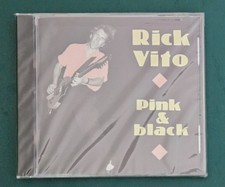
RICK VITO - Pink & Black - CD - Brand New
$17.00

Reverend Rick Vito Signature Soulshaker Grey Pearloid (w/Neck binding)
$949.99

Rick Vito Slidemaster (CD) Album
$24.96
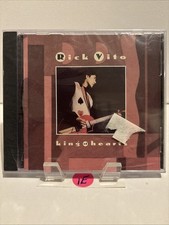
Rick Vito King Of Hearts (CD) Brand New 1E
$8.54

*Autographed* Lucky Devils by Rick Vito (CD, Oct-2005,)) No Case #1H883
$49.33


 Linear Mode

