
| |
|
|||||||
 |
|
|
Thread Tools | Display Modes |
|
#1
 01-28-2007, 06:01 PM
|
||||
|
||||
 The Killer Within - interesting story - and she's a Stevie fan
http://www.kansascity.com/mld/kansascity/16562717.htm
-------------------------------------------------------------------------------- Posted on Sun, Jan. 28, 2007 Journey of forgiveness isn’t taken alone Her father’s revelation of a long-held secret led Carrah Bechtel of Kansas City to turn her family’s story into a film. By STEVE PAUL The Kansas City Star “I got it in my head I did not have a right to life if somebody else had been taken from the earth in such a horrible way.” Carrah Bechtel DAVID EULITT | THE KANSAS CITY STAR Her father’s admission to killing a fellow college student in 1955 cast a shadow over Carrah Bechtel’s life until she decided to share with the world her search for understanding. Carrah Bechtel poured milk into a cup of coffee as her father summoned a family gathering in the living room. She remembers the milk swirling in the coffee and turning it all white. She sat on the sofa facing her father, as he began to reveal a secret he had kept for decades. “In 1955,” Bob Bechtel said, “I killed a boy in school in an act of gun violence.” Carrah Bechtel remembers how that statement just hung in the air and seemed to bounce all around her in slow motion, like the milk coloring the coffee. Her father’s announcement eventually would launch her into a painful journey of discovery. She would struggle with matters of truth and justice, with guilt and forgiveness, with fate, fortune and the hurt that can hide in family secrets. But in that swirling, upending moment, Carrah Bechtel looked at her father, the loving, brilliant and utterly normal man she and everyone else knew him to be, and had to ask: “Are you a murderer?” ••• Carrah and her older half sister, Amanda Willis, rarely told anyone about Bob Bechtel’s story. Hardly anyone who knew Bechtel in Lawrence and Kansas City, where his career as a psychology professor began, knew of his past. Nor did his friends and colleagues at the University of Arizona in Tucson, where he had taught for 30 years. But in spring 2003, nearly 10 years after her father revealed his secret, Carrah Bechtel felt compelled to talk. She was in graduate school at the Union Theological Seminary in New York, and one day she invited a documentary filmmaker to lunch. “I have a story I think you might be interested in,” she told Macky Alston, and he agreed to hear what she had to say. Amid the lunchtime clatter of a New York bistro, Carrah Bechtel told Alston about what she learned when she was 19: In 1955, her father had gone on a rampage in his dormitory at Swarthmore, a small Pennsylvania college, where he was a junior studying for the ministry. He also was the dormitory proctor. Bob Bechtel complained he had been victimized by pranks — his bed thrown out the window, firecracker bursts, name-calling. In fact, he said later, he had been subjected to bullying since childhood. Bechtel had identified four or five perpetrators among the 25 students under his charge in the Swarthmore dorm. He fired seven shots from his .22-caliber rifle, and in the end, one young schoolmate, 19-year-old Francis Holmes Strozier, lay dead where he slept. Between bites of her grilled vegetable sandwich, Carrah Bechtel told Alston how her father surrendered to police, was ruled mentally incompetent to stand trial and then was committed to a state hospital for the criminally insane. Most people tend to assume that the story should have ended there. Years later, many people, including Macky Alston, are astounded to hear what happened later. Nearly five years after he was committed, Bob Bechtel was let out of the state hospital. He had run the print shop and had taken the initiative to teach fellow patients how to read and write. If he had been mentally ill, officials concluded, he was in some kind of remission. Returned to the county jail, Bechtel spent a day on trial and heard a judge direct a verdict in his case: not guilty by reason of insanity. Bechtel was released into the custody of his grandfather. Essentially a free man given a new life, he went on to complete his bachelor’s degree at another Pennsylvania school, then headed west for the University of Kansas. In Lawrence, he earned master’s and doctorate degrees. He participated in pioneering work in the field of environmental psychology. In Kansas City in the early 1970s, he worked for the Greater Kansas City Mental Health Foundation, as did Beverly, his wife, before he joined the Arizona faculty. To this day, Bob Bechtel is not sure whether Strozier participated in the dormitory pranks. (“He was an innocent victim,” Bob Bechtel acknowledges.) But Strozier was still dead, and here she was in the flesh, Carrah Bechtel told Alston. If her father had been executed, as seemed possible in her view, she would never have been born. “You cannot look at me,” she told Alston, “and be for the death penalty.” Carrah Bechtel believes her father owes his fate to Strozier’s family. Strozier’s mother, she said, wrote a sympathetic letter to Bob Bechtel’s mother and also to the judge in his case. One of those letters was read at trial, and Carrah Bechtel believes that without it, her father just as easily could have been convicted and executed. This has become the crux of Carrah Bechtel’s story. She told Alston: “You need to make a movie about forgiveness.” Alston, who had made two personal movies about race and spirituality, was spellbound — and convinced he should make the film. A week after their lunch, Alston, by coincidence, had planned to be in Tucson on another matter. So he and a camera crew met with Bob and Beverly Bechtel and started filming the family’s story. ••• Carrah Bechtel is a gangly 5-foot-9 with green eyes and a flock of small earrings on each lobe. Wisps of cream-streaked auburn hair frame her oval face. She has a thing for Stevie Nicks, the ethereal rock singer of the ’70s, whose pale visage adorns one of Bechtel’s handbags and whose voice fills the wait time on her cell phone. “There’s nobody else like her,” Bechtel says. “She does her own thing. She navigated through the male-dominated rock world, while managing to stay feminine the whole time. She totally stayed within herself.” Now 32, Carrah is compassionate and intense. When she starts talking about Buddhism or music or baking or the long, sad history of school shootings in American culture, her voice cranks into a turbo-speed staccato. In October, after a school shooting in Lancaster County, Pa., she seemed to be crawling out of her skin. One night at work, waiting tables at Aixois, a French bistro south of the Plaza, she wondered whether the thing she had to do right that minute was to head to Pennsylvania and console the Amish families of the murdered children and honor the way they responded — with a public expression of forgiveness of the shooter. Something had long nagged at Carrah Bechtel ever since that day her father told his story to her and her sister. Irrational as it might seem, she felt guilty about his act. She couldn’t get past the hurt he had inflicted and the compassion she felt for Strozier and his family. “I got it in my head I did not have a right to life,” she says now, “if somebody else had been taken from the earth in such a horrible way.” At the seminary in New York, Carrah Bechtel saw that her path toward religion was an excuse, a kind of mask for the guilt she felt. She had tried acting and creative writing. She was thinking of becoming a prison chaplain. But it wasn’t really her, she decided. One night she had an emotional breakdown, which her father, 2,500 miles away in Tucson, helped talk her through on the phone. An administrator at her school, a woman who happened to be Korean, also talked to her about “second-generation trauma.” Some children of Holocaust survivors experience it, and perhaps Carrah had internalized the trauma of her father’s experience — the bullying; his absent father; the experience of being a misfit, intellectual kid; the rampage. “She looked at me, straight in the eye,” Carrah Bechtel says of the woman, “and said, ‘You need to recognize that you didn’t kill anybody.’ ” Carrah soon left New York and moved to Kansas City, where she had been born and where her half sister lived. “Something,” she says, “told me it would be a place to calm down and chill out.” ••• Alston decided to use Carrah as the inquisitor in his movie, to shape the documentary about Bob Bechtel around his daughter’s search for truth and understanding. “I didn’t necessarily want to expose my father’s story,” Carrah says. “But I wanted in some way to express to the world what it’s like to heal from trauma, what it’s like to experience trauma, what it does to you and how it affects you. I also wanted someone to go with me to search for truth, to get to the truth about my father. Who was he? What happened? I had his point of view. I wanted to get to the other side, the full scope, even if it hurt, even if it was hard. “And it was hard, because you had to recognize that the incident didn’t just kill the victim, it haunted all of those survivors. My father was there to plan a mass murder. He discharged a lot of ammunition after he killed Holmes.” Bob Bechtel was ready to have his story told. He had been working on a book. A few years ago, he revealed his act to a stunned classroom. His message was about bullying and how it can lead one to commit unexplainable and horrible acts. Alston spent more than two years filming “The Killer Within.” He shot scenes of Bob Bechtel at the former Farview State Hospital and interviewed longtime friends and in-laws and cousins who knew nothing of the family secret. On May 22, 2005, Alston and the production crew traveled with Carrah Bechtel to Akron, Ohio, to film what was expected to be the closing shot, a moment she had thought about for years. “I’m only going to do one take,” Carrah told the filmmakers. They were in a cemetery. She walked up a grassy rise, found the Strozier family plot and knelt down before the grave of Francis Holmes Strozier. “I just wanted to introduce myself,” she said. “My name is Carrah Bechtel. My father killed you.” She put her hands on the stone. “I don’t think I’ve led a life worthy of your forgiveness,” Bechtel continued, “and I’m going to do my best to change that.” Carrah says she felt something powerful in that moment — “God’s presence,” perhaps. Then she laid down on the ground by Strozier’s grave and she sobbed. ••• Alston’s movie, “The Killer Within,” had three screenings in September at the Toronto Film Festival, where it earned considerable buzz. The Los Angeles Times called it “riveting.” A Canadian critic saw in it “a deep mining of the human condition.” The production company, Discovery Films, plans to release “The Killer Within” in theaters later this year and show it on the Discovery Channel, though no dates have been announced. The film makes no judgment about Bob Bechtel and leaves it to viewers to weigh his crime and his psychological journey. Some have noted that, 50 years later, Bechtel appears to show no remorse, though his daughters say that is not true. “People want to see that he feels bad that he did this,” says Amanda Willis, “and I don’t think they see that in the film, and I think that’s troubling. I know him differently, so I know that he struggles with that every day.” The film also allows viewers to listen to Strozier’s brother and to Strozier’s Swarthmore dorm mates, some of whom still carry emotional tremors from the shooting and some who remain angry over Bechtel’s act and his second chance at life. “That was interesting to learn,” Carrah Bechtel says, “that my loving, wonderful, amazing father was hated, viciously, you know. That’s very difficult. But then you have to allow them that, because their reality of my father is wholly opposite of my experience of him.” Carrah’s quest allowed her to piece her own life together, her father says. “I think she felt in some ways that I had taken it away from her,” Bob Bechtel says. “But it’s not for me to give it back to her. It’s for her to discover on her own. So she takes ownership of it.” At one of the Toronto screenings, Carrah and her sister sat on stage and took questions from the audience. It gave them a chance to talk openly about the consequences of bullying and trauma and family secrets. “Carrah has found a valuable way to speak up and be accounted for,” says Alston. In a recent coffee-shop conversation, Carrah Bechtel says she is still unsure what she ought to be doing in life. She is thinking of leaving Kansas City for Los Angeles to make another try at acting. She also is writing a screenplay about Stevie Nicks and Fleetwood Mac. “It’s something I have to do before I die.” -------------------------------------------------------------------------------- For more •To watch the trailer of “The Killer Within” and for more information about the story of Bob Bechtel, go to www.thekillerwithin movie.com. •For information on a federally supported Safe Schools/Healthy Students initiative, go to www.sshs.samhsa.gov/ initiative/default.aspx. 
|
| . |
|
#2
01-28-2007, 08:51 PM
|
||||
|
||||
|
Gee, only a few emotional scars there. Maybe making the film will help.
__________________
. Watching the drama of the Ledge since 2001.
|
|
|
|


BEKKA BRAMLETT - I Got News For You - CD - **Excellent Condition** - RARE
$49.99
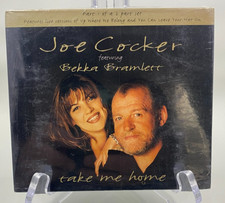
NEW - JOE COCKER - Take Me Home HTF UK CD Single feat. Bekka Bramlett
$7.49

Bekka Bramlett "I Got News For You" CD In Mint. Shongaloo Records LLC 1707. 2009
$45.00

BEKKA BRAMLETT - I Got News For You - CD - **Excellent Condition** - RARE
$49.75
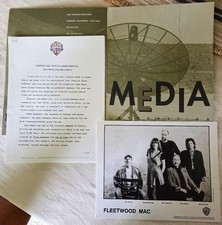
RARE Fleetwood Mac Dave Mason Bekka Bramlett Era 93 Original WB Press Kit w 8x10
$69.99


 Linear Mode

