
| |
|
|||||||
 |
|
|
Thread Tools | Display Modes |
|
#1
 10-20-2006, 08:04 AM
|
||||
|
||||
 Shades of Star Trek: Scientists create "cloak of invisibility"!!
Scientists create cloak of invisibility
By RANDOLPH E. SCHMID, AP Science WriterFri Oct 20, 2:22 AM ET Scientists are boldly going where only fiction has gone before — to develop a Cloak of Invisibility. It isn't quite ready to hide a Romulan space ship from Capt. James T. Kirk or to disguise Harry Potter, but it is a significant start and could show the way to more sophisticated designs. In this first successful experiment, researchers from the United States and England were able to cloak a copper cylinder. It's like a mirage, where heat causes the bending of light rays and cloaks the road ahead behind an image of the sky. "We have built an artificial mirage that can hide something from would-be observers in any direction," said cloak designer David Schurig, a research associate in Duke University's electrical and computer engineering department. For their first attempt, the researchers designed a cloak that prevents microwaves from detecting objects. Like light and radar waves, microwaves usually bounce off objects, making them visible to instruments and creating a shadow that can be detected. Cloaking used special materials to deflect radar or light or other waves around an object, like water flowing around a smooth rock in a stream. It differs from stealth technology, which does not make an aircraft invisible but reduces the cross-section available to radar, making it hard to track. The new work points the way for an improved version that could hide people and objects from visible light. Conceptually, the chance of adapting the concept to visible light is good, Schurig said in a telephone interview. But, he added, "From an engineering point of view it is very challenging." The cloaking of a cylinder from microwaves comes just five months after Schurig and colleagues published their theory that it should be possible. Their work is reported in a paper in Friday's issue of the journal Science. "We did this work very quickly ... and that led to a cloak that is not optimal," said co-author David R. Smith, also of Duke. "We know how to make a much better one." The first working cloak was in only two dimensions and did cast a small shadow, Smith said. The next step is to go for three dimensions and to eliminate any shadow. Viewers can see things because objects scatter the light that strikes them, reflecting some of it back to the eye. "The cloak reduces both an object's reflection and its shadow, either of which would enable its detection," Smith said. The cloak is made of metamaterials, which are mixtures of metal and circuit board materials such as ceramic, Teflon or fiber composite. In an ideal situation, the cloak and the item it is hiding would be invisible. An observer would see whatever is beyond them, with no evidence the cloaked item exists. "Since we do not have a perfect cloak at this point, there is some reflection and some shadow, meaning that the background would still be visible just darkened somewhat. ... We now just need to improve the performance of cloaking structures." In a very speculative application, he added, "one could imagine 'cloaking' acoustic waves, so as to shield a region from vibration or seismic activity." Natalia M. Litchinitser, a researcher at the University of Michigan department of electrical engineering and computer science who was not part of the research team, said the ideas raised by the work "represent a first step toward the development of functional materials for a wide spectrum of civil and military applications." Joining Schurig and Smith in the project were researchers at Imperial College in London and SensorMetrix, a materials and technology company in San Diego. The research was supported by the Intelligence Community Postdoctoral Research Fellowship Program and the United Kingdom Engineering and Physical Sciences Research Council. ___ (deleted stupid copyright stuff) so.......HOW COOL IS THIS?????  
|
| . |
|
#2
10-20-2006, 09:59 AM
|
|||
|
|||
|
Wild! I read some article recently about scientists in Europe developing the technology to transport molecules from one spot to another. Call it a crude form of "beaming". Very interesting!
And to think, technological advances 20 years ago involved a big black floppy disk and phones you didn't have to dial.
|
|
#4
10-20-2006, 10:58 AM
|
|||
|
|||
|
That is awesome and scary at the same time. It just adds to my theory that technology is going to be the complete downfall of humans....these advances just freak me out

|
|
#6
10-20-2006, 10:04 PM
|
||||
|
||||
|
Quote:
and, the stuff they did on that show actually HAD a solid scientific foundation, because they consulted the greatest scientists of the time to ask about the feasibility of 'warp drive' or the "cloak of invisibility" or "transporters"..... many of the things that appeared on Star Trek have since become commonplace. for instance microwave cooking, and various computer functions. please explore the following links: StarTrek technology science of StarTrek I guess thats enuff for now.... Last edited by irishgrl; 10-21-2006 at 08:15 AM..
|
|
#7
10-21-2006, 04:52 AM
|
||||
|
||||
|
Several years ago I read in a scientific magazine that one of the space shuttle experiments, that actually proved successful, was to get bacteria to hold and retreive data. Now why the hell anyone would ever want to do that in a practicle application is beyond me. It would have been nice if the writer had included that tidbit of information in the article. But seriously, the "floppy disc" in this instance was a petrie dish of sorts that could be read by a laser read/write head. The bacteria would grow as more data was written to it and shrink as it was retrieved. The problem encountered is that the application didn't work well at all in a positive gravity atmosphere. It only worked in zero gravity, on the space shuttle. Some of this stuff, like quantum mechanics and all that, is so far beyond my little pea-brain's ability to comprehend... then when these people talk about actually doing something far-flung, there's a big part of me that doesn't want to believe what I'm reading. I hear the transporter was being worked on too. The stumbling block there is that the bugs and rats they use never get transfered in their entirety... legs and tails end up missing or malformed.
Whew... I wish I were a scientist, sounds a lot less boring than a database administrator!
|
|
#8
10-21-2006, 08:10 AM
|
||||
|
||||
|
I think Science is awesome
 and when I hear about science actually doing the stuff we saw on TV, I get all excited! and when I hear about science actually doing the stuff we saw on TV, I get all excited!did you know that the military gives shots like Dr McCoy did? some kinda air propulsion effect, shoots the medicine thru the pores....so cool!
|
|
#9
10-21-2006, 08:12 AM
|
||||
|
||||
|
Quote:

|
|
#10
10-21-2006, 08:13 AM
|
||||
|
||||
|
Quote:
Why do I know everything about Star Trek?  
|
|
#13
10-21-2006, 08:23 AM
|
||||
|
||||
|
Quote:
|
|
#14
10-21-2006, 08:30 AM
|
||||
|
||||
|
Quote:
Vulcans would be cool too. They might make me feel inferior though, so leave them home.
|
|
|
|


BEKKA BRAMLETT - I Got News For You - CD - **Excellent Condition** - RARE
$49.99

NEW - JOE COCKER - Take Me Home HTF UK CD Single feat. Bekka Bramlett
$7.49

Bekka Bramlett "I Got News For You" CD In Mint. Shongaloo Records LLC 1707. 2009
$45.00

BEKKA BRAMLETT - I Got News For You - CD - **Excellent Condition** - RARE
$49.75
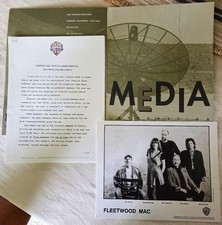
RARE Fleetwood Mac Dave Mason Bekka Bramlett Era 93 Original WB Press Kit w 8x10
$69.99


 Linear Mode

