
| |
|
#1
 12-04-2005, 11:15 PM
|
||||
|
||||
 Signs of the End of the World
All the frogs the world over are dying out at a rather rapid pace it seems & nobody seems to know why. I'd venture to say it's because all the insects they eat are becoming more aggressive and toxic & in some cases they might even turn on the frog and eat it.
__________________
 moviekinks.blogspot.com 
|
| . |
|
#2
12-04-2005, 11:21 PM
|
||||
|
||||
|
Quote:
Here's a link to an article Frogs on the verge of extinction They predate the dinosaurs, but they appear to be nearin the same fate Amphibians, which include frogs, toads and salamanders, are declining worlwide in alarming numbers. Monday, October 18, 2004 Web posted at 12:00:01 AM EST Dennis O'Brien The Baltimore Sun (BALTIMORE, MARYLAND, USA) One of the oldest life forms on Earth is disappearing, and no one knows why. The number of amphibians - a class of creature that predates the dinosaur and includes frogs, toads and salamanders - is declining across the world at astonishing rates. Costa Rica's golden toad vanished from a pristine wildlife refuge in about three years. Fewer chorus frogs are singing in upstate New York, and the Mississippi gopher frog has all but disappeared from the Southeast. There could be many reasons: climate change, habitat loss, man-made pollutants, and recently discovered diseases. But researchers acknowledge that they have no clear answers as to why so many extinctions are occurring worldwide - and at such alarming rates. "There isn't any one angle, or one cause that we know of," said James Hanken, an amphibian expert at Harvard University. "We really don't know the reasons for all these declines." There is more is at stake than the fate of some water-soaked croakers. Amphibians have been around for 350 million years. Living on water and land, they're among the most ecologically sensitive creatures on Earth. They're a major food source for birds, fish and mammals, and they gobble up disease-bearing insects. So their demise could be a signal that other wildlife is at risk. "There's no question but that these creatures are the canaries in the coal mine, (for Amber)" said Richard A. Seigel, chairman of the biology department at Towson University, who has studied frog populations throughout the United States. Amphibian populations have not declined significantly in Maryland and nearby states. The wood frog, American toad, bullfrog and spring peeper thrive in area waterways, Seigel said. But with increased development and pollution threatening habitats, their populations might soon begin to drop. "We know there's a problem, and we just wonder if maybe it's just a matter of time," he said. A study published online last week by Science Express documents the severity of the problem worldwide. About a third of the 5,743 species of amphibians known to exist - about 1,856 - are threatened with extinction, the report says. By contrast, 12 percent of the world's bird species face a similar threat. Researchers began documenting amphibians' losses in the 1970s, when they found the Wyoming toad and other amphibian populations declining in several Western states. Scientists have since reported declines of various species of frogs, toads and salamanders in Central and South America, Australia, China and other ecological hotspots. Declining frog populations became a hot topic in the 1990s, with federal officials setting up a task force, launching a Web site and pumping millions of dollars into research. "In the case of amphibians, there were a number of sources of the problem, and the concern was, what did it mean for the environment?" said William Brown, adviser to former Interior Secretary Bruce Babbitt. But the study's authors say their report is the first that puts all the evidence together. "For years, we knew there were more or less isolated losses of some species in some parts of the world, but no one was looking at this globally. It's only now that we know it's a big issue and a big problem," said Janice S. Chanson, an ecologist at the World Conservation Union and a co-author. The report, due to be published in the journal Science in a few weeks, was co-written by researchers from the union, Conservation International and NatureServe, all conservation groups. About 500 researchers in 60 countries participated in the three-year study. Experts counted frogs and toads on field trips and, in many cases, estimated populations based on calls recorded with microphones. The study found that most threatened species are in the tropical regions that are host to most of the world's amphibians, such as Brazil, Colombia, Ecuador and Mexico. Since 1980, nine species of amphibians have been declared extinct, but another 113 have disappeared or almost disappeared, the report says. "Things are not going well in a lot of places," Chanson said. Losses are occurring across the spectrum of frogs, toads and salamanders. Frogs, with smooth moist skin and long thin legs, live mostly in water and hop away to escape predators. Toads are fatter, with shorter legs and rougher skin. They live on land, and many have poisonous skin to keep from being eaten. Salamanders have long tails, are generally smaller and hide under logs and leaves. The authors blame some declines on habitat loss, pollution and activities such as frog hunting - frog hides are used for wallets in Asia, and their legs are a delicacy in many parts of the world. But almost half of the lost species are dying from "unidentified causes" because they disappear before they can be studied. "These declines tend to be very rapid, and few of them have actually been observed taking place," the report says. Some scientists say the best example of such a mysterious decline might be that of the Monteverde golden toad of Costa Rica. The golden toad's disappearance in the 1980s baffled scientists because of where and how it occurred. It happened quickly - over the course of about three years - and in a wildlife preserve, where the habitat was safe from development and there was no evidence of man-made water pollution. "You would come back to an area where there were frogs just the year before, and there would be an eerie silence," said Anthony Wiesniewski, a consultant and former herpetologist at the Baltimore Zoo who helped count frogs in Costa Rica. The loss was eventually attributed to chytridiomycosis, a highly infectious disease caused by a fungus implicated in the deaths of various species in South America, Australia and China. Another disease has killed off so many Mississippi gopher frogs that only a small colony remains in one pond in Mississippi's DeSoto National Forest. Why the diseases are killing so quickly remains a mystery. Some experts say that pollution and climate change are making amphibians more susceptible to diseases by weakening their immune systems. Research also has linked chytridiomycosis to drought, herbicides and higher levels of ultraviolet light absorbed by the skin. Amphibians breathe through their lungs and absorb oxygen through their skin, making them particularly sensitive to environmental conditions. They also don't migrate, so changes to even a small pond can pose a threat. "When birds see a problem, they go elsewhere. When mammals see a problem, they go elsewhere. With amphibians, they can't go elsewhere," Chanson said. Chanson said that establishing captive breeding programs, creating protected areas and setting policies that minimize water pollution will help save amphibians. "The main problem, still, is habitat loss," she said. "A lot more needs to be done to preserve land." Copyright Notice: Copyright 2004 The Baltimore Sun Company Last edited by irishgrl; 12-05-2005 at 12:50 AM..
|
|
12-04-2005, 11:27 PM
|
| ReFleetwoodMac |
|
This message has been deleted by ReFleetwoodMac.
|
|
#3
12-04-2005, 11:28 PM
|
||||
|
||||
|
Quote:
I don't think it's the insects. I think it's pollution in the water. Frogs and toads are amphibians. They breed in water. They hatch and spend their tadpole stage breathing the water, absorbing it through their skin, and eating other lifeforms that also depend on it. Although I will say that the wild crickets here in Vacaville are aggressive as all hell. I brought some home once to feed to my pet frog. He tried to eat one but it bit back and he spent that night in hiding. I spent that night lying awake listening to the eerie sounds of those demonic things trying to gnaw through the wire mesh of the screen top of his tank. 
|
|
#4
12-04-2005, 11:40 PM
|
||||
|
||||
|
Quote:

__________________
"Do not be afraid! I am Esteban de la Sexface!" "In order to live free and happily, you must sacrifice boredom. It is not always an easy sacrifice" Whehyll I can do EHYT!! Wehyll I can make it WAHN moh thihme! (wheyllit'sA reayllongwaytogooo! To say goodbhiiy!) -
|
|
#5
12-04-2005, 11:50 PM
|
||||
|
||||
|
Quote:
We left her concert early because it was so bad. But we love Cattleman's restaurant! What a meal you used to get there!
__________________
moviekinks.blogspot.com
|
|
#6
12-05-2005, 12:04 AM
|
||||
|
||||
|
Quote:
But yeah, glad you liked it. Though even if I had eaten at Cattlemen's back then, I wouldn't remember. I was 10 in 1991.
|
|
#7
12-05-2005, 12:09 AM
|
||||
|
||||
|
Quote:
pricey, but worth it.
|
|
#8
12-05-2005, 12:29 AM
|
||||
|
||||
 Nahhh...
if the world was ending I wouldnt be ill with bronchitis at this moment, The Chicago Cubs would be the World Champions & I would have all the correct numbers for the Super-Ball Lotto...
Let's see, Am I healthy at this exact moment? Nope...Are the Cubs the Champs? Nope...Do I have the winning lottery numbers? Hell no...So the world isnt ending yet, But be afraid if all the above were to happen this coming year (Hurry and die 2005!!! F**king worthless year!!!)
__________________
"To acknowledge death is to accept freedom and responsibility."
|
|
#9
12-05-2005, 12:38 AM
|
||||
|
||||
|
I thought that Arnold Schwarzenegger becoming Governor of Californina was a sure sign of the end of the world..
hmm.. Frogs disappearing my a**... They all packed their bags and moved to Texas.. I swear to God...we are overrun by frogs... My uncle's pond is INFESTED.. and the croaking is mind numbing.... but hey...I'm no scientist, so what do I know...  Ciao! Ash x
|
|
#10
12-05-2005, 12:52 AM
|
||||
|
||||
|
Quote:
|
|
#11
12-05-2005, 03:11 PM
|
|||
|
|||
|
Quote:

|
 |
|
|


Billy Burnette Lp Self Titled On Columbia - Vg+ To Vg++ / Vg++
$11.99

Billy Burnette - Self-Titled LP - 1980 1st Pressing 12" Columbia LP + Lyrics VG+
$4.50
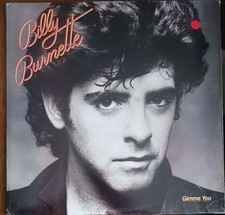
BILLY BURNETTE - GIMME YOU - 1981 COLUMBIA RECORDS VINYL ALBUM - (VG/VG+)
$5.00

BILLY BURNETTE - (SELF- TITLED) - 1979 POLYDOR RECORDS PROMO VINYL LP - (VG/VG)
$5.50

BILLY BURNETTE 45 RPM Promo Record "SHOO-BE-DOO" 1978 Rock Unplayed MINT
$6.70


 Linear Mode

