
| |
|
|||||||
 |
|
|
Thread Tools | Display Modes |
|
#1
 10-12-2004, 10:55 AM
|
||||
|
||||
 Supreme Court to consider Ten Commandments displays
http://www.cnn.com/2004/LAW/10/12/10....ap/index.html
Surprise announcement on politically sensitive issue Tuesday, October 12, 2004 Posted: 10:43 AM EDT (1443 GMT) WASHINGTON (AP) -- The Supreme Court said Tuesday it will take up the constitutionality of Ten Commandments displays on government land and buildings, a surprise announcement that puts justices in the middle of a politically sensitive issue. Justices have repeatedly refused to revisit issues raised by their 1980 decision that banned the posting of copies of the Ten Commandments in public school classrooms. In the meantime, lower courts have reached a hodgepodge of conflicting rulings that allow displays in some instances but not in others. The high court will hear an appeal early next year involving displays in Kentucky and Texas. In the Texas case, the justices will decide if a Ten Commandments monument on the state Capitol grounds is an unconstitutional attempt to establish state-sponsored religion. A homeless man, Thomas Van Orden, lost his lawsuit to have the 6-foot tall red granite removed. The Fraternal Order of Eagles donated the monument to the state in 1961. The group gave scores of similar monuments to American towns during the 1950's and '60's, and those have been the subject of multiple court fights. Separately, they will consider whether a lower court wrongly barred the posting of the Ten Commandments in Kentucky courthouses. McCreary and Pulaski county officials hung framed copies of the Ten Commandments in their courthouses and later added other documents, such as the Magna Charter and Declaration of Independence, after the display was challenged. The Ten Commandments contain both religious and secular directives, including the familiar proscriptions on stealing, killing and adultery. The Bible says God gave the list to Moses. The Constitution bars any state "establishment" of religion. That means the government cannot promote religion in general, or favor one faith over another. 
|
| . |
|
#2
10-12-2004, 11:15 AM
|
||||
|
||||
|
great. It's too bad the 10 commandments are from the bible and all, cause they are good ideas. Nevertheless, they are. I can't believe a COURTHOUSE posted them -THEN posted the declaration of independence and Magna Carta. That is soo wrong, and frightening...
__________________
"Do not be afraid! I am Esteban de la Sexface!" "In order to live free and happily, you must sacrifice boredom. It is not always an easy sacrifice" Whehyll I can do EHYT!! Wehyll I can make it WAHN moh thihme! (wheyllit'sA reayllongwaytogooo! To say goodbhiiy!) -
|
|
#3
10-12-2004, 08:21 PM
|
||||
|
||||
|
Quote:
The present cases' facts are similar, but not exactly the same. Here is what the Court said in 1980 ( http://caselaw.lp.findlaw.com/script...us/449/39.html ) : U.S. Supreme Court STONE v. GRAHAM, 449 U.S. 39 (1980) 449 U.S. 39 STONE ET AL. v. GRAHAM, SUPERINTENDENT OF PUBLIC INSTRUCTION OF KENTUCKY ON PETITION FOR WRIT OF CERTIORARI TO THE SUPREME COURT OF KENTUCKY No. 80-321. Decided November 17, 1980 Held: A Kentucky statute requiring the posting of a copy of the Ten Commandments, purchased with private contributions, on the wall of each public school classroom in the State has no secular legislative purpose, and therefore is unconstitutional as violating the Establishment Clause of the First Amendment. While the state legislature required the notation in small print at the bottom of each display that "[t]he secular application of the Ten Commandments is clearly seen in its adoption as the fundamental legal code of Western Civilization and the Common Law of the United States," such an "avowed" secular purpose is not sufficient to avoid conflict with the First Amendment. The pre-eminent purpose of posting the Ten Commandments, which do not confine themselves to arguably secular matters, is plainly religious in nature, and the posting serves no constitutional educational function. Cf. Abington School District v. Schempp, 374 U.S. 203 . That the posted copies are financed by voluntary private contributions is immaterial, for the mere posting under the auspices of the legislature provides the official support of the state government that the Establishment Clause prohibits. Nor is it significant that the Ten Commandments are merely posted rather than read aloud, for it is no defense to urge that the religious practices may be relatively minor encroachments on the First Amendment. Certiorari granted; 599 S. W. 2d 157, reversed. PER CURIAM. A Kentucky statute requires the posting of a copy of the Ten Commandments, purchased with private contributions, on the wall of each public classroom in the State. 1 Petitioners, [449 U.S. 39, 40] claiming that this statute violates the Establishment and Free Exercise Clauses of the First Amendment, 2 sought an injunction against its enforcement. The state trial court upheld the statute, finding that its "avowed purpose" was "secular and not religious," and that the statute would "neither advance nor inhibit any religion or religious group" nor involve the State excessively in religious matters. App. to Pet. for Cert. 38-39. The Supreme Court of the Commonwealth of Kentucky affirmed by an equally divided court. 599 S. W. 2d 157 (1980). We reverse. This Court has announced a three-part test for determining whether a challenged state statute is permissible under the Establishment Clause of the United States Constitution: "First, the statute must have a secular legislative purpose; second, its principal or primary effect must be one that neither advances nor inhibits religion . . .; finally the statute must not foster `an excessive government entanglement with religion.'" Lemon v. Kurtzman, 403 U.S. 602, 612 -613 (1971) (citations omitted). If a statute violates any of these three principles, it must be [449 U.S. 39, 41] struck down under the Establishment Clause. We conclude that Kentucky's statute requiring the posting of the Ten Commandments in public school rooms has no secular legislative purpose, and is therefore unconstitutional. The Commonwealth insists that the statute in question serves a secular legislative purpose, observing that the legislature required the following notation in small print at the bottom of each display of the Ten Commandments: "The secular application of the Ten Commandments is clearly seen in its adoption as the fundamental legal code of Western Civilization and the Common Law of the United States." 1978 Ky. Acts, ch. 436, 1 (effective June 17, 1978), Ky. Rev. Stat. 158.178 (1980). The trial court found the "avowed" purpose of the statute to be secular, even as it labeled the statutory declaration "self-serving." App. to Pet. for Cert. 37. Under this Court's rulings, however, such an "avowed" secular purpose is not sufficient to avoid conflict with the First Amendment. In Abington School District v. Schempp, 374 U.S. 203 (1963), this Court held unconstitutional the daily reading of Bible verses and the Lord's Prayer in the public schools, despite the school district's assertion of such secular purposes as "the promotion of moral values, the contradiction to the materialistic trends of our times, the perpetration of our institutions and the teaching of literature." Id., at 223. The pre-eminent purpose for posting the Ten Commandments on schoolroom walls is plainly religious in nature. The Ten Commandments are undeniably a sacred text in the Jewish and Christian faiths, 3 and no legislative recitation of a supposed secular purpose can blind us to that fact. The Commandments do not confine themselves to arguably secular matters, such as honoring one's parents, killing or murder, [449 U.S. 39, 42] adultery, stealing, false witness, and covetousness. See Exodus 20: 12-17; Deuteronomy 5: 16-21. Rather, the first part of the Commandments concerns the religious duties of believers: worshipping the Lord God alone, avoiding idolatry, not using the Lord's name in vain, and observing the Sabbath Day. See Exodus 20: 1-11; Deuteronomy 5: 6-15. This is not a case in which the Ten Commandments are integrated into the school curriculum, where the Bible may constitutionally be used in an appropriate study of history, civilization, ethics, comparative religion, or the like. Abington School District v. Schempp, supra, at 225. Posting of religious texts on the wall serves no such educational function. If the posted copies of the Ten Commandments are to have any effect at all, it will be to induce the schoolchildren to read, meditate upon, perhaps to venerate and obey, the Commandments. However desirable this might be as a matter of private devotion, it is not a permissible state objective under the Establishment Clause. It does not matter that the posted copies of the Ten Commandments are financed by voluntary private contributions, for the mere posting of the copies under the auspices of the legislature provides the "official support of the State . . . Government" that the Establishment Clause prohibits. 374 U.S., at 222 ; see Engel v. Vitale, 370 U.S. 421, 431 (1962). 4 Nor is it significant that the Bible verses involved in this case are merely posted on the wall, rather than read aloud as in Schempp and Engel, for "it is no defense to urge that the religious practices here may be relatively minor encroachments on the First Amendment." Abington School District v. Schempp, supra, at 225. We conclude that Ky. Rev. [449 U.S. 39, 43] Stat. 158.178 (1980) violates the first part of the Lemon v. Kurtzman test, and thus the Establishment Clause of the Constitution. 5 The petition for a writ of certiorari is granted, and the judgment below is reversed. It is so ordered. THE CHIEF JUSTICE and JUSTICE BLACKMUN dissent. They would grant certiorari and give this case plenary consideration. JUSTICE STEWART dissents from this summary reversal of the courts of Kentucky, which, so far as appears, applied wholly correct constitutional criteria in reaching their decisions. Footnotes [ Footnote 1 ] The statute provides in its entirety: "(1) It shall be the duty of the superintendent of public instruction, provided sufficient funds are available as provided in subsection (3) of this Section, to ensure that a durable, permanent copy of the Ten [449 U.S. 39, 40] Commandments shall be displayed on a wall in each public elementary and secondary school classroom in the Commonwealth. The copy shall be sixteen (16) inches wide by twenty (20) inches high. "(2) In small print below the last commandment shall appear a notation concerning the purpose of the display, as follows: `The secular application of the Ten Commandments is clearly seen in its adoption as the fundamental legal code of Western Civilization and the Common Law of the United States.' "(3) The copies required by this Act shall be purchased with funds made available through voluntary contributions made to the state treasurer for the purposes of this Act." 1978 Ky. Acts, ch. 436, 1 (effective June 17, 1978), Ky. Rev. Stat. 158.178 (1980). [ Footnote 2 ] The first Amendment provides in relevant part: "Congress shall make no law respecting an establishment of religion, or prohibiting the free exercise thereof . . . ." This prohibition is applicable to the States through the Fourteenth Amendment. Abington School District v. Schempp, 374 U.S. 203, 215 -216 (1963). [ Footnote 3 ] As this Court commented in Abington School District v. Schempp, supra, at 224: "Surely the place of the Bible as an instrument of religion cannot be gainsaid . . . ." [ Footnote 4 ] Moreover, while the actual copies of the Ten Commandments were purchased through private contributions, the State nevertheless expended public money in administering the statute. For example, the statute requires that the state treasurer serve as a collecting agent for the contributions. Ky. Rev. Stat. 158.178 (3) (1980). [ Footnote 5 ] The Supreme Court cases cited by the dissenting opinion as contrary, Committee for Public Education v. Nyquist, 413 U.S. 756 (1973); Sloan v. Lemon, 413 U.S. 825 (1973); Lemon v. Kurtzman, 403 U.S. 602 (1971); Board of Education v. Allen, 392 U.S. 236 (1968), are easily distinguishable: all are cases involving state assistance to private schools. Such assistance has the obvious legitimate secular purpose of promoting educational opportunity. The posting of the Ten Commandments on classroom walls has no such secular purpose. JUSTICE REHNQUIST, dissenting. With no support beyond its own ipse dixit, the Court concludes that the Kentucky statute involved in this case "has no secular legislative purpose," ante, at 41 (emphasis supplied), and that "[t]he pre-eminent purpose for posting the Ten Commandments on schoolroom walls is plainly religious in nature," ibid. This even though, as the trial court found, "[t]he General Assembly thought the statute had a secular legislative purpose and specifically said so." App. to Pet. for Cert. 37. The Court's summary rejection of a secular purpose articulated by the legislature and confirmed by the state court is without precedent in Establishment Clause jurisprudence. This Court regularly looks to legislative articulations of a statute's purpose in Establishment Clause cases [449 U.S. 39, 44] and accords such pronouncements the deference they are due. See, e. g., Committee for Public Education v. Nyquist, 413 U.S. 756, 773 (1973) ("we need touch only briefly on the requirement of a `secular legislative purpose.' As the recitation of legislative purposes appended to New York's law indicates, each measure is adequately supported by legitimate, nonsectarian state interests"); Lemon v. Kurtzman, 403 U.S. 602, 613 (1971) ("the statutes themselves clearly state they are intended to enhance the quality of the secular education"); Sloan v. Lemon, 413 U.S. 825, 829 -830 (1973); Board of Education v. Allen, 392 U.S. 236, 243 (1968). See also Florey v. Sioux Falls School District, 619 F.2d 1311, 1314 (CA8) (upholding rules permitting public school Christmas observances with religious elements as promoting the articulated secular purpose of "advanc[ing] the student's knowledge and appreciation of the role that our religious heritage has played in the social, cultural and historical development of civilization"), cert. denied, post, p. 987. The fact that the asserted secular purpose may overlap with what some may see as a religious objective does not render it unconstitutional. As this Court stated in McGowan v. Maryland, 366 U.S. 420, 445 (1961), in upholding the validity of Sunday closing laws, "the present purpose and effect of most of [these laws] is to provide a uniform day of rest for all citizens; the fact that this day is Sunday, a day of particular significance for the dominant Christian sects, does not bar the state from achieving its secular goals." Abington School District v. Schempp, 374 U.S. 203 (1963), repeatedly cited by the Court, is not to the contrary. No statutory findings of secular purpose supported the challenged enactments in that case. In one of the two cases considered in Abington School District the trial court had determined that the challenged exercises were intended by the State to be religious exercises. Id., at 223. A contrary finding is presented here. In the other case no specific finding had been [449 U.S. 39, 45] made, and "the religious character of the exercise was admitted by the State," id., at 224. 1 The Court rejects the secular purpose articulated by the State because the Decalogue is "undeniably a sacred text," ante, at 41. It is equally undeniable, however, as the elected representatives of Kentucky determined, that the Ten Commandments have had a significant impact on the development of secular legal codes of the Western World. The trial court concluded that evidence submitted substantiated this determination. App. to Pet. for Cert. 38. See also Anderson v. Salt Lake City Corp., 475 F.2d 29, 33 (CA10 1973) (upholding construction on public land of monument inscribed with Ten Commandments because they have "substantial secular attributes"). Certainly the State was permitted to conclude that a document with such secular significance should be placed before its students, with an appropriate statement of the document's secular import. See id., at 34 ("It does not seem reasonable to require removal of a passive monument, involving no compulsion, because its accepted precepts, as a foundation for law, reflect the religious nature of an ancient era"). 2 See also Opinion of the Justices, 108 N. H. 97, 228 A. 2d 161 (1967) (upholding placement of plaques with the motto "In God We Trust" in public schools). The Establishment Clause does not require that the public sector be insulated from all things which may have a religious [449 U.S. 39, 46] significance or origin. This Court has recognized that "religion has been closely identified with our history and government," Abington School District, supra, at 212, and that "[t]he history of man is inseparable from the history of religion," Engel v. Vitale, 370 U.S. 421, 434 (1962). Kentucky has decided to make students aware of this fact by demonstrating the secular impact of the Ten Commandments. The words of Justice Jackson, concurring in McCollum v. Board of Education, 333 U.S. 203, 235 -236 (1948), merit quotation at length: "I think it remains to be demonstrated whether it is possible, even if desirable, to comply with such demands as plaintiff's completely to isolate and cast out of secular education all that some people may reasonably regard as religious instruction. Perhaps subjects such as mathematics, physics or chemistry are, or can be, completely secularized. But it would not seem practical to teach either practice or appreciation of the arts if we are to forbid exposure of youth to any religious influences. Music without sacred music, architecture minus the cathedral, or painting without the scriptural themes would be eccentric and incomplete, even from a secular point of view. . . . I should suppose it is a proper, if not an indispensable, part of preparation for a worldly life to know the roles that religion and religions have played in the tragic story of mankind. The fact is that, for good or for ill, nearly everything in our culture worth transmitting, everything which gives meaning to life, is saturated with religious influences, derived from paganism, Judaism. Christianity - both Catholic and Protestant - and other faiths accepted by a large part of the world's peoples. One can hardly respect the system of education that would leave the student wholly ignorant of the currents of religious thought that move the world society for a part in which he is being prepared." [449 U.S. 39, 47] I therefore dissent from what I cannot refrain from describing as a cavalier summary reversal, without benefit of oral argument or briefs on the merits, of the highest court of Kentucky. [ Footnote 1 ] The Court noted that even if the State's purpose were not strictly religious, "it is sought to be accomplished through readings, without comment, from the Bible." 374 U.S., at 224 . Here of course there was no compelled reading, and there was comment accompanying the text of the Commandments, mandated by statute and focusing on their secular significance. [ Footnote 2 ] The Court's emphasis on the religious nature of the first part of the Ten Commandments is beside the point. The document as a whole has had significant secular impact, and the Constitution does not require that Kentucky students see only an expurgated or redacted version containing only the elements with directly traceable secular effects. [449 U.S. 39, 48] ________________________________________________________ Since 1980 - the Court has issued a myriad of cases which allowed some governmental displays of religious symbols, but not others. So, it is apparent they accepted the writ of certiori to clear up those waters. Of interest is they rejected the Alabama case, which is insulting to the former AL Sup. Ct. Chief Justice and, IMO, telling that the court will allow governmental religious displays as long as all are allowed (mangers, a Star of David, a buddah, etc.). Again, if all are allowed, then the state is not establishing a religion, which is all the Fed. Const. prohibits.
__________________
 save the cheerleader - save the world
|
|
#4
10-12-2004, 10:38 PM
|
|||
|
|||
|
I think there's an easy way to fix this whole situation.
Non-Christians should insist that monuments to their religions be added right next to Christian monuments of the Ten Commandments, etc. Personally, I don't mind the monuments, I just think their placement should be "fair and balanced" (  ) with consideration to the country's other religions. ) with consideration to the country's other religions.Surely the Jews, Muslims, Buddhists, Hare Krishnas, Agnostics, Atheists, Amish, Koreshians, Moonies, etc., would like to have their religious beliefs posted for all to see. And I know the Christians who are forcing these monuments and this issue on everyone would never go for that... Blasphemy!!! In downtown Houston, there's even a Bible on display that is causing some controversy. Why not a Torah (sp?) or a Koran or The Lord of the Rings (because I'm sure there are people who worship that too...).
|
|
#5
10-13-2004, 12:28 AM
|
||||
|
||||
|
Quote:

__________________
"Do not be afraid! I am Esteban de la Sexface!" "In order to live free and happily, you must sacrifice boredom. It is not always an easy sacrifice" Whehyll I can do EHYT!! Wehyll I can make it WAHN moh thihme! (wheyllit'sA reayllongwaytogooo! To say goodbhiiy!) -
|
|
#6
10-13-2004, 12:30 AM
|
||||
|
||||
|
Quote:
__________________
"Do not be afraid! I am Esteban de la Sexface!" "In order to live free and happily, you must sacrifice boredom. It is not always an easy sacrifice" Whehyll I can do EHYT!! Wehyll I can make it WAHN moh thihme! (wheyllit'sA reayllongwaytogooo! To say goodbhiiy!) -
|
|
#7
10-13-2004, 05:42 AM
|
||||
|
||||
|
Quote:
 Here are some views on when religious symbols may be displayed by the govt. - some are biased but worth the read IMO http://www.law.umkc.edu/faculty/proj...oussymbols.htm http://www.religioustolerance.org/sep_c_s1.htm http://atheism.about.com/library/FAQ...l_nativity.htm http://archive.aclu.org/news/n121798b.html
__________________
save the cheerleader - save the world
|
|
#8
10-13-2004, 10:47 AM
|
||||
|
||||
|
Quote:
__________________
|
|
#9
10-13-2004, 10:51 AM
|
||||
|
||||

I think its a great idea. The Ten Commandments are rules which every man can view to be true and worthy of upholding. I think as long as the Commandments are not made to be "law" then we're ok.
__________________

|
|
#10
10-13-2004, 10:56 AM
|
||||
|
||||
|
Quote:
__________________
|
|
#11
10-13-2004, 11:03 AM
|
||||
|
||||
|
Quote:
I have always you can be a great American and be non-Christian or Jew. In fact, you can be a great American and be an atheist. I have yet to be proven wrong.
__________________
save the cheerleader - save the world
|
|
#12
10-13-2004, 11:06 AM
|
||||
|
||||
|
Quote:
__________________
|
|
#13
10-13-2004, 11:15 AM
|
||||
|
||||
|
Quote:
|
|
#14
10-13-2004, 11:18 AM
|
||||
|
||||
|
Quote:
__________________
|
|
#15
10-13-2004, 12:13 PM
|
||||
|
||||
|
Here in this STRONGLY CONSERVATIVE county in which I live, the 10 Commandments have now been posted in our courthouse. The "League of the South" is the group who donated them to our Courthouse , a group who in the past has been quoted as using racial words against blacks, and for some reason is highly respected here. They feel they are "Sent from God" to put the Commandments in public buildings.
1. I am the Lord thy God, which have brought thee out of the land of Egypt, out of the house of bondage. Thou shalt have no other gods before me. 2. Thou shalt not take the name of the Lord thy God in vain. 3. Thou shalt not make unto thee any graven image, or any likeness of anything that is in heaven above, or that is in the earth beneath, or that is in the water under the earth. Thou shalt not bow down thyself to them, nor serve them. 4. Remember the sabbath day, to keep it holy. 5. Honor thy father and thy mother: that thy days may be long. 6. Thou shalt not kill. 7. Thou shalt not commit adultery. 8. Thou shalt not steal. 9. Thou shalt not bear false witness against thy neighbour. 10. Thou shalt not covet thy neighbor's house, thou shalt not covet thy neighbor's wife, nor his manservant, nor his maidservant, nor his ox, nor his ass, nor anything that is thy neighbor's.
__________________
CHRIS M.
|
|
|
|


Fleetwood Mac Rumours 3-CD Expanded Edition 2013 Sealed
$18.99

1977 Fleetwood Mac Rumours US Club Pressing VG+ W/ Original Lyric Poster
$142.54
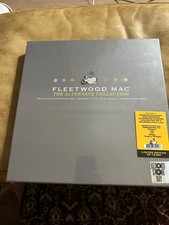
Fleetwood Mac The Alternate Collection 8LP Vinyl Box Set Sealed RSD 2022 Limited
$180.00

FLEETWOOD MAC Lifetime Collection LOT Ticket Stubs Vinyl Records Cd STEVIE Nicks
$333.33
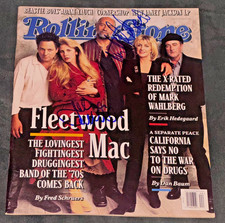
Signed John McVie Mick Fleetwood Mac Autographed Rolling Stone Magazine Auto PSA
$499.99


 Linear Mode

