
| |
|
#1
 09-16-2008, 10:33 PM
|
||||
|
||||
 Fed in AIG rescue - $85B loan
http://money.cnn.com/2008/09/16/news...ex.htm?cnn=yes
Government response reaches dramatic new level: U.S. will take 80% stake in nation's largest insurer to prevent global financial chaos. NEW YORK (CNNMoney.com) -- In an unprecedented move, the Federal Reserve Board is lending as much as $85 billion to rescue crumbling insurer American International Group, officials announced Tuesday evening. The Fed authorized the Federal Reserve Bank of New York to lend AIG (AIG, Fortune 500) the funds. In return, the federal government will receive a 79.9% stake in the company. Officials decided they had to act lest the nation's largest insurer file bankruptcy. Such a move would roil world markets since AIG (AIG, Fortune 500) has $1.1 trillion in assets and 74 million clients in 130 countries. An eventual liquidation of the company is most likely, senior Fed officials said. But with the government loan, the company won't have to go through a tumultuous fire sale. "[A] disorderly failure of AIG could add to already significant levels of financial market fragility and lead to substantially higher borrowing costs, reduced household wealth and materially weaker economic performance," the Fed said in a statement. The bailout marks the most dramatic turn yet in an expanding crisis that started more than a year ago with the mortgage meltdown. The resulting credit crunch is now toppling not only mainstay Wall Street players, but others in the wider financial industry. The line of credit to AIG, which is available for two years, is designed to help the company meet its obligations, the Fed said. Interest will accrue at a steep rate of 3-month Libor plus 8.5%, which totals 11.31% at today's rates. AIG will sell certain of its businesses with "the least possible disruption to the overall economy." The government will have veto power over the asset sales and the payment of dividends to shareholders. The company's management will be replaced, though Fed staffers did not name the new executives. The board will remain. For customers, it will be business as usual, officials said. Taxpayers will be protected, the Fed said, because the loan is backed by the assets of AIG and its subsidiaries. The loan is expected to be repaid from the proceeds of the asset sales. The government had resisted throwing a lifeline to AIG, hoping to entice investment firms to set up a $75 billion rescue fund. Officials opted not to bail out Lehman Brothers, which filed for bankruptcy on Monday. But by Tuesday night, it became clearer that the private sector would not step in to help AIG, which has a greater reach into other financial companies and markets than Lehman does. "We are working closely with the Federal Reserve, the SEC and other regulators to enhance the stability and orderliness of our financial markets and minimize the disruption to our economy," said Treasury Secretary Henry Paulson. "I support the steps taken by the Federal Reserve tonight to assist AIG in continuing to meet its obligations, mitigate broader disruptions and at the same time protect the taxpayers." Dramatic end, high stakes The firm's options grew more limited as the day wore on. Its already-battered share price fell another 21% with more than 1 billion shares trading hands, and plummeted another 46% in after-hours trading. At one point Tuesday morning, shares fell more than 70% - a day after losing 61% of their value. The company, which did not return calls for comment and made no public statements about the deal, was scrambling to raise capital to stay afloat after being hit with credit rating agencies downgrades that is forcing it to come up with billions of dollars in additional collateral fast. New York State officials, who regulate the insurance titan, had urged the federal government to rescue AIG. The state attempted to help AIG on Monday by allowing it to tap into $20 billion in assets from its subsidiaries if the company could comes up with a comprehensive plan to get the much-needed capital, said a state Insurance Department spokesman. Pleased with the federal government's response, New York Gov. David Paterson said Tuesday night: "Policy holders will be protected. Jobs will be saved. Business will continue." The funding became ever more crucial as the insurer was hit Monday night by a series of credit rating downgrades. The cuts meant AIG (AIG, Fortune 500) could be forced to post more than $13 billion in additional collateral. Late Monday night, Moody's Investors Service and Standard & Poor's Ratings Services each said they had lowered their ratings. A few hours earlier, Fitch Rating had also downgraded AIG, saying the company's ability to raise cash is "extremely limited" because of its plummeting stock price, widening yields on its debt, and difficult capital market conditions. The downgrade could force AIG to post $13.3 billion of collateral, Fitch said in a statement. Also, the moves would make it more expensive for AIG to issue debt and harder for it to regain the confidence of investors. All the while, analysts urged the company to unveil its restructuring plan. "Management needs to address investor concerns now before the market sell-off becomes a self-fulfilling prophecy," Rob Haines, analyst at CreditSights, said Tuesday. Global ripples The failure of AIG could have caused unprecedented global ripple effects, said Robert Bolton, managing director at Mendon Capital Advisors Corp. AIG is a major player in the market for credit default swaps, which are insurance-like contracts that guarantee against a company defaulting on its debt. Also, it is a huge provider of life insurance, property and casualty insurance and annuities. "If AIG fails and can't make good on its obligations, forget it," Bolton said. "It's as big a wave as you're going to see." AIG has had a very tough year. Rocked by the subprime crisis, the company has lost more than $18 billion in the past nine months and has seen its stock price fall more than 91% so far this year. It already raised $20 billion in fresh capital earlier this year. Its troubles stem from its sales of credit default swaps and from its subprime mortgage-backed securities holdings. AIG has written down the value of the credit default swaps by $14.7 billion, pretax, in the first two quarters of this year, and has had to write down the value of its mortgage-backed securities as the housing market soured. The insurer could be forced to immediately come up with $18 billion to support its credit swap business if its ratings fall by as little as one notch, wrote John Hall, an analyst at Wachovia, on Monday. This year's results have also included $12.2 billion in pretax writedowns, primarily because of "severe, rapid declines" in certain mortgage-backed securities and other investments. The company brought in new management to try to turn the company around. In June, the company tossed out its chief executive, Martin Sullivan, and named AIG chairman Robert Willumstad, who joined AIG in 2006 after serving as president and chief operating officer of Citigroup (C, Fortune 500), in his place. 
|
| . |
|
#2
09-17-2008, 06:56 AM
|
||||
|
||||
|
I honestly do not know what to think of all of this. Would it be better to let them all go broke and then start fresh. I tend to think it would not. Look at Chrysler in the 80's. The Govt.'s loan proved to be a good thing in that instance and tens of thousands of jobs were saved. I get that Chrysler is not very financially sound today, but that is not due to the loan the govt. gave it almost 30 years ago.
__________________
 save the cheerleader - save the world
|
|
#4
09-17-2008, 11:02 AM
|
||||
|
||||
|
I don't think this is the end of the road. With respect to the Chinese, yes we are protecting their investment in us. It's absolutely necessary.
I was surprised that they didn't bail out Lehman Brothers but maybe that's because this was already in the works and they couldn't do both. Strand, I guess this could be a good thing, we'll just have to wait and see. It will be interesting to see how many fans of deregulation there will be now.
|
|
#5
09-17-2008, 12:04 PM
|
||||
|
||||

It's just more money to tack onto our national debt.
__________________

|
|
#6
09-17-2008, 12:06 PM
|
||||
|
||||
|
Quote:
What I do not understand is the vast najority of mortgages out there are being paid. So, why have their been somwhere over 20 billion dollars in write downs?
__________________
save the cheerleader - save the world
|
|
#7
09-17-2008, 12:07 PM
|
||||
|
||||
|
Interesting:
http://www.reuters.com/article/bonds...080916?sp=true Fed repaid JPMorgan $87 billion for Lehman financing By Chelsea Emery and Dan Wilchins NEW YORK (Reuters) - The New York Federal Reserve intervened aggressively to shore up the U.S. financial system this week, providing at least $87 billion to help underpin trades with units of bankrupt Lehman Brothers Holdings Inc, court documents show. The Fed's action is the latest sign of how U.S. authorities have been seeking to prop up financial markets following the failure of Lehman (LEH.P: Quote, Profile, Research, Stock Buzz) and as big insurer American International Group (AIG.N: Quote, Profile, Research, Stock Buzz) fights for survival. While the government had pledged not to fund a rescue of Lehman, the disclosure on Tuesday showed that authorities were taking other financial steps to prevent markets from descending into chaos. JPMorgan Chase & Co (JPM.N: Quote, Profile, Research, Stock Buzz) advanced $87 billion to the units on Monday to help clear and facilitate securities transactions with customers and clients of Lehman "to avoid disruption of financial markets," according to documents filed in the U.S. Bankruptcy Court for the Southern District of New York. Lehman and the New York Fed had requested the advance, known as a "commencement date advance" and the New York Fed repaid it, according to filings. In effect, the New York Fed lent the funds to the units. A representative for the New York Fed declined to comment. "This expansion of the Fed's credit program is unprecedented," said David Pauker, a managing director with restructuring adviser Goldin Associates. "It should provide the liquidity necessary to facilitate the sale of Lehman's core brokerage and banking business." In court on Tuesday, U.S. Bankruptcy Judge James Peck said he would provide a "comfort order" for JPMorgan, allowing it to continue providing the advances to Lehman. Harold Novikoff, a lawyer for JPMorgan, told the court that the firm has regularly provided these advances for Lehman to facilitate its trading, but was typically paid back by other parties who would step in overnight to repay JPMorgan. However, some of those third parties have disappeared since Lehman's bankruptcy, filing necessitating the intervention from the Fed. A representative for the Federal Reserve Bank of New York said in court that services provided by JPMorgan were "integral" to the market. "If we stop, the broker dealer stops. It's that simple," Novikoff told reporters after the hearing. Lehman had provided JPMorgan with $17 billion in collateral for the advancing services prior to the bankruptcy filing, Lehman's lawyer Shai Weisman told the court. The sale of Lehman's broker-dealer business appeared closer on Tuesday, as a source said Britain's Barclays (BARC.L: Quote, Profile, Research, Stock Buzz) had agreed to buy Lehman's core broker-dealer business for about $2 billion. Lehman's holding company filed for bankruptcy in the early hours of Monday, in the largest U.S. bankruptcy ever. Although Lehman's broker-dealer units are not covered under the filing, customers typically unwind trades with a dealer whose holding company is bankrupt. On Tuesday, at the request of Lehman and the New York Fed, JPMorgan advanced $51 billion to Lehman as part of a so-called second-day advance. Court documents did not specify whether the New York Fed would repay the second amount. JPMorgan may elect to advance additional money to Lehman units as part of a "post-petition advance." All post-petition advances are guaranteed by Lehman and collateralized, according to the documents. "The Lehman Brothers bankruptcy is taking the restructuring industry into uncharted waters," Pauker said.
|
|
#8
09-17-2008, 12:07 PM
|
||||
|
||||
|
Quote:
__________________
save the cheerleader - save the world
|
|
#9
09-17-2008, 12:18 PM
|
||||
|
||||
|
Quote:
__________________
|
|
#11
09-17-2008, 12:42 PM
|
||||
|
||||
|
Quote:
__________________
save the cheerleader - save the world
|
|
#12
09-17-2008, 09:04 PM
|
|||
|
|||
|
Quote:
|
|
#13
09-17-2008, 09:09 PM
|
||||
|
||||
|
Quote:
__________________
save the cheerleader - save the world
|
|
#14
09-17-2008, 09:11 PM
|
|||
|
|||
|
Quote:
|
|
#15
09-17-2008, 09:15 PM
|
||||
|
||||
|
Quote:
__________________
save the cheerleader - save the world
|
 |
|
|

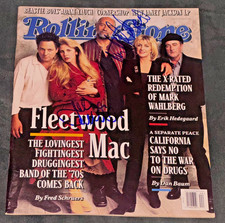
Signed John McVie Mick Fleetwood Mac Autographed Rolling Stone Magazine Auto PSA
$499.99
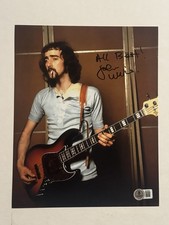
JOHN MCVIE HAND SIGNED 8x10 PHOTO AUTOGRAPHED FLEETWOOD MAC BASSIST RARE BAS COA
$127.49

Fleetwood Mac ~ Mick Fleetwood / John McVie Signed 11x14 Photo Page with JSA COA
$299.94

Mick Fleetwood John McVie autographed Fleetwood Mac album vinyl proof Beckett
$949.99
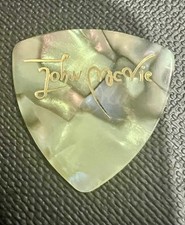
Authentic Touring Fleetwood Mac John McVie Vintage Tour Guitar Pick
$116.62


 Linear Mode

