
| |
|
#1
 03-26-2008, 11:30 AM
|
||||
|
||||
 Screwball vs. Romantic Comedy
A friend of mine was just telling me that folks have a strange opinion of what a screwball comedy is (or was, I guess he meant). He opined that what it isn't is a bunch of cartoon people frantically crashing into furniture, &c. It's not Bobby Clark or Benny Hill. He added that, while a budding romance is at the center, Groucho and Margaret don't fit the screwball parameters.
My friend said that one problem is the blurred line between screwball and romantic comedy. Obviously the boy--girl thing figures in both, but there's a flippant approach to the former that's generally absent in romantic comedy. He added that WHEN HARRY MET SALLY is a romantic comedy because they're quite serious underneath the charming goofiness. Contrast that with HIS GIRL FRIDAY: Walter is still "wonderful in a loathsome sort of way."  What do you guys think? Although I think the line between romantic & screwball is blurry, too, I buy my friend's overall distinction. By extension, I consider MY MAN GODFREY primarily romantic (Godfrey is wounded in love in a serious way). But what of PALM BEACH STORY, where romantic relationships in Palm Beach are screwy but the marriage-in-trouble story is serious? This is why genre is only an assist; these categories never hold up as laws. My friend also said that most screwballs are female-driven (there's probably a master's thesis in that just waiting to be submitted to a dissertation committee). I would add that many dozens of them from the 1930s involve heiresses & the consequent social commentary on the divide between rich & poor/working class, as you would expect from Depression-era comedies (e.g., EASY LIVING). More blurriness between genre once you consider that some heiress comedies involve social/class commentary & serious romance but are not specifically screwball (e.g., IT HAPPENED ONE NIGHT, ALICE ADAMS). And what's this?! Some social/class commentary commedies are neither primarily screwball nor romantic comedy (e.g., YOU'RE TELLING ME).  Where would you place a film like George Stevens's THE MORE THE MERRIER?
__________________
 moviekinks.blogspot.com 
|
| . |
|
#2
03-26-2008, 02:51 PM
|
||||
|
||||
|
I did a couple of papers on these subjects last year. Both genres are considered female-driven (lots written on this already - if you can find a fresh thesis in there at this point, submit it!). Screwball comedies typically focus on class differences (the woman is usually from the upper-class) as a source of comedy - especially laughing at the rich. As you noted, Godfrey is the famous example. Carole Lombard did it best. We see it again in Overboard.
I think of romantic comedies as finding laughs in the tension between the two leads, who (the audience knows from the start) will end up together. Again, When Harry Met Sally is a great example. One of my papers was on Crossing Delancey and Keeping the Faith, and I chose them (even when my prof wanted me to add a particular drama, I said no) because of the familiar romantic comedy formula (that makes it easier to analyze other parts of the films). - Jake
__________________
“The hair went from perm to growing out perm to really bad growing out perm to almost straight to good straight to long straight to beautiful straight to a lot of work straight back to the perm.”
|
|
#3
03-26-2008, 02:56 PM
|
||||
|
||||
|
Oh, also at least one source* names It Happened One Night as the first real example of a Romantic Comedy. You're right, it's no Screwball Comedy.
*(Lyden, John C. Film as Religion: Myths, Morals, and Rituals. New York: New York University Press, 2003 --- p. 180) - Jake
__________________
“The hair went from perm to growing out perm to really bad growing out perm to almost straight to good straight to long straight to beautiful straight to a lot of work straight back to the perm.”
|
|
#4
03-27-2008, 11:59 AM
|
||||
|
||||
|
I always appreciate your replies, Jake.
I agree with you Thanks for the book recommendation. I have a book called CANNED GOODS AS CAVIAR by Gerald Weales. It's pretty good.
__________________
moviekinks.blogspot.com
|
|
#5
03-27-2008, 11:57 PM
|
||||
|
||||
|
Not necessarily recommending that book, just naming it as a reference.
And I always appreciate your threads, David.  I don't know the one you named, but if film comedy interests you, you might also look at Frank Krutnik's Hollywood Comedians: The Film Reader. I'm currently working on two papers on film comedy (not to mention another on a film drama) - one on Ruth Gordon and one on (believe it or not) Love at First Bite.   Plus on Tuesday I present on Goodbye, Columbus. Comedies are my thing now, I guess. Plus on Tuesday I present on Goodbye, Columbus. Comedies are my thing now, I guess.- Jake
__________________
“The hair went from perm to growing out perm to really bad growing out perm to almost straight to good straight to long straight to beautiful straight to a lot of work straight back to the perm.”
|
|
#6
03-28-2008, 06:50 PM
|
||||
|
||||
|
I agree the difference is blurry. I don't agree though in putting When Harry Met Sally in the same category of the Romantic comedies pre WW2. Obviously the genre is the same, but as a critic (can't remember who) wrote, the best romantic and screwball comedies of the thirties and forties were filled with
signifiers, symbols, metaphors, way more provocative and modern than the '80'-2000's rom coms. When Harry met Sally could be considered a masterpiece, but a conservative one. The More, The Merrier? Romantic comedy IMO. Romy
__________________
Non vogliate negar l'esperienza di retro al sol, del mondo sanza gente Considerate la vostra semenza fatti non foste a viver come bruti ma per seguir virtute e canoscenza ~ Dante Alighieri, Divina Commedia, Inferno Canto XXVI Last edited by Serrart; 03-28-2008 at 06:56 PM..
|
|
#7
03-28-2008, 11:53 PM
|
||||
|
||||
|
Quote:
But let me ask you guys about something I've been trying to understand in my own views. As you know, I love the comedies of Preston Sturges -- really dearly love those buggers. But SULLIVAN'S TRAVELS has always been the one I loved the least, & I have had trouble understanding why. It's often considered the best of the Sturges oeuvre, & it's certainly as popular as any of the other Sturges comedies are. But I myself never quite took to it, & I think the reason is that I feel it's primarily a social commentary, a didactic work, & only secondarily a romantic comedy. In fact, I think it somewhat subverts its own claims, & maybe that confuses or even bothers me. The film's moral point of view is that it's better to make people laugh than to instruct them or make them think about serious issues. Sullivan, the director, learns at the end of his adventures that the men in the prison camp benefit most by just having a good laugh -- that lightens their weary load the best -- & Sullivan realizes that his earlier disdain for "cheap laughs" & his desire to make a more serious film were misguided. And yet . . . doesn't Sturges in SULLIVAN'S TRAVELS take the option that Sullivan rejects? Sturges makes a film that is intended primarily to convey instruction or a moral lesson, & is only secondarily funny or amusing. I think that may be what I don't like about the film: It says something to me that I believe is true (the importance of laughter & entertainment) & yet it doesn't adhere to its own precepts. It's preaching this "laughter" message, but doing so with high seriousness that I have trouble taking seriously. Many of the other Sturges comedies also made serious points -- THE LADY EVE, HAIL THE CONQUERING HERO, CHRISTMAS IN JULY, etc. -- but those films are all essentially high comedy & essentially hugely amusing in their effects & they don't leave me feeling as if I were being instructed in a high-toned lesson in a classroom. Quote:
__________________
moviekinks.blogspot.com
|
 |
|
|

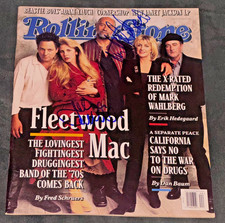
Signed John McVie Mick Fleetwood Mac Autographed Rolling Stone Magazine Auto PSA
$499.99
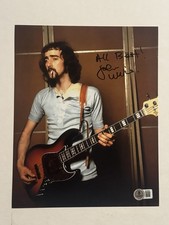
JOHN MCVIE HAND SIGNED 8x10 PHOTO AUTOGRAPHED FLEETWOOD MAC BASSIST RARE BAS COA
$127.49

Fleetwood Mac ~ Mick Fleetwood / John McVie Signed 11x14 Photo Page with JSA COA
$299.94

Mick Fleetwood John McVie autographed Fleetwood Mac album vinyl proof Beckett
$949.99
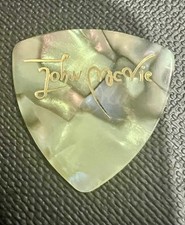
Authentic Touring Fleetwood Mac John McVie Vintage Tour Guitar Pick
$116.62


 Linear Mode

