
| |
|
#1
 12-28-2007, 09:22 PM
|
||||
|
||||
 FM on Vinyl
I am going to do the opposite of dating oneself and admit now that I recently had my first experience listening to Rumours on vinyl, start to finish. My brother got a brand new record player for Christmas and I finally had a chance to listen to some of the albums I picked up years ago just so that I could own them. I can't remember the last time I actually sat down and listened to an album and wasn't doing something else or bouncing around to listen to specific songs or skipping songs entirely. I'm not even positive when I did that with Rumours at all, though I'm sure I did when I first got the CD. In this age of iPods and iTunes, I've become one of those people who forgets to remember to appreciate albums in the way they were created, that there's reasons behind the placements of songs and the stories they tell, that someone may have scrutinized about what song went where on an album and I'm just listening to it however I want. Needless to say, it was quite the experience and I loved not only the sound of the album on vinyl, but the feelings listening to it the way it was originally meant to be listened to gave me. I could barely contain myself as I placed the needle on the vinyl and the first few seconds of "Second Hand News" started. It made me wish I could listen to all new music that way, and as someone who always felt born into the wrong generation, at least musically, I loved the opportunity to sort of go back to when it was a little more magical.
I also had the chance to listen to Mirage on vinyl, which wasn't quite as powerful, but fun nonetheless. Next trip home, hopefully Tusk! 
|
| . |
|
#2
12-28-2007, 09:52 PM
|
||||
|
||||
|
Mirage on vinyl sucks. I can stand to listen to the songs other than "Gypsy" and "Hold Me" because I have no better source for comparison, but the difference between those two big hits on vinyl and my CD of Greatest Hits is appalling. For example. the piano beginning to "Hold Me" is muted, and the only way to hear it at a satisfying level is to turn the volume way up and then be jarred when the rest kicks in.
|
|
#3
01-04-2008, 07:19 PM
|
||||
|
||||
|
Quote:
__________________
 ~~Don't compromise yourself. You're all you've got.~~ Janis Joplin
|
|
#4
01-04-2008, 07:32 PM
|
|||
|
|||
|
Here's an old article discussing a Tusk audiophile, when the format was new.
New York Times (NY), July 6, 1980 RECORDINGS HIGH-QUALITY DISKS FOR THE 'AUDIOPHILE' JOHN ROCKWELL Fleetwood Mac ," the 1975 album by the group of that name and its first with its current personnel, is one of the best-known of all 1970's pop disks. The album was released by Warner Brothers and is still available on that label. Yet recently it also appeared as part of something called Original Master Recordings, which in turn is put out by the Mobile Fidelity Sound Lab. This is a higher-priced, limited edition "audiophile" pressing, the product of one of the four companies now issuing such refurbished disks of well-known pop stars. And the differences between it and the record you probably already have in your collection are marked. The 1975 release was and remains a superbly produced high-fidelity record, but the audiophile version is finer still. It is not so radically altered as to be unrecognizable: the differences are not as pronounced as, say, a recording of Beethoven's Fifth Symphony made in the 1930's and one of today. But the bass notes are more sharply and cleanly defined, the highs are more crisply etched, the mid-range is more solid, the overall texture is more transparent and natural, there is less distortion and the surfaces are quieter. If you have a good enough sound system, and you play it loud, the record sounds as if you are listening to the playback of the final mix straight off the studio monitors. Audiophile" in the broadest sense means any recording designed for the high-fidelity connoisseur. Audiophile recordings of all sorts have proliferated in recent years, and can be seen as the restless stirrings of an industry presumably on the verge of abandoning record players as we know them and shifting over to the new digital playback equipment. Thus the various forms of audiophile recordings are probably the last, desperate refinements of an already-outmoded technology. But in the short run, the results are still spectacular, and require no alterations in play-back equipment. In fact, the very reason for the audiophile "software" is that the sophistication of present-day playback equipment (or "hardware") has long since outstripped the capabilities of the average, mass-produced LP and cassette. Various avenues to superior audiophile recordings have been attempted. There are digital recordings transferred to conventional "analogue" disks, but awaiting final conversion into true digital disks, once the playback equipment is in American homes. There are "direct-disk" recordings, in which the artists simply play the music straight onto the master disk. And there are the new, more highly responsive chromium-dioxide cassettes. But all of these have their limitations. Digital-to-analogue disks are an obvious compromise, and don't sound all that superior to analogue recordings. The digital recording process doesn't yet offer the full range of overdubbing so beloved by pop producers. That is also the principal drawback of direct-disk recordings, which by their very nature allow for no overdubbing at all. Besides, direct disk seems unsuitable for top-selling pop records, since the limited life of a master disk makes it difficult to press millions of vinyl records. And the very nature of cassettes right now seems to preclude sound that can equal the best disks -although cassette proponents might dispute that statement. For pop audiophile recordings, the preferred method is to take an already-recorded, analogue master tape and prepare from it a superior LP pressing. The reasons for this method of operation are two. One, it allows pop fans who are also hi-fi buffs to hear their favorite records in sound they may never have realized was there; in classical music, there can always be a brand-new performance made of a familiar work, but in contemporary pop, piece and performance are usually one. Two, it lets the artists make their records without worrying too much about new technology. Indeed, they don't have to worry about anything, unless they choose to approve the new masters, since the recording is already finished before the audiophile labels move in. Original Master Recordings, which made the Fleetwood Mac record described above, was the first of the new pop audiophile labels, and has the largest catalogue of such pressings. Super Disk, which is also near Los Angeles, and Nautilus, in Nashville, came next. And now a "major," the New York-based CBS, has inaugurated its own Mastersound series. All four of these labels do the same thing, with one exception. They lease the master tape of a well-known pop recording from the original company, and release a specified number of their own version. The exception is CBS, which can draw from its own roster of artists and thus needn't restrict itself as to numbers of records pressed. The key step in the audiophile process for all four labels is the making of a "half-speed" master. This process involves playing the master tape and the master disk at half the normal speed, with a resultant improvement in frequency response, definition of the grooves and lowering of distortion. Thereafter every step is refined to a degree that mass-production doesn't seem to allow: the metal stampers are made more carefully, better vinyl is used in the actual disks, there is greater quality control all down the line and the disks are inserted into special static-resistant sleeves.Original Master Recordings has its disks pressed in Japan; the other labels do their pressings in this country. A sampling of the various companies' catalogues gives a hint of what is available. Original Master Recordings offers disk by Supertramp ("Crime of the Century"), John Klemmer, Al Stewart, George Benson, Little Feat, the Grateful Dead ("American Beauty"), Emmylou Harris, Pink Floyd ("Dark Side of the Moon"), Gordon Lightfoot, Poco, Steve Miller, the Beatles ("Abbey Road" - which is especially pristine to hear, given its age), Neil Diamond, Styx ("The Grand Illusion"), Steeleye Span and others. In addition, disks by Steely Dan ("Katy Lied") and the Crusaders are already out of print. Direct Disk has, among others, Carly Simon's "Boys in the Trees," Elton John's "Yellow Brick Road" and the Who's "Who Are you." On Nautilus are Heart's "Dreamboat Annie," Fleetwood Mac's "Rumours" and Joni Mitchell's "Court and Spark." The first such pop disks on the initial CBS Mastersounds release are Pink Floyd's "Wish You Were Here," Bruce Springsteen's "Born to Run," Boston's "Boston" and Billy Joel's "The Stranger." These disks are rather erratically available (given both distribution troubles and the limited numbers originally pressed) at selected record stores and audiophile shops. The average list price is $14.98, which covers both the costs of taking greater care and, when necessary, the payment of a royalty to the artist and the original record company. The future of such recordings is unclear; by next year, they may have gone the way of the picture disk, although that degree of ephemerality seems unlikely. Clearly they do not presage a massive upgrading of normal pressings: the demands of the mass market and the need to keep the already-escalating prices of conventional records as low as possible preclude that. And presumably they won't survive into the era of the true digital disk. But CBS's entry into the audiophile market indicates that research has indeed revealed a tangible market for such quality products. Right now the question is, whether enough owners of moderately priced reproduction equipment will think it worth their while to invest in these audiophile disks. In the meantime, pop fans with at all substantial playback equipment have an exciting treat in store.
|
|
#5
01-05-2008, 10:51 PM
|
||||
|
||||
|
Quote:

__________________
~~Don't compromise yourself. You're all you've got.~~ Janis Joplin
|
|
#6
01-10-2008, 02:26 PM
|
|||
|
|||
|
Boston Globe (MA), March 19, 1981
Section: CALENDAR TUNING IN TO DIGITAL RECORDS IT'S NOT FOR ROCK-POP YET Jim Sullivan Classical digital recordings line a good stretch of wall at the Harvard Coop. Chris Dwyer, a clerk in the classical department, says the store stocks about 250 titles, cites the superior sound of digital records and calls them "very, very popular." And what if you're interested in digitally recorded pop and rock records? Don't search too hard for a special section. Although there are a growing number of half-speed mastered audiophile pop records, there are very few albums that have been digitally produced and/or mixed. Ry Cooder was the first to use the process for his "Bop Till You Drop" album in 1979. Fleetwood Mac used digital mixing for last year's "Tusk" and their new live album, "Fleetwood Mac Live." But not many rock artists have embraced the process. Why has the digital process been used so widely in the classical field and so sparingly in the popular field? "It's simple," says Ken Caillet, coproducer of both Fleetwood Mac albums. "Classical music doesn't need multitracking. With classical, typically you'd go in, take a tape recorder into an auditorium and record the show on four or eight tracks of digital. With rock 'n' roll, we're forced to go to multitrack." Caillet says as of now there are no good 24-track digital recorders and a limited number of very expensive mixing facilities. Still, he notes, it's only a matter of time - perhaps two years - until the digital process is developed to a more accessible standard. And when that time comes, Caillet figures digital will revolutionize the recording industry. What does digital recording do? "What it does is it doesn't change anything," Caillet says. "With analogue recording there's always some difference - in addition to the tape hiss there are little changes in the transient response. "Digital will eliminate any harmonic distortion, it'll eliminate amplifier noise, it'll eliminate tape noise," he says enthusiastically. "Basically, what you'll get from the time you put a microphone in front of an instrument until the person at home listens to it should be identical." And on a $250 stereo system will there be any noticeable difference in sound? "Ah, I'll tell you," Caillet says. "I think it makes a difference right down to the cheapest system in the world. The simple fact is: The better you make it to start with, no matter what they play it on, it's going to still sound better at the end." Another main problem with digital recording now is its cost. "It's frighteningly expensive," says Larry Fast, a synthesizerist who records under the name Synergy and has used digital recording experimentally. "But it won't be in the coming decade. Electronic technology is about the only thing running counter to inflation right now. It will be compatible (cost-wise) with analogue within a few years and at some point it will be quite a bit cheaper." Caillet says Fleetwood Mac spent an extra $20,000 to digitally mix "Fleetwood Mac Live." He figures the cost of using digital equipment adds about $500 a day to a band's studio expense. For Fleetwood Mac, a band not exactly lacking in capital, Caillet says, "It's absolutely worth it." He notes that in addition to improved sound, a digital mix preserves the sound forever. "With analogue you have tape rubbing across the head and the tape noise. As the tape gets older, it wears more. Digital is a list of numbers which equates to a song's sound. It'll be exactly the same in a hundred years or a thousand plays." Fast, who extensively used a new digital synthesizer with recording capabilities on Peter Gabriel's latest record, says he is excited by the promise digital recording holds, but he is wary of industry attempts to rush in before the process is perfected. "There is an awful big push for commercial reasons," he says, "and those reasons have little to do with extending the frontiers of the art, but more in order to hype a record and say it was digitally produced." Fast cautions that problems are being discovered continuously and that the pressure to latch onto standards at this point is premature. He wants to see more experimentation done. "It needs a fair shake, and it should not pushed to reach its market standard sooner than it really should." Still, even if digital is perfected, one major problem remains: the quality of record pressings. Caillet notes, with no small measure of exasperation, that after Fleetood Mac's state-of-the-art recording on "Tusk," they found that many of the records were poorly pressed, with a high level of surface noise. "After Tusk' came out," says Caillet, "we had a meeting of, literally, all the vinyl manufacturers. We had 'em all come in and actually tell us why there were so many problems. They got into how the formula was made . . . it's sort of like now we're dealing with the oil companies and they start changing the percentage of this or that and they don't tell anybody. That's why vinyl is going to be the weak link forever." Or until laser technology takes over and listeners play music on credit card-sized pieces of plastic and records become obsolete. But that's another story.
|
|
#7
01-10-2008, 03:21 PM
|
||||
|
||||
|
Quote:
I have listened to it this way for many years and I LOVE IT. 
|
|
#8
01-20-2008, 09:08 PM
|
||||
|
||||
|
Went on a roadtrip for the long weekend and found a record stop in New Hampshire that had a load of random FM related records. Interviews pressed on vinyl, random compilations and a few 12" singles. Picked up an "Oh Diane" single with "Only Over You" and "The Chain" on it, mostly because I love the French penguin album art.
It's strange, I went vinyl searching in NYC last week and hit ten record shops and barely found anything particularly interesting. Obviously, some released albums and plenty of used pre-Rumours FM, but the most exciting thing I saw was Lindsey's Go Insane album on vinyl. So either no one in NYC sells their old and/or random stuff or everyone in NYC picks up the old stuff, but those stores that are so obsessed with Dylan and the Stones and the Beatles barely seem to have any FM. So I was excited to find this store and it's goldmine of stuff. Might go back tomorrow to pick up some more. Last edited by bucklind17; 01-20-2008 at 09:15 PM..
|
|
#9
01-21-2008, 10:56 AM
|
||||
|
||||
|
getting all the albums, solo albums, and singles on vinyl is a long, tedious process. i'm picky, so i really only get excellent condition copies (record and sleeve), and there are a couple that i lack. ugh, and a ton of singles... but when it's all said and done, it's totally worth it because the vinyl sounds so much better and the album art is so much bigger.
i wish they'd do special edition vinyls of the dance and syw.
__________________
Yup. I'm in hell.
|
|
#10
01-21-2008, 11:51 AM
|
|||
|
|||
|
Quote:
The only other Mac one I have at this point is Live [I buy my vinyls at a used CD/Record/Tape store in the city near where I live, the price is right], and as soon as I saw it I scooped it up, and bought it. then as soon as I got to the car I noticed a big chunck of the album sleeve was missing. like someone cut it out with a knife. God Knows why someone would do that. It just dissapointed me. Im still yearning for my mom to set up her record player so i can listen to AT LEAST Live, I've never heard that album, and it just saddens me. Id also love to put Mirage on for a spin so I can hear just how much better the sound is. I hear that the CD quality of Mirage sucks compared to the record.
__________________
~Christine~  Hail To the Trojan Man!
|
 |
|
|

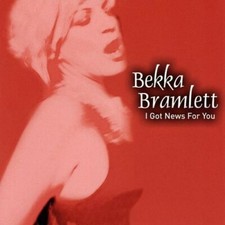
BEKKA BRAMLETT - I Got News For You - CD - **Excellent Condition** - RARE
$49.99
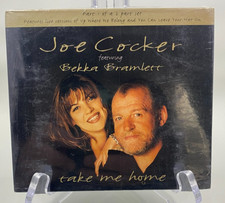
NEW - JOE COCKER - Take Me Home HTF UK CD Single feat. Bekka Bramlett
$7.49
Bekka Bramlett "I Got News For You" CD In Mint. Shongaloo Records LLC 1707. 2009
$45.00
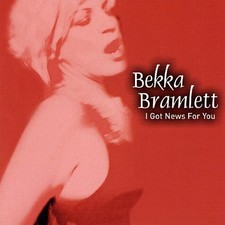
BEKKA BRAMLETT - I Got News For You - CD - **Excellent Condition** - RARE
$49.75
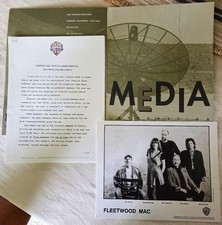
RARE Fleetwood Mac Dave Mason Bekka Bramlett Era 93 Original WB Press Kit w 8x10
$69.99


 Linear Mode

