
| |
|
#1
 12-23-2007, 06:55 PM
|
||||
|
||||
 The Wild Heart - new article
The Wild Heart
On the edge of 60, Stevie Nicks still feels rebellious and ready to rock and roll, writes Andrew Gumbel... Stevie Nicks is telling a story about the first time in her professional career that she felt completely out of control. Strangely, it is not a story about the complex web of fiery love affairs that, on several occasions, threatened to blow her and her Fleetwood Mac band members apart. Nor is it about the cocaine she snorted her way through in the Seventies and early Eighties, or the painkillers that blackened her moods, bloated her body and killed her creativity for years at a stretch. Somehow, like the other lucky rockers of her generation who have lived to tell the tale, she managed to survive all that. This is a story about something ultimately more central to both her work ethic and her enduring popularity as one of the most reliably thrilling live performers on the US music circuit ~ her determination to control her performance on stage down to the tiniest detail. It was 1975, and Nicks was about to go on her first tour with Fleetwood Mac, which she had just joined with her then-boyfriend and fellow singer-songwriter, Lindsey Buckingham. Six months earlier she had been poverty-stricken, living with Buckingham in Aspen, Colorado, and wondering if it wasn’t time to get out of the music business for good. (She captured the mood of that fraught moment in her much covered song Landslide, which appeared on her first album with Fleetwood Mac.) It never occurred to her to dream up a costume for that first tour. “In my head I was still totally poor. I just went to my closet and picked out my own stuff,” she said. “Then, when I got out on stage, it was a nightmare. Every night we were on tour, I realised my stuff was not going to cut it.” Musically, the tour was a success, but Nicks was miserable. And she vowed she would never again let an oversight like this creep into her work. So she invented a whole look for herself: the “English Dickensian waif in a shabby, raggedy black chiffony skirt and heavy boots”. “I thought, if I’m going to take this really seriously I’m going to plan this all out,” she said. “I had my hair a certain way, my make-up a certain way. I wanted it to be a complete package.” Her single-mindedness paid huge dividends. It wasn’t just that she was thinking up a stage costume. She was dreaming up an image for herself that she intended to last until she was old enough to draw a pension. “Right then I thought, since I plan to do this when I’m 60, I want to make sure that what I wear now I can still wear when I’m 60.” It was, in many ways, the birth of Stevie Nicks as the world has come to know her, the moment when the dreamy, mystical, other-worldly quality she brought to her songwriting became incarnated in her on-stage image. She had become, in her own words, “the airy-fairy person” of the group. Nicks is now 59 ~ just one year shy of that distant, twilight year she imagined all those decades ago ~ and she’s still very much in the business of managing every aspect of her public image. When I met her at her large, improbably traditional house up a canyon overlooking the Pacific Ocean in Los Angeles, she’d been up two nights running to scrutinise a new batch of publicity photographs. Now, though, she wasn’t happy, complaining that she couldn’t properly judge the texture and tone of the digital pictures. “I don’t know why this isn’t in focus,” she told her manager. “I can’t tell if I’m smiling or not smiling.” Nicks wasn’t catty or unreasonable about it, just very exacting. “When you get to be my age,” she says, “you get protective of your image. I can either be involved or there will be no picture at all.” It’s an attitude that has only hardened as Fleetwood Mac, and Nicks herself, have waned as recording artists and come to rely increasingly on their live shows to keep going. She’s been alternating solo tours and band tours for the past quarter-century, along with special double-act gigs with the likes of Don Henley of the Eagles ~ a musical partner and ex-boyfriend ~ and Chris Isaak. The key to everything is her voice, which is still as rich, textured and rough-edged as ever. When she tours alone, she also has a topnotch band ~ 10 players, usually, although she has been known to perform with a full symphony orchestra. “New artists can’t do what we do ~ they don’t get the support from their record companies,” she says, to explain it all. “We just stayed on the road. We’ve done it so long we could be half dead and still do a great show with one day of rehearsal.” In other words, they just don’t make super-groups like they used to. Fleetwood Mac are not quite unique in the fact that the key members are all still alive and still ~ give or take a defection or two ~ playing together. Nicks had as rough a time as anyone. She took enough drugs to be forced into rehab, complained of chronic fatigue syndrome, became addicted to the painkiller Klonopin, had a miserable time weaning herself off it after her weight ballooned to almost 11 stone, and suffered horrific after-effects from a breast enhancement, which she later reversed and always deeply regretted. Her love life was no less turbulent. The secret to their survival was simple: “None of us ever did heroin. Right there, that’s why we are alive. We were careful - we didn’t die. But we could have.” She attributes the group’s endurance to two things. One is the primacy of the work. When she got frustrated at the backlog of her unused songs in the late 1970s, she broke out with a solo record called Bella Donna which made her a star in her own right ~ at least in the US. From that moment on, Fleetwood Mac was more or less at her mercy ~ waiting for her to finish her own albums, or her own tours, before returning to the fold. “The rest of Fleetwood Mac got a vacation while I did my albums,” she said. “They were always waiting.” She almost ran herself into the ground in the process, but musically, at least, it worked. The other thing, for want of a better term, was the feminine touch. She and Christine McVie brought a gender balance uncommon in major rock bands at the time. They were also major players because they wrote songs as well as performed them. If they clubbed together, they could exercise a veto over the rest of the band, and they did, frequently. “We became the mums,” they said. “There were times when we literally said, ‘OK, we’re going to have to fix this situation’. We did it many times. What can I say? Women are the caretakers. We can see a mess coming before they (the men) can.” In the States, Nicks has never gone out of fashion, and never failed to sell out a tour. She is, in fact, by some distance the most successful solo artist ever to break out from a major band ~outselling Mick Jagger, Robert Plant, Don Henley and even Phil Collins, who comes closest to matching her. The Independent http://www.thestatesman.net/page.new...ss=1&id=182190 
|
| . |
|
#2
12-23-2007, 07:24 PM
|
||||
|
||||
|
Quote:
(BTW, any pics of her on skis?  ) )- Jake
__________________
“The hair went from perm to growing out perm to really bad growing out perm to almost straight to good straight to long straight to beautiful straight to a lot of work straight back to the perm.”
|
|
#3
12-23-2007, 07:53 PM
|
||||
|
||||
|
Rehash or reprint (although a shorter version), of the original article from October 6th in the Independent: http://arts.independent.co.uk/music/...cle3022698.ece
|
|
#4
12-23-2007, 07:57 PM
|
|||
|
|||
|
Quote:
Quote:

|
|
#5
12-23-2007, 08:09 PM
|
||||
|
||||
|
Quote:
Now how about one in a bikini on waterskis? - Jake
__________________
“The hair went from perm to growing out perm to really bad growing out perm to almost straight to good straight to long straight to beautiful straight to a lot of work straight back to the perm.”
|
|
#6
12-23-2007, 08:11 PM
|
||||
|
||||
|
Quote:

|
|
#9
12-24-2007, 12:42 AM
|
|||
|
|||
|
Quote:
According to the Zevon biography, it was Warren Zevon's inlaw's place where they stayed. They stayed there to save on paying for a hotel during the tour. Michele
|
|
#11
12-24-2007, 12:05 PM
|
||||
|
||||
|
Quote:

|
|
#12
12-24-2007, 12:50 PM
|
||||
|
||||
|
Quote:
|
|
#13
12-24-2007, 12:57 PM
|
||||
|
||||
|
Quote:
|
|
#14
12-25-2007, 09:43 AM
|
||||
|
||||
|
Quote:
Oh, and Happy Christmas everybody!
|
|
#15
12-25-2007, 10:38 AM
|
|||
|
|||
|
Quote:
But I doubt she told him that. She loves to maintain her self-proclaimed survivor status. I think he was just saying that she did so much drugs, the most logical next step was to go to rehab. It doesn't literally say she was forced by others, just forced by the situation.
|
 |
|
|

![Peter Green - In The Skies - Expanded Edition [New CD] Bonus Tracks, Expanded Ve picture](/vintage/img/g/W7IAAeSwD9tpHhmo/s-l225/Peter-Green-In-The-Skies-Expanded-Edition-New-CD-B.jpg)
Peter Green - In The Skies - Expanded Edition [New CD] Bonus Tracks, Expanded Ve
$17.10
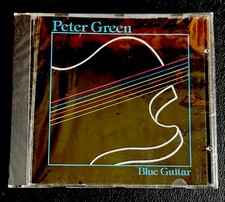
CD Peter Green Blue Guitar Castle Communications 1991 Rock Blues
$24.99
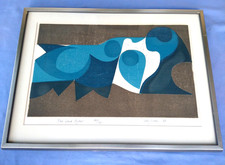
68' Peter Green Woodcut Blue Land Figure Signed #64/100
$1250.00
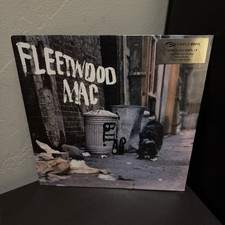
Fleetwood Mac - Peter Green’s Fleetwood Mac Simply Vinyl S125032 UK 2005 SEALED
$49.99
![Anne of Green Gables: The Ultimate Collection Soundtrack - 4 CDs [Audio CD] picture](/vintage/img/g/wlcAAeSwkxFqp2uI/s-l225/Anne-of-Green-Gables-The-Ultimate-Collection-Sound.jpg)
Anne of Green Gables: The Ultimate Collection Soundtrack - 4 CDs [Audio CD]
$45.96


 Linear Mode

