The Ledge

Go Back   The Ledge > Main Forums > Chit Chat
User Name
Password
Register FAQ Members List Calendar


Make the Ads Go Away! Click here.
Reply
 
Thread Tools Display Modes
  #61  
Old 08-14-2007, 08:24 PM
irishgrl's Avatar
irishgrl irishgrl is offline
Addicted Ledgie
 
Join Date: Dec 2003
Location: in the past
Posts: 7,189
Default

Quote:
Originally Posted by carrie721 View Post
that's my point though ... these kids need to be taught standard english using ESL techniques so they're working with the same tools as the kids living in more economically prosperous areas. for the kids, use of ebonics isn't a choice, it's their native tongue.


it certainly is wise to learn the language of the country you're living in, you'll get no argument from me there.
agreed, Carrie, in my work, we do just that. we have a very active/vital Hmong community that contributes quite a lot to the community at large but you can bet that we place all eligible candidates into the ESL classes to HELP them succeed. and they DO. They WANT to assimilate.

I certainly wouldnt go to Thailand and expect everyone to speak english to accomodate me.....
Reply With Quote
  #62  
Old 08-14-2007, 08:25 PM
irishgrl's Avatar
irishgrl irishgrl is offline
Addicted Ledgie
 
Join Date: Dec 2003
Location: in the past
Posts: 7,189
Default

Quote:
Originally Posted by strandinthewind View Post
Yes, the white guys in the music business want the rap stars, they make the money.
personally, I think that is going to change. call it a hunch, but I think that Rap is not as potent as it was in the 90's.
Reply With Quote
  #63  
Old 08-14-2007, 08:27 PM
strandinthewind's Avatar
strandinthewind strandinthewind is offline
Addicted Ledgie
 
Join Date: Feb 2003
Location: New York City
Posts: 25,791
Default

Quote:
Originally Posted by irishgrl View Post
personally, I think that is going to change. call it a hunch, but I think that Rap is not as potent as it was in the 90's.
Could be - but it is still a huge money maker

Can rap regain its crown?

By Steve Jones, USA TODAY
Not long ago, rap dominated album sales charts. Now, the music that has been a driving creative and commercial force in American culture is struggling to get its swagger back.
The music industry is suffering across-the-board drops in CD sales, but rap is in a steeper slide: This year, rap sales are down 33% from 2006, twice the decline for the industry overall, according to Nielsen SoundScan. Five years ago, Eminem's album The Eminem Show was atop the Billboard chart, on its way to becoming the runaway best-selling album that year, with 7.6 million copies. Since then, no rap album has sold as well.

Established rap stars no longer are sure things in sales. During the past nine months, Jay-Z, Ludacris, Snoop Dogg, Diddy and Nas released albums, but only those by Jay-Z and Ludacris have sold at least 1 million copies in the USA, and only Diddy is still on the charts.

Rap's decline can be traced to a range of factors, including marketing strategies that have de-emphasized album sales in favor of selling less-lucrative single songs and short versions of those singles as ring tones for cellphones. But more important to the industry, there are signs that many music-buying Americans — particularly the young, largely white audience that can make a difference between modest and blockbuster sales — are tiring of rappers' emphasis on "gangsta" attitudes, explicit lyrics and tales of street life and conspicuous consumption.

Within the rap industry, there's a growing debate about whether years of rampant commercialism — Snoop Dogg now endorses Pony sneakers; 50 Cent peddles grape-flavored vitamin water — have drained credibility and creativity out of a once-vibrant genre of music. And there's concern that rap, also known as hip-hop, has reached an evolutionary plateau: After more than a quarter-century on the charts, it's no longer the radical newcomer.

Rap pioneer KRS-One, who just released Hip Hop Lives with fellow legend Marley Marl, offers a blunt explanation.

"The music is garbage," he says. "What has happened over the past few years is that we have traded art for money, simple and plain, and the public is not stupid."

Chuck Creekmur, co-founder of hip-hop news website Allhiphop.com, says rap once was known for creative storytelling and clever rhymes, but now is being undermined by a lack of both.

"A lot of these albums now are looking to duplicate the success" of whatever is hot at the moment, he says. "There is a lack of variety."

An industry force no more

Whatever's causing consumers to tune out, it's clear that rap no longer dominates the music industry. In 2006, rap sold 59.1 million albums, down 21% from 2005 and 27% from 2004. Sales are trailing those for country albums (75 million) and heavy metal (61.6 million) — genres that rap formerly overshadowed.

In 2006, for the first time in five years, no rap albums were among the year's 10 biggest sellers, a list led by the soundtrack to Disney's High School Musical, which sold 3.7 million copies. Compare that with 2003, when 50 Cent's Get Rich or Die Tryin' ranked No. 1 with 6.5 million copies.

This year's top-selling albums thus far are by American Idol rocker Chris Daughtry's band and jazz chanteuse Norah Jones.

The rap industry is pinning hopes on 50 Cent's Curtis, due Sept. 4, and Kanye West's Graduation Day, expected in late August, as well as releases by Eminem and Dr. Dre that could arrive before the end of the year.

But those albums may not be enough to salvage the sales numbers for this year, and it's unclear whether 50 Cent or Eminem can match their past sales.

A genre is born

Hip-hop was born out of DJ-hosted block parties in the Bronx, N.Y., in the early 1970s and evolved with emcees "rapping" over the beats the DJs played.

The genre hit the Top 40 with the Sugar Hill Gang's Rapper's Delight in 1979.

Rap soon became, as Public Enemy's Chuck D described it, "the CNN of black culture," encompassing everything from party tales to political commentaries, especially from the view of poor and disaffected urban youths.

Rap found an audience not only in cities but in mostly white suburbs, as well.

By the 1990s, a harder-edged version of rap that glorified gang life began to dominate music and influence youth culture. Its songs and videos typically depict violence and drug dealers awash in diamonds and platinum jewelry, champagne and scantily clad women.

Rap became a multibillion-dollar-a-year global industry, influencing fashion, lifestyles and language while selling everything from SUVs to personal computers.

Rap's declining sales haven't escaped the attention of its kingpins. Declaring that hip-hop needed saving, Jay-Z ended a three-year retirement in November with his CD Kingdom Come, in which he essentially cast himself as Superman trying to save hip-hop.

A month later, Nas decried rap's lack of originality on his disc Hip HopIs Dead:

"Everybody sound the same, commercialize the game / Reminiscin' when it wasn't all business / They forgot where it started / So we all gather here for the dearly departed."

Rap may not be dead, but it's significantly weakened, in part by its own doing, music analysts say.

The industry's longtime strategy of pushing singles to sell albums has backfired in the digital age, says Felicia Palmer, president of 4Control Media and founder of the hip-hop news website SOHH.com.

Digital sales have outstripped CD sales, but not yet to a degree that compensates for the price difference between a 99-cent download and a $19.99 CD.

A just-released survey by the website found 82% of nearly 700 respondents are purchasing fewer albums than in previous years, and 67% acknowledge that they have illicitly downloaded albums rather than pay for them. One reason: 69% say they're "not inspired by many albums."

"People have gotten smart and know that (record companies) usually put out the two best singles, and the rest of the album is usually garbage," Palmer says.

Labels need to do more to help artists build their fan bases with promotional tours, which help consumers buy into the performer and not just a song, says Michael "Blue" Williams, who manages Outkast and other urban acts.

"People like hot music, but we are still not making artists who matter across the board," Williams says. "So while the labels are screaming that the sky is falling, they are trapped in their own vicious cycle of having to chase each single."

Promoting singles means getting favorable airplay, and that's more difficult now that hip-hop isn't the "only contemporary music that matters," as it was just a few years ago, says Sean Ross of Edison Media Research.

"Three years ago, you wouldn't have wanted to be a Top 40 station playing Bright Lights by (pop/rockers) Matchbox Twenty while your competitor was playing Get Low by (rapper) Lil Jon," Ross says.

"Now, Top 40 has Daughtry and Gwen Stefani, as well as a lot of quasi hip-hop from artists like Fergie and the Pussycat Dolls that, for some listeners, fill the same need as the real thing."

The real thing may no longer be real enough.

Glenn Peoples, founder and editor of music industry blog Coolfer.com, says: "A lot of people who used to listen to rap are now listening to rock. Rock is really strong right now."

'The public has made a choice'

Part of hip-hop's attraction has been the assumed authenticity of its lyrics and artists, but now, many younger listeners "believe that so much of what the mainstream (rap) industry does is orchestrated," says Bakari Kitwana, author of the books The Hip Hop Generation and Why White Kids Love Hip Hop. "I don't think they have a lot of confidence in the music the industry is producing."

For years, increasing sales of rap albums effectively muted protests about some songs' promotion of misogyny, racism and violence. Now, dwindling receipts and fading interest in rap have provided what some in the industry see as an opportunity to rethink content.

"The public has made a choice," KRS-One says. "They're saying, 'We do not want the nonsense that we see and hear on radio, and we are not putting our money there.' Rap music is being boycotted by the American public because of the images that we are putting forward."

The rising angst about rap lyrics was spotlighted this spring during the fallout over radio talk-show host Don Imus' smearing of the Rutgers University women's basketball team. Imus called team members "hos," then later noted in his defense that the word is commonly used in rap songs to describe women.

Soon after, hip-hop mogul Russell Simmons called a meeting of music industry executives. His Hip-Hop Summit Action Network later recommended that the rap industry voluntarily delete or bleep out offensive terms for broadcast.

Such efforts have drawn mixed reactions from rappers.

Master P, who built his multimillion-dollar No Limit Records empire on gangsta rap in the '90s, announced plans to start a new label, Take A Stand Records, with his son Romeo. He says he has been part of the problem and now wants to be part of the solution with clean, positive music.

That idea was derided by 50 Cent, who said he has no intention of cleaning up his lyrics.

"Music is a mirror, and hip-hop is a reflection of the environment we grew up in," he said at a news conference.

"If I ask you to paint a picture of the American flag and not use the color red, you're going to have a difficult time."

A new business model

Content questions aside, rap faces the same challenge that has alarmed much of the music industry: how to adapt to the digital revolution.

"What we have to do is figure out what the new music business is," says Kevin Liles, executive vice president of Warner Music Group, home to artists such as DJ Quik, Lil Scrappy and E-40.

"There was a time when an artist like a Jay-Z or DMX or 50 Cent would sell 4 million or 5 million CDs. But there's a new climate. Artists like Young Jeezy might sell 2 million albums, but 6 million ring tones."

Recent sales by rap star Mims reflect the problems facing the industry. His single This Is Why I'm Hot has done well this year, selling 634,000 downloads and 1.9 million ring tones, the 2007 leader in ring tones so far. But the album that contains This Is Why I'm Hot hasn't been so hot, selling only 231,000 copies. Music Is My Savior is No. 100 on Billboard's albums chart 11 weeks after its release.

Rap's early stars, from Grandmaster Flash to Public Enemy and LL Cool J, "touched on humor, politics, ghetto life and realities they faced," says music consultant Tom Vickers. "Rap has gradually degenerated from an art form into a ring tone. It's a hip catchphrase or a musical riff with a short shelf life. It has a novelty element that captures the listener's imagination, but it's not a song. It won't build a career. That's why we're seeing this backlash."

To rebound, he says, "rap has to look at the bigger issues confronting society. There's only so much bling the public can take."

The upside for rap, Kitwana says, is that so much of it "remains off the mainstream radar. You never know when hip-hop is going to reinvent itself, or when something operating out on the fringe is going to emerge and become the next new thing."

Contributing: Edna Gundersen

Find this article at:
http://www.usatoday.com/life/music/n...-decline_N.htm
__________________
Photobucket

save the cheerleader - save the world
Reply With Quote
  #64  
Old 08-14-2007, 08:27 PM
carrie721's Avatar
carrie721 carrie721 is offline
Addicted Ledgie
 
Join Date: Nov 2005
Location: the north coast of OH
Posts: 11,312
Default

Quote:
Originally Posted by irishgrl View Post
agreed, Carrie, in my work, we do just that. we have a very active/vital Hmong community that contributes quite a lot to the community at large but you can bet that we place all eligible candidates into the ESL classes to HELP them succeed. and they DO. They WANT to assimilate.

I certainly wouldnt go to Thailand and expect everyone to speak english to accomodate me.....
these kids want to assimilate too. they're just not given the tools. i think it's great that your community has ESL classes for those people.
Reply With Quote
  #65  
Old 08-14-2007, 08:42 PM
irishgrl's Avatar
irishgrl irishgrl is offline
Addicted Ledgie
 
Join Date: Dec 2003
Location: in the past
Posts: 7,189
Default

Quote:
Originally Posted by carrie721 View Post
these kids want to assimilate too. they're just not given the tools. i think it's great that your community has ESL classes for those people.
if they want to assimilate and arent given the opportunity, thats heinous.

I feel very LUCKY to live in CA. I know we get ridiculed all the time by the rest of the country, but really, this State looks out for the needs of the minorites, the old, the poor...........as much as feasibly possible.
Reply With Quote
  #66  
Old 08-14-2007, 08:44 PM
irishgrl's Avatar
irishgrl irishgrl is offline
Addicted Ledgie
 
Join Date: Dec 2003
Location: in the past
Posts: 7,189
Default

Quote:
Originally Posted by strandinthewind View Post
Could be - but it is still a huge money maker

Can rap regain its crown?

By Steve Jones, USA TODAY
Not long ago, rap dominated album sales charts. Now, the music that has been a driving creative and commercial force in American culture is struggling to get its swagger back.
The music industry is suffering across-the-board drops in CD sales, but rap is in a steeper slide: This year, rap sales are down 33% from 2006, twice the decline for the industry overall, according to Nielsen SoundScan. Five years ago, Eminem's album The Eminem Show was atop the Billboard chart, on its way to becoming the runaway best-selling album that year, with 7.6 million copies. Since then, no rap album has sold as well.

Established rap stars no longer are sure things in sales. During the past nine months, Jay-Z, Ludacris, Snoop Dogg, Diddy and Nas released albums, but only those by Jay-Z and Ludacris have sold at least 1 million copies in the USA, and only Diddy is still on the charts.

Rap's decline can be traced to a range of factors, including marketing strategies that have de-emphasized album sales in favor of selling less-lucrative single songs and short versions of those singles as ring tones for cellphones. But more important to the industry, there are signs that many music-buying Americans — particularly the young, largely white audience that can make a difference between modest and blockbuster sales — are tiring of rappers' emphasis on "gangsta" attitudes, explicit lyrics and tales of street life and conspicuous consumption.

Within the rap industry, there's a growing debate about whether years of rampant commercialism — Snoop Dogg now endorses Pony sneakers; 50 Cent peddles grape-flavored vitamin water — have drained credibility and creativity out of a once-vibrant genre of music. And there's concern that rap, also known as hip-hop, has reached an evolutionary plateau: After more than a quarter-century on the charts, it's no longer the radical newcomer.

Rap pioneer KRS-One, who just released Hip Hop Lives with fellow legend Marley Marl, offers a blunt explanation.

"The music is garbage," he says. "What has happened over the past few years is that we have traded art for money, simple and plain, and the public is not stupid."

Chuck Creekmur, co-founder of hip-hop news website Allhiphop.com, says rap once was known for creative storytelling and clever rhymes, but now is being undermined by a lack of both.

"A lot of these albums now are looking to duplicate the success" of whatever is hot at the moment, he says. "There is a lack of variety."

An industry force no more

Whatever's causing consumers to tune out, it's clear that rap no longer dominates the music industry. In 2006, rap sold 59.1 million albums, down 21% from 2005 and 27% from 2004. Sales are trailing those for country albums (75 million) and heavy metal (61.6 million) — genres that rap formerly overshadowed.

In 2006, for the first time in five years, no rap albums were among the year's 10 biggest sellers, a list led by the soundtrack to Disney's High School Musical, which sold 3.7 million copies. Compare that with 2003, when 50 Cent's Get Rich or Die Tryin' ranked No. 1 with 6.5 million copies.

This year's top-selling albums thus far are by American Idol rocker Chris Daughtry's band and jazz chanteuse Norah Jones.

The rap industry is pinning hopes on 50 Cent's Curtis, due Sept. 4, and Kanye West's Graduation Day, expected in late August, as well as releases by Eminem and Dr. Dre that could arrive before the end of the year.

But those albums may not be enough to salvage the sales numbers for this year, and it's unclear whether 50 Cent or Eminem can match their past sales.

A genre is born

Hip-hop was born out of DJ-hosted block parties in the Bronx, N.Y., in the early 1970s and evolved with emcees "rapping" over the beats the DJs played.

The genre hit the Top 40 with the Sugar Hill Gang's Rapper's Delight in 1979.

Rap soon became, as Public Enemy's Chuck D described it, "the CNN of black culture," encompassing everything from party tales to political commentaries, especially from the view of poor and disaffected urban youths.

Rap found an audience not only in cities but in mostly white suburbs, as well.

By the 1990s, a harder-edged version of rap that glorified gang life began to dominate music and influence youth culture. Its songs and videos typically depict violence and drug dealers awash in diamonds and platinum jewelry, champagne and scantily clad women.

Rap became a multibillion-dollar-a-year global industry, influencing fashion, lifestyles and language while selling everything from SUVs to personal computers.

Rap's declining sales haven't escaped the attention of its kingpins. Declaring that hip-hop needed saving, Jay-Z ended a three-year retirement in November with his CD Kingdom Come, in which he essentially cast himself as Superman trying to save hip-hop.

A month later, Nas decried rap's lack of originality on his disc Hip HopIs Dead:

"Everybody sound the same, commercialize the game / Reminiscin' when it wasn't all business / They forgot where it started / So we all gather here for the dearly departed."

Rap may not be dead, but it's significantly weakened, in part by its own doing, music analysts say.

The industry's longtime strategy of pushing singles to sell albums has backfired in the digital age, says Felicia Palmer, president of 4Control Media and founder of the hip-hop news website SOHH.com.

Digital sales have outstripped CD sales, but not yet to a degree that compensates for the price difference between a 99-cent download and a $19.99 CD.

A just-released survey by the website found 82% of nearly 700 respondents are purchasing fewer albums than in previous years, and 67% acknowledge that they have illicitly downloaded albums rather than pay for them. One reason: 69% say they're "not inspired by many albums."

"People have gotten smart and know that (record companies) usually put out the two best singles, and the rest of the album is usually garbage," Palmer says.

Labels need to do more to help artists build their fan bases with promotional tours, which help consumers buy into the performer and not just a song, says Michael "Blue" Williams, who manages Outkast and other urban acts.

"People like hot music, but we are still not making artists who matter across the board," Williams says. "So while the labels are screaming that the sky is falling, they are trapped in their own vicious cycle of having to chase each single."

Promoting singles means getting favorable airplay, and that's more difficult now that hip-hop isn't the "only contemporary music that matters," as it was just a few years ago, says Sean Ross of Edison Media Research.

"Three years ago, you wouldn't have wanted to be a Top 40 station playing Bright Lights by (pop/rockers) Matchbox Twenty while your competitor was playing Get Low by (rapper) Lil Jon," Ross says.

"Now, Top 40 has Daughtry and Gwen Stefani, as well as a lot of quasi hip-hop from artists like Fergie and the Pussycat Dolls that, for some listeners, fill the same need as the real thing."

The real thing may no longer be real enough.

Glenn Peoples, founder and editor of music industry blog Coolfer.com, says: "A lot of people who used to listen to rap are now listening to rock. Rock is really strong right now."

'The public has made a choice'

Part of hip-hop's attraction has been the assumed authenticity of its lyrics and artists, but now, many younger listeners "believe that so much of what the mainstream (rap) industry does is orchestrated," says Bakari Kitwana, author of the books The Hip Hop Generation and Why White Kids Love Hip Hop. "I don't think they have a lot of confidence in the music the industry is producing."

For years, increasing sales of rap albums effectively muted protests about some songs' promotion of misogyny, racism and violence. Now, dwindling receipts and fading interest in rap have provided what some in the industry see as an opportunity to rethink content.

"The public has made a choice," KRS-One says. "They're saying, 'We do not want the nonsense that we see and hear on radio, and we are not putting our money there.' Rap music is being boycotted by the American public because of the images that we are putting forward."

The rising angst about rap lyrics was spotlighted this spring during the fallout over radio talk-show host Don Imus' smearing of the Rutgers University women's basketball team. Imus called team members "hos," then later noted in his defense that the word is commonly used in rap songs to describe women.

Soon after, hip-hop mogul Russell Simmons called a meeting of music industry executives. His Hip-Hop Summit Action Network later recommended that the rap industry voluntarily delete or bleep out offensive terms for broadcast.

Such efforts have drawn mixed reactions from rappers.

Master P, who built his multimillion-dollar No Limit Records empire on gangsta rap in the '90s, announced plans to start a new label, Take A Stand Records, with his son Romeo. He says he has been part of the problem and now wants to be part of the solution with clean, positive music.

That idea was derided by 50 Cent, who said he has no intention of cleaning up his lyrics.

"Music is a mirror, and hip-hop is a reflection of the environment we grew up in," he said at a news conference.

"If I ask you to paint a picture of the American flag and not use the color red, you're going to have a difficult time."

A new business model

Content questions aside, rap faces the same challenge that has alarmed much of the music industry: how to adapt to the digital revolution.

"What we have to do is figure out what the new music business is," says Kevin Liles, executive vice president of Warner Music Group, home to artists such as DJ Quik, Lil Scrappy and E-40.

"There was a time when an artist like a Jay-Z or DMX or 50 Cent would sell 4 million or 5 million CDs. But there's a new climate. Artists like Young Jeezy might sell 2 million albums, but 6 million ring tones."

Recent sales by rap star Mims reflect the problems facing the industry. His single This Is Why I'm Hot has done well this year, selling 634,000 downloads and 1.9 million ring tones, the 2007 leader in ring tones so far. But the album that contains This Is Why I'm Hot hasn't been so hot, selling only 231,000 copies. Music Is My Savior is No. 100 on Billboard's albums chart 11 weeks after its release.

Rap's early stars, from Grandmaster Flash to Public Enemy and LL Cool J, "touched on humor, politics, ghetto life and realities they faced," says music consultant Tom Vickers. "Rap has gradually degenerated from an art form into a ring tone. It's a hip catchphrase or a musical riff with a short shelf life. It has a novelty element that captures the listener's imagination, but it's not a song. It won't build a career. That's why we're seeing this backlash."

To rebound, he says, "rap has to look at the bigger issues confronting society. There's only so much bling the public can take."

The upside for rap, Kitwana says, is that so much of it "remains off the mainstream radar. You never know when hip-hop is going to reinvent itself, or when something operating out on the fringe is going to emerge and become the next new thing."

Contributing: Edna Gundersen

Find this article at:
http://www.usatoday.com/life/music/n...-decline_N.htm
thks for proving my point. I think it will be a long slow slide, but I think Rap as a force is on the way out.

I dont know what will take its place but whatever it is, I, along with Babyface, hope that it involves musicians actually PLAYING MUSIC and not relying on synth to manufacture it.
Reply With Quote
  #67  
Old 08-14-2007, 08:48 PM
GypsySorcerer's Avatar
GypsySorcerer GypsySorcerer is offline
Addicted Ledgie
 
Join Date: Jan 2004
Location: KY
Posts: 6,605
Default

Quote:
Originally Posted by irishgrl View Post
if they want to assimilate and arent given the opportunity, thats heinous.

I feel very LUCKY to live in CA. I know we get ridiculed all the time by the rest of the country, but really, this State looks out for the needs of the minorites, the old, the poor...........as much as feasibly possible.
I thought you were just complaining about the billions of tax dollars spent on accommodating non-English speakers.
Reply With Quote
  #68  
Old 08-14-2007, 08:51 PM
irishgrl's Avatar
irishgrl irishgrl is offline
Addicted Ledgie
 
Join Date: Dec 2003
Location: in the past
Posts: 7,189
Default

Quote:
Originally Posted by GypsySorcerer View Post
I thought you were just complaining about the billions of tax dollars spent on accommodating non-English speakers.
with respect to the endless forms in every possible foreign language, yes. I think that is non-productive, but for classes to teach all these folks ENGLISH, I see no problem, nor do I object. Ultimately, our nation (or State in this case) is revitalized by the influx of new blood that brings idealistic HOPE. These folks come here because they believe in the DREAM. if they are contributing to the good of the community, we are all enriched! if they are a drag, or hindrance and need special accomodation, then the minuses outweigh the pluses in my opinion.

Last edited by irishgrl; 08-14-2007 at 08:54 PM..
Reply With Quote
  #69  
Old 08-15-2007, 12:39 AM
Sarah's Avatar
Sarah Sarah is offline
Addicted Ledgie
 
Join Date: Feb 2001
Location: Hell's Half Acre
Posts: 2,826
Default

Quote:
Originally Posted by irishgrl View Post
personally, I dont appreciate the Gangsta attitude toward women. sorry
that's exactly what i was talking about several posts ago... not appreciating something because you automatically assume it's thug, based on the language barrier.
__________________
Yup. I'm in hell.
Reply With Quote
  #70  
Old 08-15-2007, 06:23 AM
irishgrl's Avatar
irishgrl irishgrl is offline
Addicted Ledgie
 
Join Date: Dec 2003
Location: in the past
Posts: 7,189
Default

Quote:
Originally Posted by Sarah View Post
that's exactly what i was talking about several posts ago... not appreciating something because you automatically assume it's thug, based on the language barrier.
You're kidding right?

I dont have to assume anything, Gangsta Rap IS thug, and is very up front about the fact that women are treated as sex objects ONLY. "Bitch" and "Ho" are not victims of any "language barrier." We all know what "Playah" indicates. Songs that glorify guns and violence and devalue women by treating them as meat or not worthy of fidelity are not my cup of tea.

Last edited by irishgrl; 08-15-2007 at 06:26 AM..
Reply With Quote
  #71  
Old 08-15-2007, 06:45 AM
shackin'up's Avatar
shackin'up shackin'up is offline
Addicted Ledgie
 
Join Date: Jan 2003
Location: bemmel/lowlands
Posts: 6,912
Default

a bunch of bull is this list.

where's velvet underground?

lou reed?

and Tusk? That's the definite album when it comes to the transition from mainstream to indie.

FM's white album? gorgeous but ten times less important than Tusk.
__________________
..........................................................................................


Reply With Quote
  #72  
Old 08-15-2007, 12:59 PM
shackin'up's Avatar
shackin'up shackin'up is offline
Addicted Ledgie
 
Join Date: Jan 2003
Location: bemmel/lowlands
Posts: 6,912
Default

OK, it's about sales.

Interesting.

__________________
..........................................................................................


Reply With Quote
  #73  
Old 08-15-2007, 01:12 PM
Sarah's Avatar
Sarah Sarah is offline
Addicted Ledgie
 
Join Date: Feb 2001
Location: Hell's Half Acre
Posts: 2,826
Default

Quote:
Originally Posted by irishgrl View Post
You're kidding right?

I dont have to assume anything, Gangsta Rap IS thug, and is very up front about the fact that women are treated as sex objects ONLY. "Bitch" and "Ho" are not victims of any "language barrier." We all know what "Playah" indicates. Songs that glorify guns and violence and devalue women by treating them as meat or not worthy of fidelity are not my cup of tea.
"Playah"?? Never heard of it. Thanks for the definition.

Not all gangsta rap is created equally. And believe it or not, there are plenty of golddigging hos out there that dangle themselves like meat to get knocked up and feed off someone who's doing well. As ugly as it is, that's a fact. While there is a lot of trash rap.. mainly radio/mtv rap/hip hop.. that does toss around "bitch" and "ho" without discretion, there are plenty of dudes out there just telling a true story of how they got taken for a ride after they were offered a ride, if you know what I'm saying. Likewise, there are plenty of dudes who rarely even talk about chicks, and just what it's like to worry about getting shot up every time you walk out your door. Or how you started slinging rock at 15 because you were on your own without any opportunity at all.


And no, I'm not kidding one bit. Also, I have to respectfully say that I don't appreciate the condescending nature of that question. I simply put a fact out there for consumption, because I've listened to a lot of rap and KNOW that it isn't all like that.
__________________
Yup. I'm in hell.

Last edited by Sarah; 08-15-2007 at 01:13 PM.. Reason: i've decided to be nice.
Reply With Quote
  #74  
Old 08-15-2007, 01:19 PM
skcin's Avatar
skcin skcin is offline
Addicted Ledgie
 
Join Date: May 2003
Location: Behind your back, talking
Posts: 13,298
Default

Quote:
Originally Posted by danax6 View Post
Same with movies. Since you brought up Dirty Dancing... I'd say that was definitely one of the defining movies of the 80s, but technically the movie isn't all that great. The acting, for instance, is far from top notch.


How dare you, miss. How DARE you!
Reply With Quote
  #75  
Old 08-15-2007, 01:23 PM
danax6 danax6 is offline
Addicted Ledgie
 
Join Date: Aug 2005
Location: Stevie's nether land.
Posts: 4,839
Default

Quote:
Originally Posted by skcin View Post


How dare you, miss. How DARE you!
It's Jennifer Grey's nose, it's too distracting.

And still this is one of my favorite movies, or eh, guilty pleasures, so what does that say about me, right? I am a shallow, shallow person. Oh, and cheap.
Reply With Quote
Reply


Posting Rules
You may not post new threads
You may not post replies
You may not post attachments
You may not edit your posts

BB code is On
Smilies are On
[IMG] code is On
HTML code is On

Forum Jump


BEKKA BRAMLETT - I Got News For You - CD - **Excellent Condition** - RARE picture

BEKKA BRAMLETT - I Got News For You - CD - **Excellent Condition** - RARE

$49.99


NEW - JOE COCKER - Take Me Home HTF UK CD Single feat. Bekka Bramlett picture

NEW - JOE COCKER - Take Me Home HTF UK CD Single feat. Bekka Bramlett

$7.49


Bekka Bramlett

Bekka Bramlett "I Got News For You" CD In Mint. Shongaloo Records LLC 1707. 2009

$45.00


BEKKA BRAMLETT - I Got News For You - CD - **Excellent Condition** - RARE picture

BEKKA BRAMLETT - I Got News For You - CD - **Excellent Condition** - RARE

$49.75
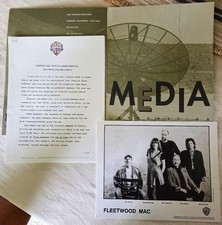


RARE Fleetwood Mac Dave Mason Bekka Bramlett Era 93 Original WB Press Kit w 8x10 picture

RARE Fleetwood Mac Dave Mason Bekka Bramlett Era 93 Original WB Press Kit w 8x10

$69.99


All times are GMT -5. The time now is 07:12 AM.


Powered by vBulletin® Version 3.8.11
Copyright ©2000 - 2026, vBulletin Solutions Inc.
© 1995-2003 Martin and Lisa Adelson, All Rights Reserved