
| |
|
|||||||
 |
|
|
Thread Tools | Display Modes |
|
#76
 09-26-2006, 05:11 PM
|
||||
|
||||

I think a phased withdrawal, which I just heard the D's are getting behind, is the only humane thing to do.
Clinton killed many people there. Killing people is killing people and he did it to the gleeful cheers from the D's in the hosue and senate. Yes, W killed more. So what. Killing on BS is killing. That you make a distinction is ridiculous. But, you support Clinton no matter what. All that stuff in the 60's and 70's was mostly insignificant in the big scheme of things. Products liability, which essentially began with the dawn of the automobile did far more when the concept of privy was lessened http://www.law.unb.ca/cpwala/privity.htm Also, ATT was considered a monopoly and that is why the R administration broke it into the seven dwarves  Personally, I think that were it not for the advancement of cell phones and the lessened demand for long distance carriers, there would not have been the subsequent remerging of the ATT companies in one form or another. Personally, I think that were it not for the advancement of cell phones and the lessened demand for long distance carriers, there would not have been the subsequent remerging of the ATT companies in one form or another.
__________________
 save the cheerleader - save the world Last edited by strandinthewind; 09-26-2006 at 05:16 PM.. 
|
|
#77
09-26-2006, 05:56 PM
|
||||
|
||||
|
Quote:
as for the breaking up of monopolies, THAT is what I was referring to as an anti-monopoly mindset. However, late in Reagan's terms, deregulation reared its ugly head and allowed former segments of the whole to again regroup and again form the same ubergiant company. to wit, ATT is again ATT. the little guys dont have a chance. again. We should never have deregulated IMO, if we are left with what we tried to eliminate in the first place.
|
|
#78
09-26-2006, 06:03 PM
|
||||
|
||||
|
Warranty and all the related law essentially came from the lessening of privy - which was started by products liability law, effectively a sort of form of breach of contract.
As for the deregulation laws, some were good, some bad. Look at banking - without the degregulation, the housing room would have been severely lessened. Then again the S&L fraud may have been lessened had the regulation stayed in place. Interestingly, no Pres. since RR has done much to go after trusts - Reno tried against MS - but it was a half a$$ effort IMO. Interestingly, the tobacco companies are the only ones hit really hard over the last 20 years.
__________________
save the cheerleader - save the world
|
|
#79
09-26-2006, 06:16 PM
|
||||
|
||||
|
Quote:
according to the author of a book I just got (at home, dont remember his name) the whole rise of the financial/banking behemoth is a good part responsible for the mess this country is now in (he names a culture of debt, the marriage of religion and politics, and a dependance on oil and the resultant geopolitical maneuvering as the three biggest problems facing America today...) I think its shameful the way the credit card companies have managed to institute such punitive measures against consumers, while at the same time dangling credit offers in front of desperate people like so many carrots.... but I guess thats a discussion for another day.....
|
|
#80
09-26-2006, 06:35 PM
|
||||
|
||||
|
Quote:

|
|
#81
09-26-2006, 09:21 PM
|
||||
|
||||
|
Quote:
Not really - as the advent of products liability was like 70 years earlier. One of the reasons behind products liability was to force manufacturers to spend that extra 50 cents on stronger headlamps, etc. But, yes, the 70's were a boon as well. I also think the UCC helped greatly as well.
__________________
save the cheerleader - save the world
|
|
#82
09-26-2006, 09:22 PM
|
||||
|
||||
|
Quote:
on edit - yes, they were not in agreement as of 2/06 http://www.boston.com/news/nation/wa...o_pull_troops/ Democrats may unite on plan to pull troops See Iraq withdrawal, deployment in region By Rick Klein, Globe Staff | February 20, 2006 WASHINGTON -- After months of trying unsuccessfully to develop a common message on the war in Iraq, Democratic Party leaders are beginning to coalesce around a broad plan to begin a quick withdrawal of US troops and install them elsewhere in the region, where they could respond to emergencies in Iraq and help fight terrorism in other countries. The concept, dubbed ''strategic redeployment," is outlined in a slim, nine-page report coauthored by a former Reagan administration assistant Defense secretary, Lawrence J. Korb, in the fall. It sets a goal of a phased troop withdrawal that would take nearly all US troops out of Iraq by the end of 2007, although many Democrats disagree on whether troop draw-downs should be tied to a timeline. Howard Dean, Democratic National Committee chairman, has endorsed Korb's paper and begun mentioning it in meetings with local Democratic groups. In addition, the study's concepts have been touted by the senator assigned to bring Democrats together on Iraq -- Jack Reed of Rhode Island -- and the report has been circulated among all senators by Senator Dianne Feinstein, an influential moderate Democrat from California. The party remains divided on some points, including how much detail to include in a party-produced document, fearful of giving too much fodder for attacks by Republicans. But in its broad outlines, many leading Democrats say the Korb plan represents an answer to Republicans' oft-repeated charge that Democrats aren't offering a way forward on Iraq -- and to do so in a way that is neither defeatist nor blindly loyal to the president. ''We're not going to cut and run -- that's just Republican propaganda," Dean said in a speech Feb. 10 in Boston. ''But we are going to redeploy our troops so they don't have targets on their backs, and they're not breaking down doors and putting themselves in the line of fire all the time. . . . It's a sensible plan. It's a thoughtful plan. I think Democrats can coalesce around it." Reed, an Army veteran and former paratrooper who has been charged with developing a party strategy on the war, said the plan is attractive to many Democrats because it rejects what he calls the ''false dichotomy" suggested by President Bush: that the only options in Iraq are ''stay the course" or ''cut and run." ''It's important to note that it's not withdrawal -- it's redeployment," Reed said. ''We need to pursue a strategy that is going to accomplish the reasonable objectives, and allow us to have strategic flexibility. Not only is it a message, but it's a method to improve the security there and around the globe." The idea of a phased deployment of troops out of Iraq recognizes that a huge US military presence in the country is straining the armed services as well as feeding the insurgency, Reed said. He added that many military commanders agree that the nation should be moving toward taking American troops out of Iraq, to better equip the military to respond to threats around the world and give the Iraqi government a greater incentive to handle its own security. Under Korb's outline, all reservists and National Guard members would come home this year. Most of the other troops would be redeployed to other key areas -- Afghanistan, Southeast Asia, and the Horn of Africa -- with large, quick-strike forces placed in Kuwait, where they could respond to crises in neighboring Iraq. Korb said in an interview that setting dates for troop withdrawal would send a message to the Iraqi people that the United States does not intend to set up permanent military bases in Iraq. Starting the redeployment quickly will ensure that the Army does not wear out before the insurgents do, he said. ''The Iraqis want us to go," said Korb, who has opposed Bush's decision to invade Iraq from the start. ''If you're out by the end of 2007, we'll have been there almost five years. That's not cutting and running." But some strategists say the goal of a near-total withdrawal within two years is overly optimistic. US troops that are a plane ride away won't be an effective deterrent, and Iraqi security forces appear unlikely to be able to handle the violence on their own in the near future, said Michael O'Hanlon, a centrist defense specialist who is a lecturer at Princeton University. ''You're demanding that the political system produces a miracle," O'Hanlon said. ''Any plan that envisions complete American withdrawal in such a period of time is still a prescription for strategic defeat." The war has been a source of long-running tension among Democrats. Twenty-nine Democratic senators and 81 House Democrats voted to authorize the president to invade Iraq, and while most are now critical of Bush's handling of the war, some -- notably Senator Joseph I. Lieberman, Democrat of Connecticut -- remain staunch supporters. Although ''strategic redeployment" could draw a large portion of Democrats into the same fold, Reed and other Democrats disagree with setting a timeline for troop withdrawal, saying that such decisions should be dictated by commanders on the ground. Still, Reed noted that the Bush administration has begun modest troop withdrawals. The Senate in November overwhelmingly approved a resolution calling for 2006 to be ''a period of significant transition to full Iraqi sovereignty," and on Friday, the White House issued a statement reiterating its position: ''In 2006, it is anticipated that the Iraqi military will take more of the lead for security throughout Iraq." But the president has strongly rejected issuing any time frames, arguing that they would be exploited by insurgents who would strike as soon as troops leave Iraq. Democrats who have suggested time frames for withdrawal have faced harsh attacks from Republicans, who paint them as offering a strategy of defeat. In November, Representative John P. Murtha, a Pennsylvania Democrat, shook much of Washington with his call for an immediate withdrawal of troops, and his estimate that all troops could be out of Iraq within six months. The generally hawkish Vietnam veteran also called for quick strike forces to remain close to Iraq -- similar to the Korb plan -- but that was largely overlooked in the barrage from Republicans. White House spokesman Scott McClellan said the Murtha plan amounted to ''surrender to the terrorists." Representative Jean Schmidt, Republican of Ohio, delivered a blistering speech on the House floor aimed at Murtha, who spent 37 years in the Marine Corps: ''Cowards cut and run, Marines never do," Schmidt said, in remarks she later withdrew from the Congressional Record. The attacks on Murtha demonstrated the political peril that could face Democrats who offer plans involving troop withdrawals. Although Murtha has 99 House cosponsors for his plan, some Democrats remain skittish about offering a plan that they know would be attacked harshly -- and, they say, almost certainly misconstrued -- by political opponents. Still, Dean, Reed, and others in the party are trying to develop a united Democratic vision for Iraq, based in part on the calculation that the war will be a big factor in many 2006 congressional campaigns. Representative Martin T. Meehan, a Lowell Democrat who voted in favor of the war and now supports the Murtha plan, said that while the war remains Bush's responsibility, Democrats should be able to tell voters what they would do differently. ''There are a lot of different views, but I personally believe that putting forward specifics about how to move forward in Iraq is important to do," said Meehan, a member of the House Armed Services Committee. ''I would like to see Democrats coalesce around a strategy like Korb's strategy." This fall, in elections that Democrats hope will bring them back to power in Congress, more than 50 military veterans are running in congressional races as Democrats. Those candidates are asked about Iraq all the time, and the idea of strategic redeployment is appealing to many of them, said Eric Massa, who is challenging an incumbent Republican in upstate New York and is helping to organize strategy for the veterans who are running. ''You can't stand in front of people and say, 'We want your vote,' and not tell people what it is they're voting for," said Massa, a former Navy officer. ''We all know that staying the course is not a strategy that's going to work." Rick Klein can be reached at [email protected].
__________________
save the cheerleader - save the world Last edited by strandinthewind; 09-26-2006 at 09:31 PM..
|
|
#83
09-26-2006, 10:56 PM
|
||||
|
||||
|
Quote:
to wit: Quote:
|
|
#84
09-26-2006, 11:16 PM
|
||||
|
||||
|
Quote:
http://www.washingtonpost.com/wp-dyn...111700794.html Hawkish Democrat Joins Call For Pullout GOP Assails Murtha's Demand to Leave Iraq By Charles Babington Washington Post Staff Writer Friday, November 18, 2005; Page A01 The top House Democrat on military spending matters stunned colleagues yesterday by calling for the immediate withdrawal of U.S. troops from Iraq, while many congressional Democrats reacted defiantly to President Bush's latest attack on his critics. Rep. John P. Murtha (D-Pa.), a decorated Vietnam War veteran, said many of those troops are demoralized and poorly equipped and, after more than two years of war, are impeding Iraq's progress toward stability and self-governance. "Our troops have become the primary target of the insurgency," Murtha said in a Capitol news conference that left him in tears. Islamic insurgents "are united against U.S. forces, and we have become a catalyst for violence," he said. ". . . It's time to bring them home." Murtha's action, coupled with stinging rhetoric from the White House, was the catalyst for a remarkable outpouring of rage on Capitol Hill about Iraqi war policy, an issue that for months was relatively dormant but now is dominating congressional debate. In sometimes vitriolic terms, Republican leaders accused Democrats of siding with terrorists, and Democrats countered that Bush deceived the nation in starting a war that he has no strategy for ending. The bitter exchanges came as polls show Americans are increasingly eager to have Iraqis assume control so U.S. troops can come home. Speaker J. Dennis Hastert (R-Ill.) declared: "Murtha and Democratic leaders have adopted a policy of cut and run. They would prefer that the United States surrender to the terrorists who would harm innocent Americans. To add insult to injury, this is done while the president is on foreign soil." A few dozen other House Democrats have called for withdrawing from Iraq as soon as possible. But most are liberals who voted against going to war, and they have drawn modest attention. Murtha is a hawkish ex-Marine who voted for the war and has close ties to the military. House Minority Leader Nancy Pelosi (D-Calif.) told colleagues at a closed meeting yesterday morning that she, too, would advocate an immediate troop withdrawal, according to several who attended. But by day's end, Pelosi -- a liberal who has sharply criticized Bush's handling of the war -- chose merely to praise Murtha and say he deserved to have "his day." The Senate voted on Tuesday to press the administration for concrete steps toward troop withdrawals, designating 2006 as "a period of significant transition to full Iraqi sovereignty." But the Senate rejected a Democratic proposal to require the administration to project dates for a phased withdrawal of troops if conditions permitted. Bush, traveling in South Korea, told reporters he agrees with Vice President Cheney's view that politicians who criticize the administration's handling of prewar intelligence are engaging in "dishonest and reprehensible" behavior. South Korea's Defense Ministry said today that it plans to bring home about one-third of its 3,200 troops from Iraq next year. "I expect there to be criticism," Bush said. "But when Democrats say that I deliberately misled the Congress and the people, that's irresponsible. They looked at the same intelligence I did, and they voted -- many of them voted -- to support the decision I made. . . . So I agree with the vice president." Murtha, asked about the comments, replied sarcastically: "I like guys who got five deferments and [have] never been there and send people to war, and then don't like to hear suggestions about what needs to be done." Cheney did not serve in the military, and Bush was an Air National Guardsman who did not leave the United States during the Vietnam War. Murtha's Democratic colleagues reacted warily to his remarks, while Republicans pounced. Rep. Rahm Emanuel (Ill.), head of the House Democrats' campaign effort, said, "Jack Murtha went out and spoke for Jack Murtha." As for Iraq policy, Emanuel added: "At the right time, we will have a position." The hot rhetoric reflects a fracturing of public and congressional attitudes toward the war, which may lead to more emphatic calls for an exit strategy after lawmakers mingle with constituents during a two-week recess slated to start Monday. Several Democrats disputed Bush's remarks, saying that Congress was not shown all the prewar intelligence the White House had collected regarding Iraq's potential weapons of mass destruction, and that administration officials gave greater weight to hints that Saddam Hussein had such weapons than to signals that he did not. Bush and Cheney "have begun a new campaign of distortion and manipulation," Sen. Edward M. Kennedy (D-Mass.) told reporters. "Because of the polls showing that Americans have lost trust in the president and believe he manipulated intelligence before the war, the president and vice president have abandoned any pretense of leading this country and have gone back on the campaign trail." The two men could not find weapons of mass destruction, Kennedy said, and "they can't find the truth, either." Such comments are a disservice to U.S. troops, said some GOP lawmakers, including Sen. Ted Stevens of Alaska. "Now the attempt is to undermine the people standing abroad by repeatedly calling [Bush] a liar," Stevens said. At a House Republican news conference responding to Murtha, Rep. Geoff Davis (Ky.) accused Democrats of making politically motivated "shameful statements." Democrats remain far from united on the war, despite continuing efforts by House and Senate leaders to find common ground. In October 2002, 81 Democrats in the House and 29 Democrats in the Senate voted in favor of going to war. The party's liberal base is clamoring for the United States to leave Iraq as soon as possible. But many Democratic foreign policy experts contend that deadlines and timetables might have disastrous consequences for the region. "There's a tendency to want to say 'Cut your losses,' " said retired Gen. Wesley K. Clark, a 2004 presidential candidate who has consulted extensively with House Democrats on Iraq. "Until we reach the point where engagement there cannot advance us, you have to still work the problem." A Republican leader -- House Armed Services Committee Chairman Duncan Hunter (Calif.) -- said that if the United States does not prevail in Iraq, it will invite attacks akin to those of Sept. 11, 2001. "Four years have expired without a second attack on our homeland because we've aggressively projected America's fighting forces in the theaters in Afghanistan and Iraq," he said. A top Democrat -- Senate Minority Leader Harry M. Reid (Nev.) -- said in a floor speech that Bush and Cheney have "shamelessly decided to play politics" over Iraq. "We need a commander in chief, not a campaigner in chief," Reid said. "We need leadership from the White House, not more whitewashing of the very serious issues confronting us in Iraq." Last edited by gldstwmn; 09-26-2006 at 11:19 PM..
|
|
#85
09-27-2006, 05:42 AM
|
||||
|
||||
|
^^^^^
I know that - but my original, general point was how the D's are going to defeat the R's in the next month and in the next two years. To do that, they must as a party a la the R's present a plan to withdraw from Iraq and they all must a la the R's all solidly behind it. I think we are talking about two different things. Mary - here is an article on the genesis of products liability. Clearly, it was developed to benefit the consumer as it allowed the consumer a legal avenue of relief not previously available because there was no contract between the injured party and the supplier of the defective product. This occured at least 50 or 60 years before the 70's - though it did expand in the 70's as you said http://www.pointoflaw.com/products/overview.php and another http://www.marlerclark.com/WPMarlerC...ty%20law%20%22
__________________
save the cheerleader - save the world
|
|
#86
09-27-2006, 06:27 AM
|
||||
|
||||
|
Quote:
in any event, I believe that big business has successfully managed to neutralize consumer protection thanks to a congress williing to pass business friendly laws...for example, class actions are now quite restricted ...
|
|
#87
09-27-2006, 12:51 PM
|
|||
|
|||
|
Uh oh...
 Bush Blamed More Than Clinton for Failure to Capture Bin Laden Views are predictably partisan; independents mostly blame Bush September 27, 2006 by Lydia Saad GALLUP NEWS SERVICE (Excerpt  PRINCETON, NJ -- The recent firestorm over former President Bill Clinton's culpability for the Sept. 11 terrorist attacks was fueled on Tuesday when Secretary of State Condoleezza Rice contrasted President Bush's efforts to pursue al-Qaeda leader Osama bin Laden with Clinton's efforts. Clinton has strongly denied various suggestions that his administration missed key opportunities to kill bin Laden and left the Bush administration without a comprehensive anti-terrorism strategy. However, Bush -- whom Clinton says did nothing about al-Qaeda for the first eight months of his presidency -- has the bigger image problem with Americans on the issue. According to a recent Gallup Panel survey, the American public puts the primary blame on Bush rather than Clinton for the fact that bin Laden has not been captured. A majority of Americans say Bush is more to blame (53%), compared with 36% blaming Clinton. Click for more stats and bar charts (everyone loves a good bar chart, right???): http://www.galluppoll.com/content/?ci=24733
|
|
#88
09-27-2006, 01:39 PM
|
||||
|
||||
|
btw and in case anyone cares, on Democracy Now, this morning Amy Goodman said that a current poll of Iraqis shows that the MAJORITY want the US out NOW.
Quote:
heres a link: http://www.worldpublicopinion.org/pi...t=250&lb=hmpg1 here's a graph:  pertinent excerpts: Quote:
 notice that the Sunnis who comprise the majority, believe themselves to be underrepresented since Saddam's capture, and most strongly resent US involvement. Last edited by irishgrl; 09-27-2006 at 02:11 PM..
|
|
#89
09-27-2006, 02:09 PM
|
||||
|
||||
|
Quote:
 Or, we try in the next, say year to do what we can and hopefully save those lives. I cannot believe you are that cruel Or, we try in the next, say year to do what we can and hopefully save those lives. I cannot believe you are that cruel
__________________
save the cheerleader - save the world
|
|
#90
09-27-2006, 02:26 PM
|
||||
|
||||
|
Quote:
|
|
|
|


BILLY BURNETTE 45 RPM Promo Record "SHOO-BE-DOO" 1978 Rock Unplayed MINT
$6.70

Billy Burnette - Self-Titled LP - 1980 1st Pressing 12" Columbia LP + Lyrics VG+
$4.50
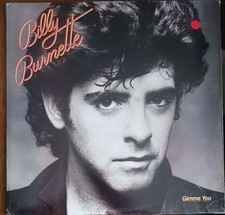
BILLY BURNETTE - GIMME YOU - 1981 COLUMBIA RECORDS VINYL ALBUM - (VG/VG+)
$5.00
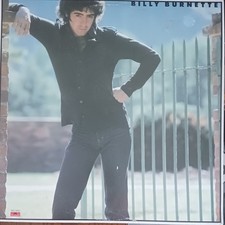
BILLY BURNETTE - (SELF- TITLED) - 1979 POLYDOR RECORDS PROMO VINYL LP - (VG/VG)
$5.50

Billy Burnette Lp Self Titled On Columbia - Vg+ To Vg++ / Vg++
$11.99


 Linear Mode

