
| |
|
|||||||
 |
|
|
Thread Tools | Display Modes |
|
#16
 09-11-2006, 11:07 AM
|
||||
|
||||

Quote:
that. scares the **** out of me. 
|
|
#18
09-11-2006, 11:23 AM
|
||||
|
||||
|
Quote:
 NOW they are printing the stories with facts that were available 5 years ago; such as the lack of a real connection between Saddam and 9/11 and, for that matter, a lack of any connection between him and aiding any terrorists. It is truly sickening. NOW they are printing the stories with facts that were available 5 years ago; such as the lack of a real connection between Saddam and 9/11 and, for that matter, a lack of any connection between him and aiding any terrorists. It is truly sickening.
__________________
~Suzy
|
|
#19
09-11-2006, 12:40 PM
|
||||
|
||||
|
Quote:
__________________
 save the cheerleader - save the world
|
|
#20
09-11-2006, 01:00 PM
|
||||
|
||||
|
Here is a cool site on the Administration's lies about rushing to the war in Iraq when they saw the inspections would reveal nothing significant.
http://www.americanprogress.org/Acco...IMFACT1029.HTM
__________________
save the cheerleader - save the world
|
|
#21
09-11-2006, 05:15 PM
|
||||
|
||||
|
Quote:
The fact that "gang" members Cheney and Rumsfeld had previously sold the WMD story to Ronnie Ray-gun (with the weapons being in Russia) was a dead give away.
|
|
#24
09-11-2006, 08:53 PM
|
||||
|
||||
|
Quote:

__________________
save the cheerleader - save the world
|
|
#25
09-11-2006, 09:01 PM
|
||||
|
||||
|
Quote:
I NEVER did. and neither did many other Ledgies. Im sure we werent the ONLY ones who didnt see Saddam with WMD. How many people did Clinton kill Jason? a FRACTION of what Bush the First or Bush the Second killed. Those Bushies more than any others knew that SH didnt have WMD any longer because Desert Storm effectively crippled SH from being any real threat. If SH had such weapons, I think he would have used them the first time, against us in Desert Storm. Face it, YOU Jason, along with 90% of the rest of the Sheeple, believed the propaganda. I believed in my heart otherwise and time has proven me right. btw, not EVERY nation was ready to jump on the WMD bandwagon if I recall correctly. Especially with Monkey Boy, there was quite a LOT of international opposition. France, China, Russia come to mind... Last edited by irishgrl; 09-11-2006 at 09:03 PM..
|
|
#26
09-11-2006, 09:16 PM
|
||||
|
||||
|
Quote:
You are irrelevant to my point. You are not the leader of a world country. You do not vote in the UN. They are the people I was talking about and they unanimously voted to keep the inspections going because they thought SH had WMD. That is a fact you cannot refute. And - even if Clinton killed one - that is enough - but, surely you realize the boycotts during the Clinton Admin. killed tens of thousands and more by some estimates. But, you cannot go against him ever and that is rather pathetic. And, even more pathetic is you cannot see that the situation in Iraq cannot be considered W's baby alone. W did not come into office and say "Hey, America, there is the country you have never heard of called Iraq and I am going to invade them" - No, he said: 1. the evidence mostly available for the last ten years indicated SH had WMD 2. SH is a sworn enemy of the US 3. 9/11 means we no longer can tolerate a dangerous variable such as SH, who has used WMD before, has invaded US allies, etc. So, W got UN approval for inspections and they, after a final balk by SH, went ahead. The world through their leaders was on board with the UN andthe US up until this point  Then, W's malfeasance showed. He stopped the inspections before they were completed and invaded Iraq. This is where I and the world stopped supporting W - though I knew it would take invading Iraq to get to the real truth because I failed to see how anyone could trust SH, a player you interestingly fail to fault in this case. Do you not realize that if SH had allowed inspections of his entire country per his agreement at the end of DS, this would not be happening? But, you cannot admit that. You want to think W is solely responsible for all of the misery in Iraq and no one can ever share that blame. Let me put it this way - after 9/11, would you have been comfortable with no inspections in Iraq when all the evidence pointed to him having WMD and the prior US Administration told you SH had them. Should W have done nothing in Iraq? If you answer yes, W should have left Iraq alone and had no inspections, then I am afraid you have no credibility.
__________________
save the cheerleader - save the world Last edited by strandinthewind; 09-11-2006 at 09:19 PM..
|
|
#27
09-11-2006, 09:22 PM
|
||||
|
||||
|
But, why take my word for it - here it is out of the horse's mouth:
Transcript: President Clinton explains Iraq strike CLINTON: Good evening. Earlier today, I ordered America's armed forces to strike military and security targets in Iraq. They are joined by British forces. Their mission is to attack Iraq's nuclear, chemical and biological weapons programs and its military capacity to threaten its neighbors. Their purpose is to protect the national interest of the United States, and indeed the interests of people throughout the Middle East and around the world. Saddam Hussein must not be allowed to threaten his neighbors or the world with nuclear arms, poison gas or biological weapons. I want to explain why I have decided, with the unanimous recommendation of my national security team, to use force in Iraq; why we have acted now; and what we aim to accomplish. Six weeks ago, Saddam Hussein announced that he would no longer cooperate with the United Nations weapons inspectors called UNSCOM. They are highly professional experts from dozens of countries. Their job is to oversee the elimination of Iraq's capability to retain, create and use weapons of mass destruction, and to verify that Iraq does not attempt to rebuild that capability. The inspectors undertook this mission first 7.5 years ago at the end of the Gulf War when Iraq agreed to declare and destroy its arsenal as a condition of the ceasefire. The international community had good reason to set this requirement. Other countries possess weapons of mass destruction and ballistic missiles. With Saddam, there is one big difference: He has used them. Not once, but repeatedly. Unleashing chemical weapons against Iranian troops during a decade-long war. Not only against soldiers, but against civilians, firing Scud missiles at the citizens of Israel, Saudi Arabia, Bahrain and Iran. And not only against a foreign enemy, but even against his own people, gassing Kurdish civilians in Northern Iraq. The international community had little doubt then, and I have no doubt today, that left unchecked, Saddam Hussein will use these terrible weapons again. The United States has patiently worked to preserve UNSCOM as Iraq has sought to avoid its obligation to cooperate with the inspectors. On occasion, we've had to threaten military force, and Saddam has backed down. Faced with Saddam's latest act of defiance in late October, we built intensive diplomatic pressure on Iraq backed by overwhelming military force in the region. The UN Security Council voted 15 to zero to condemn Saddam's actions and to demand that he immediately come into compliance. Eight Arab nations -- Egypt, Syria, Saudi Arabia, Kuwait, Bahrain, Qatar, United Arab Emirates and Oman -- warned that Iraq alone would bear responsibility for the consequences of defying the UN. When Saddam still failed to comply, we prepared to act militarily. It was only then at the last possible moment that Iraq backed down. It pledged to the UN that it had made, and I quote, a clear and unconditional decision to resume cooperation with the weapons inspectors. I decided then to call off the attack with our airplanes already in the air because Saddam had given in to our demands. I concluded then that the right thing to do was to use restraint and give Saddam one last chance to prove his willingness to cooperate. I made it very clear at that time what unconditional cooperation meant, based on existing UN resolutions and Iraq's own commitments. And along with Prime Minister Blair of Great Britain, I made it equally clear that if Saddam failed to cooperate fully, we would be prepared to act without delay, diplomacy or warning. Now over the past three weeks, the UN weapons inspectors have carried out their plan for testing Iraq's cooperation. The testing period ended this weekend, and last night, UNSCOM's chairman, Richard Butler, reported the results to UN Secretary-General Annan. The conclusions are stark, sobering and profoundly disturbing. In four out of the five categories set forth, Iraq has failed to cooperate. Indeed, it actually has placed new restrictions on the inspectors. Here are some of the particulars. Iraq repeatedly blocked UNSCOM from inspecting suspect sites. For example, it shut off access to the headquarters of its ruling party and said it will deny access to the party's other offices, even though UN resolutions make no exception for them and UNSCOM has inspected them in the past. Iraq repeatedly restricted UNSCOM's ability to obtain necessary evidence. For example, Iraq obstructed UNSCOM's effort to photograph bombs related to its chemical weapons program. It tried to stop an UNSCOM biological weapons team from videotaping a site and photocopying documents and prevented Iraqi personnel from answering UNSCOM's questions. Prior to the inspection of another site, Iraq actually emptied out the building, removing not just documents but even the furniture and the equipment. Iraq has failed to turn over virtually all the documents requested by the inspectors. Indeed, we know that Iraq ordered the destruction of weapons-related documents in anticipation of an UNSCOM inspection. So Iraq has abused its final chance. As the UNSCOM reports concludes, and again I quote, "Iraq's conduct ensured that no progress was able to be made in the fields of disarmament. "In light of this experience, and in the absence of full cooperation by Iraq, it must regrettably be recorded again that the commission is not able to conduct the work mandated to it by the Security Council with respect to Iraq's prohibited weapons program." In short, the inspectors are saying that even if they could stay in Iraq, their work would be a sham. Saddam's deception has defeated their effectiveness. Instead of the inspectors disarming Saddam, Saddam has disarmed the inspectors. This situation presents a clear and present danger to the stability of the Persian Gulf and the safety of people everywhere. The international community gave Saddam one last chance to resume cooperation with the weapons inspectors. Saddam has failed to seize the chance. And so we had to act and act now. Let me explain why. First, without a strong inspection system, Iraq would be free to retain and begin to rebuild its chemical, biological and nuclear weapons programs in months, not years. Second, if Saddam can crippled the weapons inspection system and get away with it, he would conclude that the international community -- led by the United States -- has simply lost its will. He will surmise that he has free rein to rebuild his arsenal of destruction, and someday -- make no mistake -- he will use it again as he has in the past. Third, in halting our air strikes in November, I gave Saddam a chance, not a license. If we turn our backs on his defiance, the credibility of U.S. power as a check against Saddam will be destroyed. We will not only have allowed Saddam to shatter the inspection system that controls his weapons of mass destruction program; we also will have fatally undercut the fear of force that stops Saddam from acting to gain domination in the region. That is why, on the unanimous recommendation of my national security team -- including the vice president, the secretary of defense, the chairman of the joint chiefs of staff, the secretary of state and the national security adviser -- I have ordered a strong, sustained series of air strikes against Iraq. They are designed to degrade Saddam's capacity to develop and deliver weapons of mass destruction, and to degrade his ability to threaten his neighbors. At the same time, we are delivering a powerful message to Saddam. If you act recklessly, you will pay a heavy price. We acted today because, in the judgment of my military advisers, a swift response would provide the most surprise and the least opportunity for Saddam to prepare. If we had delayed for even a matter of days from Chairman Butler's report, we would have given Saddam more time to disperse his forces and protect his weapons. Also, the Muslim holy month of Ramadan begins this weekend. For us to initiate military action during Ramadan would be profoundly offensive to the Muslim world and, therefore, would damage our relations with Arab countries and the progress we have made in the Middle East. That is something we wanted very much to avoid without giving Iraq's a month's head start to prepare for potential action against it. Finally, our allies, including Prime Minister Tony Blair of Great Britain, concurred that now is the time to strike. I hope Saddam will come into cooperation with the inspection system now and comply with the relevant UN Security Council resolutions. But we have to be prepared that he will not, and we must deal with the very real danger he poses. So we will pursue a long-term strategy to contain Iraq and its weapons of mass destruction and work toward the day when Iraq has a government worthy of its people. First, we must be prepared to use force again if Saddam takes threatening actions, such as trying to reconstitute his weapons of mass destruction or their delivery systems, threatening his neighbors, challenging allied aircraft over Iraq or moving against his own Kurdish citizens. The credible threat to use force, and when necessary, the actual use of force, is the surest way to contain Saddam's weapons of mass destruction program, curtail his aggression and prevent another Gulf War. Second, so long as Iraq remains out of compliance, we will work with the international community to maintain and enforce economic sanctions. Sanctions have cost Saddam more than $120 billion -- resources that would have been used to rebuild his military. The sanctions system allows Iraq to sell oil for food, for medicine, for other humanitarian supplies for the Iraqi people. We have no quarrel with them. But without the sanctions, we would see the oil-for-food program become oil-for-tanks, resulting in a greater threat to Iraq's neighbors and less food for its people. The hard fact is that so long as Saddam remains in power, he threatens the well-being of his people, the peace of his region, the security of the world. The best way to end that threat once and for all is with a new Iraqi government -- a government ready to live in peace with its neighbors, a government that respects the rights of its people. Bringing change in Baghdad will take time and effort. We will strengthen our engagement with the full range of Iraqi opposition forces and work with them effectively and prudently. The decision to use force is never cost-free. Whenever American forces are placed in harm's way, we risk the loss of life. And while our strikes are focused on Iraq's military capabilities, there will be unintended Iraqi casualties. Indeed, in the past, Saddam has intentionally placed Iraqi civilians in harm's way in a cynical bid to sway international opinion. We must be prepared for these realities. At the same time, Saddam should have absolutely no doubt if he lashes out at his neighbors, we will respond forcefully. Heavy as they are, the costs of action must be weighed against the price of inaction. If Saddam defies the world and we fail to respond, we will face a far greater threat in the future. Saddam will strike again at his neighbors. He will make war on his own people. And mark my words, he will develop weapons of mass destruction. He will deploy them, and he will use them. Because we're acting today, it is less likely that we will face these dangers in the future. Let me close by addressing one other issue. Saddam Hussein and the other enemies of peace may have thought that the serious debate currently before the House of Representatives would distract Americans or weaken our resolve to face him down. But once more, the United States has proven that although we are never eager to use force, when we must act in America's vital interests, we will do so. In the century we're leaving, America has often made the difference between chaos and community, fear and hope. Now, in the new century, we'll have a remarkable opportunity to shape a future more peaceful than the past, but only if we stand strong against the enemies of peace. Tonight, the United States is doing just that. May God bless and protect the brave men and women who are carrying out this vital mission and their families. And may God bless America. http://www.cnn.com/ALLPOLITICS/stori...s/clinton.html
__________________
save the cheerleader - save the world
|
|
#28
09-11-2006, 09:23 PM
|
||||
|
||||
|
Quote:
And btw, I AM relevant to your point when you say "the WORLD" because the last time I checked I, along with other dissenters, also inhabit this globe. Again, not every nation wanted Iraq invaded, as I pointed out, France China and Russia come to mind. I dont see how you can even bring Clinton in, but again it is your knee jerk reaction to say (along with all the other rabid right wingers) WHAT ABOUT CLINTON???? ITS HIS FAULT!! PUH LEEZ. you were wrong and I pointed it out way back when you may find this interesting, it refutes some of your older points: http://celticfringe.net/opinions/iraq1.shtml Quote:
in the end, I guess we'll just have to agree to disagree..... Last edited by irishgrl; 09-12-2006 at 06:38 AM..
|
|
#29
09-12-2006, 07:35 AM
|
||||
|
||||
|
Isn't it interesting that Clinton was forthcoming and eloquent in his explanation?
Progressive news outlets were reporting right away that the intelligence to go into Iraq was flawed but no one was listening.
__________________
~Suzy
|
|
#30
09-12-2006, 07:51 AM
|
||||
|
||||
|
Blah Blah Blah - once again, here are the UN Resoultions. Please tell me what countries were not on board for decades and up until and during the final inspections.
Security Council Resolutions Concerning Iraq Read the entire White House background paper "A Decade of Deception and Defiance" Saddam Hussein's Defiance of United Nations Resolutions Saddam Hussein has repeatedly violated seventeen United Nations Security Council Resolutions (UNSCRs) designed to ensure that Iraq does not pose a threat to international peace and security. In addition to these repeated violations, he has tried, over the past decade, to circumvent UN economic sanctions against Iraq, which are reflected in a number of other resolutions. As noted in the resolutions, Saddam Hussein was required to fulfill many obligations beyond the withdrawal of Iraqi forces from Kuwait. Specifically, Saddam Hussein was required to, among other things: allow international weapons inspectors to oversee the destruction of his weapons of mass destruction; not develop new weapons of mass destruction; destroy all of his ballistic missiles with a range greater than 150 kilometers; stop support for terrorism and prevent terrorist organizations from operating within Iraq; help account for missing Kuwaitis and other individuals; return stolen Kuwaiti property and bear financial liability for damage from the Gulf War; and he was required to end his repression of the Iraqi people. Saddam Hussein has repeatedly violated each of the following resolutions: UNSCR 1441 - November 8, 2002 Called for the immediate and complete disarmament of Iraq and its prohibited weapons. Iraq must provide UNMOVIC and the IAEA full access to Iraqi facilities, individuals, means of transportation, and documents. States that the Security Council has repeatedly warned Iraq and that it will face serious consequences as a result of its continued violations of its obligations. UNSCR 1284 - December 17, 1999 Created the United Nations Monitoring, Verification and Inspections Commission (UNMOVIC) to replace previous weapon inspection team (UNSCOM). Iraq must allow UNMOVIC "immediate, unconditional and unrestricted access" to Iraqi officials and facilities. Iraq must fulfill its commitment to return Gulf War prisoners. Calls on Iraq to distribute humanitarian goods and medical supplies to its people and address the needs of vulnerable Iraqis without discrimination. UNSCR 1205 - November 5, 1998 "Condemns the decision by Iraq of 31 October 1998 to cease cooperation" with UN inspectors as "a flagrant violation" of UNSCR 687 and other resolutions. Iraq must provide "immediate, complete and unconditional cooperation" with UN and IAEA inspectors. UNSCR 1194 - September 9, 1998 "Condemns the decision by Iraq of 5 August 1998 to suspend cooperation with" UN and IAEA inspectors, which constitutes "a totally unacceptable contravention" of its obligations under UNSCR 687, 707, 715, 1060, 1115, and 1154. Iraq must cooperate fully with UN and IAEA weapons inspectors, and allow immediate, unconditional and unrestricted access. UNSCR 1154 - March 2, 1998 Iraq must cooperate fully with UN and IAEA weapons inspectors and allow immediate, unconditional and unrestricted access, and notes that any violation would have the "severest consequences for Iraq." UNSCR 1137 - November 12, 1997 "Condemns the continued violations by Iraq" of previous UN resolutions, including its "implicit threat to the safety of" aircraft operated by UN inspectors and its tampering with UN inspector monitoring equipment. Reaffirms Iraq's responsibility to ensure the safety of UN inspectors. Iraq must cooperate fully with UN weapons inspectors and allow immediate, unconditional and unrestricted access. UNSCR 1134 - October 23, 1997 "Condemns repeated refusal of Iraqi authorities to allow access" to UN inspectors, which constitutes a "flagrant violation" of UNSCR 687, 707, 715, and 1060. Iraq must cooperate fully with UN weapons inspectors and allow immediate, unconditional and unrestricted access. Iraq must give immediate, unconditional and unrestricted access to Iraqi officials whom UN inspectors want to interview. UNSCR 1115 - June 21, 1997 "Condemns repeated refusal of Iraqi authorities to allow access" to UN inspectors, which constitutes a "clear and flagrant violation" of UNSCR 687, 707, 715, and 1060. Iraq must cooperate fully with UN weapons inspectors and allow immediate, unconditional and unrestricted access. Iraq must give immediate, unconditional and unrestricted access to Iraqi officials whom UN inspectors want to interview. UNSCR 1060 - June 12, 1996 "Deplores" Iraq's refusal to allow access to UN inspectors and Iraq's "clear violations" of previous UN resolutions. Iraq must cooperate fully with UN weapons inspectors and allow immediate, unconditional and unrestricted access. UNSCR 1051 - March 27, 1996 Iraq must report shipments of dual-use items related to weapons of mass destruction to the UN and IAEA. Iraq must cooperate fully with UN and IAEA inspectors and allow immediate, unconditional and unrestricted access. UNSCR 949 - October 15, 1994 "Condemns" Iraq's recent military deployments toward Kuwait. Iraq must not utilize its military or other forces in a hostile manner to threaten its neighbors or UN operations in Iraq. Iraq must cooperate fully with UN weapons inspectors. Iraq must not enhance its military capability in southern Iraq. UNSCR 715 - October 11, 1991 Iraq must cooperate fully with UN and IAEA inspectors. UNSCR 707 - August 15, 1991 "Condemns" Iraq's "serious violation" of UNSCR 687. "Further condemns" Iraq's noncompliance with IAEA and its obligations under the Nuclear Non-Proliferation Treaty. Iraq must halt nuclear activities of all kinds until the Security Council deems Iraq in full compliance. Iraq must make a full, final and complete disclosure of all aspects of its weapons of mass destruction and missile programs. Iraq must allow UN and IAEA inspectors immediate, unconditional and unrestricted access. Iraq must cease attempts to conceal or move weapons of mass destruction, and related materials and facilities. Iraq must allow UN and IAEA inspectors to conduct inspection flights throughout Iraq. Iraq must provide transportation, medical and logistical support for UN and IAEA inspectors. UNSCR 688 - April 5, 1991 "Condemns" repression of Iraqi civilian population, "the consequences of which threaten international peace and security." Iraq must immediately end repression of its civilian population. Iraq must allow immediate access to international humanitarian organizations to those in need of assistance. UNSCR 687 - April 3, 1991 Iraq must "unconditionally accept" the destruction, removal or rendering harmless "under international supervision" of all "chemical and biological weapons and all stocks of agents and all related subsystems and components and all research, development, support and manufacturing facilities." Iraq must "unconditionally agree not to acquire or develop nuclear weapons or nuclear-weapons-usable material" or any research, development or manufacturing facilities. Iraq must "unconditionally accept" the destruction, removal or rendering harmless "under international supervision" of all "ballistic missiles with a range greater than 150 KM and related major parts and repair and production facilities." Iraq must not "use, develop, construct or acquire" any weapons of mass destruction. Iraq must reaffirm its obligations under the Nuclear Non-Proliferation Treaty. Creates the United Nations Special Commission (UNSCOM) to verify the elimination of Iraq's chemical and biological weapons programs and mandated that the International Atomic Energy Agency (IAEA) verify elimination of Iraq's nuclear weapons program. Iraq must declare fully its weapons of mass destruction programs. Iraq must not commit or support terrorism, or allow terrorist organizations to operate in Iraq. Iraq must cooperate in accounting for the missing and dead Kuwaitis and others. Iraq must return Kuwaiti property seized during the Gulf War. UNSCR 686 - March 2, 1991 Iraq must release prisoners detained during the Gulf War. Iraq must return Kuwaiti property seized during the Gulf War. Iraq must accept liability under international law for damages from its illegal invasion of Kuwait. UNSCR 678 - November 29, 1990 Iraq must comply fully with UNSCR 660 (regarding Iraq's illegal invasion of Kuwait) "and all subsequent relevant resolutions." Authorizes UN Member States "to use all necessary means to uphold and implement resolution 660 and all subsequent relevant resolutions and to restore international peace and security in the area." Complete Index of UN Security Council Resolutions http://www.state.gov/p/nea/rls/01fs/14906.htm _______________________________________________________ I cannot believe you are actually arguing this point, which is the world thought he had them and the US had killed thousands in the name of them way before W ever took office - yet all you can do is say W is solely to blame for all of the problems in and with Iraq and Clinton was a hero there and to bring Clinton's name up is blasphemy when all we should do is blame and hate W for dreaming up holding SH's feet to the fire when SH refused to comply for a decade or so. Hell, Clinton's bombing of Iraq was due, according to Clinton, to SH's refusal to comply as evidenced in the speech above and not Lewinsky and the subsequent related problems. Talk about blind partisanship and head in the sand logic. On edit - no comment on Oil for Food killing thousands - hmmmmmm http://www.commondreams.org/views/071800-102.htm http://www.globalissues.org/Geopolit.../Sanctions.asp "When asked on US television if she [Madeline Albright, US Secretary of State] thought that the death of half a million Iraqi children [from sanctions in Iraq] was a price worth paying, Albright replied: “This is a very hard choice, but we think the price is worth it." http://www.alternet.org/story/26054/ Good thing Clinton was such a nice guy and only W started the killing of innocent Iraqis in the name of oil  You really can't see that this all started way before W and was perpetuated by Clinton - thus, it must be considered in a timeline.
__________________
save the cheerleader - save the world Last edited by strandinthewind; 09-12-2006 at 08:11 AM..
|
|
|
|


Billy Burnette Lp Self Titled On Columbia - Vg+ To Vg++ / Vg++
$11.99
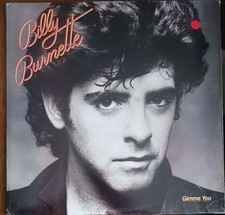
BILLY BURNETTE - GIMME YOU - 1981 COLUMBIA RECORDS VINYL ALBUM - (VG/VG+)
$5.00

Billy Burnette - Self-Titled LP - 1980 1st Pressing 12" Columbia LP + Lyrics VG+
$4.50

BILLY BURNETTE - (SELF-TITLED) - 1980 COLUMBIA VINYL RECORD - (VG/VG)
$4.50
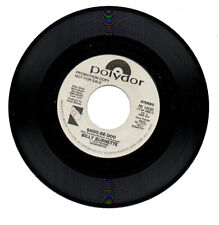
BILLY BURNETTE 45 RPM Promo Record "SHOO-BE-DOO" 1978 Rock Unplayed MINT
$6.70


 Linear Mode

