The Ledge

Go Back   The Ledge > Main Forums > Chit Chat
User Name
Password
Register FAQ Members List Calendar


Make the Ads Go Away! Click here.
Reply
 
Thread Tools Display Modes
  #16  
Old 02-09-2006, 10:42 AM
irishgrl's Avatar
irishgrl irishgrl is offline
Addicted Ledgie
 
Join Date: Dec 2003
Location: in the past
Posts: 7,189
Default

Quote:
Originally Posted by strandinthewind
Poor Mary - bless your heart, trying to bait people by blanketly insulting the South
I wasnt baiting anyone you silly SILLY man! if you felt baited, thats YOUR problem! Actually Markolas was the one who put down his southern schooling and I was only being tongue in cheek about a reason why! Im not sure why you want to see the glass as half empty where I am concerned, but I assure you I was only teasing, and Im guessing he knew it even if you didnt....
Reply With Quote
  #17  
Old 02-09-2006, 10:45 AM
strandinthewind's Avatar
strandinthewind strandinthewind is offline
Addicted Ledgie
 
Join Date: Feb 2003
Location: New York City
Posts: 25,791
Default

Quote:
Originally Posted by irishgrl
I wasnt baiting anyone you silly SILLY man! if you felt baited, thats YOUR problem! Actually Markolas was the one who put down his southern schooling and I was only being tongue in cheek about a reason why! Im not sure why you want to see the glass as half empty where I am concerned, but I assure you I was only teasing, and Im guessing he knew it even if you didnt....
Actually, he said Lousiana and you extrapolated that to the whole South. Get your facts straight

and - I knew you were joking silly rabbit
__________________
Photobucket

save the cheerleader - save the world
Reply With Quote
  #18  
Old 02-09-2006, 10:47 AM
amber's Avatar
amber amber is offline
Addicted Ledgie
 
Join Date: Jun 2004
Location: Fighting foh the Nohthun Stah...NO SPEED LIMIT! BITCH! THIS IS THE FAST LANE!!!
Posts: 23,178
Default

Quote:
Originally Posted by markolas
I was taught it was a republic, but I've learned to not trust my Louisiana public school education. My high school biology teacher decided to skip the chapter on evolution because, in her words, "it's such a touchy subject." That I'm able to so much as chew my own food amazes me.
__________________
"Do not be afraid! I am Esteban de la Sexface!"
"In order to live free and happily, you must sacrifice boredom.
It is not always an easy sacrifice"

Whehyll I can do EHYT!! Wehyll I can make it WAHN moh thihme! (wheyllit'sA reayllongwaytogooo! To say goodbhiiy!) -
Reply With Quote
  #19  
Old 02-09-2006, 10:48 AM
strandinthewind's Avatar
strandinthewind strandinthewind is offline
Addicted Ledgie
 
Join Date: Feb 2003
Location: New York City
Posts: 25,791
Default

Quote:
Originally Posted by irishgrl
we are actually a representative democracy, we elect representatives (presumably) to represent us.

btw: the "nice try" comment is odd, considering I copy/pasted a definition, not my own words. Your arrogance is astonishing that you now think you can argue with a dictionary.
No, it is a republic.

Again - "and to the republic for which it stands" - why would that sanctioned line be that way if it were untrue?

But, if you want to call it a representative democracy - knock yourself out
__________________
Photobucket

save the cheerleader - save the world
Reply With Quote
  #20  
Old 02-09-2006, 10:50 AM
strandinthewind's Avatar
strandinthewind strandinthewind is offline
Addicted Ledgie
 
Join Date: Feb 2003
Location: New York City
Posts: 25,791
Default

Quote:
Originally Posted by irishgrl
. . . Your arrogance is astonishing that you now think you can argue with a dictionary.
First, I am an elitist full of hot air. Now I am arrogant. Will the name calling ever cease Oh well, when you can't argue anything factually based, I suppose that is your method

Again - "and to the republic for which it stands"
__________________
Photobucket

save the cheerleader - save the world
Reply With Quote
  #21  
Old 02-09-2006, 10:58 AM
irishgrl's Avatar
irishgrl irishgrl is offline
Addicted Ledgie
 
Join Date: Dec 2003
Location: in the past
Posts: 7,189
Default

Quote:
Originally Posted by strandinthewind
Actually, he said Lousiana and you extrapolated that to the whole South. Get your facts straight

and - I knew you were joking silly rabbit
Last time I checked it was part of the South? and Im glad you knew I was teasing!
Reply With Quote
  #22  
Old 02-09-2006, 10:59 AM
strandinthewind's Avatar
strandinthewind strandinthewind is offline
Addicted Ledgie
 
Join Date: Feb 2003
Location: New York City
Posts: 25,791
Default

A google search revealed this:

REPUBLIC vs. DEMOCRACY

I pledge allegiance to the flag of the United States of America, and to the Republic for which it stands, one Nation under God, indivisible, with liberty and justice for all."

In the Pledge of Allegiance we all pledge allegiance to our Republic, not to a democracy. "Republic" is the proper description of our government, not "democracy." I invite you to join me in raising public awareness regarding that distinction.

The distinction between our Republic and a democracy is not an idle one. It has great legal significance.

The Constitution guarantees to every state a Republican form of government (Art. 4, Sec. 4). No state may join the United States unless it is a Republic. Our Republic is one dedicated to "liberty and justice for all." Minority individual rights are the priority. The people have natural rights instead of civil rights. The people are protected by the Bill of Rights from the majority. One vote in a jury can stop all of the majority from depriving any one of the people of his rights; this would not be so if the United States were a democracy. (see People's rights vs Citizens' rights)

In a pure democracy 51 beats 49[%]. In a democracy there is no such thing as a significant minority: there are no minority rights except civil rights (privileges) granted by a condescending majority. Only five of the U.S. Constitution's first ten amendments apply to Citizens of the United States. Simply stated, a democracy is a dictatorship of the majority. Socrates was executed by a democracy: though he harmed no one, the majority found him intolerable.


SOME DICTIONARY DEFINITIONS
Government. ....the government is but an agency of the state, distinguished as it must be in accurate thought from its scheme and machinery of government. ....In a colloquial sense, the United States or its representatives, considered as the prosecutor in a criminal action; as in the phrase, "the government objects to the witness." [Black's Law Dictionary, Fifth Edition, p. 625]

Government; Republican government. One in which the powers of sovereignty are vested in the people and are exercised by the people, either directly, or through representatives chosen by the people, to whom those powers are specially delegated. In re Duncan, 139 U.S. 449, 11 S.Ct. 573, 35 L.Ed. 219; Minor v. Happersett, 88 U.S. (21 Wall.) 162, 22 L.Ed. 627. [Black's Law Dictionary, Fifth Edition, p. 626]

Democracy. That form of government in which the sovereign power resides in and is exercised by the whole body of free citizens directly or indirectly through a system of representation, as distinguished from a monarchy, aristocracy, or oligarchy. Black's Law Dictionary, Fifth Edition, pp. 388-389.

Note: Black's Law Dictionary, Fifth Edition, can be found in any law library and most law offices.


COMMENTS

Notice that in a Democracy, the sovereignty is in the whole body of the free citizens. The sovereignty is not divided to smaller units such as individual citizens. To solve a problem, only the whole body politic is authorized to act. Also, being citizens, individuals have duties and obligations to the government. The government's only obligations to the citizens are those legislatively pre-defined for it by the whole body politic.

In a Republic, the sovereignty resides in the people themselves, whether one or many. In a Republic, one may act on his own or through his representatives as he chooses to solve a problem. Further, the people have no obligation to the government; instead, the government being hired by the people, is obliged to its owner, the people.

The people own the government agencies. The government agencies own the citizens. In the United States we have a three-tiered cast system consisting of people ---> government agencies ---> and citizens.

The people did "ordain and establish this Constitution," not for themselves, but "for the United States of America." In delegating powers to the government agencies the people gave up none of their own. (See Preamble of U.S. Constitution). This adoption of this concept is why the U.S. has been called the "Great Experiment in self government." The People govern themselves, while their agents (government agencies) perform tasks listed in the Preamble for the benefit of the People. The experiment is to answer the question, "Can self-governing people coexist and prevail over government agencies that have no authority over the People?"

The citizens of the United States are totally subject to the laws of the United States (See 14th Amendment of U.S. Constitution). NOTE: U.S. citizenship did not exist until July 28, 1868.

Actually, the United States is a mixture of the two systems of government (Republican under Common Law, and democratic under statutory law). The People enjoy their God-given natural rights in the Republic. In a democracy, the Citizens enjoy only government granted privileges (also known as civil rights).

There was a great political division between two major philosophers, Hobbes and Locke. Hobbes was on the side of government. He believed that sovereignty was vested in the state. Locke was on the side of the People. He believed that the fountain of sovereignty was the People of the state. Statists prefer Hobbes. Populists choose Locke. In California, the Government Code sides with Locke. Sections 11120 and 54950 both say, "The people of this State do not yield their sovereignty to the agencies which serve them." The preambles of the U.S. and California Constitutions also affirm the choice of Locke by the People.

It is my hope that the U.S. will always remain a Republic, because I value individual freedom.

Thomas Jefferson said that liberty and ignorance cannot coexist.* Will you help to preserve minority rights by fulfilling the promise in the Pledge of Allegiance to support the Republic? Will you help by raising public awareness of the difference between the Republic and a democracy?

http://www.chrononhotonthologos.com/...s/repvsdem.htm

and another:

Is the United States a democracy?

The Pledge of Allegiance includes the phrase: "and to the republic for which it stands." Is the United States of America a republic? I always thought it was a democracy? What's the difference between the two?

The United States is, indeed, a republic, not a democracy. Accurately defined, a democracy is a form of government in which the people decide policy matters directly--through town hall meetings or by voting on ballot initiatives and referendums. A republic, on the other hand, is a system in which the people choose representatives who, in turn, make policy decisions on their behalf. The Framers of the Constitution were altogether fearful of pure democracy. Everything they read and studied taught them that pure democracies "have ever been spectacles of turbulence and contention; have ever been found incompatible with personal security or the rights of property; and have in general been as short in their lives as they have been violent in their deaths" (Federalist No. 10).

By popular usage, however, the word "democracy" come to mean a form of government in which the government derives its power from the people and is accountable to them for the use of that power. In this sense the United States might accurately be called a democracy. However, there are examples of "pure democracy" at work in the United States today that would probably trouble the Framers of the Constitution if they were still alive to see them. Many states allow for policy questions to be decided directly by the people by voting on ballot initiatives or referendums. (Initiatives originate with, or are initiated by, the people while referendums originate with, or are referred to the people by, a state's legislative body.) That the Constitution does not provide for national ballot initiatives or referendums is indicative of the Framers' opposition to such mechanisms. They were not confident that the people had the time, wisdom or level-headedness to make complex decisions, such as those that are often presented on ballots on election day.

Writing of the merits of a republican or representative form of government, James Madison observed that one of the most important differences between a democracy and a republic is "the delegation of the government [in a republic] to a small number of citizens elected by the rest." The primary effect of such a scheme, Madison continued, was to:

. . . refine and enlarge the public views by passing them through the medium of a chosen body of citizens whose wisdom may best discern the true interest of their country and whose patriotism and love of justice will be least likely to sacrifice it to temporary or partial considerations. Under such a regulation it may well happen that the public voice, pronounced by the representatives of the people, will be more consonant to the public good than if pronounced by the people themselves, convened for the same purpose (Federalist No. 10).
Later, Madison elaborated on the importance of "refining and enlarging the public views" through a scheme of representation:

There are particular moments in public affairs when the people, stimulated by some irregular passion, or some illicit advantage, or misled by the artful misrepresentations of interested men, may call for measures which they themselves will afterwards be most ready to lament and condemn. In these critical moments, how salutary will be the interference of some temperate and respectable body of citizens, in order to check the misguided career and to suspend the blow meditated by the people against themselves, until reason, justice and truth can regain their authority over the public mind(Federalist No. 63).
In the strictest sense of the word, the system of government established by the Constitution was never intended to be a "democracy." This is evident not only in the wording of the Pledge of Allegiance but in the Constitution itself which declares that "The United States shall guarantee to every State in this Union a Republican Form of Government" (Article IV, Section 4). Moreover, the scheme of representation and the various mechanisms for selecting representatives established by the Constitution were clearly intended to produce a republic, not a democracy.

To the extent that the United States of America has moved away from its republican roots and become more "democratic," it has strayed from the intentions of the Constitution's authors. Whether or not the trend toward more direct democracy would be smiled upon by the Framers depends on the answer to another question. Are the American people today sufficiently better informed and otherwise equipped to be wise and prudent democratic citizens than were American citizens in the late 1700s? By all accounts, the answer to this second question is an emphatic "no."


http://www.chrononhotonthologos.com/...s/repvsdem.htm
__________________
Photobucket

save the cheerleader - save the world
Reply With Quote
  #23  
Old 02-09-2006, 11:01 AM
irishgrl's Avatar
irishgrl irishgrl is offline
Addicted Ledgie
 
Join Date: Dec 2003
Location: in the past
Posts: 7,189
Default

Quote:
Originally Posted by strandinthewind
First, I am an elitist full of hot air. Now I am arrogant. Will the name calling ever cease Oh well, when you can't argue anything factually based, I suppose that is your method

Again - "and to the republic for which it stands"
actually the word "republic" was mentioned in the definition for "democracy"
apparently the two are commonly used interchangeably. As for not being factual, Im not sure why you would say that when I used a dictionary definition? You never give anything I say any credence anyway, no matter how many sources I cite. Its too bad, because Ive posted some good material that I thought explained my viewpoint very well
Reply With Quote
  #24  
Old 02-09-2006, 11:03 AM
strandinthewind's Avatar
strandinthewind strandinthewind is offline
Addicted Ledgie
 
Join Date: Feb 2003
Location: New York City
Posts: 25,791
Default

Quote:
Originally Posted by irishgrl
Last time I checked it was part of the South? and Im glad you knew I was teasing!
Yes, but it is not the entire South. Thus, you attributed Louisiana's public school qualities to the entire South in an effort to demean the entire South even if in jest So, don't sugar coat it
__________________
Photobucket

save the cheerleader - save the world
Reply With Quote
  #25  
Old 02-09-2006, 11:04 AM
strandinthewind's Avatar
strandinthewind strandinthewind is offline
Addicted Ledgie
 
Join Date: Feb 2003
Location: New York City
Posts: 25,791
Default

Quote:
Originally Posted by irishgrl
actually the word "republic" was mentioned in the definition for "democracy"
apparently the two are commonly used interchangeably. As for not being factual, Im not sure why you would say that when I used a dictionary definition? You never give anything I say any credence anyway, no matter how many sources I cite. Its too bad, because Ive posted some good material that I thought explained my viewpoint very well
Ummm - that was not the intent of the Framers of the Const. See supra (""The United States shall guarantee to every State in this Union a Republican Form of Government" (Article IV, Section 4).")

As for you and your dic. - lighten up - I was joking
__________________
Photobucket

save the cheerleader - save the world
Reply With Quote
  #26  
Old 02-09-2006, 11:16 AM
irishgrl's Avatar
irishgrl irishgrl is offline
Addicted Ledgie
 
Join Date: Dec 2003
Location: in the past
Posts: 7,189
Default

Quote:
Originally Posted by strandinthewind
Yes, but it is not the entire South. Thus, you attributed Louisiana's public school qualities to the entire South in an effort to demean the entire South even if in jest So, don't sugar coat it
Im sure Louisiana reflects the region as a whole. show me where it does not.

Were you taught evolution? do you not have to deal with parochial attitudes regarding the primacy of Christianity? It is not such a reach to make such a link when you remember which block of states are trying to outlaw abortion/womens' rights/gay marriage etc...
Reply With Quote
  #27  
Old 02-09-2006, 11:20 AM
irishgrl's Avatar
irishgrl irishgrl is offline
Addicted Ledgie
 
Join Date: Dec 2003
Location: in the past
Posts: 7,189
Default

Quote:
Originally Posted by strandinthewind
A google search revealed this:

REPUBLIC vs. DEMOCRACY

I pledge allegiance to the flag of the United States of America, and to the Republic for which it stands, one Nation under God, indivisible, with liberty and justice for all."

In the Pledge of Allegiance we all pledge allegiance to our Republic, not to a democracy. "Republic" is the proper description of our government, not "democracy." I invite you to join me in raising public awareness regarding that distinction.

The distinction between our Republic and a democracy is not an idle one. It has great legal significance.

The Constitution guarantees to every state a Republican form of government (Art. 4, Sec. 4). No state may join the United States unless it is a Republic. Our Republic is one dedicated to "liberty and justice for all." Minority individual rights are the priority. The people have natural rights instead of civil rights. The people are protected by the Bill of Rights from the majority. One vote in a jury can stop all of the majority from depriving any one of the people of his rights; this would not be so if the United States were a democracy. (see People's rights vs Citizens' rights)

In a pure democracy 51 beats 49[%]. In a democracy there is no such thing as a significant minority: there are no minority rights except civil rights (privileges) granted by a condescending majority. Only five of the U.S. Constitution's first ten amendments apply to Citizens of the United States. Simply stated, a democracy is a dictatorship of the majority. Socrates was executed by a democracy: though he harmed no one, the majority found him intolerable.


SOME DICTIONARY DEFINITIONS
Government. ....the government is but an agency of the state, distinguished as it must be in accurate thought from its scheme and machinery of government. ....In a colloquial sense, the United States or its representatives, considered as the prosecutor in a criminal action; as in the phrase, "the government objects to the witness." [Black's Law Dictionary, Fifth Edition, p. 625]

Government; Republican government. One in which the powers of sovereignty are vested in the people and are exercised by the people, either directly, or through representatives chosen by the people, to whom those powers are specially delegated. In re Duncan, 139 U.S. 449, 11 S.Ct. 573, 35 L.Ed. 219; Minor v. Happersett, 88 U.S. (21 Wall.) 162, 22 L.Ed. 627. [Black's Law Dictionary, Fifth Edition, p. 626]

Democracy. That form of government in which the sovereign power resides in and is exercised by the whole body of free citizens directly or indirectly through a system of representation, as distinguished from a monarchy, aristocracy, or oligarchy. Black's Law Dictionary, Fifth Edition, pp. 388-389.

Note: Black's Law Dictionary, Fifth Edition, can be found in any law library and most law offices.


COMMENTS

Notice that in a Democracy, the sovereignty is in the whole body of the free citizens. The sovereignty is not divided to smaller units such as individual citizens. To solve a problem, only the whole body politic is authorized to act. Also, being citizens, individuals have duties and obligations to the government. The government's only obligations to the citizens are those legislatively pre-defined for it by the whole body politic.

In a Republic, the sovereignty resides in the people themselves, whether one or many. In a Republic, one may act on his own or through his representatives as he chooses to solve a problem. Further, the people have no obligation to the government; instead, the government being hired by the people, is obliged to its owner, the people.

The people own the government agencies. The government agencies own the citizens. In the United States we have a three-tiered cast system consisting of people ---> government agencies ---> and citizens.

The people did "ordain and establish this Constitution," not for themselves, but "for the United States of America." In delegating powers to the government agencies the people gave up none of their own. (See Preamble of U.S. Constitution). This adoption of this concept is why the U.S. has been called the "Great Experiment in self government." The People govern themselves, while their agents (government agencies) perform tasks listed in the Preamble for the benefit of the People. The experiment is to answer the question, "Can self-governing people coexist and prevail over government agencies that have no authority over the People?"

The citizens of the United States are totally subject to the laws of the United States (See 14th Amendment of U.S. Constitution). NOTE: U.S. citizenship did not exist until July 28, 1868.

Actually, the United States is a mixture of the two systems of government (Republican under Common Law, and democratic under statutory law). The People enjoy their God-given natural rights in the Republic. In a democracy, the Citizens enjoy only government granted privileges (also known as civil rights).

There was a great political division between two major philosophers, Hobbes and Locke. Hobbes was on the side of government. He believed that sovereignty was vested in the state. Locke was on the side of the People. He believed that the fountain of sovereignty was the People of the state. Statists prefer Hobbes. Populists choose Locke. In California, the Government Code sides with Locke. Sections 11120 and 54950 both say, "The people of this State do not yield their sovereignty to the agencies which serve them." The preambles of the U.S. and California Constitutions also affirm the choice of Locke by the People.

It is my hope that the U.S. will always remain a Republic, because I value individual freedom.

Thomas Jefferson said that liberty and ignorance cannot coexist.* Will you help to preserve minority rights by fulfilling the promise in the Pledge of Allegiance to support the Republic? Will you help by raising public awareness of the difference between the Republic and a democracy?

http://www.chrononhotonthologos.com/...s/repvsdem.htm

and another:

Is the United States a democracy?

The Pledge of Allegiance includes the phrase: "and to the republic for which it stands." Is the United States of America a republic? I always thought it was a democracy? What's the difference between the two?

The United States is, indeed, a republic, not a democracy. Accurately defined, a democracy is a form of government in which the people decide policy matters directly--through town hall meetings or by voting on ballot initiatives and referendums. A republic, on the other hand, is a system in which the people choose representatives who, in turn, make policy decisions on their behalf. The Framers of the Constitution were altogether fearful of pure democracy. Everything they read and studied taught them that pure democracies "have ever been spectacles of turbulence and contention; have ever been found incompatible with personal security or the rights of property; and have in general been as short in their lives as they have been violent in their deaths" (Federalist No. 10).

By popular usage, however, the word "democracy" come to mean a form of government in which the government derives its power from the people and is accountable to them for the use of that power. In this sense the United States might accurately be called a democracy. However, there are examples of "pure democracy" at work in the United States today that would probably trouble the Framers of the Constitution if they were still alive to see them. Many states allow for policy questions to be decided directly by the people by voting on ballot initiatives or referendums. (Initiatives originate with, or are initiated by, the people while referendums originate with, or are referred to the people by, a state's legislative body.) That the Constitution does not provide for national ballot initiatives or referendums is indicative of the Framers' opposition to such mechanisms. They were not confident that the people had the time, wisdom or level-headedness to make complex decisions, such as those that are often presented on ballots on election day.

Writing of the merits of a republican or representative form of government, James Madison observed that one of the most important differences between a democracy and a republic is "the delegation of the government [in a republic] to a small number of citizens elected by the rest." The primary effect of such a scheme, Madison continued, was to:

. . . refine and enlarge the public views by passing them through the medium of a chosen body of citizens whose wisdom may best discern the true interest of their country and whose patriotism and love of justice will be least likely to sacrifice it to temporary or partial considerations. Under such a regulation it may well happen that the public voice, pronounced by the representatives of the people, will be more consonant to the public good than if pronounced by the people themselves, convened for the same purpose (Federalist No. 10).
Later, Madison elaborated on the importance of "refining and enlarging the public views" through a scheme of representation:

There are particular moments in public affairs when the people, stimulated by some irregular passion, or some illicit advantage, or misled by the artful misrepresentations of interested men, may call for measures which they themselves will afterwards be most ready to lament and condemn. In these critical moments, how salutary will be the interference of some temperate and respectable body of citizens, in order to check the misguided career and to suspend the blow meditated by the people against themselves, until reason, justice and truth can regain their authority over the public mind(Federalist No. 63).
In the strictest sense of the word, the system of government established by the Constitution was never intended to be a "democracy." This is evident not only in the wording of the Pledge of Allegiance but in the Constitution itself which declares that "The United States shall guarantee to every State in this Union a Republican Form of Government" (Article IV, Section 4). Moreover, the scheme of representation and the various mechanisms for selecting representatives established by the Constitution were clearly intended to produce a republic, not a democracy.

To the extent that the United States of America has moved away from its republican roots and become more "democratic," it has strayed from the intentions of the Constitution's authors. Whether or not the trend toward more direct democracy would be smiled upon by the Framers depends on the answer to another question. Are the American people today sufficiently better informed and otherwise equipped to be wise and prudent democratic citizens than were American citizens in the late 1700s? By all accounts, the answer to this second question is an emphatic "no."


http://www.chrononhotonthologos.com/...s/repvsdem.htm
your own quote actually backs up what I said, which was that the US was a REPRESENTATIVE DEMOCRACY, not a Pure Democracy. I am not aware of any place in any time that actually operated under a Pure Democracy; And I never said we were a direct Democracy either. Go back to my original post, I said REPRESENTATIVE Democracy.

btw: my understanding of "republic" is that it refers to a citizen body, the citizen population, whereas "democracy" is a political construct, and is completely different altogether.
Reply With Quote
  #28  
Old 02-09-2006, 11:21 AM
strandinthewind's Avatar
strandinthewind strandinthewind is offline
Addicted Ledgie
 
Join Date: Feb 2003
Location: New York City
Posts: 25,791
Default

Quote:
Originally Posted by irishgrl
Im sure Louisiana reflects the region as a whole. show me where it does not.

Were you taught evolution? do you not have to deal with parochial attitudes regarding the primacy of Christianity? It is not such a reach to make such a link when you remember which block of states are trying to outlaw abortion/womens' rights/gay marriage etc...
Now your an expert on Southern schooling - your acumen knows no bounds

Yes, I was taught evolution and I went to a Catholic (parochial) school in a very conservative town. What's that I hear - oh its just the wind coming out of your theory

Finally, the most recent evolution case came out of Kansas, which FYI is not the South

Here's a link for ya http://www.religioustolerance.org/ev_school.htm
__________________
Photobucket

save the cheerleader - save the world
Reply With Quote
  #29  
Old 02-09-2006, 11:23 AM
strandinthewind's Avatar
strandinthewind strandinthewind is offline
Addicted Ledgie
 
Join Date: Feb 2003
Location: New York City
Posts: 25,791
Default

Quote:
Originally Posted by irishgrl
your own quote actually backs up what I said, which was that the US was a REPRESENTATIVE DEMOCRACY, not a Pure Democracy. I am not aware of any place in any time that actually operated under a Pure Democracy; And I never said we were a direct Democracy either. Go back to my original post, I said REPRESENTATIVE Democracy.

btw: my understanding of "republic" is that it refers to a citizen body, the citizen population, whereas "democracy" is a political construct, and is completely different altogether.
You mean your edited post where you initially called it a representative democracy but then later - in an attempt at wit - said "Bush thinks we live in a Republic, the rest of us (except Jason LOL!) think we live in a Democracy...." - the latter has no qualifer dear.
__________________
Photobucket

save the cheerleader - save the world
Reply With Quote
  #30  
Old 02-09-2006, 11:24 AM
strandinthewind's Avatar
strandinthewind strandinthewind is offline
Addicted Ledgie
 
Join Date: Feb 2003
Location: New York City
Posts: 25,791
Default

Quote:
Originally Posted by irishgrl
your own quote actually backs up what I said, which was that the US was a REPRESENTATIVE DEMOCRACY, not a Pure Democracy. I am not aware of any place in any time that actually operated under a Pure Democracy; And I never said we were a direct Democracy either. Go back to my original post, I said REPRESENTATIVE Democracy.

btw: my understanding of "republic" is that it refers to a citizen body, the citizen population, whereas "democracy" is a political construct, and is completely different altogether.
Again, the Const. guarantees a republican form of govt. Why is that so hard to grasp? But and again, if you want to think we live in a representative democracy - go right on ahead.
__________________
Photobucket

save the cheerleader - save the world
Reply With Quote
Reply


Posting Rules
You may not post new threads
You may not post replies
You may not post attachments
You may not edit your posts

BB code is On
Smilies are On
[IMG] code is On
HTML code is On

Forum Jump


BEKKA BRAMLETT - I Got News For You - CD - **Excellent Condition** - RARE picture

BEKKA BRAMLETT - I Got News For You - CD - **Excellent Condition** - RARE

$49.99
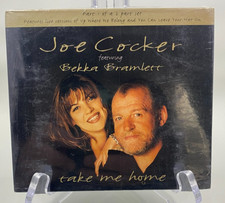


NEW - JOE COCKER - Take Me Home HTF UK CD Single feat. Bekka Bramlett picture

NEW - JOE COCKER - Take Me Home HTF UK CD Single feat. Bekka Bramlett

$7.49



Bekka Bramlett

Bekka Bramlett "I Got News For You" CD In Mint. Shongaloo Records LLC 1707. 2009

$45.00
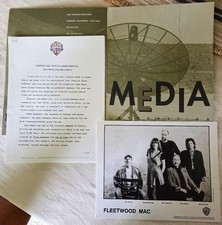


RARE Fleetwood Mac Dave Mason Bekka Bramlett Era 93 Original WB Press Kit w 8x10 picture

RARE Fleetwood Mac Dave Mason Bekka Bramlett Era 93 Original WB Press Kit w 8x10

$69.99



BEKKA BRAMLETT - I Got News For You - CD - **Excellent Condition** - RARE picture

BEKKA BRAMLETT - I Got News For You - CD - **Excellent Condition** - RARE

$49.75


All times are GMT -5. The time now is 11:26 AM.


Powered by vBulletin® Version 3.8.11
Copyright ©2000 - 2026, vBulletin Solutions Inc.
© 1995-2003 Martin and Lisa Adelson, All Rights Reserved