
| |
|
#31
 09-30-2005, 08:41 AM
|
||||
|
||||

Thank you, Brwn Eyes, for making me lose my breakfast. A bit of nausea is always the best way to start any day.
  
|
|
#32
09-30-2005, 09:38 AM
|
||||
|
||||
|
Quote:
 Quote:

__________________

|
|
#33
09-30-2005, 09:39 AM
|
||||
|
||||
|
Quote:

__________________
|
|
#34
09-30-2005, 09:42 AM
|
||||
|
||||
|
Quote:
|
|
#35
09-30-2005, 09:46 AM
|
||||
|
||||
|
Quote:
Quote:
__________________
"How much does the world weigh? Ask a single mother..."
|
|
#37
09-30-2005, 10:42 AM
|
||||
|
||||
|
Quote:
__________________
|
|
#38
09-30-2005, 10:47 AM
|
||||
|
||||
|
Quote:
She called Katie Couric an "airhead." She called Susan Collins a "half-wit." She called Gary Johnson "truly stupid." She called Adlai Stevenson "a boob." She called Jim Jeffords "D-U-M-M." She called Frisky Christie Whitman a "birdbrain." Shall I go on?
__________________
|
|
#39
09-30-2005, 11:02 AM
|
||||
|
||||
|
Quote:
1. Take your copy of Slander off the shelf and dust it off. 2. Turn to page 134. 3. It reads "Even during the media's nightly flogging of Iran-Contra, Reagan's approval ratings fell only 5 percentage points, from 80 percent to 75 percent." 4. Flip to the endnote that she refers you to. 5. Read the endnote. It cites an article from a Christian Science Monitor piece from 1/7/87. 6. Here's what that article that she cites actually reads: Political fallout from the Iran-contra imbroglio continues to rain on President Reagan and the Republicans, but some analysts say the White House may now have seen the worst. As the crisis passes the two-month mark, this is the damage report as seen from here: *President Reagan took a 16-point spill in his public-approval ratings during the first weeks of the crisis. That is one of the greatest drops ever recorded by a President, a Gallup Organization official says. Gage says poll results must be properly analyzed. For example, in last month's Gallup poll, Reagan's approval rating fell from 63 percent to 47 percent. But Reagan's personal popularity fell only from 80 percent to 75 percent. The first figure represents public reaction to the headlines, Gage says. The second reflects the public's actual feelings toward the President. Even so, a Gallup official notes that the approval-rating drop was ''the biggest ever recorded for Reagan, and I think the biggest for any President in a two-month period.'' Even President Richard Nixon's approval rating fell at a slower rate during Watergate.
__________________
|
|
#40
09-30-2005, 11:17 AM
|
||||
|
||||
|
http://abcnews.go.com/sections/us/Po...ll_040607.html
Reagan's Ratings June 7, 2004— Ronald Reagan is misremembered as one of the most popular presidents, an assessment based more on his skills as a communicator and effectiveness as a campaigner than on public views of his accomplishments while in office. His job approval ratings, in fact, were mid-tier. Across his tenure an average of 57 percent of Americans approved of Reagan's work as president, tied with Bill Clinton and within a point of Lyndon Johnson. Among postwar presidents, John F. Kennedy, Dwight Eisenhower and George H.W. Bush all ran better averages, and George W. Bush has averaged better to date, despite his current slump. Reagan has done far better in retrospect, as can happen as ex-presidents recede from the fray of day-to-day politics. Asked to think back to when he served, 66 percent in an ABC News/Washington Post poll in 2001 approved of his work, as did still more, 73 percent, in a 2002 Gallup poll. (Jimmy Carter's retrospective rating did the same thing, rising 20 points in the two decades after he left office.) Reagan's personal ratings also have improved with time. During his presidency an average of 61 percent of Americans reported an overall favorable impression of him, about the same as the career favorable rating for his successor, the first President Bush (63 percent). By 2001, though, more — 69 percent — viewed Reagan favorably. Reagan's ratings while in office rose and fell sharply with events. Approval peaked at 73 percent after he was wounded in a March 1981 assassination attempt, but tumbled to 42 percent in the early '80s recessions (unemployment hit a 40-year high in 1982). It recovered to 70 percent in early 1986 as the economy improved, but then dived by 26 points in nine months during the Iran-Contra scandal. While Reagan presided over what was characterized as a go-go economy in the second half of the 1980s, consumer confidence from that period pales compared to its level in the late 1990s — one reason he was not insulated from Iran-Contra the way Clinton was protected (in terms of public opinion) from the Lewinsky scandal. Positive ratings of the economy never exceeded 50 percent (reached once) from December 1985 until the end of Reagan's term. In contrast, 71 percent rated the economy favorably, on average, during the Lewinsky days. Like many presidents, Reagan inspired substantial polarization. The gender gap became evident in his presidency; he did seven or eight points better among men than among women in the 1980 and 1984 elections alike. And his ratings were sharply divided along political lines: At times ABC News polls found a 50-point gap between Republicans and Democrats in their ratings of Reagan's job performance, compared with a 30- or 35-point gap for his successor. In an example of that polarization, in a poll in the late '90s, Reagan tied for first as "the best president in your lifetime," cited by 23 percent. But he also tied for second, behind Richard Nixon, as the worst president, chosen by 17 percent. http://www.fair.org/index.php?page=1192 The Myth of Reagan's "Enormous Popularity" Extra! March/April 1989 By Michael Benhoff Reagan left office bolstered by the oft-repeated media myth that he had been far and away the most popular of any president since World War II. But bearing in mind Mark Twain's observation that a lie gets half-way around the world before truth puts its boots on, the US public deserves to know what the polling data actually says. According to Gallup polls taken throughout his presidency, Reagan was not one of the more popular presidents in the post-Roosevelt pack. At various points during his presidency he rated lower than the other presidents during comparable periods of their terms in office. For instance, during the first two years of Reagan's presidency, the public was giving President Reagan the lowest level of approval of all modern elected presidents. Reagan's average first year approval rating was 58%-- lower than Dwight Eisenhower's 69%, Jack Kennedy's 75%, Richard Nixon's 61% and Jimmy Carter's 62%. The post-Roosevelt presidents who assumed office through circumstances other than elections scored higher approval ratings during their first months in office than Reagan. In October 1945, six months after FDR died, President Harry Truman received an 82% approval rating, down from 87% the previous June. In December 1963, shortly after JFK's assassination, Lyndon Johnson got a 79% public approval rating, and it stayed in the mid-to-low seventies until December 1964, when he scored 69%. Only Gerald Ford, who received a 71% approval rating in August 1974, declined below Reagan's first-year level. Nor did the US public give Reagan higher marks in his second year than other post-World War II presidents. Reagan's approval rating at the end of his second year in office was 41%, with an average for that year of 44%. Compare these statistics to Eisenhower, who notched a 69% approval rating at the end of his second year and a 65% year's average; Kennedy's were 76% and 72% respectively; Nixon's 52% and 57%; and Carter's at 51% and 47%. President Reagan's humdrum approval ratings continued throughout his first and second terms. Averaging 50% for his first term, Reagan fared slightly better than Ford at 47% and Carter at 47%, but with Gallup's 3% margin of error even these differences are not statistically significant. On the other band, Reagan's first term average was much lower than those of Presidents Kennedy (1961-63) who averaged a 70% approval rating, Eisenhower with a 69% average, and Nixon at 56%. In May of the second year of his second term (1986), Reagan's 68% approval rating surpassed the mid-sixth year figures for two-term presidents. But after the Iran-Contra scnadal broke in the fall of 1986, Reagan's approval raing plummeted to 46%, leaving him wiht an unimpressive average for that year. Reagan finished strong with a December 1988 Gallup poll recording a 63% approval rating. But given the 3% margin of error, this statistic is not appreciably different than the final ratings of Eisenhower (59%) or Kennedy (58%). Polls showed FDR with a 66% favorable tally at the time of his death. Reagan's 52% average approval rating for his entire presidency was topped by Kennedy's 70% average, Eisenhower's 66%, Roosevelt's 68%, and even by Johnson (54%), who eschewed running for reelection because of the unpopularity of his Vietnam policy. In short, about half-- and sometimes more than half-- of the US public did not approve of Reagan's presidential performance. His approval index was not much better than the lowest modern presidential averages: Truman's and Ford's, each at 46%; Carter's at 47%; and 48% for Nixon. Even the notion that the American public likes Ronald Reagan the man (as opposed to some of his policies) has been grossly exaggerated. Overall, his "likeability" percentages have ranged in the low-to-mid seventies, reaching a high of 81% in November 1985, and a low of 50% in August 1983. No other modern president's likeability indexes have generally fluctuated in the mid-to-upper seventies for all of Reagan's modern predecessors. For example, 84% of Americans liked Ike in February 1956. In August 1964, 89% of Americans liked Johnson. Even in the summer months of Carter's final, unpopular year as president (just before his defeat by Reagan in the 1980 election), Carter scored a higher Gallup personal likeability index at 76% than Reagan's 73% during the comparable period of his Administration. For anyone who cares to look at the actual polling data, the facts show that Reagan was definitely not the most popular post-war president, and during many comparable periods he was among the most unpopular.
__________________
|
|
#41
09-30-2005, 11:19 AM
|
||||
|
||||
|
Quote:
She actually has an overall point in her arguments though, she doesn't just call Katie Couric, for instance, an "airhead" just for the sake of calling her an "airhead."
__________________
|
|
#42
09-30-2005, 11:21 AM
|
||||
|
||||
|
Quote:
__________________
|
|
#43
09-30-2005, 11:26 AM
|
||||
|
||||
|
Quote:
Here is a prime example of "name calling" that most liberals result to.... Here is the two most common things Ann gets in the mail from [sarcastic]fans[/sarcastic].... "You are ugly!"....and I QUOTE NOW! That's it! I mean come on they can do better than that! and here is the other... "The only reason you get on T.V. is because of your good looks!" So which is it? Is she ugly or good looking? Even her detractors can't even make up their minds.
__________________
|
|
#44
09-30-2005, 11:30 AM
|
||||
|
||||
|
Quote:
Quote:
__________________
|
|
#45
09-30-2005, 11:47 AM
|
||||
|
||||
|
Quote:
and I'm the one who hasn't "read her books"...right! 
__________________
|
 |
|
|

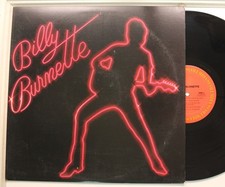
Billy Burnette Lp Self Titled On Columbia - Vg+ To Vg++ / Vg++
$11.99
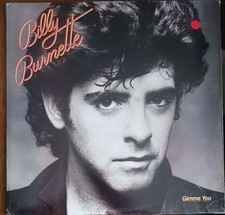
BILLY BURNETTE - GIMME YOU - 1981 COLUMBIA RECORDS VINYL ALBUM - (VG/VG+)
$5.00
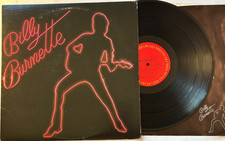
Billy Burnette - Self-Titled LP - 1980 1st Pressing 12" Columbia LP + Lyrics VG+
$4.50
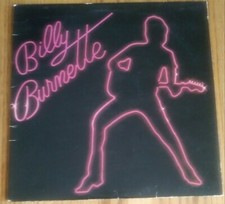
BILLY BURNETTE - (SELF-TITLED) - 1980 COLUMBIA VINYL RECORD - (VG/VG)
$4.50
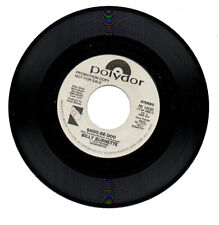
BILLY BURNETTE 45 RPM Promo Record "SHOO-BE-DOO" 1978 Rock Unplayed MINT
$6.70


 Linear Mode

