
| |
|
|||||||
 |
|
|
Thread Tools | Display Modes |
|
#91
 08-08-2004, 04:52 PM
|
||||
|
||||

Quote:
Again, it's called Google. PS: As Americans, it is our job. 
__________________
|
|
#92
08-08-2004, 04:52 PM
|
||||
|
||||
|
Quote:
 I know they do a little. But, Rice also said and I quote: Here is a copy of Rice's http://www.cnn.com/2004/ALLPOLITICS/...ce.transcript/ It seems she was not all you say because she ways she was persuing leads on OBL  You may not believe her, but she said she was and the 8/6/01 memo. indicates there were about 70 FBI investigations that were ongoing. How much more proof is needed. You may not believe her, but she said she was and the 8/6/01 memo. indicates there were about 70 FBI investigations that were ongoing. How much more proof is needed.Again, they were caught with their pants down - no question about it. But, I think you are implying Dr. Rice sort of patted the pesky loudmouthes about OBL and Al-Q on the head and then concentrated solely on Iraq (humor  ) - her testimony does not support that. Here is an example: ) - her testimony does not support that. Here is an example:After President Bush was elected, we were briefed by the Clinton administration on many national security issues during the transition. The president-elect and I were briefed by George Tenet on terrorism and on the al Qaeda network. Members of Sandy Berger's NSC staff briefed me, along with other members of the new national security team, on counterterrorism and al Qaeda. This briefing lasted about one hour, and it reviewed the Clinton administration's counterterrorism approach and the various counterterrorism activities then underway. Sandy and I personally discussed a variety of other topics, including North Korea, Iraq, the Middle East and the Balkans. Because of these briefings and because we had watched the rise of al Qaeda over the years, we understood that the network posed a serious threat to the United States. We wanted to ensure there was no respite in the fight against al Qaeda. On an operational level, we decided immediately to continue pursuing the Clinton administration's covert action authorities and other efforts to fight the network. President Bush retained George Tenet as director of central intelligence, and Louis Freeh remained the director of the FBI. I took the unusual step of retaining Dick Clarke and the entire Clinton administration's counterterrorism team on the NSC staff. I knew Dick to be an expert in his field, as well as an experienced crisis manager. Our goal was to ensure continuity of operations while we developed new and more aggressive policies. At the beginning of the administration, President Bush revived the practice of meeting with the director of central intelligence almost every day in the Oval Office -- meetings which I attended, along with the vice president and the chief of staff. At these meetings, the president received up-to-date intelligence and asked questions of his most senior intelligence officials. From January 20 through September 10, the president received at these daily meetings more than 40 briefing items on al Qaeda, and 13 of these were in response to questions he or his top advisers had posed. In addition to seeing DCI Tenet almost every morning, I generally spoke by telephone every morning at 7:15 with Secretaries Powell and Rumsfeld. I also met and spoke regularly with the DCI about al Qaeda and terrorism. Of course, we also had other responsibilities. President Bush had set a broad foreign policy agenda. We were determined to confront the proliferation of weapons of mass destruction. We were improving America's relations with the world's great powers. We had to change an Iraq policy that was making no progress against a hostile regime which regularly shot at U.S. planes enforcing U.N. Security Council resolutions. And we had to deal with the occasional crisis, for instance, when the crew of a Navy plane was detained in China for 11 days. We also moved to develop a new and comprehensive strategy to eliminate the al Qaeda terrorist network. President Bush understood the threat, and he understood its importance. He made clear to us that he did not want to respond to al Qaeda one attack at a time. He told me he was "tired of swatting flies." This new strategy was developed over the Spring and Summer of 2001, and was approved by the president's senior national security officials on September 4. It was the very first major national security policy directive of the Bush administration -- not Russia, not missile defense, not Iraq, but the elimination of al Qaeda. Although this National Security Presidential Directive was originally a highly classified document, we arranged for portions to be declassified to help the Commission in its work, and I will describe some of those today. The strategy set as its goal the elimination of the al Qaeda network. It ordered the leadership of relevant U.S. departments and agencies to make the elimination of al Qaeda a high priority and to use all aspects of our national power -- intelligence, financial, diplomatic, and military -- to meet this goal. And it gave Cabinet Secretaries and department heads specific responsibilities. For instance: It directed the secretary of state to work with other countries to end all sanctuaries given to al Qaeda. It directed the secretaries of the treasury and state to work with foreign governments to seize or freeze assets and holdings of al Qaeda and its benefactors. It directed the director of central intelligence to prepare an aggressive program of covert activities to disrupt al Qaeda and provide assistance to anti-Taliban groups operating against al Qaeda in Afghanistan. It tasked the director of OMB with ensuring that sufficient funds were available in the budgets over the next five years to meet the goals laid out in the strategy. And it directed the secretary of defense to -- and I quote -- "ensure that the contingency planning process include plans: against al Qaeda and associated terrorist facilities in Afghanistan, including leadership, command-control-communications, training, and logistics facilities; against Taliban targets in Afghanistan, including leadership, command-control, air and air defense, ground forces, and logistics; to eliminate weapons of mass destruction which al Qaeda and associated terrorist groups may acquire or manufacture, including those stored in underground bunkers." This was a change from the prior strategy -- Presidential Decision Directive 62, signed in 1998 -- which ordered the secretary of defense to provide transportation to bring individual terrorists to the U.S. for trial, to protect DOD forces overseas, and to be prepared to respond to terrorist and weapons of mass destruction incidents. More importantly, we recognized that no counterterrorism strategy could succeed in isolation. As you know from the Pakistan and Afghanistan strategy documents that we made available to the Commission, our counterterrorism strategy was part of a broader package of strategies that addressed the complexities of the region. Integrating our counterterrorism and regional strategies was the most difficult and the most important aspect of the new strategy to get right. Al Qaeda was both client of and patron to the Taliban, which in turn was supported by Pakistan. Those relationships provided al Qaeda with a powerful umbrella of protection, and we had to sever them. This was not easy. Not that we hadn't tried. Within a month of taking office, President Bush sent a strong, private message to President Musharraf urging him to use his influence with the Taliban to bring Bin Laden to justice and to close down al Qaeda training camps. Secretary Powell actively urged the Pakistanis, including Musharraf himself, to abandon support for the Taliban. I met with Pakistan's Foreign Minister in my office in June of 2001. I delivered a very tough message, which was met with a rote, expressionless response. America's al Qaeda policy wasn't working because our Afghanistan policy wasn't working. And our Afghanistan policy wasn't working because our Pakistan policy wasn't working. We recognized that America's counterterrorism policy had to be connected to our regional strategies and to our overall foreign policy. To address these problems, I made sure to involve key regional experts. I brought in Zalmay Khalilzad, an expert on Afghanistan who, as a senior diplomat in the 1980s, had worked closely with the Afghan Mujahedeen, helping them to turn back the Soviet invasion. I also ensured the participation of the NSC experts on South Asia, as well as the secretary of state and his regional specialists. Together, we developed a new strategic approach to Afghanistan. Instead of the intense focus on the Northern Alliance, we emphasized the importance of the south -- the social and political heartland of the country. Our new approach to Pakistan combined the use of carrots and sticks to persuade Pakistan to drop its support for the Taliban. And we began to change our approach to India, to preserve stability on the subcontinent. While we were developing this new strategy to deal with al Qaeda, we also made decisions on a number of specific anti-al Qaeda initiatives that had been proposed by Dick Clarke. Many of these ideas had been deferred by the last administration, and some had been on the table since 1998. We increased counterterror assistance to Uzbekistan; we bolstered the Treasury Department's activities to track and seize terrorist assets; we increased funding for counterterrorism activities across several agencies; and we moved quickly to arm Predator unmanned surveillance vehicles for action against al Qaeda. When threat reporting increased during the Spring and Summer of 2001, we moved the U.S. Government at all levels to a high state of alert and activity. Let me clear up any confusion about the relationship between the development of our new strategy and the many actions we took to respond to threats that summer. Policy development and crisis management require different approaches. Throughout this period, we did both simultaneously. For the essential crisis management task, we depended on the Counterterrorism Security Group chaired by Dick Clarke to be the interagency nerve center. The CSG consisted of senior counterterrorism experts from CIA, the FBI, the Department of Justice, the Defense Department (including the Joint Chiefs of Staff), the State Department, and the Secret Service. The CSG had met regularly for many years, and its members had worked through numerous periods of heightened threat activity. As threat information increased, the CSG met more frequently, sometimes daily, to review and analyze the threat reporting and to coordinate actions in response. CSG members also had ready access to their Cabinet Secretaries and could raise any concerns they had at the highest levels. The threat reporting that we received in the spring and summer of 2001 was not specific as to time, nor place, nor manner of attack. Almost all of the reports focused on al Qaeda activities outside the United States, especially in the Middle East and North Africa. In fact, the information that was specific enough to be actionable referred to terrorist operations overseas. More often, it was frustratingly vague. Let me read you some of the actual chatter that we picked up that spring and summer: "Unbelievable news coming in weeks," "Big event ... there will be a very, very, very, very big uproar," "There will be attacks in the near future." Troubling, yes. But they don't tell us when; they don't tell us where; they don't tell us who; and they don't tell us how. In this context, I want to address in some detail one of the briefing items we received, since its content has frequently been mischaracterized. On August 6, 2001, the president's intelligence briefing included a response to questions that he had earlier raised about any al Qaeda intentions to strike our homeland. The briefing item reviewed past intelligence reporting, mostly dating from the 1990s, regarding possible al Qaeda plans to attack inside the United States. It referred to uncorroborated reporting that from 1998 that terrorists might attempt to hijack a U.S. aircraft in an attempt to blackmail the government into releasing U.S.-held terrorists who had participated in the 1993 World Trade Center bombing. This briefing item was not prompted by any specific threat information. And it did not raise the possibility that terrorists might use airplanes as missiles. Despite the fact that the vast majority of the threat information we received was focused overseas, I was concerned about possible threats inside the United States. On July 5, chief of staff Andy Card and I met with Dick Clarke, and I asked Dick to make sure that domestic agencies were aware of the heightened threat period and were taking appropriate steps to respond, even though we did not have specific threats to the homeland. Later that same day, Clarke convened a special meeting of his CSG, as well as representatives from the FAA, the INS, Customs, and the Coast Guard. At that meeting, these agencies were asked to take additional measures to increase security and surveillance. Throughout this period of heightened threat information, we worked hard on multiple fronts to detect, protect against, and disrupt any terrorist plans or operations that might lead to an attack. For instance, the Department of Defense issued at least five urgent warnings to U.S. military forces that al Qaeda might be planning a near-term attack, and placed our military forces in certain regions on heightened alert. The State Department issued at least four urgent security advisories and public worldwide cautions on terrorist threats, enhanced security measures at certain embassies, and warned the Taliban that they would be held responsible for any al Qaeda attack on U.S. interests. The FBI issued at least three nationwide warnings to Federal, State, and local law enforcement agencies, and specifically stated that, although the vast majority of the information indicated overseas targets, attacks against the homeland could not be ruled out. The FBI also tasked all 56 of its U.S. field offices to increase surveillance of known or suspected terrorists and reach out to known informants who might have information on terrorist activities. The FAA issued at least five Civil Aviation Security Information Circulars to all U.S. airlines and airport security personnel, including specific warnings about the possibility of hijackings. The CIA worked round the clock to disrupt threats worldwide. Agency officials launched a wide-ranging disruption effort against al Qaeda in more than 20 countries. During this period, the vice president, DCI Tenet, and the NSC's counterterrorism staff called senior foreign officials requesting that they increase their intelligence assistance and report to us any relevant threat information. This is a brief sample of our intense activity over the Summer of 2001. Yet, as your hearings have shown, there was no silver bullet that could have prevented the 9/11 attacks. In hindsight, if anything might have helped stop 9/11, it would have been better information about threats inside the United States, something made difficult by structural and legal impediments that prevented the collection and sharing of information by our law enforcement and intelligence agencies. So the attacks came. A band of vicious terrorists tried to decapitate our government, destroy our financial system, and break the spirit of America. As an officer of government on duty that day, I will never forget the sorrow and the anger I felt. Nor will I forget the courage and resilience shown by the American people and the leadership of the president that day. ___________________________________________________________ There is bunch more too much to post.
__________________
 save the cheerleader - save the world
|
|
#93
08-08-2004, 04:52 PM
|
||||
|
||||
|
Quote:

|
|
#94
08-08-2004, 04:53 PM
|
||||
|
||||
|
Quote:

__________________
|
|
#95
08-08-2004, 04:54 PM
|
||||
|
||||
|
Quote:
|
|
#96
08-08-2004, 04:54 PM
|
||||
|
||||
|
Quote:
__________________
save the cheerleader - save the world
|
|
#97
08-08-2004, 04:55 PM
|
||||
|
||||
|
Quote:
I have the interim report form the 9/11 panel after her testimony, too, but I feel like making you work today. Go fetch! j/k
__________________
|
|
#98
08-08-2004, 04:56 PM
|
||||
|
||||
|
Quote:
If you go to PBS online, you can watch the whole Frontline episode concerning John O'Neill, the Cole bombing and it's subsequent investigations.
__________________
|
|
#99
08-08-2004, 04:57 PM
|
||||
|
||||
|
Quote:
But, Clinton has referred to other and subsequent windows of opportunity that did not work for various reasons. Also, after OBL attacked the US many other times, why didn't Clinton try to extradite him. We do with other criminals
__________________
save the cheerleader - save the world
|
|
#100
08-08-2004, 04:57 PM
|
||||
|
||||
|
Quote:
 I think so! I think so! Read Worse Than Watergate yet? It's a great read.
__________________
|
|
#101
08-08-2004, 04:59 PM
|
||||
|
||||
|
Quote:
__________________
|
|
#102
08-08-2004, 05:00 PM
|
||||
|
||||
|
Quote:
__________________
save the cheerleader - save the world
|
|
#103
08-08-2004, 05:02 PM
|
||||
|
||||
|
Quote:

|
|
#104
08-08-2004, 05:03 PM
|
||||
|
||||
|
Quote:
I think actually in some remote part of my memory, Clinton did try. But, I cannot remember. I will do some research. Interestingly: 11/03/2001 - Updated 07:27 PM ET Saudi: Bin Laden extradition botched CAIRO, Egypt (AP) — The leader of Afghanistan's ruling Taliban militia agreed to extradite Osama bin Laden to Saudi Arabia in 1998 but reneged following U.S. strikes on Afghanistan that year, a former head of Saudi intelligence said Saturday. Prince Turki al-Faisal, who left his post a few days before Sept. 11, also said he is convinced bin Laden and his al-Qa'eda network were behind the attacks that destroyed the World Trade Center and damaged the Pentagon. He said he discussed bin Laden's handover with Taliban leader Mullah Mohammed Omar in a meeting in Kandahar, Afghanistan, two months before the August 1998 terrorist attacks on two U.S. embassies in Africa. "I briefed him on what (bin Laden) had done against the kingdom's interests and asked him to stop him and hand him over to us," the Saudi royal family member said in an interview with the Saudi-owned satellite TV channel MBC. Bin Laden — named by the United States as the chief suspect in the Sept. 11 attacks — was then wanted in his native Saudi Arabia for anti-government agitation and opposition to the presence of U.S. troops. Prince Turki said Omar's response to the extradition request was favorable. "First he agreed, but he said: 'Let us set up a joint (Saudi-Afghan) committee to probe the ways and means to do that,"' Prince Turki said. Then the U.S. embassies in Kenya and Tanzania were blown up by truck bombs, killing 231 people, including 12 Americans. Blaming bin Laden, the United States fired cruise missiles at a bin Laden camp in Afghanistan and a pharmaceutical factory in Sudan thought to be linked to the Saudi exile. Prince Turki said that when he returned to Afghanistan later that year, he found Mullah Omar had changed his mind. In a stormy meeting, Mullah Omar flatly rejected the request to extradite bin Laden, he said. "I told him: 'You will regret it and the Afghan people will pay a high price for that,"' Prince Turki said. In his first television interview since he left his post as intelligence chief in September, Prince Turki said Mullah Omar and bin Laden share the same ideology. "At any rate, the evil in them is the same," said Prince Turki, the first prominent Saudi to say publicly that he is convinced bin Laden was behind the Sept. 11 attacks. Saudi officials are balancing their alliance with Washington and their own fear of Islamic militancy with their citizens' anger at the United States and admiration for bin Laden. A son of the late King Faisal, Prince Turki served as head of the kingdom's secret service for more than twenty years. He was reportedly the official who supervised Saudi financial assistance to guerrillas fighting the Soviet occupation of Afghanistan of 1979-89. He is also thought to have been a friend of bin Laden before bin Laden joined the guerrillas. http://www.usatoday.com/news/sept11/.../extradite.htm
__________________
save the cheerleader - save the world
|
|
|
|


Fleetwood Mac Rumours 3-CD Expanded Edition 2013 Sealed
$18.99

1977 Fleetwood Mac Rumours US Club Pressing VG+ W/ Original Lyric Poster
$142.54
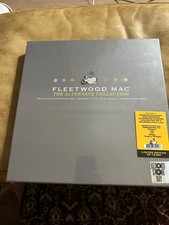
Fleetwood Mac The Alternate Collection 8LP Vinyl Box Set Sealed RSD 2022 Limited
$180.00

FLEETWOOD MAC Lifetime Collection LOT Ticket Stubs Vinyl Records Cd STEVIE Nicks
$333.33
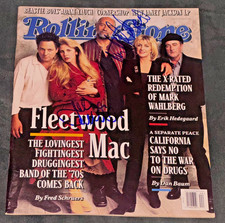
Signed John McVie Mick Fleetwood Mac Autographed Rolling Stone Magazine Auto PSA
$499.99


 Linear Mode

