
| |
|
#76
 06-16-2004, 09:35 PM
|
||||
|
||||

http://www.thenation.com/doc.mhtml?i=20040621&s=pollitt
Desperately Seeking Health Insurance Print this article E-mail this article Write to the editors Take Action Now! s crises go, medical insurance is not a very sexy one. It's not that no one talks about the 43.6 million uninsured, skyrocketing drug costs, emergency rooms crammed with patients in search of routine care or the 18,000 Americans who, according to the Institute of Medicine, die each year for lack of care. Every politician has a stump speech and a plan--usually a rather complicated one. (Insert your Kerry joke here if you must, but give the man credit--at least he'll cover most people.) The simple solution would be a single-payer system like Canada's, a mantra the left has been humming for decades, but where's the big, irate, energetic movement for it? Health coverage doesn't seem to bring out the fire-breathers, like, oh, gay marriage or "partial-birth" abortion or whether "under God" belongs in the Pledge of Allegiance. Why is that? Maybe we've been living this way so long that we've just accepted it, like the housing crisis. Maybe the kinds of people who are uninsured are the sort voters are all too used to ignoring. Maybe people don't want to pay for universal coverage (even though they tell pollsters they're willing). And maybe the political classes, who have good coverage and money and tend to live in places with lots of specialists and state-of-the-art hospitals, fear they'd have to stand in line under a Canadian-style system, as the New York Times is always warning them they would. While wonks debate, the crisis deepens. Dr. Michele Barry, who directs tropical medicine at Yale Medical School, sent me her notes on three patients she saw within a single week recently at Yale-New Haven Hospital: Mr. N. An Italian-American man in his early 50s who moved from Florida to New Haven to let his wife die up near her family in Maine. He went 250,000 dollars in debt trying to self-pay for care for his wife, who was diagnosed with cervical cancer over a year ago. He was admitted to my service with hyperkalemia (high potassium) due to using expensive medicines he could get for free from pharmaceutical donations--these were inappropriate for his kidney problems, which were caused by diabetes. He could not even afford the long-acting insulin we wanted to give him. His reply to my telling him he might die if we didn't treat his potassium was: "Doc, maybe that's for the better." Mr. M. A 38-year-old auto mechanic who was admitted in narcotic withdrawal. A year ago, he was the victim of a freak accident when a clutch released and a car rolled back into him. He developed back pain which subsequently caused him to seek several neurosurgical opinions, but nothing was done because he couldn't afford follow-up appointments. He became addicted to the OxyContin the doctors prescribed. Unemployed, disabled and out of money due to medical costs of imaging and doctors, he lost his home and was forced to move to a motel and file for bankruptcy. He came into the hospital when he could not afford his motel room or any more narcotics and thus started to withdraw. Ms. W. A 40-year-old black woman from North Carolina who came into my service with hypertensive emergency (escalating blood pressure) and heart failure. She had stopped taking any blood pressure medicines in order to save for her husband's kidney transplant. Due to her prolonged non-treatment, she developed irreversible heart damage. As these tragic stories show, health insurance is about more than treating an immediate illness. Lack of insurance can precipitate an avalanche of trouble: job loss, debt, bankruptcy, more illness, inappropriate charity treatment that worsens the original problem, prescription drug addiction, homelessness. The crisis doesn't even have to be yours: Mr. N.'s diabetes and Ms. W.'s hypertension--common, manageable conditions--became life-threatening because they skimped on their own medicine to help a spouse with an even bigger problem. In the case of Mr. N.'s wife, her fatal illness was itself possibly related to lack of preventive care because she didn't have health insurance: Cervical cancer is usually curable if caught early on by regular Pap smears. Critics complain about the cost of universal coverage, but if you think of those 43.6 million uninsured as embedded in families, you have to count the privations endured by everyone in them as part of the true cost of the status quo. More money for a parent's doctor means less for the children's dentist--or summer camp, or college fund. Untreated or inadequately treated illness means stress and anxiety for the whole family. When a patient goes bankrupt, like Mr. M.--and healthcare costs are involved in 50 percent of bankruptcies, which have risen 400 percent in the past twenty-five years--the whole family suffers. Conservatives are always worrying about divorce--what about divorce as triggered by the financial and emotional stresses of uninsured illness? Maybe universal coverage could be sold as a family value. Dr. Barry, who moves mountains for her patients, is doing all that one doctor can do. She was able to arrange donated drugs for Ms. W. and Mr. N., as a temporary stopgap. But what will happen to them down the road? As for Mr. M., she writes, "We gave him a long-acting morphine compound--not OxyContin!--for his pain and are trying to find him a surgeon who will accept state insurance. Not one orthopedic in our area does this. He was last seen living in a shelter in town." * * * 
|
|
#77
06-16-2004, 09:45 PM
|
||||
|
||||
|
The medical care in this country has been a travesty for the last 30 years, which is as far back as I can remember
 Although it had some flaws, I think Hillary actually had a good plan - in fact it was so good, the R's used most of it in their initial plan. I am unsure what the answer is. I mean socialized medicine is an alternative, but I am unsure whether it would be Constitutional. I have often toyed with the idea of having doctors and hospitals (all of them) be required by the AMA to make something like 1/3 of their practice pro bono. But, I know few people in any industry that would think that was fair if applied to them, etc. But, in the end, we are talking about people living, etc. and that should IMO take a higher priority. AND - that all of those foolish politicians (R and D alike ) passed that assinine Rx coverage crapola is a farce. Although some will benefit a little from it, IMO it was just a boon to the Rx companies, which sickens me. Surely, we are better than that.
__________________
 save the cheerleader - save the world
|
|
#78
06-16-2004, 10:10 PM
|
||||
|
||||
|
Quote:
__________________
|
|
#79
06-16-2004, 10:12 PM
|
||||
|
||||
|
Quote:
But, I also think the US should vote the Kyoto Protocol into effect, but that'll never happen. 
__________________
|
|
#80
06-16-2004, 10:24 PM
|
||||
|
||||
|
Quote:
Oh - the poor Kyoto protocol - I will always say that when the rest of the world comes on board, we should. I also think Clinton knew there was no way that would happen, so he set W up on that one. But, I agree, we should adopt the KP - it will just never happen until both R and D politicians get off the corp. tit  As for socialized medicine, I am not against it in theory, I am just scared of what will happen if the govt. takes it over. The govt. tends to screw up everything it touches and then makes it into a procedural nightmare like Medicare and SS. So, I think in the end, forcing doctors and hospitals to donate a third of their time and rape the ins. companies for the other 2/3 is the only way to ensure quality and non-bureaucratic health care. But, who knows, it seems to work in GB  BTW - did you catch Preacher man Al Gore on CNN tonight Bless his spot light deprived heart
__________________
save the cheerleader - save the world
|
|
#81
06-16-2004, 10:34 PM
|
||||
|
||||
|
Quote:
Quote:
Quote:
EDIT: That came off as asshole-ish. It was not meant that way! 
__________________
|
|
#82
06-16-2004, 10:59 PM
|
||||
|
||||
|
Quote:
|
|
#83
06-17-2004, 07:07 AM
|
||||
|
||||
|
I was talking about state sponsored health care, not private ins.
I think the HMO system has had successess, but for the most part has failed. I am not in an HMO nor do I want to be. Interestingly, I am in a Blue Cross Blue Shield PPO and I think it runs great. Rx drugs are $5 to $10 each time and I can choose the brand name one. Each doctor's visit is $25 and the choice of doctors is far greater than the HMO choice. My portion of the premiums are $48.90 per month. All ER visits are free to me no matter if the hospital is a PPO. I am unsure how I could do better than that. Moreover, BCBS widely offers my plan in its other companies (there are many BCBS's). If I leave my job, under Federal law (COBRA) I, like anyone else, can continue this health care coverage for a year or two (I am uncertain as to the exact amount of time). I can then join a private group for about $100 a month. The COBRA provision also allows, I think (its been awhile) you to join one while still covered under another so as to avoid the one year pre-existing exceptions most plans have. So, the private coverage is out there. Thus, I was not really talking about private insurers (which I do think need a swift kick in the rear, esp. HMO's ) as I think it is the publicly funded health care and the health care for seniors that needs to be overhauled.
__________________
save the cheerleader - save the world Last edited by strandinthewind; 06-17-2004 at 07:16 AM..
|
|
#84
06-17-2004, 08:12 AM
|
||||
|
||||
|
http://www.commondreams.org/views04/0616-09.htm
This is the Fight of Our Lives by Bill Moyers Keynote speech Inequality Matters Forum New York University June 3, 2004 _________________________ This is too long to post, but it is relevant to the current discussion.
__________________
save the cheerleader - save the world
|
|
#85
06-17-2004, 08:17 AM
|
||||
|
||||
|
and back to the economy in a more direct manner:
http://money.cnn.com/2004/06/17/mark...ex.htm?cnn=yes PPI to eat at stocks Futures turn lower after report shows big pickup in wholesale inflation. June 17, 2004: 8:51 AM EDT NEW YORK (CNN/Money) - Stock futures edged lower, indicating a weaker start on Wall Street, after the latest government report on inflation came in a shade higher than forecasts. About 40 minutes before the start of trading, S&P and Nasdaq futures pointed to opening losses in the market. U.S. producer prices shot up a hefty 0.8 percent last month, the biggest jump since March 2003, as prices for food and energy surged, the Labor Department said Thursday. The core producer price index, which excludes food and energy prices, gained a larger-than-expected 0.3 percent. Economists surveyed by Briefing.com on average had expected a 0.6 percent rise in overall producer prices with the core index up 0.2 percent In another sign that the economy continues to improve, claims for unemployment benefits fell last week, coming in below estimates. Initial claims for unemployment insurance dropped to 336,000 in the week ending June 12, the Department of Labor said. That's down from a revised 351,000 the previous week and below economists' estimates of 340,000. In other news, influential bond fund manager Bill Gross of PIMCO told the Financial Times that he's worried about the outlook for the global economy. "Too much debt, geopolitical risk and several bubbles have created a very unstable environment which can turn any minute," Gross was quoted as saying. "More than any point in the past 20 or 30 years, there's potential for a reversal." Stocks ended little changed Wednesday as the market tried to digest the latest news on consumer prices, oil and comments from Fed officials about the outlook for the economy and interest rates. Overseas, Asian stocks ended mostly lower while European markets were little changed in morning trading. Treasury bonds edged lower, pushing the yield on the 10-year note up to 4.74 percent from 4.72 late Wednesday. Bond prices and yields move in opposite directions. The dollar fell against the euro and Japanese yen. Oil prices rose, supported by the stoppage to Iraqi exports after a series of sabotage strikes on key pipelines and a drop in U.S. gasoline stocks as peak summer demand approached. U.S. light crude added 44 cents to $37.76 a barrel in electronic trading, almost $5 off the 21-year peak hit earlier this month, while Brent crude in London added 45 cents to $35.65 a barrel, Reuters reported.
__________________
save the cheerleader - save the world
|
|
#86
06-17-2004, 12:20 PM
|
||||
|
||||
|
Quote:
COBRA is sure a nice idea. However, how many unemployed folks do you think can afford to pay the full premium of their insurance each month? Maybe if they live in a box. HMO's were the beginning of the end.
|
|
#87
06-17-2004, 12:29 PM
|
||||
|
||||
|
Quote:
ITA - HMO's are just not a good idea.
__________________
save the cheerleader - save the world
|
|
#88
06-17-2004, 12:32 PM
|
||||
|
||||
|
Quote:
http://www.dol.gov/opa/media/press/eta/ui/current.htm The advance seasonally adjusted insured unemployment rate was 2.3 percent for the week ending June 5, unchanged from the prior week's unrevised rate of 2.3 percent. The advance number for seasonally adjusted insured unemployment during the week ending June 5 was 2,895,000, an increase of 31,000 from the preceding week's revised level of 2,864,000. The 4-week moving average was 2,920,750, a decrease of 9,500 from the preceding week's revised average of 2,930,250. UNADJUSTED DATA The advance number of actual initial claims under state programs, unadjusted, totaled 311,906 in the week ending June 12, an increase of 3,927 from the previous week. There were 383,371 initial claims in the comparable week in 2003. The advance unadjusted insured unemployment rate was 2.1 percent during the week ending June 5, unchanged from the prior week. The advance unadjusted number for persons claiming UI benefits in state programs totaled 2,677,997, an increase of 43,039 from the preceding week. A year earlier, the rate was 2.7 percent and the volume was 3,376,503. Extended benefits were available in Alaska during the week ending May 29. 10,895 individuals filed continued claims under the Federal Temporary Extended Unemployment Compensation (TEUC) program during the week ending May 29. Initial claims for UI benefits by former Federal civilian employees totaled 1,343 in the week ending June 5, a decrease of 70 from the prior week. There were 1,865 initial claims by newly discharged veterans, a decrease of 15 from the preceding week. There were 14,267 former Federal civilian employees claiming UI benefits for the week ending May 29, an increase of 1,033 from the previous week. Newly discharged veterans claiming benefits totaled 24,916, a decrease of 77 from the prior week. The highest insured unemployment rates in the week ending May 29 were in Alaska (4.9 percent), Puerto Rico (3.8), Oregon (3.2), Pennsylvania (3.0), New Jersey (2.9), Michigan (2.7), Washington (2.7), Arkansas (2.6), California (2.6), and Massachusetts (2.6). The largest increases in initial claims for the week ending June 5 were in California (+2,628), Tennessee (+1,613), Pennsylvania (+1,466), Michigan (+1,442), and Louisiana (+1,055), while the largest decreases were in Texas (-1,303), Florida (-1,154), New Jersey (-889), South Carolina (-821), and Arizona (-799). Wow! Look at that job market go! 
|
|
#89
06-17-2004, 12:34 PM
|
||||
|
||||
|
Perhaps that explains the market's tepid reception to this good news.
__________________
save the cheerleader - save the world
|
|
#90
06-17-2004, 12:37 PM
|
||||
|
||||
|
http://ap.tbo.com/ap/breaking/MGBANVONKVD.html
Workers' Comp Claims From Americans Working in Iraq Could Cost Government Millions By Leigh Strope The Associated Press Published: Jun 17, 2004 WASHINGTON (AP) - Almost half of all injury and death claims filed by U.S. government contractors so far this year were for incidents that occurred in Iraq. The federal government ultimately will spend millions of dollars for these workers' compensation payments. Federal law requires all U.S. government contractors and subcontractors to obtain workers' compensation insurance for civilian employees who work overseas. If an injury or death claim is related to a "war-risk hazard," the War Hazards Compensation Act provides for government reimbursement to insurance carriers. Of the 771 injury claims filed by U.S. contractors so far this year, 345 occurred in Iraq. Of the 66 deaths reported as of last week, all but nine occurred in Iraq, according to the Labor Department, which handles the reporting of claims and reimbursements. Since January 2003, there have been claims for 476 injuries and 80 deaths in Iraq. Casualties are rising. A convoy of contractors was ambushed Tuesday in Baghdad. Two people were killed and three were injured when shots were fired from a highway overpass. Among the most gruesome deaths were four civilian security personnel who were killed March 31 in Fallujah, their bodies mutilated and burned. The remains of two were hung from a bridge. "The security situation is virtually unprecedented," said Bob Hartwig, chief economist with the Insurance Information Institute, an industry group. "You've got the potential to be kidnapped, to be killed, to be tortured, shot at, blown up." Labor Department officials said they had no cost estimate for reimbursements of Iraq-related claims, but given the maximum payment of $1,030.78 per week and the number of injuries and deaths, it could well climb into the multimillions. In past years, annual reimbursement costs under the War Hazards Act have ranged from $1 million to $2 million.
|
 |
|
|


BEKKA BRAMLETT - I Got News For You - CD - **Excellent Condition** - RARE
$49.99
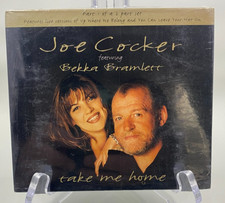
NEW - JOE COCKER - Take Me Home HTF UK CD Single feat. Bekka Bramlett
$7.49

Bekka Bramlett "I Got News For You" CD In Mint. Shongaloo Records LLC 1707. 2009
$45.00
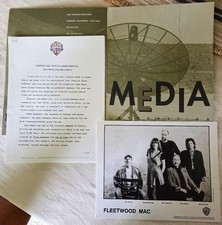
RARE Fleetwood Mac Dave Mason Bekka Bramlett Era 93 Original WB Press Kit w 8x10
$69.99
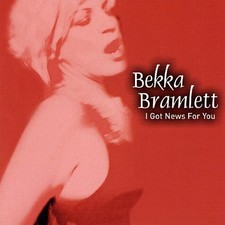
BEKKA BRAMLETT - I Got News For You - CD - **Excellent Condition** - RARE
$49.75


 Linear Mode

