
| |
|
#91
 01-09-2005, 02:32 AM
|
||||
|
||||

Quote:
 Again, I think you sould be singing a different tune if Kerry had won - but we will never really know because he did not win (sadly so IMO) Here is an interesting article on the prior coronations: The First Inauguration It was in New York City, out nation’s first capital, that George Washington became the first President of the United States. Congress had planned for the new government to begin its responsibilities on March 4, 1789, but a harsh winter made travel difficult, and it wasn’t until April 6 that enough congressmen arrived in New York to count the electors’ votes and announce, "Whereby it appears that George Washington, Esq. Was unanimously elected President, --and John Adams, Esq. Was duly elected Vice President of the United States of America…" It took several days for the exciting news to reach Mount Vernon, General Washington’s home in Virginia. He set off for the capital, leaving behind his wife, Martha, who would join him later. He traveled by coach and on horseback through Baltimore, Wilmington, and Philadelphia, finally arriving in New York City aboard a grand barge that had been rowed from New Jersey across Newark Bay. Meanwhile John Adams, his Vice President-elect, and the Congress were deciding what the new Chief Executive’s official title should be. Adams preferred "His Most Benign Highness," but a congressional committee settled on the title we still use today: "President of the United States." Inauguration Day, April 30, began with the sounds of ceremonial artillery and church bells ringing across the city. At noon, General Washington made his way through large crowds to Federal Hall, where both houses of Congress were assembled for swearing-in. New York Chancellor Robert Livingston read the oath, and Washington, his right hand on a Bible, repeated the words inscribed in the Constitution: "I do solemnly swear that I will faithfully execute the office of the President of the United States and will, to the best of my ability, preserve, protect, and defend the Constitution of the United States." President Washington added the words, "So help me God," a custom followed by every President since. Inaugural Traditions The First Inauguration gave rise to many traditions that continue today. For example, President Washington followed his swearing-in with an Inaugural Address, a special speech written for the occasion. In 1793, the oath of office for Washington’s second term was administered by William Cushing, an Associate Justice of the Supreme Court and the first in a long line of Supreme Court Justices to preside over Presidential Inaugurations. Thomas Jefferson was the first to be sworn in as President in Washington, D.C., the location chosen for the permanent capital and the site of all but a handful of Inaugural ceremonies. Jefferson showed his taste for simplicity by going on foot to the Capitol for the oath-taking and returning to his boardinghouse afterwards for dinner. After his second Inauguration, however, Jefferson rode on horseback from the Capitol to the President’s House (the name then used for the White House) amid music and a spontaneous gathering of mechanics from the nearby Navy Yard – a procession that grew into today’s Inaugural Parade. Jefferson’s second Inauguration also began the tradition of the Inaugural Open House, when the executive mansion was opened to all who wished to greet the President after his swearing-in. The popularity of the Open House would later cause our seventh President, Andrew Jackson, to flee through a window after a mob of well-wishers stormed the White House, ruining furniture and breaking china in their eagerness to see him. In 1865, despite growing concern about safety, Abraham Lincoln shook some 6,000 hands after his second Inauguration. President Grover Cleveland, realizing that the White House could no longer accommodate such crowds, instead held a review of the troops from a flag-draped grandstand just outside, adding another element to the Inaugural Parade. Presidents have celebrated in many ways since George Washington danced the minuet after his Inauguration in 1789. James Madison, America’s fourth President, and his wife, Dolley, were the guests of honor at the first official Inaugural Ball, held at Long’s Hotel in Washington, D.C. Martin Van Buren’s Inauguration featured two balls, and President William Henry Harrison held three to meet the ever-growing demand for tickets. Later Inaugurations have featured specially built pavilions for dancing, balls held at several sites throughout the capital, and even Inaugural parties in other cities. Modern Inaugural festivities reflect not only the President they honor, but also the desire to include the many Americans who want to take part in celebrating our nation’s rich history and the transfer of presidential power. Technology and Ceremony You may have watched President Bill Clinton’s 1997 Inauguration on television or heard about it from a radio broadcast. Maybe your local newspaper carried photographs of the event, or perhaps you visited an Internet web site to get information about the ceremony and various Inaugural celebrations. We rely on technology to help us participate in and learn about our government in ways that previous generations of Americans never dreamed. For example, only the members of Congress gathered in Federal Hall on April 30, 1789, heard President Washington’s first Inaugural Address. Twenty years later, after James Madison’s swearing-in, his speech was published in the newspaper for all to read. James Polk took the oath of office on 1845 while Samuel Morse, inventor of the electric telegraph, sat near him on the platform tapping out the news on his miraculous machine. It was 1857 – the year James Buchanan became President –when the Inauguration ceremony was first photographed. Citizens across the country were able to share in the festivities through pictures. Four decades later, movie cameras recorded highlights of William McKinley’s Inauguration, giving viewers a new window into history. The year 1925 found Americans gathered around their radios to hear Calvin Coolidge take the oath of office, and in 1949, Harry Truman became the first President to whose swearing-in was televised. If you like to use computers, you may know that President Bill Clinton’s second Inauguration was the first to have an official web site and to be seen live on the Internet by people around the world. Inaugural Language The Constitution is the supreme law of the united States, describing out country’s three-branched, democratic system of government and the fundamental rights to which all citizens are entitled. In Article II, Section 1 of the Constitution, our nation’s founders declared that "The executive Power shall be vested in the President of the United States of America," and provided an oath of office for the President-elect’s official swearing-in. This 35-word oath has remained unchanged for more than two centuries, in part because it so clearly and simply describes the responsibilities of the Chief Executive: "I do solemnly swear (or affirm) that I will faithfully execute the Office of President of the United States, and will to the best of my Ability, preserve, protect and defend the Constitution of the United States." In 1817, James Monroe, our fifth President, became the first to give an Inaugural Address to an assembled public crowd. Since that time, the traditional Inaugural Address has been an opportunity for the President to speak directly to the American people. George Washington said juts 135 words after his second inauguration in 1793, while William Henry Harrison gave the longest Inaugural Address ever, taking almost two hours to deliver 8,445 words. Inaugural Addresses are often remembered as reflecting a particular time in history. During the Civil War, Abraham Lincoln called on Americans to "…finish the work we are in, to bind up the nation’s wounds," while in 1933 Franklin Roosevelt reached out to citizens discouraged by the Great Depression, saying, "This great nation will endure as it has endured, will revive and will prosper." President John F. Kennedy inspired a generation of young people in 1961 when he urged, "…ask not what your country can do for you—ask what you can do for your country." And in 1993, President Bill Clinton reassured a nation in transition after the end of the Cold War by stating, "There is nothing wrong with America that cannot be cured by what is right with America." http://clinton4.nara.gov/WH/Family/h...n_history.html
__________________
 save the cheerleader - save the world 
|
|
#92
01-09-2005, 02:33 AM
|
||||
|
||||
|
and another:
____________________________________________________________ A look at the history and tradition of Inauguration Day WASHINGTON (AP) -- At noon on January 20, in the shadow of the Capitol, George W. Bush will raise his right hand, place the other on a Bible and swear to faithfully execute the office of president and preserve, protect and defend the Constitution. It will be the 55th quadrennial presidential inauguration, an event steeped in history and marked by all the pomp and pageantry with which Americans have come to associate the oath-taking ceremony. Heightened security, a constant in this age of terrorism, also will be part of the first inaugural since the attacks of September 11, 2001. Here, in question and answer form, is a look at the inauguration: Q: Why is the inauguration on January 20 at noon? A: The Constitution's 20th Amendment, passed by Congress March 2, 1932 and ratified by the necessary states on January 23, 1933, set the date and time. The president had been sworn in on March 4, typically the final day of the congressional session. For practical reasons, the nation's forefathers had chosen that date because it took weeks to collect and count the votes, and then weeks by coach or horse for the president-elect to get to the capital. The change also reflected the desire to limit the lame-duck congressional session, which the outgoing president and members of Congress found to be an "unproductive period of time," according to Betty Koed, the assistant U.S. Senate historian. In the 1930s, Sen. George Norris, R-Nebraska, suggested the 20th Amendment, and lawmakers agreed. Koed said there were several reasons for the date. It was about two weeks after Congress counted the electoral votes. Also, calendars indicated that at least for the next few years, the inauguration would not fall on a Sunday -- a day of religious services for many -- and weather patterns showed favorable conditions. High noon seemed appropriate for a change in command. Q: Does the chief justice of the United States always administer the oath of office? A: Traditionally, at the official Washington ceremony, the chief justice administers the oath. Chief Justice William H. Rehnquist has accepted Bush's invitation to administer the oath despite begin treated for thyroid cancer. In special circumstances, others have sworn in a president. On November 22, 1963, after President Kennedy was assassinated, U.S. District Judge Sarah T. Hughes administered the oath to Lyndon B. Johnson aboard Air Force One at Love Field in Dallas. Hughes was the first woman to administer the oath. On April 30, 1789, when George Washington was sworn in on the balcony at Federal Hall in New York City, not a single justice had been appointed to the Supreme Court. Robert R. Livingston, chancellor of New York state, administered the oath. Q: Who is responsible for planning the inauguration? A: Three entities oversee what is considered a 10-day event -- parties and ceremonies five days before the inauguration, the day itself and four days of celebrations after the swearing-in. The Joint Congressional Committee on Inaugural Ceremonies is responsible for all that transpires at the Capitol. That includes the oath-taking ceremony on the West Front and the inaugural luncheon in the Rotunda for the president, vice president, members of Congress and other dignitaries. The Presidential Inaugural Committee, chosen by the president-elect, handles all events outside the Capitol, including choosing the bands for the parade and arranging the inaugural balls. The Joint Task Force-Armed Forces Inaugural Committee is responsible for providing the military ceremonial support such as marching bands, honor cordons and color guards. The Joint Task Force, representing the Army, Air Force, Navy, Marines and Coast Guard, also organizes the parade down Pennsylvania Avenue. The inauguration has been designated a National Security Special Event by the Homeland Security Department, which means the Secret Service takes the lead on security. Since 1998, the Secret Service has overseen 20 special security events, including the Republican and Democratic conventions, the 2000 inauguration and the 2002 Super Bowl in New Orleans, Louisiana. Q: When were inaugural balls first held? A: Americans threw a party to honor George Washington one week after his inauguration on May 7, 1789. The tradition of a ball began in 1809 when James Madison was inaugurated in Washington. Dolley Madison, the first lady, hosted the party for which 400 tickets were sold at $4 apiece. In 1857, James Buchanan had a single inaugural ball with all the trimmings -- $3,000 worth of wine, 1,200 quarts of ice cream, 60 cuts of mutton, 75 hams and 125 tongues as well as 400 gallons of oysters plus plenty of beef and chicken salad. Often inaugural balls were held in temporary quarters. Ulysses S. Grant's second inauguration in 1873 was in a specially constructed edifice that lacked heating. Freezing temperatures forced the guests to dance in their coats and hats, eat cold food. Canaries kept in cages as part of the decorations froze. Nine official inaugural balls are planned for Bush's inauguration, including the first commander in chief's ball for some 2,000 men and women who served in Iraq and Afghanistan and their families. Q: What music do they play at the swearing-in ceremony? A: In January 2001, the Marine Band played more than 45 songs in addition to "Hail to the Chief." Among the music: "The Man of the Hour," "Riders for the Flag," "The Southerner," "Semper Fidelis," "Solid Men to the Front," "Washington Post," "Americans We" and "March of the Women Marines." Q: What are some of the highlights in the history of the parade? A: Dwight D. Eisenhower's first inauguration, in 1953, was the largest and longest parade, with 73 bands, 59 floats, horses, elephants and civilian and military vehicles. It went on for 4 hours, 32 minutes. In 1865, for Abraham Lincoln's second inauguration, blacks marched for the first time. Women first participated in the 1917 inaugural parade, at Woodrow Wilson's second inauguration. In 1921, Warren G. Harding became the first president to ride in the procession in an automobile. Cold forced the only known cancellation of an inaugural parade in 1985, for Ronald Reagan's second term. The parade for Bush's inauguration will have 14 giant floats, 45 marching bands from across the country, 48 marching units and thousands of dignitaries and representatives from every state. The military estimates about 10,000 participants in a parade it says will last 1 hour, 52 minutes. Q: How many horses participate in the parade? A: 350. Prospects must have experience in local parades. This year they come from Colorado, Kansas, Ohio, Texas and Virginia. Q: How much does all of this cost? A: The public is contributing at least $2.8 million. Costs run much higher; in 2001, planners raised more than $40 million in private donations to help pay for the festivities. President Bush's team hopes to raise $40 million to $50 million for this inaugural, with a special "underwriter" package for $250,000 and a "sponsor" package of $100,000. Donors who dig deep gets tickets to Bush's swearing-in ceremony, good seats for the inaugural parade and either entry to a lunch or candlelight dinner in which the president, vice president and their spouses will attend. -------------------------------------------------------------------------------- Copyright 2005 The Associated Press. All rights reserved.This material may not be published, broadcast, rewritten, or redistributed. Find this article at: http://www.cnn.com/2005/ALLPOLITICS/...ation.qanda.ap
__________________
save the cheerleader - save the world
|
|
#93
01-09-2005, 02:34 AM
|
||||
|
||||
|
Quote:
uh, so, carry on. I personally don't care if you watch the news, i only care that something i saw clearly is now being called not to have existed...  
__________________
"Do not be afraid! I am Esteban de la Sexface!" "In order to live free and happily, you must sacrifice boredom. It is not always an easy sacrifice" Whehyll I can do EHYT!! Wehyll I can make it WAHN moh thihme! (wheyllit'sA reayllongwaytogooo! To say goodbhiiy!) -
|
|
#94
01-09-2005, 02:34 AM
|
||||
|
||||
|
Quote:
__________________
save the cheerleader - save the world
|
|
01-09-2005, 02:37 AM
|
| takenbythesky |
|
This message has been deleted by takenbythesky.
|
|
#95
01-09-2005, 02:37 AM
|
||||
|
||||
|
http://www.ledge.fleetwoodmac.net/sh...watch+the+news
Post #7 - you said "I rarely watch the news" - Granted rarely is not never - but it does imply you do not watch too often 
__________________
save the cheerleader - save the world
|
|
#96
01-09-2005, 02:38 AM
|
||||
|
||||
|
Quote:
 WELL SAID!!!!! 
__________________
save the cheerleader - save the world
|
|
#97
01-09-2005, 02:38 AM
|
||||
|
||||
|
Quote:
Did you edit her post in red? naughty, naughty!
__________________
"Do not be afraid! I am Esteban de la Sexface!" "In order to live free and happily, you must sacrifice boredom. It is not always an easy sacrifice" Whehyll I can do EHYT!! Wehyll I can make it WAHN moh thihme! (wheyllit'sA reayllongwaytogooo! To say goodbhiiy!) -
|
|
#98
01-09-2005, 02:40 AM
|
||||
|
||||
|
Quote:
But, she used red to highlight that she reads, not watches, the news - SWISHHHHHHHHH - the sound of a rimshot!!!!!!
__________________
save the cheerleader - save the world
|
|
#99
01-09-2005, 02:43 AM
|
||||
|
||||
|
Quote:
__________________
"Do not be afraid! I am Esteban de la Sexface!" "In order to live free and happily, you must sacrifice boredom. It is not always an easy sacrifice" Whehyll I can do EHYT!! Wehyll I can make it WAHN moh thihme! (wheyllit'sA reayllongwaytogooo! To say goodbhiiy!) -
|
|
#100
01-09-2005, 02:44 AM
|
||||
|
||||
|
Quote:
__________________
save the cheerleader - save the world
|
|
#101
01-09-2005, 02:45 AM
|
||||
|
||||
|
AND - come to think of it, I was correct about Rather resigning. Lord - why the hell don't you people just agree with me
 
__________________
save the cheerleader - save the world
|
|
#102
01-09-2005, 02:46 AM
|
||||
|
||||
|
Quote:
|
|
#103
01-09-2005, 02:48 AM
|
||||
|
||||
|
Quote:
|
|
#104
01-09-2005, 02:50 AM
|
||||
|
||||
|
Quote:
Plus, i said "I thought you did not watch the news " so you just misquoted me - see how easy it is
__________________
save the cheerleader - save the world
|
|
#105
01-09-2005, 02:50 AM
|
||||
|
||||
|
Quote:
|
 |
|
|

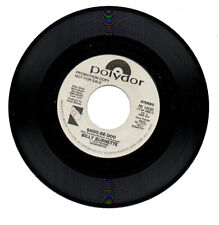
BILLY BURNETTE 45 RPM Promo Record "SHOO-BE-DOO" 1978 Rock Unplayed MINT
$6.70
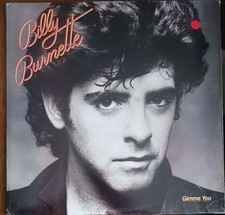
BILLY BURNETTE - GIMME YOU - 1981 COLUMBIA RECORDS VINYL ALBUM - (VG/VG+)
$5.00
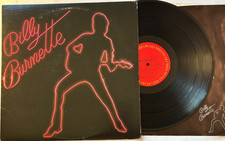
Billy Burnette - Self-Titled LP - 1980 1st Pressing 12" Columbia LP + Lyrics VG+
$4.50
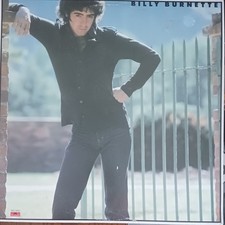
BILLY BURNETTE - (SELF- TITLED) - 1979 POLYDOR RECORDS PROMO VINYL LP - (VG/VG)
$5.50
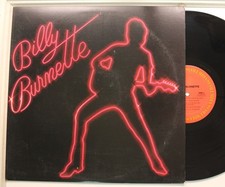
Billy Burnette Lp Self Titled On Columbia - Vg+ To Vg++ / Vg++
$11.99


 Linear Mode

