
| |
|
#31
 07-20-2005, 10:20 AM
|
||||
|
||||

July 19, 2005
POLITICS AND POLICY DOW JONES REPRINTS This copy is for your personal, non-commercial use only. To order presentation-ready copies for distribution to your colleagues, clients or customers, use the Order Reprints tool at the bottom of any article or visit: www.djreprints.com. • See a sample reprint in PDF format. • Order a reprint of this article now. Start a FREE trial of the Online Journal Subscribe to The Print Journal Free US Quotes: Symbol Name Get FREE E-Mail by topic Check Out our Mobile & Wireless Services DIGEST OF EARNINGS Details of the latest corporate earnings reported for FREE. Memo Underscored Issue of Shielding Plame's Identity By ANNE MARIE SQUEO and JOHN D. MCKINNON Staff Reporters of THE WALL STREET JOURNAL July 19, 2005; Page A3 A classified State Department memo that may be pivotal to the CIA leak case made clear that information identifying an agent and her role in her husband's intelligence-gathering mission was sensitive and shouldn't be shared, according to a person familiar with the document. A special prosecutor is investigating whether Bush administration officials broke the law by intentionally outing a covert intelligence operative. Investigators are trying to determine if the memo, dated June 10, 2003, was how White House officials learned that Valerie Wilson was an agent for the Central Intelligence Agency. News that the memo was marked for its sensitivity emerged as President Bush yesterday appeared to backtrack from his 2004 pledge to fire any member of his staff involved in the leaking of the CIA agent's name. In a news conference yesterday that followed disclosures that his top strategist, Karl Rove, had discussed Ms. Wilson's CIA employment with two reporters, Mr. Bush adopted a different formulation, specifying criminality as the standard for firing. "If someone committed a crime, they will no longer work in my administration," Mr. Bush said. White House spokesman Scott McClellan later disputed the suggestion that the president had shifted his position. The memo's details are significant because they will make it harder for officials who saw the document to claim that they didn't realize the identity of the CIA officer was a sensitive matter. Patrick Fitzgerald, the special prosecutor, may also be looking at whether other crimes -- such as perjury, obstruction of justice or leaking classified information -- were committed. On July 6, 2003, former diplomat Joseph Wilson wrote an op-ed piece for the New York Times, disputing administration arguments that Iraq had sought to buy uranium ore from Africa to make nuclear weapons. The following day, President Bush and top cabinet officials left for Africa, and the memo was aboard Air Force One. The paragraph in the memo discussing Ms. Wilson's involvement in her husband's trip is marked at the beginning with a letter designation in brackets to indicate the information shouldn't be shared, according to the person familiar with the memo. Such a designation would indicate to a reader that the information was sensitive. The memo, though, doesn't specifically describe Ms. Wilson as an undercover agent, the person familiar with the memo said. Generally, the federal government has three levels of classified information -- top secret, secret and confidential -- all indicating various levels of "damage" to national security if disclosed. There also is an unclassified designation -- indicating information that wouldn't harm national security if shared with the public -- but that wasn't the case for the material on the Wilsons prepared by the State Department's Bureau of Intelligence and Research. It isn't known what level of classification was assigned to the information in the memo. MORE • Text of Bush-Singh Press Conference1 07/18/05 • Storm Persists Over CIA Leak Probe2 07/18/05 FROM THE ARCHIVES • Memo May Aid Leak Probe3 10/17/03 Who received the memo, which was prepared for Marc Grossman, then the under secretary of state for political affairs, and how widely it was circulated are issues as Mr. Fitzgerald tries to pinpoint the origin of the leak of Ms. Wilson's identity. According to the person familiar with the document, it didn't include a distribution list. It isn't known if President Bush has seen the memo. Mr. Fitzgerald has subpoenaed the phone logs from Air Force One for the week of the Africa tour, which precedes the revelation of Ms. Wilson's CIA identity in a column by Robert Novak on July 14. In that piece, Mr. Novak identified Valerie Plame, using Ms. Wilson's maiden name, saying that "two senior administration officials" had told him that Ms. Wilson suggested sending her husband to Niger. Mr. Novak attempted to reach Ari Fleischer, then the White House press secretary, in the days before his column appeared. However, Mr. Fleischer didn't respond to Mr. Novak's inquiries, according to a person familiar with his account. Mr. Fleischer, who has since left the administration, is one of several officials who testified before the grand jury. In an October 2003 article4 on the memo, The Wall Street Journal reported that it details a meeting in early 2002 in which CIA officials discussed how to verify reports that Iraq had sought uranium ore from Niger. Ms. Wilson, an agent working on issues related to weapons of mass destruction, recommended her husband, an expert on Africa, to travel to Niger to investigate the matter. White House officials had been warning reporters off the notion that the trip to Niger was ordered by Vice President Dick Cheney, as Mr. Wilson had suggested. Emails and a first-person account published this week of his grand-jury testimony by Time magazine reporter Matthew Cooper support this notion. The grand jury is set to expire in October in this case, though its tenure could be extended for six months. It is possible that reporters learned Ms. Wilson's identity from government officials who hadn't seen the memo. Mr. Cooper has testified and written that he was first told of Mr. Wilson's wife by Mr. Rove, the White House deputy chief of staff. Mr. Rove didn't identify Ms. Wilson by name. Similarly, one of Mr. Cooper's other sources, I. Lewis "Scooter" Libby, the vice president's chief of staff, said he had heard Mr. Wilson's wife worked at the CIA, but he didn't identify her any further, according to Mr. Cooper. The fact that two top White House officials discussed a CIA agent with reporters has prompted a furor in Washington, with Democrats calling for the firing of Mr. Rove. A new ABC News poll signaled how the matter has damaged the administration's credibility -- and the political peril Mr. Rove still faces. Just 25% of Americans say the White House is fully cooperating with the federal investigation into the leak of Ms. Wilson's identity, down from about half when the investigation began nearly two years ago. Moreover, 75% said Mr. Rove should lose his job if he leaked classified information. The poll of 1,008 adults, conducted July 13-17, has a margin of error of three percentage points. ---- John Harwood contributed to this article http://online.wsj.com/article_email/...aqWHm5,00.html
__________________
 save the cheerleader - save the world 
|
|
#32
07-23-2005, 08:13 PM
|
||||
|
||||
|
July 24, 2005
For Bush, Effect of Investigation of C.I.A. Leak Case Is Uncertain By RICHARD W. STEVENSON WASHINGTON, July 23 - His former secretary of state, most of his closest aides and a parade of other senior officials have testified to a grand jury. His political strategist has emerged as a central figure in the case, as has his vice president's chief of staff. His spokesman has taken a pounding for making public statements about the matter that now appear not to be accurate. For all that, it is still not clear what the investigation into the leak of a C.I.A. operative's identity will mean for President Bush. So far the disclosures about the involvement of Karl Rove, among others, have not exacted any substantial political price from the administration. And nobody has suggested that the investigation directly implicates the president. Yet Mr. Bush has yet to address some uncomfortable questions that he may not be able to evade indefinitely. For starters, did Mr. Bush know in the fall of 2003, when he was telling the public that no one wanted to get to the bottom of the case more than he did, that Mr. Rove, his longtime strategist and senior adviser, and I. Lewis Libby Jr., Vice President Dick Cheney's chief of staff, had touched on the C.I.A. officer's identity in conversations with journalists before the officer's name became public? If not, when did they tell him, and what would the delay say in particular about his relationship with Mr. Rove, whose career and Mr. Bush's have been intertwined for decades? Then there is the broader issue of whether Mr. Bush was aware of any effort by his aides to use the C.I.A. officer's identity to undermine the standing of her husband, a former diplomat who had publicly accused the administration of twisting its prewar intelligence about Iraq's nuclear program. For the last several weeks, Mr. Bush and his spokesman, Scott McClellan, have declined to address the leak in any substantive way, citing the continuing federal criminal investigation. But Democrats increasingly see an opportunity to raise questions about Mr. Bush's credibility, and to reopen a debate about whether the White House leveled with the nation about the urgency of going to war with Iraq. And even some Republicans say Mr. Bush cannot assume that he will escape from the investigation politically unscathed. "Until all the facts come out, no one is really going to know who the fickle finger of fate points at," said Tony Fabrizio, a Republican pollster. The case centers on how the name of a C.I.A. operative came to be appear two years ago in a syndicated column by Robert D. Novak, who identified her by her maiden name, Valerie Plame. The operative, who is more usually known as Valerie Wilson, is married to Joseph C. Wilson IV, a former diplomat who had publicly accused the administration eight days before Mr. Novak's column of twisting some of the intelligence used to justify going to war with Iraq. Under some conditions, the disclosure of a covert intelligence agent's name can be a federal crime. The special prosecutor in the case, Patrick J. Fitzgerald, has kept a tight curtain of secrecy around his investigation. But he spent more than an hour in the Oval Office on June 24, 2004, interviewing Mr. Bush about the case. Mr. Bush was not under oath, but he had his personal lawyer for the case, James E. Sharp, with him. Neither the White House nor the Justice Department has said what Mr. Bush was asked about, but prosecutors do not lightly seek to put questions directly to any president, suggesting that there was some information that Mr. Fitzgerald felt he could get only from Mr. Bush. Allan J. Lichtman, a presidential historian at American University in Washington, said the lesson of recent history, for example in the Iran-contra case under President Ronald Reagan, is that presidents tend to know more than it might first appear about what is going on within the White House. "My presumption in presidential politics is that the president always knows," Mr. Lichtman said. "But there are degrees of knowing. Reagan said, keep the contras together body and soul. Did he know exactly what Oliver North was doing? No, it doesn't mean he knew what every subordinate is doing." Although it is possible that other officials will turn out to have played leading roles in the leak case, the subordinates whose actions would appear to be of most interest to Mr. Bush right now are Mr. Rove and Mr. Libby, who as Mr. Cheney's chief of staff had particular reason to protect the vice president. According to accounts by various people involved in the case, Mr. Rove spoke in the days after Mr. Wilson went public with his criticism in July 2003 to both of the first two reporters to disclose that Mr. Wilson's wife worked for the C.I.A., Mr. Novak and Matthew Cooper of Time. Mr. Cooper has said he also spoke about the case with Mr. Libby. By September 2003, as a criminal investigation was getting under way, Mr. McClellan was telling reporters that Mr. Rove had nothing to do with the leak, saying he had checked with Mr. Rove about the topic. Around the same time, the president was saying he had no idea who might have been responsible. Asked by a reporter on Oct. 6, 2003, whether the leak was retaliation for Mr. Wilson's criticism, Mr. Bush replied: "I don't know who leaked the information, for starters. So it's hard for me to answer that question until I find out the truth." Asked the next day if he was confident that the leakers would be found, Mr. Bush, alluding to the "two senior administration officials" cited by Mr. Novak as his sources, replied: "I don't know if we're going to find out the senior administration official. Now, this is a large administration, and there's a lot of senior officials. I don't have any idea. I'd like to. I want to know the truth." Republicans said the relationship between Mr. Bush and Mr. Rove was so deep and complex that it was hard to imagine the president cutting ties with him barring an indictment. "Can you survive being involved in something you probably shouldn't have been involved in where you didn't break any laws?" Mr. Fabrizio said. "Well, you probably can, especially if you are Karl." Mr. Fabrizio said that even if Mr. Rove left the White House, he would continue to consult with Mr. Bush "unless they put him in a tunnel." Mr. McClellan and other White House officials have repeatedly declined to answer when asked if Mr. Rove or Mr. Libby had told the president by October 2003 that they had alluded to Ms. Wilson's identity months earlier in their conversations with the journalists. But Mr. Bush's political opponents say the president is in a box. In their view, either Mr. Rove and Mr. Libby kept the president in the dark about their actions, making them appear evasive at a time when Mr. Bush was demanding that his staff cooperate fully with the investigation, or Mr. Rove and Mr. Libby had told the president and he was not forthcoming in his public statements about his knowledge of their roles. "We know that Karl Rove, through Scott McClellan, did not tell Americans the truth," said Representative Rahm Emanuel, Democrat of Illinois and a former top aide in the Clinton White House. "What's important now is what Karl Rove told the president. Was it the truth, or was it what he told Scott McClellan?" There is a third option, that neither Mr. Rove nor Mr. Libby considered their conversations with the journalists to have amounted to leaking or confirming the information about Ms. Wilson. In that case, they may have felt no need to inform the president, or they did inform him and he shared their view that they had done nothing wrong. Mr. Bush has also yet to answer any questions publicly about what if anything he learned from aides about Mr. Wilson and Ms. Wilson in the days after Mr. Wilson leveled his criticism of the administration in an Op-Ed article in The New York Times on July 6, 2003. http://www.nytimes.com/2005/07/24/po...rtner=homepage
__________________
save the cheerleader - save the world
|
|
#33
07-23-2005, 09:19 PM
|
||||
|
||||
|
i want this to turn into a feeding frenzy. thanks for sharing these articles, strandie. i seem to not pay attention to the news anymore. how sad, i get my info from the ledge... at least people share!
"This country, with its institutions, belongs to the people who inhabit it. Whenever they shall grow weary of the existing government, they can exercise their constitutional right of amending it... or exercise their revolutionary right to overthrow it." Lincoln
__________________
"Check it out, I've got a gaping hole." ~ SN
|
|
#35
07-24-2005, 01:35 PM
|
||||
|
||||
|
Quote:
Atty. Gen. Gonzales Responds to Frank Rich's '12-Hour Gap' Charge By E&P Staff Published: July 24, 2005 11:20 AM ET NEW YORK Attorney General Alberto Gonzales, responding to a strong charge in a column by Frank Rich in The New York Times’ today, said there was nothing improper about waiting 12 hours to “preserve all materials” after being informed by the Justice Department in 2003 that it was launching an investigation into the disclosure of Valerie Plame’s status as a CIA agent. Gonzales told Bob Schieffer on the CBS show “Face the Nation” that he had been given permission by the Justice Department to hold off overnight if he saw fit, which he did. He also explained that he had not launched his own probe into the matter because “in this kind of case you want to wait to see if there is a criminal investigation.” He said he feared his own queries into the Plame leak “would hinder a criminal investigation.” Rich had written that Gonzales was likely denied the Supreme Court nod that just went to John G. Roberts because the White House feared that he had too much “proximity” to the Plame scandal. “As White House counsel, he was the one first notified that the Justice Department, at the request of the C.I.A., had opened an investigation into the outing of Joseph Wilson's wife,” Rich wrote. “That notification came at 8:30 p.m. on Sept. 29, 2003, but it took Mr. Gonzales 12 more hours to inform the White House staff that it must ‘preserve all materials’ relevant to the investigation. "This 12-hour delay, he has said, was sanctioned by the Justice Department, but since the department was then run by John Ashcroft, a Bush loyalist who refused to recuse himself from the Plame case, inquiring Senate Democrats would examine this 12-hour delay as closely as an 18½-minute tape gap. ‘Every good prosecutor knows that any delay could give a culprit time to destroy the evidence,’ said Senator Charles Schumer, correctly, back when the missing 12 hours was first revealed almost two years ago.” Asked about this by Schieffer today, Gonzales said, “It has always been my practice to work closely with investigators.” After getting notification from the Justice Department about 8 p.m. that night, he asked if he could inform staffers at the White House early in the morning , and that was okayed. Schieffer then asked if he at least informed anyone at the White House that first night to “get ready” for the order. Yes, Gonzales said, he told the president’s chief of staff that night, and then the president himself “first thing” the next day. He then explained that he hadn't launched an internal probe just in case a criminal investigation was in the works. Any regrets about how he handled all this? Schieffer wondered. “No,” Gonzales replied, pointing how that the “strong prosecutor” in the case will bring out all the facts.
|
|
#36
07-24-2005, 06:03 PM
|
||||
|
||||
|
in my most sacred non-lindsey-shagging fantasies i see rove, ashcroft, and cheney going down and taking gonzales, frist, delay, jeb bush, and mel martinez with them. as it looks like lindsey-shagging isn't in the cards, i will most certainly settle for shooting jerk republican fish in a valerie plame barrel.
__________________
"Check it out, I've got a gaping hole." ~ SN
|
|
#37
07-24-2005, 06:11 PM
|
||||
|
||||
|
Quote:
|
|
#38
07-24-2005, 08:28 PM
|
||||
|
||||
|
Quote:

|
 |
|
|


Fleetwood Mac – The Very Best Of Fleetwood Mac 2 CD Set - NEW
$17.40
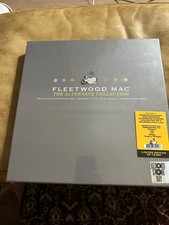
Fleetwood Mac The Alternate Collection 8LP Vinyl Box Set Sealed RSD 2022 Limited
$180.00

FLEETWOOD MAC KILN HOUSE Gatefold LP-Reprise RS 6408-Vinyl EXCELLENT
$22.99

Fleetwood Mac The Very Best of Fleetwood Mac 2CD 2002 Rhino R2 73775
$9.50

Stevie Nicks (Fleetwood Mac) Signed 8x10" Authentic Original Autograph + COA
$125.00


 Linear Mode

