
| |
|
#16
 06-26-2004, 07:24 PM
|
||||
|
||||

Quote:
Oops. I forgot. There was no Iraq/Al Qaida connection. 
|
|
#18
06-26-2004, 08:12 PM
|
||||
|
||||
|
Quote:
Maybe you can ring them up and they'll let you prosecute him while beating on your chest singing John Ashcroft's "Let The Eagle Soar."
|
|
#19
06-26-2004, 08:22 PM
|
||||
|
||||
|
Quote:
 You do realize people will lie and say anything when faced with jail You do realize people will lie and say anything when faced with jail  In fact, people will lie and say anything when they cannot sell their case for immediate war based on the evidence everyone agrees with (Hello W In fact, people will lie and say anything when they cannot sell their case for immediate war based on the evidence everyone agrees with (Hello W  ) )  Again, I am not saying this guy did or did not do anything. I am just saying he has to prove it - and you just automatically believe him (I do not think he actually said he did anything did he). If he is relying solely on his word, that will not be good enough because his credibility is not very good in that he failed his duty to report it while there and instead he came home while still getting paid and while having turned his back on all the autrocities he allegedly witnessed. Then, once home, he then and apparently only then cried out against it. I am not too sure that will play well with the court (I am unsure if he will get a jury as he will be in military court and be prosecuted by the JAG) - of course, I could be wrong Again, it will be his burden and unless he comes up with other than his word, which he may hopefully be able to do - he most likely is going to jail.This is just my speculation of the facts of this case.
__________________
 save the cheerleader - save the world Last edited by strandinthewind; 06-26-2004 at 09:08 PM..
|
|
#20
06-26-2004, 08:56 PM
|
||||
|
||||
|
Quote:
But, it does not matter to me because I do not think a link to Al-Q was necessary. As I have repeatedly stated, the world for 11 years thought SH had WMD and called for him to disarm or prove he had disarmed. he refused to do so and acted in every way possible to thwart the world. After 9/11, I, along with every other major political person in the word, thought the world could no longer afford the possibility that SH would give some chemical or biological weapon to any terrorist group, much less use them himself as Russia claims he wanted to do to us after 9/11 (granted they have not proved that - but it is a strong statement to lie about ). Interestingly, every major political leader in the world agrees with me, including the D heir apparent My only issue was the timing of the war. I think in the end, however, SH could have had ten more years and he would never have cooperated AND according to David Kay, SH was in material breach, which only supported UN Res. 1441. So, regardless of any link with OBL and Al-Q, I think SH had to go. I do wish, however W had done it differently because in his rush to war, we sent untrained people over there and that has cost us significantly IMO.But, I brought up Al-Q earlier to demonstrate that the GC does not apply against them. I also think they and/oe other terrorist groups we similarly cannot tolerate after 9/11 are in Iraq now. But, you may think differently despite the evidence to the contrary. I will not, of course agree with you
__________________
save the cheerleader - save the world
|
|
#21
06-26-2004, 08:58 PM
|
||||
|
||||
|
Quote:
__________________
save the cheerleader - save the world
|
|
#22
06-26-2004, 09:08 PM
|
||||
|
||||
|
http://jurist.law.pitt.edu/forum/paust2.php
THE COMMON PLAN TO VIOLATE THE GENEVA CONVENTIONS Professor Jordan Paust University of Houston Law Center JURIST Guest Columnist If one focuses on the January 25, 2002 Memorandum for the President by White House Counsel Alberto R. Gonzales (available here) and President George Bush’s subsequent decisions and authorizations, there is evidence of the initiation of a Common Plan to violate the 1949 Geneva Conventions. Behind the Plan was a memorandum addressing possible war crime responsibility and designs for attempted avoidance of international criminal responsibility that was written by then DOJ OLC attorneys John Yoo and Robert Delahunty entitled “Application of Treaties and Laws to Al Qaeda and Taliban Detainees” written on January 9, 2002 (available in part here) and “endorsed by top lawyers in the White House, the Pentagon and the vice president’s office,” according to the New York Times (Neil A. Lewis, “Justice Memos Explained How to Skip Prisoner Rights,” NYT, May 21, 2004, at A10). According to the Gonzales memo, the Common Plan involved at least those responsible for “the Department of Justice...formal legal opinion concluding... [with respect to] the Geneva Convention III on the Treatment of Prisoners of War (GPW)...that there are reasonable grounds for you to conclude that GPW does not apply with respect to the conflict with the Taliban. I understand that you decided that GPW does not apply...,” adding: “OLC has further opined that you have the authority to determine that GPW does not apply to the Taliban....OLC’s interpretation of this legal issue is definitive.” According to the Yoo - Delahunty memo, when asked by General Counsel William Haynes about “the effect of international treaties...on the treatment of individuals detained by the U.S. Armed Forces during the conflict in Afghanistan... [and, i]n particular, ...whether the laws of armed conflict apply to the conditions of detention and the procedures for trial... [, w]e conclude that these treaties do not protect members of the al Qaeda organization... [and] do not apply to the Taliban....” The Plan among White House Counsel Gonzales and President Bush (and evidently others in DOJ and DOD at the time) that is evidenced in the Gonzales memo was legally inept. The Plan openly admits the unavoidable fact that “the customary laws of war would still be available.... Moreover, even if GPW is not applicable, we can still bring war crimes charges....” with respect to violations of the laws of war during the war in Afghanistan. Thus, the Plan recognizes that the customary laws of war apply to the war in Afghanistan but involves a design and decision to refuse to apply the 1949 Geneva Conventions despite the unavoidable facts: (1) that they apply to the war in Afghanistan, and (2) that they are treaty law that is also widely recognized as part of the customary laws of war that apply to the war in Afghanistan. As Secretary Colin Powell warned in his memo of January 26, 2002, “The United States has never determined that the GPW did not apply to an armed conflict in which its forces have been engaged.... the GPW was intended to cover all types of armed conflict and did not by its terms limit its application” (available at here ). It was reported in early February 2002 that the White House changed its prior plan to not apply the Geneva Conventions to the war in Afghanistan that the US internationalized on October 7, 2001. The newer Plan attempted to erroneously deny any protections to members of al Qaeda captured in that war, but admit that the Geneva Conventions applied during the war. See Paust, “Antiterrorism Military Commissions: Courting Illegality,” 23 Mich. J. Int’l L. 1, 7 n.15 (2001) [hereinafter “Antiterrorism”]. Later events demonstrate that the newer Plan was to deny Geneva protections for the Taliban as well, claiming that they were all unlawful combatants and, as such, had no rights under the Geneva law – which is also in error and in violation of the Conventions. See, e.g., Paust, “Judicial Power To Determine the Status and Rights of Persons Detained Without Trial,” 44 Harv. Int’l L.J. 503, 504 n.3 (2003) [hereinafter “Judicial Power”]; “Antiterrorism,” supra at 5-8 n.15. The Plan attempted to rest on a supposed “high premium on other factors, such as the ability to quickly obtain information,” supposed “military necessity,” and a claim that a “new paradigm renders obsolete Geneva’s strict limitations on questioning.” However, none of these claims justify a Plan to violate the Geneva law. Common Article 1 of the Geneva Conventions requires the United States “to respect and to ensure respect for the” Conventions “in all circumstances.” The Plan was to violate this duty. Common Article 3 requires that, “as a minimum,” all persons taking no active part in the hostilities, regardless of their status, “shall in all circumstances be treated humanely” and shall enjoy listed minimum guarantees. The Plan was to violate these rights and duties. No exceptions exist to the rights and prohibitions also contained, for example, in GPW Articles 13, 14, 16, 17, 130. No exceptions exist to the rights and prohibitions also contained, for example, in the Geneva Convention Relative to the Protection of Civilian Persons in Time of War (GC) Articles 8, 16, 27 (except for necessary measures of control and security as such), 29, 31, 32, 33, 43, 78, 147. The Plan was to violate these rights and duties. As the Legal Adviser to the U.S. Department of State has written with respect to “the right to humane treatment – a right that belongs to all humankind, in war and in peace,” “[i]t is a general principle...that inhumane treatment is cruel and unacceptable under any circumstance.... More broadly, this customary law...found more expansive expression in Article 75 of Additional Protocol I to the Geneva Conventions. While the United States has major objections to parts of Additional Protocol I, it does regard the provisions of Article 75 as an articulation of safeguards to which all persons in the hands of an enemy are entitled.” William H. Taft, IV, “The Law of Armed Conflict After 9/11: Some Salient Features,” 28 Yale J. Int’l L. 319, 321-22 (2003); see also Paust, “War and Enemy Status After 9/11: Attacks on the Laws of War, in id. at 325-35; “Judicial Power,” supra at 504-14; Paust, Abuse of Iraqi Detainees at Abu Ghraib: Will Prosecution and Cashiering of a Few Soldiers Comply With International Law? Any person who is not a prisoner of war and who is detained, regardless of status, is protected under common Article 3 of the Geneva Conventions as well as other relevant international laws. Most are also entitled to protections under the Geneva Civilian Convention. See, e.g., materials cited previously and U.S. Dep’t of Army Field Manual 27-10, The Law of Land Warfare 31, para. 73 (1956). Thus, basic Geneva rights and duties concerning humane treatment apply whether or not a person detained is a prisoner of war, unprivileged belligerent, terrorist, or ordinary civilian. Under the United States Constitution, the President (and members of the Executive branch) is bound to faithfully execute the law, which includes treaty law and customary international law. See, e.g., U.S. Const., art. II, Sec. 3; Paust, International Law as Law of the United States 169-73 (2ed. 2003), and cases and materials cited. Thus, the Plan to violate the Geneva Conventions is not only illegal but is also unconstitutional. This inquiry focuses on the Plan evidenced in the Gonzales 2002 memo and reports concerning the Yoo - Delahunty memo. It does not begin to address the criminal authorizations, orders, and other actions effectuating the Plan or other plans that involve patent violations of the laws of war, such as plans (1) to remove persons who are not pws from occupied territory in Afghanistan or Iraq in violation of GC Articles 49 and 147 (war crimes and “grave breaches”), (2) to engage in forced disappearance of persons by refusing to disclose names and/or whereabouts of those detained without trial, (3) to offer rewards “dead or alive” (a war crime), (4) to deny persons who might face trials in military commissions at Guantanamo the minimum due process rights that are required under human rights law and the Geneva Conventions, and (5) to adopt “20" or other secret interrogation techniques which apparently include some that are patent per se violations of the laws of war and human rights and some that are highly problematic and can constitute violations in particular circumstances. With respect to planned denials of Geneva protections for those being interrogated, it has also been reported that there is evidence of an effectuation of the Common Plan at Guantanamo through April 2003 when Secretary of State Donald Rumsfeld ended the use of certain illegal tactics but approved other secret harsh methods, claiming that the Geneva law did not apply to the detainees. See Robert Burns, “Lawyers Opposed Questioning at Guantanamo,” The Tribune, SanLuisObispo.com , May 21, 2004. See also DOD Background Briefing, May 20, 2004 (Di Rita: “the president had determined that the conflict...with the Taliban, while it was subject to the Geneva Conventions, people picked up as Taliban would be considered” unprotected; and a DOD Working Group created by General Counsel William Haynes in January 2003, with DOJ input, approved secret harsh interrogation techniques, which Secretary Rumsfeld approved in April 2003). There were also September 2003 and October 12, 2003 memos by Lt. Gen. Ricardo Sanchez concerning approved and need-to-be approved interrogation techniques in Iraq. We are still learning more about the impermissible interrogation techniques. Readers will recall that war crimes can range from “all measures of intimidation” through “inhumane treatment” and “cruel” treatment to “torture” and that the United States has several statutory bases for prosecution of both military and civilian persons who are reasonably accused of dereliction of duty, complicity, perpetration of various crimes, and direct involvement in common plans to violate the Geneva Conventions and other international criminal proscriptions. See, e.g., Paust, Abuse of Iraqi Detainees. Clearly, it is important that President Bush carry out his promise to initiate prosecution of all who are reasonably accused of relevant international crimes and end criminal practices such as illegal transfers of detainees, forced disappearance, and illegal forms of interrogation. -------------------------------------------------------------------------------- Jordan J. Paust is Law Foundation Professor at the University of Houston Law Center and a former Captain, U.S. Army Judge Advocate General’s Corps and member of the faculty of TJAG School (1969-1973).
|
|
#23
06-26-2004, 09:11 PM
|
||||
|
||||
|
BTW - the articel says "A military court convicted Mejia on May 21 at Fort Stewart, Ga., for going absent without leave in October 2003 after he returned from Iraq for a two- week furlough. Mejia surrendered to the military in March, armed with a 55- page conscientious objector application and stories of prisoner abuses allegedly witnessed at the Al Assad Prison near Baghdad." So, isn't this a different prison?
__________________
save the cheerleader - save the world
|
|
#24
06-26-2004, 09:13 PM
|
||||
|
||||
|
http://www.salon.com/opinion/conason...hts/index.html
Lack of protection Long before Abu Ghraib, senior officers warned that Bush appointees in the Pentagon were undermining prisoner safeguards. - - - - - - - - - - - - By Joe Conason May 7, 2004 | Long before official reports and journalistic exposés revealed the horrific abuse of Iraqi prisoners at Abu Ghraib, high-ranking American officers expressed their deep concern that the civilian officials at the Pentagon were undermining the military's traditional detention and interrogation procedures, according to a prominent New York attorney. Scott Horton, a partner at Patterson, Belknap, Webb and Tyler who now chairs the Committee on International Law of the Association of the Bar of New York City, says he was approached last spring by "senior officers" in the Judge Advocate General Corps, the military's legal division, who "expressed apprehension over how their political appointee bosses were handling the torture issue." Horton, who once represented late Soviet dissident Andrei Sakharov, was serving as the chairman of the bar association's Committee on Human Rights law when the JAG officers first contacted him. Prompted by their allegations as well as press reports of torture and mistreatment of detainees in Afghanistan, Horton and other members of the New York bar began to compile a report examining U.S. and international legal standards governing the treatment of military prisoners. Horton says he and his colleagues met with JAG officers expressing the same concerns again last fall. The bar association's 110-page report, released last week, leaves no doubt that the practices revealed at Abu Ghraib violated both U.S. and international law. During the preparation of that report, Horton and his colleagues were more concerned with practices in Afghanistan and Guantánamo than in Iraq. What they have learned recently, however, suggests that questionable practices and attitudes toward prisoners stem from broad policy decisions made at the very highest levels of the Defense Department. Indeed, Horton says that the JAG officers specifically warned him that Undersecretary of Defense for Policy Douglas J. Feith,one of the most powerful political appointees in the Pentagon, had significantly weakened the military's rules and regulations governing prisoners of war. The officers told Horton that Feith and the Defense Department's general counsel, William J. Haynes II, were creating "an atmosphere of legal ambiguity" that would allow mistreatment of prisoners in Iraq and Afghanistan. Haynes, who was recently nominated to a federal appeals court seat by President Bush, is responsible for legal issues concerning prisoners and detainees. But the general counsel takes his marching orders from Feith, an attorney whose scorn for international human rights law was summed up by his assessment of Protocol One, the 1977 Geneva accord protecting civilians, as "law in the service of terrorism." Haynes, who was recently nominated to a federal appeals court seat by President Bush, is responsible for legal issues concerning prisoners and detainees. But the general counsel takes his marching orders from Feith, an attorney whose scorn for international human rights law was summed up by his assessment of Protocol One, the 1977 Geneva accord protecting civilians, as "law in the service of terrorism." In practice, the changes in oversight appear to have blurred authority and accountability at Abu Ghraib. Along with the lack of proper supervision and training of the Army reservists who ran the prison, these changes resulted in lawlessness and atrocious abuse. After hearing the complaints of the JAG officers, Horton and his bar colleagues wrote to Haynes and the CIA's general counsel in an effort to clarify U.S. policy on the treatment and interrogation of detainees. Those inquiries, he recalls, "were met with a firm brushoff. We then turned to senators who had raised the issue previously, and [we] assisted their staff in pursuing the issue directly with the Pentagon. These inquiries met with a similar brushoff." The Bush administration wanted no meddling by human rights lawyers as it brought democracy and human rights to the benighted region. Horton says that career military officers at the Pentagon were "greatly upset" by what they regarded as the deliberate destruction of traditions and methods that have long protected soldiers as well as civilians. Those officers, and others who may have evidence to offer, are obviously reluctant to step forward and speak because they fear reprisal from the Pentagon and the White House. They have been instructed not to talk to anyone about these issues. It is to be hoped that in the investigations to come -- whether or not Secretary of State Donald Rumsfeld and Undersecretary Feith keep their jobs -- those conscientious officers will be able to tell what they know about the decisions that led to this national disaster. Last edited by gldstwmn; 06-26-2004 at 09:18 PM..
|
|
#25
06-26-2004, 09:15 PM
|
||||
|
||||
|
Good article, but it is wrong in assuming Al-Q qaulified as POW's. That is just incorrect - period. The Taliban on the other hand probably should have. They were fighting on behalf of a country we attacked (though provoked) , they wore uniforms, etc. So, we should have considered them POW's under the GC. But, Al-Q - no way. Again, this does not mean I think the Al-Q detainees should be tortured in any way. Rumsfeld allowed that, or at least came close to it with the use of dogs as a threat, etc. For that, he should be prosecuted. You will get no argument from me there.
__________________
save the cheerleader - save the world Last edited by strandinthewind; 06-26-2004 at 09:18 PM..
|
|
#26
06-26-2004, 09:24 PM
|
||||
|
||||
|
Quote:
|
|
#27
06-26-2004, 09:26 PM
|
||||
|
||||
|
Quote:
|
|
#28
06-26-2004, 09:29 PM
|
||||
|
||||
|
http://www.startribune.com/stories/562/4812581.html
Newsweek recently published excerpts from a January 2002 memorandum from Alberto Gonzales, White House counsel, to President Bush, in which Gonzales urges the president to declare that the Geneva Convention does not apply to the conflict with Al-Qaida or the Taliban. As Secretary of State Colin Powell objected in a dissenting memo, such a declaration would "reverse over a century of U.S. policy and practice in supporting the Geneva Conventions." But Gonzales nonetheless urged President Bush to take this unprecedented step, on the grounds that it would "substantially reduce the threat of domestic criminal prosecution under the War Crimes Act."
|
|
#29
06-26-2004, 09:32 PM
|
||||
|
||||
|
Quote:
__________________
save the cheerleader - save the world
|
|
#30
06-26-2004, 09:32 PM
|
||||
|
||||
|
http://www.news14charlotte.com/conte...asp?ArID=66870
The White House also released documents detailing some of the most harsh interrogation methods Rumsfeld approved for use on prisoners at the lockup at the U.S. naval base at Guantanamo Bay, Cuba. Rumsfeld's Nov. 27, 2002, memo approved several methods which apparently would violate Geneva Convention rules, including: Putting detainees in "stress positions," such as standing, for up to four hours. Removing prisoners' clothes. Intimidating detainees with dogs. Interrogating prisoners for 20 hours at a time. Forcing prisoners to wear hoods during interrogations and transportation. Shaving detainees' heads and beards. Using "mild, non-injurious physical contact," such as poking. Prisoners at Abu Ghraib were interrogated for as long as 20 hours at a time, kept hooded and naked, intimidated with dogs and forcibly shaved. Bush and other administration officials have said other treatment at the Iraqi prison, such as forcing prisoners to perform sex acts, beating them and piling them in a naked human pyramid, were unquestionably illegal. Less than two months later, on Jan. 15, 2003, Rumsfeld rescinded approval for those methods without saying why. He appointed a Pentagon panel to recommend proper interrogation methods. That panel reported to Rumsfeld in April 2003, and its recommendations included prohibiting the removal of clothes, which it said could be considered inhumane treatment under international law. Rumsfeld issued a new set of approved interrogation methods later that month, disallowing nakedness and requiring approval for four techniques: use of rewards or removal of privileges; verbally attacking or insulting the ego of a detainee; alternating friendly and unfriendly interrogators in a "good cop, bad cop" method; and isolation. Bush had agreed in February 2002 that al Qaeda and Taliban prisoners at Guantanamo Bay were not protected by the Geneva Conventions on prisoners of war because they violated the laws of war themselves. Bush's previously secret Feb. 7, 2002, order also agrees with Justice and Pentagon lawyers that a president can ignore U.S. law and treaties. "I accept the legal conclusion of the Attorney General and the Department of Justice that I have the authority to suspend Geneva (conventions) as between the United States and Afghanistan," Bush wrote. "I reserve the right to exercise this authority in this or future conflicts." Bush and Rumsfeld have said the Geneva Conventions do apply to all prisoners in Iraq. But Rumsfeld acknowledged last week that he ordered a suspected terrorist to be secretly held in Iraq without notifying the International Committee of the Red Cross, which is a violation of the Geneva Conventions. Rumsfeld said he approved an unspecified number of other, similar secret detentions.
|
 |
|
|


$3.40

$5.40

Fleetwood Mac: The First 30 Years, Bob Brunning
$6.33
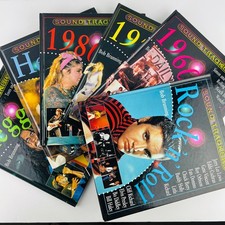
Bob Brunning Sound Trackers Music Series Hardcover 6 Book Lot Pop, Metal, Reggae
$59.99

Blues: The British Connection by Bob Brunning
$27.44


 Linear Mode

