
| |
|
|||||||
|
|
Thread Tools | Display Modes |
|
#1
 06-19-2004, 07:36 PM
|
||||
|
||||
 On 9/11, a Telling Seven-Minute Silence
http://www.washingtonpost.com/ac2/wp...nguage=printer
Interpreting the President's Image in Crisis By Joel Achenbach Washington Post Staff Writer Saturday, June 19, 2004; Page C01 You're at a photo op, reading a book with schoolchildren and an aide suddenly whispers that a second plane has hit the World Trade Center. "America is under attack." You're the president of the United States. What do you do? There have been other moments like this in American history, when the chief executive was suddenly plunged into a crisis, but they weren't caught on videotape. George W. Bush was on camera in an elementary school in Sarasota, Fla. He could see the pagers of reporters and photographers going off, one by one. He was on the spot like few people have ever been. From two different angles, Americans have new glimpses of that historic moment. One comes from rabble-rousing Michael Moore, whose Bush-eviscerating film "Fahrenheit 9/11" premieres next week, and includes an uninterrupted seven-minute segment showing Bush's reaction after hearing the news of the attack. He doesn't move. Instead he continues to sit in the classroom, listening to children read aloud. Moore lets the tape roll as the minutes pass painfully by. And now from a second angle: The staff of the 9/11 Commission this week released a report that summarizes Bush's closed-door testimony about his thoughts as he sat there. "The President told us his instinct was to project calm, not to have the country see an excited reaction at a moment of crisis . . . The President felt he should project strength and calm until he could better understand what was happening." This moment will surely be used by the president's political opponents, and with equal fervor defended by his supporters. However it is interpreted, it points out a basic truth about any president: He's both an executive and a symbolic figure. He's the spiritual leader of the nation as well as the head of state. He's monarch and prime minister. Sometimes he has to decide what role to take. Presidential historian Robert Dallek of Boston University thinks Bush focused too much on appearances, rather than leaping into action. "It speaks volumes about the preoccupation these politicians have about manipulating image," Dallek said yesterday. Bush should have immediately excused himself and started figuring out what was happening and what he could do. "The way to project calm and strength is to take care of business." Douglas Brinkley, a presidential historian at the University of New Orleans, concurs: "I don't understand how one sits there. I just don't. Minutes are an eternity in that sort of situation. . . . A quick presidential decision may save lives." snip Eventually, at the suggestion of an aide, Bush got up and went to a holding room. He spoke briefly to the vice president, his national security adviser, the governor of New York and the head of the FBI, according to the commission report. Then, the report states, Bush spent roughly 15 minutes working on what he'd say to the cameras at the elementary school. He was acting as Communicator in Chief, in a sense. With his senior aides, he worked on his lines. "As far as we know, no one was in contact with the Pentagon. The focus was on the President's statement to the nation. No decisions were made at this time, other than the decision to return to Washington," the report states. The president was persuaded to fly to Louisiana and then Nebraska before finally returning to the capital. snip Bush was conscious on Sept. 11 of the need, for symbolic reasons, to return to Washington, but was persuaded by the Secret Service, Cheney and other aides that the situation was too risky. Some critics, Dallek among them, say Bush should have overruled his aides. The commission report states that all participants agree that Bush argued forcefully for returning. The commission report portrays a discombobulated government that can't even keep track of the hijacked planes. Fighter planes fly in the wrong direction, pilots have no idea why they're in the air (maybe a cruise missile attack?), orders don't get passed along the chain of command. Everyone's flying blind. The president borrows a cell phone to try to get through to the White House. Symbolically and substantively, the ship of state was foundering. 
|
| . |
|
|

![Christine McVie - In The Meantime [New CD] picture](/vintage/img/g/nRIAAeSwBM9pHfKK/s-l225/Christine-McVie-In-The-Meantime-New-CD-.jpg)
Christine McVie - In The Meantime [New CD]
$17.25
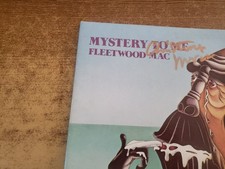
christine mcvie hand signed 1970s excellent Fleetwood Mac – Mystery To Me lp33
$284.29
![Christine McVie - Christine Mcvie [New CD] picture](/vintage/img/g/2jkAAeSwFlFpHc17/s-l225/Christine-McVie-Christine-Mcvie-New-CD-.jpg)
Christine McVie - Christine Mcvie [New CD]
$17.25
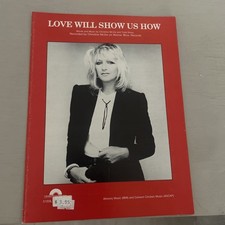
CHRISTINE McVIE "LOVE WILL SHOW US HOW" Sheet Music P/V/G 1984 Unused
$18.00
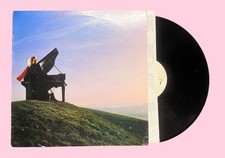
Christine McVie 1984 LP Warner Bros. Records Fleetwood Mac 9 25059-1
$9.99


 Threaded Mode