
| |
|
#226
 09-20-2005, 11:21 PM
|
||||
|
||||

Quote:
__________________
 save the cheerleader - save the world 
|
|
#227
09-20-2005, 11:23 PM
|
||||
|
||||
|
Quote:
Many people lost a ton of money in all those companies that went bust either via fraud or false speculation.
__________________
save the cheerleader - save the world
|
|
#228
09-20-2005, 11:24 PM
|
||||
|
||||
|
Quote:
__________________
save the cheerleader - save the world
|
|
#229
09-20-2005, 11:24 PM
|
||||
|
||||
|
Quote:
You say the "fraud occurred in the late 90's with Enron and MCI" I'd be willing to bet that the actual fraud (in the form of creative financing) has been going on since the 80's. It was exposed as Bush took office or shortly thereafter, but there were indications of it happening by the way Enron gouged California in selling us back our own energy. that should have set off a red flag. The inflated stock prices for these companies was a monster of their OWN making. as for the tech bubble...Im beginning to think that in the end, it really didnt affect me at the lower end of the economic ladder because I never did any wheeling/dealing. That sort of collapse really hit the speculators the hardest. I dont play the stock market. I consider it a form of gambling and my money is too important to risk losing it on risky (to me anyway) ventures. As for actual jobs lost, Im not sure exactly WHAT effect the corporate fraud had...obviously, the employees of those particular companies are S.O.L.... but as I said, those are relatively few companies...I dont know if they were absorbed by other employers or not...Im thinking if they were skilled, they were able to find other jobs. you state the factories laid off people due to a decrease in buying. I disagree. I think factories laid off people because they began to outsource their business. Americans lost a lot of work due to companies going overseas. I cant think of a single company that made the news for laying off people due to a decrease in buying....if you can, I'd be interested in hearing it.
|
|
#230
09-20-2005, 11:26 PM
|
||||
|
||||
|
Actually, here is that article:
The Nasdaq Bubble After the 1987 stock market crash, the global markets resumed their previous bull market trend. This powerful trend was driven by computer technology. Many of the technology stocks were listed on the Nasdaq exchange, which is an electronic marketplace. In the early 1990’s, the personal computer was rapidly gaining acceptance for business and personal use. The computer was at last becoming more reasonably priced and more user-friendly. Computers were no longer the fodder of geeky hobbyists. They were veritable business tools, which were vital in gaining a competitive edge. Business applications were invented to aid the user in accounting, calculating taxes and word processing. Computers also began to compete with televisions as a form of entertainment, as PC video games flooded the marketplace. Corporations such as Microsoft prospered enormously as almost every computer system contained their operating system software. During this time, the US computer industry focused more upon computer software versus hardware. This is because software was an extremely high margin product, due to it not being a physical product, like chips. Software companies produced a markup from selling licensed information, which costs very little to reproduce. Computer hardware became a commodity product, i.e. virtually indistinguishable from the product of any other competitor. Commodity products produce very little profits as each competitor constantly undercuts each other’s prices. Asian companies, with small manufacturing costs, produced virtually all of the hardware components at this point. Software, however, was protected as intellectual property with patents. Therefore, a product such as Microsoft Windows is a one of a kind product. This creates a strong barrier to entry, a benefit which is highly sought after in business. The stock prices of software companies were marching ahead rapidly. Many small software companies were started by college students in garages, paying their employees with as much pizza and soda they desired. Every startup wanted to become “the Next Microsoft”. Eventually, several of these start-up companies took the notice of serious venture capitalists, who were looking to finance these operations, take them public and reap massive profits. Soon the fledgling startups began to pay their hopeful employees with company shares. The premise was that when the company went public, the early shareholders would become instantly wealthy. The majority of the software companies were started in Silicon Valley, near San Francisco, which was a technology Mecca. The Nasdaq index of technology stocks was rising extremely fast, creating many millionaires. Computers became further popularized in the mid 1990’s, as blockbuster PC games were created, such as Sim City and Duke Nukem. This fueled an increase in tech savvy youth, as computers went from “geek to chic”. The Internet Age Around 1994, a new frontier called the internet, was first being made available to the general public. In actuality, a primitive form of the internet had been around since 1969. This early internet was called DARPANet and was created by government agencies as an efficient way to exchange scientific and military information to computers in different locations. By the 1990’s the internet had evolved as a way to communicate using email, use chat rooms and view informational websites. Almost immediately, businesses saw the internet as a profit opportunity. America Online made the internet available for the masses. The Yahoo search engine was started in 1994 as a directory for the universe of websites. Amazon became the first online bookstore in 1994. EBay was started in 1995 as an online auction site. As the internet moved from the hobbyist domain to a commercialized marketplace, online business owners became fantastically wealthy. Many technology companies were now selling stock in IPO’s. Most initial shareholders, including employees, became millionaires overnight. Companies continued to pay their employees in stock options, which profited greatly if the stock went up even slightly. By the late 1990’s, even secretaries had option portfolios valued in the millions! Many companies had BMW sign on bonuses! This is surely an example of irrational exuberance. Tech Stock Mania Several economists even postulated that we were in a “New Economy”, where inflation was nonexistent and the stock market crashes were obsolete! Even worse, it was said that earnings were not relevant in picking stocks either! The “Old Economy” referred to industrial stocks, such as those in the Dow Jones Average. Another buzzword was “Paradigm Shift”, which is a synonym of “New Economy”. Investors were enamored by these buzzwords, as they deceptively described something that was sleek, sexy, and exciting. From 1996 to 2000, the Nasdaq went from 600 to 5,000! Dot-com companies run by people who were barely in their 30's, were going public and raising hundreds of millions of dollars of capital. These companies didn’t even have much of a business plan, and certainly didn’t have any earnings, either! For example, Pets.com had no earnings yet came public and raised billions of dollars. Dot-coms wasted millions of dollars per night on frivolous parties. Hard work was never part of the picture for dot-commers. There are many stories of dot-com employees walking around barefoot in the office and playing foosball all day. At one point, a new millionaire was created every 60 seconds! Many of these instant millionaires thought that they were so brilliant, that all they had to do was play to make money. Never mistake a bull market for brains. The Bubble Pops By early 2000, reality started to sink in. Investors soon realized that the dot-com dream was really a bubble. Within months, the Nasdaq crashed from 5,000 to 2,000. Hundreds of stocks such as Pet.com, which were each worth billions, were off the map as quickly as they appeared. Panic selling ensued as investors lost trillions of dollars. The stock market kept crashing down to 800 in 2002. One high flier, Microstrategy, slid from $3500 per share to $4! Numerous accounting scandals came to light, showing how many companies artificially inflated earnings. Shareholders were crippled. In 2001, the economy entered a recession as the Fed repeatedly cut rates, trying to stop the bleeding. Millions of workers were now jobless and had lost their life savings. Needless to say, the New Economy was a farce, and traditional economic principles still hold. What is sadly interesting is how bubbles will continue to occur in the future. When they do occur, foolish investors will say, “This time is different!”
__________________
save the cheerleader - save the world
|
|
#231
09-20-2005, 11:26 PM
|
||||
|
||||
|
Quote:
you said Bush did better than Clinton (and I quoted your own words) and I said you were wrong, I directed you to look at my thread again with Census data, and Suze's graph proved me right as well. Give it up Jason. 
|
|
#232
09-20-2005, 11:27 PM
|
||||
|
||||
|
Quote:
|
|
#233
09-20-2005, 11:30 PM
|
||||
|
||||
|
Quote:
But, its not the only thing that the economy was built on otherwise, we would have gone under completely. I'd remind you too that people have been predicting doom and gloom about the inflated housing prices too. everyone is expecting the housing bubble to burst but it hasnt yet...people tend to be optimistic when they are making money ya know......
|
|
#234
09-20-2005, 11:31 PM
|
||||
|
||||
|
Quote:
|
|
#235
09-20-2005, 11:32 PM
|
||||
|
||||
|
Quote:
Quote:
Quote:
Of course it did.
__________________
save the cheerleader - save the world
|
|
#236
09-20-2005, 11:34 PM
|
||||
|
||||
|
Quote:
|
|
#237
09-20-2005, 11:35 PM
|
||||
|
||||
|
Quote:
__________________
save the cheerleader - save the world
|
|
#238
09-20-2005, 11:36 PM
|
||||
|
||||
|
Quote:
__________________
save the cheerleader - save the world
|
|
#239
09-20-2005, 11:38 PM
|
||||
|
||||
|
Quote:
************ again, I believe the people that lost jobs from those two companies were absorbed back into the work force. ************ I am saying that its far more likely that companies laid off people due to offshoring rather than a drop in demand. Depending upon the company, I think demand was the same (unless you're talking luxury goods) people still need food/clothes/housing/etc.....
|
|
#240
09-20-2005, 11:39 PM
|
||||
|
||||
|
Quote:
Again, I said 12.7% is an historically good number and though 12.7 is higher than any other number in W's tenure, W is throwing an historically large number at it to try and stop it. Where does Clinton figure in that. Again, Bill O'Reilly mentioned Clinton and this conversation started from that perspective, which is why I quoted him and you are attributing his words to me.
__________________
save the cheerleader - save the world
|
 |
|
|


BEKKA BRAMLETT - I Got News For You - CD - **Excellent Condition** - RARE
$49.99

NEW - JOE COCKER - Take Me Home HTF UK CD Single feat. Bekka Bramlett
$7.49

Bekka Bramlett "I Got News For You" CD In Mint. Shongaloo Records LLC 1707. 2009
$45.00

BEKKA BRAMLETT - I Got News For You - CD - **Excellent Condition** - RARE
$49.75
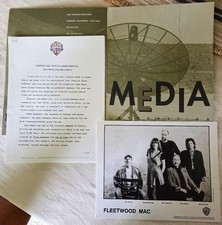
RARE Fleetwood Mac Dave Mason Bekka Bramlett Era 93 Original WB Press Kit w 8x10
$69.99


 Linear Mode

