
| |
|
#211
 11-09-2004, 09:20 AM
|
||||
|
||||

I just wanna say everyone calls liberals "Whiney," ....I think the tide may be turning....the Republicans look like the whiners now. You won your damn election, what is there to complain about?
Chris
__________________
CHRIS M. 
|
|
#212
11-09-2004, 09:21 AM
|
||||
|
||||
|
Quote:
Yes, that was just what I was trying to say the other day but I didn't manage to say it nearly as eloquently. Thank you.
|
|
#213
11-09-2004, 09:22 AM
|
||||
|
||||
|
Quote:
 So, although slavery probably would have been phased out because the rest of world was doing so, the sociological and psychological thoughts behind it were not really begun to be extinguished until about 100 years later and then that action was against the vast majority of Americans' way of thinking at the time So, my point is, majority rule is not the American way because all Americans deserve representation, even the far religious right So, although slavery probably would have been phased out because the rest of world was doing so, the sociological and psychological thoughts behind it were not really begun to be extinguished until about 100 years later and then that action was against the vast majority of Americans' way of thinking at the time So, my point is, majority rule is not the American way because all Americans deserve representation, even the far religious right  And - yes, other denominations than Christians voted for W - no question about that. but, do you really think W's track record (not the rhetoric mind you, but the actual issues promulgated into the law making process) supports anything but automatically granted rights for Christians. For example, W supports faith based charities getting Federal money (actually more than they get now because they are tax exemot ) - while I am not necessarily opposed to that in theory (too long a discussion for now  ) - do you really think anything other than Christian charities will get any significant Federal funding. I suggest they will not. Granted, Christian charities probably do the buld of the work, but still can you see W funding the Sons of Satan Goathead Soup feed the poor campaign. i certainly cannot. ) - do you really think anything other than Christian charities will get any significant Federal funding. I suggest they will not. Granted, Christian charities probably do the buld of the work, but still can you see W funding the Sons of Satan Goathead Soup feed the poor campaign. i certainly cannot.
__________________
 save the cheerleader - save the world Last edited by strandinthewind; 11-09-2004 at 09:27 AM..
|
|
#214
11-09-2004, 09:26 AM
|
||||
|
||||
|
Quote:
http://www.newsmax.com/archives/arti...1/132001.shtml And if you watched the debates, you saw that Bush didn't condemn homosexuals. Here are some quotes of what he did say: http://www.bpnews.net/bpnews.asp?ID=19347 So, I still maintain it is a misconception that Falwell and his ilk controls Bush - although he certainly wishes he did. And, finally, if the majority of the country was so extremist, we'd have Falwell or Pat Robertson for a president. But we both know they still would have no chance of being elected. Therefore, Bush must not be that off-the-wall, to appeal to more than those people.
__________________
- Nancy 
|
|
#215
11-09-2004, 09:32 AM
|
||||
|
||||
|
Quote:
So, what does this mean? That Republicans have no right do defend themselves against attacks because Bush won? Or that, because Bush won, I shouldn't be bothered by such comments? Would that be the case if the shoe was on the other foot? If Kerry had won, would you stop responding to accusatory Republican posts?
__________________
- Nancy
Last edited by sodascouts; 11-09-2004 at 09:19 PM..
|
|
#216
11-09-2004, 09:35 AM
|
||||
|
||||
|
Nancy I do not believe I said you shouldn't respond to accusatory posts...however this thread WAS started by a Republican..
If we had won, and Republicans right now were still hollering, I would say to them "ahhh whatever, we won, too late." The point is...I cannot believe in this country we live in Republicans feel the slighest bit badgered. After all you guys did win an election by scaring people into voting for your guy..PERIOD. Chris
__________________
CHRIS M.
|
|
#217
11-09-2004, 09:39 AM
|
||||
|
||||
|
Quote:
AND - I agree Falwell and that ilk are sane enough to know they cannot get elected; plus they make too much money preaching hate But, they see W as their man and openly say so. They do advise him. Perhaps not personally or at least in public, but they certainly get the votes for him and he knows that As proof, W played this election directly at the conservative Christian by suggesting, but never flat out stating, that he would suppress abortion (which his track record supports he wants to do) and suppress gay people from having any of the automatic benefits legally granted to straight married people via marriage (which his track record supports he wants to do - again those 11 Const. amendments recently passed all prohibit civil unions ) Finally, Cheney and that harpy wife of his (I cannot stand her) clearly are so embarrased they are almost apologetic that they have an openly gay daughter. Clearly, Lynn Cheney was not angry that Kerry brought her gay daughter up - how could she be when her own husband did it a week earlier - she was just mortified that people would again know her daughter was gay. When Cheney discussed her, he lower their voice as if whispering some horrible disease like "cancer." I think that speaks volumes But, in the end, I know you will never believe that we are headed toward some sort of fundamentalist Christian theocracy. While I also do not think that it will ever be that to the degree alleged in hyperbole by both sides, I do think that is what this administration is beholden to attempt to push. Again, look at the track record and ignore the meaningless rhetoric - it clearly supports my points.
__________________
save the cheerleader - save the world
|
|
#218
11-09-2004, 09:39 AM
|
||||
|
||||
|
Quote:
"In reality, getting bin Laden would have been extraordinarily difficult. He was a moving target deep inside Afghanistan. Most military operations would have been high-risk. What’s more, Clinton was weakened by scandal, and there was no political consensus for bold action, especially with an election weeks away." For some reason, I don't think it would have been as "extraordinarily difficult" to get Bin Laden after 9/11 when the military operations were high-risk, on the ground already, and he was cornered in Tora Bora. Quote:
Quote:
UNSCR 687 - April 3, 1991 Iraq must "unconditionally accept" the destruction, removal or rendering harmless "under international supervision" of all "chemical and biological weapons and all stocks of agents and all related subsystems and components and all research, development, support and manufacturing facilities." Creates the United Nations Special Commission (UNSCOM) to verify the elimination of Iraq's chemical and biological weapons programs and mandated that the International Atomic Energy Agency (IAEA) verify elimination of Iraq's nuclear weapons program. By all accounts, the weapons were destroyed right after the Gulf War and before '94. When the UN gave more power and authority to the inspectors in October of 2002, Saddam complied completely up until Bush declared war. Hans Blix: "All inspections were performed without notice, and access was almost always provided promptly. In no case have we seen convincing evidence that the Iraqi side knew in advance that the inspectors were coming." Hans Blix also said that Saddam's cooperation was "unprecendeted" if you want me to post that quote for you. Articles that support the fact that Saddam cooperated fully up until war was declared: http://www.commondreams.org/headlines04/0302-07.htm UN: Iraq Had No WMD After 1994 http://www.theinsider.org/mailing/article.asp?id=354 UN CONFIRMS NO WMD IN IRAQ http://news.bbc.co.uk/1/hi/world/americas/2967598.stm Blix criticises coalition over Iraq weapons http://news.independent.co.uk/world...sp?story=363151 US not sharing intelligence, say UK agencies http://www.latimes.com/news/nationw...0,7577124.story UN weapons inspectors in Iraq 'have zilch' thus far http://www.observer.co.uk/internati...,868839,00.html UN inspectors fear Bush will ignore them Not to mention the fact the the US removed 8,000 pages from the 12,000 page weapons report that Saddam submitted. You can also peruse these sites and read all about how UNMOVIC and IAEA never found a thing in 11 years. http://www.unmovic.org/ http://www.iaea.org/worldatom/ http://www.iaea.org/worldatom/Press...Iraq/index.html Here are some choice quotes: "We are fully aware that many governmental intelligence organizations are convinced and assert that proscribed weapons, items and programmes continue to exist. The US Secretary of State presented material in support of this conclusion. Governments have many sources of information that are not available to inspectors. Inspectors, for their part, must base their reports only on evidence, which they can, themselves, examine and present publicly. Without evidence, confidence cannot arise." "More than 200 chemical and more than 100 biological samples have been collected at different sites. Three-quarters of these have been screened using our own analytical laboratory capabilities at the Baghdad Centre (BOMVIC). The results to date have been consistent with Iraq's declarations." "We have now commenced the process of destroying approximately 50 litres of mustard gas declared by Iraq that was being kept under UNMOVIC seal at the Muthanna site. One-third of the quantity has already been destroyed. The laboratory quantity of thiodiglycol, a mustard gas precursor, which we found at another site, has also been destroyed." "Since we arrived in Iraq, we have conducted more than 400 inspections covering more than 300 sites. All inspections were performed without notice, and access was almost always provided promptly. In no case have we seen convincing evidence that the Iraqi side knew in advance that the inspectors were coming." You can read the whole UNMOVIC briefing at their site. Or try this: Extracts from UN Security Council Member Statements on 14th February 2003 Syria FAROUK AL-SHARA, Minister for Foreign Affairs of Syria, recalled that it was three months since the Council had unanimously adopted resolution 1441. Syria had joined the consensus after it had received assurances that the resolution would not be used as a pretext for waging war against Iraq. In their briefing today, the inspectors had noted the progress achieved since their last briefing. That meant that in just two weeks significant progress had been achieved. It was also significant that today Iraq had issued a decree prohibiting weapons of mass destruction in the country. That testified to the fact that inspections were accomplishing their goals, and the Council must continue to support the inspectors, allowing them sufficient time to carry out their task as prescribed in resolution 1441. France DOMINIQUE DE VILLEPIN, Minister for Foreign Affairs of France, said that by unanimously adopting resolution 1441 (2002), the Council collectively had expressed its agreement with the two-stage approach proposed by France: disarmament through inspections and, should that strategy fail, consideration by the Council of all the options, including the recourse to force. It was clear that, in the event that the inspections failed and only in that scenario, a second resolution could be justified. The question today was simple: either consider in good conscience that the disarmament via inspections was now leading to a dead-end; or that the inspections possibilities presented in resolution 1441 had still not been fully explored. In response to that question, he said his country was convinced that the option of inspections had not been taken to the end and that it could provide an effective response to the imperative of disarming Iraq. Also, the use of force would be so fraught with risks for people, for the region and for international stability that it should only be envisioned as a last resort. What had just been learned from the inspectors’ reports was that the inspections were producing results. Significant gains had been made in those areas identified by the chief inspectors on 27 January. In the chemical and biological areas, he noted that the Iraqis had provided the inspectors with new documentation. They had also announced the establishment of commissions of inquiry led by former officials of weapons programmes, in accordance with Mr. Blix’s requests. In the ballistic missile domain, the information provided by Iraq had enabled the inspectors to make progress. He knew precisely the real capabilities of the Al-Samoud missile. The unauthorized programmes must now be dismantled. In the nuclear domain, he continued, useful information had been given to the IAEA on the most important points discussed by Dr. ElBaradei on 27 January: the acquisition of magnets that could be used for enriching uranium, and the list of contacts between Iraq and the country likely to have provided it with uranium. Those points were at the heart of the logic of resolution 1441, which must ensure the effectiveness of the inspections through precise identification of banned programmes and then their elimination. He said that real progress was becoming apparent. Iraq had agreed to aerial reconnaissance over its territory, and it had allowed Iraqi scientists to be questioned by the inspectors without witnesses. Also, a bill barring all activities linked to mass destruction weapons programmes was in the process of being adopted, and Iraq was to provide a detailed list of experts who witnessed the destruction of military programmes in 1991. Such progress strengthened France’s conviction that the inspections could be effective, but “we must not shut our eyes to the amount of work that still remains” –- questions had to be cleared up, verifications made, and installations and equipment probably still had to be destroyed. To do that, he said, the inspections must be given every chance of succeeding. His proposals submitted to the Council on 5 February were practical and concrete, and could be implemented quickly. They fell within the framework of resolution 1441 and consequently did not require a new resolution. Yes, he had heard the critics, those who doubted that the inspections could be the least effective. There were those who believed that continuing them was a sort of “delaying tactic” to prevent military intervention. At the core of the debates, then, was the question of the time allowed Iraq. At stake was the Council’s credibility and sense of responsibility. He highlighted two options: a long and difficult war, following which it would be necessary to preserve Iraq’s unity and restore stability in a country and region harshly affected by the intrusion of force; or the day-by-day effective and peaceful disarmament of Iraq. No one could assert today that the path of war would be shorter than that of the inspections. No one could claim either that it might lead to a safer, more just and more stable world. For war was always the sanction of failure. The United Nations inspectors should be given the time they need for their mission to succeed. He proposed a further meeting on 14 March at the ministerial level to assess the situation. The use of force was not justified at this time, he emphasized. Furthermore, premature recourse to the military option would be fraught with risks and could bring the unity of the international community into question. That would detract from its legitimacy and, in the long run, its effectiveness. Such intervention could have incalculable consequences for the stability of that scarred and fragile region. He shared the same priority of fighting terrorism mercilessly. Given France’s present state of research and intelligence, in liaison with its allies, nothing had allowed it to establish links between Al Qaeda and the regime in Baghdad. On the other hand, the impact of disputed military action on the plan to defeat terrorism must be assessed. He said that France did not exclude the possibility that force might have to be used one day if the inspectors’ reports concluded that it was impossible to continue the inspections. The Council would then have to take a decision. The Members of the United Nations were the guardians of an ideal and of a conscience. Their onerous responsibility and immense honour must lead them to give priority to disarmament in peace. That message came today from an old country. France, like the continent to which it belonged, had known wars, occupation and barbarity. France did not forget and knew everything it owed to the freedom-fighters who came from the United States and elsewhere. Yet, it had never ceased to stand upright in the face of history and before mankind. It wished resolutely to act with all members of the international community, which, together, could build a better world. [This statement drew applause from those present - a rare and officially discouraged event at Security Council meetings] Chile MARIA SOLEDAD ALVEAR, Minister for Foreign Affairs of Chile, said that what she heard this morning showed that the Iraqi regime still had an ambivalent attitude towards the inspection process. While there were indications of progress that might indicate a decisive change in attitude towards compliance with the demands of the international community, the negative and delaying attitudes revealed an intention not to cooperate and gave rise to suspicions about the presence of weapons of mass destruction in Iraq. Maintaining pressure on Saddam Hussein’s regime had proven to be the only mechanism capable of bringing about a certain openness and respect for the decisions of the Council. That pressure must be maintained relentlessly and without relaxation. Second, she said, in keeping with the categorical and urgent tone of resolution 1441, the inspection process must be continued, strengthened and expanded to make it accurate and intrusive and, thus, capable of thwarting any effort at deception or evasion that the Iraqi regime might attempt. In that connection, she noted with interest the opinions of the inspectors on the usefulness and applicability of the French proposals. It was evident, however, that the time available was not infinite. The seriousness of the situation required immediate and definitive responses from the Iraqi regime to the inspectors. Third, she said, the United Nations and the Security Council had a key role to play in the crisis. She had noted with dismay over the past month a growing division within the Council. The unity of the Council was the basis of any international action that sought to be both legitimate and effective. Only a united Council could credibly adopt the appropriate decisions for achieving the objective of the disarmament of the Iraqi regime. The Council should, as invited to do so by the Secretary-General, take the necessary time to continue to seek the broadest possible consensus for achieving comprehensive solution that would restore to the Iraqi people, who had suffered for so long, the opportunity to participate fully in the international community. China TANG JIAXUAN, Minister for Foreign Affairs of China, said that Iraq must implement the relevant Security Council resolutions –- “strictly, comprehensively and earnestly”. He urged the Iraqi side to fully recognize the importance and urgency of the inspections and to provide more cooperation in a more proactive way. The latest visit to Baghdad by the chief inspectors had achieved some positive results. The Iraqi side had made some commitments. He asked it to make good on those promises as soon as possible. It was also necessary for the inspection work in Iraq to continue. He said that, judging from what had been done in the recent past, the inspections had made progress and clarified quite a number of issues. New developments, however, had also been discovered in that process. The two bodies -– UNMOVIC and IAEA -- were duty-bound and justified to further the inspections with the aim of finding out the truth and fulfilling the mission conferred on them by the Council. In agreement with the majority opinion of the Council, therefore, China believed that the inspection process was working and that the inspectors should continue to be given the time they needed to carry out resolution 1441 (2002). Spain ANA PALACIO, Minister for Foreign Affairs of Spain, said that as much as she had been eager to hear an affirmation of active, immediate and complete compliance with the Council’s demands by Iraq, she had been unable to find it in the inspectors’ reports. Unconditional cooperation was not forthcoming. What the Council saw was a long list of unresolved issues mentioned in Mr. Blix’s report, including VX agent, chemical bombs and anthrax. Al-Samoud missiles were longer in range than that prescribed by the Council. The Council had been also told that Iraq could produce engines for those missiles. A number of persons had refused to be interviewed privately. In a word, all the questions remained, including the most important one: was Iraq’s cooperation voluntary, or did it represent superficial concessions because time was pressing? Was it a result of international pressure, including a credible threat of the use of force? Her remarks should be seen in the right context, she explained. Her Government appreciated the inspectors’ work and was in favour of a solution being found within the Council. Spain was aware that peace and security were assured through respect for and compliance with the Council’s resolutions. Unless there was a change of will on behalf of Saddam Hussein, the Council should discharge its responsibilities for peace and security. United Kingdom JACK STRAW, Secretary of State for Foreign and Commonwealth Affairs of the United Kingdom, said that the issue was about the authority of the Council and the responsibility of the United Nations for the maintenance of international peace and security. Three months ago, the Council adopted resolution 1441. At that time, everyone, including all five permanent members, knew that Iraq had weapons of mass destruction. They knew that the issue was not whether Iraq had weapons of mass destruction, but whether it was cooperating to get rid of them. As stated on 27 January, Iraq had failed to account for various materials and weapons, failed to make a full and complete disclosure, failed to cooperate fully and failed to meet the obligations imposed on them. He hoped and believed that a peaceful solution was still possible, but it would require Iraq to meet the obligations imposed on it. A peaceful solution could only be achieved if the Council held its nerve, gave meaning to its word and ensured that Iraq would face the consequences of its actions. The 12 years since the adoption of resolution 687 (1991) had been a period of humiliation, as games had been played with the Council’s authority. The period after the inspectors were kicked out until 8 November was not the best in the Council’s history, since Iraq was in open defiance of the Council’s authority. In securing a peaceful solution, he knew that the Council had only come this far by backing the diplomatic process with a credible threat of force. If the Council backed away from that, then the disarmament of Iraq and international peace and security would not get easier, but harder. The issue was not only about Iraq, but how to deal with proliferators around the world. United States COLIN POWELL, Secretary of State of the United States, said that the inspectors had taken up a difficult task when whey they returned to Iraq last fall. He was pleased about the improvements with respect to process, but the inspectors still did not have freedom of access around Iraq to do their job well. People had come forward for interviews, but more should be doing so, in a manner that their safety and that of their families could be protected. Decrees that should have been issued years and years ago had been issued this morning. But, did anyone think that a decree from Saddam would change the situation? Those were all tricks that were being played. Now, he continued, new commissions were being formed to find materials the Iraqis say were not there in the first place. Did anyone believe they could succeed in finding material that was actively being denied? He commended the work of the inspectors, but what was needed was not more inspectors or more immediate access, but immediate, active, unconditional cooperation on the part of Iraq. Resolution 1441 was not about inspections; it was about the disarmament of Iraq. And it began with a clear statement that Iraq was in a material breach of its obligations. It went on to say that there should be a declaration within 30 days of all its activities –- “put it all on the table” was the request. He said he could not continue to allow Iraq to possess weapons of mass destruction to use against its neighbours and others, or to provide to terrorist organizations. Such connections were now emerging and he could establish that they existed. The world could not wait until one of those terrible weapons showed up in one of its cities. That was what 1441 was all about. To this day, he had not seen the level of cooperation that was expected, indeed, hoped for. No one had worked harder than he had to put forward a resolution of the international community to show the Iraqi leadership that “the time was now to come clean and comply”. More inspections was not the answer. He had not seen responsible actions on the part of Iraq, but rather “continued efforts to deceive, deny, divert, and throw us off the path”. The resolution had anticipated that kind of response. Notwithstanding improvements in process, those did not move the situation away from the central problem, namely, Iraq’s failure to comply with 1441, and more inspections or a longer inspection period would not move us away from that central problem. The threat of force must remain. It should always be a last resort, but it must be a resort. “We cannot allow this process to be endlessly strung out, as Iraq was trying to do”, he said. The Security Council was now in a situation where Iraq’s continued non-compliance and failure to cooperate required it to begin to think through the consequences of walking away from that problem, or from the reality that it had to be faced. And, in the very near future, the Council would have to consider that point, as reluctant as it might be. So many here would rather not face the issue, but that issue, namely whether it was time to consider the serious consequences referred to in 1441, had to be faced. Those were serious weapons that could kill tens of thousands of people if they got into the wrong hands. “Our security rested upon us meeting our responsibilities and, if it came to it, invoking the serious consequences named in 1441”, he stressed. Russia IGOR S. IVANOV, Minister for Foreign Affairs of the Russian Federation, said that today’s meeting was, in its way, a unique occasion in history. Once again, the Council was meeting at the ministerial level to seek a solution to the Iraqi question. That testified to the fact that the international community saw the United Nations as the most suitable mechanism for resolving world problems. That was why, with each additional meeting, the international community was further engaging hopes for strengthening the unity and solidarity of States in the face of a challenge. “We should not be guided by our emotions vis-Ã*-vis a particular regime”, he continued. “Rather, we should draw our conclusions on the basis of facts.” For that reason, the inspectors must be provided with all possible assistance, as it was on the basis of their work that the Council could make an enlightened decision. The inspections were proceeding, as required under resolution 1441. One could not disregard the fact that during the inspectors’ last visit to Baghdad much progress had been made. It had been agreed that inspections would continue with the help of aircraft, and the number of minders would be reduced. It was also important that the Iraqis had set up two commissions to search for new materials. Those matters had been discussed as pending in the past, and now they had been resolved. Thus, in fact, there was movement in the right direction. Continuing, he urged Iraq to increase its cooperation with inspectors. It was perfectly clear that UNMOVIC and the IAEA had the conditions for carrying out their mandates. Nobody was proposing any changes to the 1441 regime, but the majority was advocating providing the inspectors with all the support they needed. At the same time, the inspections must be more systematic and focused. In that connection, he recalled the inspectors’ obligations to comply with the time frame, under which they had to submit the programme of work, including the list of key disarmament tasks. That would provide objective criteria for assessing cooperation by Iraq and provide an answer to the question whether Iraq represented a threat to international peace and security. One point of principle that all must answer was if the inspectors should continue their work in Iraq for the sake of a political settlement. Russia answered yes to that question. That was the position shared by an overwhelming majority of States, including members of the Security Council. The Council had a unique opportunity to solve the problems by peaceful means in conformity with the United Nations Charter, he concluded. Force could be resorted to only when all other means had been exhausted. The international community was not now at that point. Energies must be directed, not at fighting, but at uniting efforts. Mexico LUIS ERNESTO DERBEZ, Minister for Foreign Affairs of Mexico, said that in the reports presented today he saw a degree of improvement in the working conditions of the inspectors. In the past couple of weeks, Iraq had changed its position regarding overflights and interviews and provided further documentation. While the report had indicated some improvement, it was also clear that the Iraqi Government continued to evade its international responsibilities. It had yet to respond to repeated appeals by the international community, under resolution 1441, that it cooperate unconditionally with inspectors. The international community, he said, was calling for genuine and verifiable disarmament. It wanted to know when and how Iraq had destroyed its weapons of mass destruction. It had been proven that, in the last two wars in which Iraq participated, it had used such weapons. Now, the international community wanted to know where those arsenals were, and if they had been destroyed. The international community was increasingly divided as to the most effective way to achieve the goal of Iraq’s disarmament. The unity of the Council was crucial. Having heard today’s reports, he reconfirmed his confidence in the inspections. If, thus far, the inspections had not yielded the expected results, it was the obligation of the Council to ensure that the inspections fulfilled their intended mission. Iraq must make full use of the final opportunity presented to it. The damage the conflict was having could be seen in increased political polarization, and a global economy that was suffering from uncertainty. Iraq’s disarmament and an end to its non-compliance would help bring about an end to that situation. Guinea MAMADY TRAORE (Guinea) said that progress had indeed been made since the last progress report in late January, but many issues were still pending. The progress had included the fact that inspectors had been able to interview five Iraqi scientists without minders. Restrictions on flights by U-2 aircraft had been lifted, and a decree banning weapons of mass destruction had just been approved. Those developments were acts of cooperation on the part of Iraq, but the discoveries of large quantities of mustard gas, defended as destroyed, the development of a missile programme beyond the proscribed range, and omissions in the declaration had sown doubts about the sincerity and good faith of the Iraqi authorities to resolve the crisis peacefully. He said he advocated continued inspections, although not indefinitely. A reasonable additional time period would help yield consensus and bring together the different views around the table. He was concerned about the tension in the international community around the crisis. He urged a direct and constructive dialogue among those with differing views, in order to move beyond that tension, which could deal a harsh blow to the United Nations system. Given Iraq’s obligation to cooperate actively and strictly in accordance with the Council’s resolutions, it must end its delaying tactics. A peaceful settlement of the crisis depended on it. He assured the inspection teams of his full support and urged them to explore all possibilities. The Council must continue working together as one to attain its goal. Pakistan MUNIR AKRAM (Pakistan) said that the latest report by the inspectors had provided a useful update of the situation. They indicated some important developments since 27 January and described what remained to be done. The progress included acceptance of aerial surveillance, interviews without minders and access to new documentation. As made clear by the inspectors, however, a significant number of questions and concerns remained, and they needed to be addressed. It was understandable that the patience of some important members of the Council was running out, he said. The intention of 1441 was that the process of discovery and destruction of weapons of mass destruction would be accelerated. At the same time, he noted the call for caution by several Member States. Resolution 1441 was credible because it was unanimous, he continued. The Council must maintain that unity of purpose and action. At present, the Council could still unite around the need to secure the elimination of weapons of mass destruction through peaceful means, and the conviction that to achieve that, Iraq needed to offer immediate active and unconditional cooperation and credibly demonstrate that those weapons had been destroyed. Such cooperation would be in Iraq’s supreme interests. Also needed was a readiness to allow some more time to achieve the peaceful elimination of Iraq’s weapons, which should be consistent with the spirit of resolution 1441. Obviously, all people of good will desired that all peaceful means be exhausted before the Council decided to bring force into play, he concluded. For Pakistan –- a Muslim country from the area –- such a decision would be most difficult. The primary concern should be the well-being of the Iraqi people. The aim must be to bring an end to their suffering. He trusted and hoped that the Iraqi leadership would also put its people first. Cameroon MARTIN BELINGA-EBOUTOU (Cameroon) said that in comparing today’s reports with that of 27 January, he could see significant developments resulting from the wise and reasonable choice of the Iraqi authorities to begin, at last, to cooperate with inspectors. He noted the important advances regarding interviews and U-2 air surveillance. He also welcomed that Iraq had enacted legislation prohibiting illicit chemical, biological and nuclear activities in its territory. Despite that, certain questions regarding chemical and biological issues still remained. On the issue of missiles, he noted from today’s reports that the range of the Al-Samoud missile manufactured by Iraq was beyond the range authorized by the Council. That was regrettable, since it contradicted the Iraqi declaration of 2002. It was up to the Council to decide how to deal with that non-compliance, he said. During the ministerial meeting on 5 February, the United States delegation had raised the issue of small unmanned planes, which could be used as delivery systems for weapons and other unresolved issues. He asked what information had been provided by Iraq on that issue. The documentation submitted by Iraq last week could contain clarifications on the main issues before the Council. He hoped that, if it was not possible to obtain copy of those documents, Dr. Blix would be able to provide a summary in writing, accompanied by comments and assessment. He emphasized the need for the Council to continue to safeguard its unity and cohesion. The progress made by the recent mission to Baghdad reflected a noticeable change in Iraqi attitude. That result, like the return of inspectors, was owed to the great demands of President Bush, to the collective pressure exerted by the Council, and the staunch determination of a united Council. The cacophony and confusion surrounding the Council could only harm its effectiveness. Cameroon was studying the non-paper from France, while awaiting the opinions of UNMOVIC and the IAEA. He wanted to know what the key threshold in the number of inspectors was to conduct robust inspections, and what its cost might be. Further non-compliance with the demands of the Council would be one violation too many, and Iraqi authorities would leave the Council no other choice but to adopt, in unity, appropriate measures to have its decisions respected. He appealed to Council members for unity and cohesion at this crucial stage. The credibility of the Council and the United Nations could suffer if, in the future, that unity could not be preserved. Angola ISMAEL ABRAAO GASPAR MARTINS (Angola) said he hoped the inspectors’ reports would help cool the severe tension facing the world today. Angola experienced three decades of war, which had inflicted much suffering and destruction. Today’s report provided a beacon of hope that it might be possible to save the world from an imminent conflict. The collective efforts of the Council, combined with military pressure, had increased Iraq’s level of cooperation with the inspectors. Simultaneously, that had advanced the cause of multilateralism by translating the consensual will of the international community to disarm Iraq, peacefully and with determination. He acknowledged the presentation last week of Secretary Powell. The progress made since then had showed what could be achieved by diplomacy, backed by a credible willingness to act. He was pleased by Iraq’s decision to cooperate with South Africa in letting that country point the way towards disarmament. Africa had adopted a clear position on disarming Iraq through peaceful means. African countries themselves had decided to free the continent of weapons of mass destruction, an example that could be followed in the Middle East. Unfortunately, the international community was unable, at present, to declare that Iraq was free of such weapons or that it had embarked on an irreversible road towards disarmament. He was equally unable to unequivocally state that Iraq was fully armed with weapons that posed a clear and impending threat to international peace and security. The international community had sent a clear message to the Iraqi Government with the unanimous adoption of 1441, backed by the credible willingness to use force, he emphasized. It had been able to secure Iraq’s cooperation concretely, in the face of determined pressure, as reported today by the inspectors. That was an example of what could be achieved when the international community spoke with one voice. The use of force today would preclude that gathering of valuable information that could be retrieved from U-2 flights, scientists, and other sources that provided the necessary inputs to the intrusive inspections demanded by the Council. That process -– an investment in peace -- should be given sufficient time. Bulgaria STEFAN TAFROV (Bulgaria) stressed the importance of pursuing unity in addressing the issue of Iraq, saying that he greatly appreciated the important work by UNMOVIC and the IAEA there. The experience of the last 12 years showed that inspections depended on cooperation from Iraq to be successful. Baghdad tended to provide such cooperation only under serious pressure. The work of the United Nations was still the main factor in ensuring that country’s cooperation with the inspectors. Unfortunately, Iraq was still in material breach with resolution 1441, he continued. It was up to Iraq –- not the inspectors -– to achieve disarmament. It was essential that Iraq cooperated actively and unconditionally. Iraq must prove that it had no weapons of mass destruction and give clear and definitive answers to the remaining questions by UNMOVIC and the IAEA, as well as the issues presented by Secretary Powell last week. The most serious issues concerned the chemical and biological weapons. His country had always advocated maximally effective inspections, and the French ideas regarding enhanced inspections could be one element in the overall strategy by the Council to achieve the disarmament of Iraq. Bulgaria remained in favour of a peaceful settlement, but active cooperation by Iraq was indispensable. All kinds of pressure, political and military, should be exerted on Iraq, in order to achieve the goals set by the international community. A peaceful solution was still possible, if Iraq wilfully disarmed, as required by resolution 1441. All responsibility for any undesirable outcome would lie squarely with Iraq. Bulgaria appealed to the Council to be united. That was an important condition for a peaceful outcome of the crisis. Germany Council President JOSCHKA FISCHER, Minister for Foreign Affairs of Germany, speaking in his national capacity, said that the deficits in Iraq’s cooperation with the inspectors must be rectified by Baghdad without delay. Iraq must not be allowed to possess any weapons of mass destruction and must disarm completely. Baghdad must actively and fully cooperate with UNMOVIC and the IAEA and comply unconditionally with the requirements of the relevant resolutions. The inspectors had been able to score some successes. Now it was necessary to gain experience with the new measures in place and evaluate them in the light of the common goal of ensuring Iraq’s complete disarmament. “Why should we now turn away from this path? Why should we now halt the inspections?” On the contrary, the inspectors must be given the time they needed to successfully complete their mission. How to proceed was laid down in resolutions 1441 and 1284, he said. Crucial were the resolutions’ three core elements –- cooperation, inspection and verification. First, Iraq must cooperate fully, unconditionally and actively with the inspectors if the looming tragedy was to be avoided. Secondly, the inspection regime must be made more efficient. France had made very concrete proposals on how that could be done, including increasing the number of inspection teams and improving the technical resources at their disposal. He strongly supported those proposals, for they helped ensure a response more appropriate to the size of the task. Third, and in parallel with the inspections, the verification and monitoring mechanisms called for resolution 1284 needed to be developed and expanded, he said. An ongoing long-term monitoring regime must prevent any future rearmament. Such a reinforced inspection and verification regime could also be of service to the United Nations in other crises involving weapons of mass destruction. All possible options for resolving the Iraqi crisis by peaceful means must be thoroughly explored, he said. Whatever decisions needed to be made must be taken by the Council alone. It remained the only body internationally authorized to do so. Military action against Iraq would, in addition to the terrible humanitarian consequences, endanger the stability of a tense and troubled region. The consequences for the Near and Middle East could be catastrophic. There should be no automatism leading to the use of military force. Diplomacy had not yet reached the end of the road. Quote:
 Are you using this as a justification for war? If so, why aren't we in Sudan and the dozen other police states with people just as bad as Saddam? Are you using this as a justification for war? If so, why aren't we in Sudan and the dozen other police states with people just as bad as Saddam?
__________________

|
|
#219
11-09-2004, 09:43 AM
|
||||
|
||||
|
Quote:

__________________
|
|
#220
11-09-2004, 09:47 AM
|
||||
|
||||
|
Lord Child - I am no longer typing anything about that and instead referring people to your post!!!
Seriously, the question of WMD is a tricky one because we had all the politicians, including Clinton, Kerry, W, etc., all saying SH had WMD, which I think was mostly based on SH's unwillingness to meet his burden of proving otherwise. So, there is some egg of SH's face which I submit cannot be washed away by his forced and initially beligerent compliance immediately prior to the invasion. But, ITA, W was momentarily distracted by OBL, but soon thereafter went back to plan A, which was to invade Iraq and he could not even do that right Again, if I had an employee who regardless of intention, ruined my company - I'd fire them on the spot. Sadly and IMO, the American people's hatred of all Muslins and fear of gay people prohibits them from seeing W's administration for the ineffective cesspool it is in reality.
__________________
save the cheerleader - save the world
|
|
#221
11-09-2004, 09:50 AM
|
||||
|
||||
|
And now I hear the republicans HAILING their "victory", that they got some 11 % of the black vote this time...somewhere around that. And they talk about these moral values is what won it for them, so 89% of black voters have no morals?
Oh right..I FORGOT...Black voters are bullied into the democratic party... Like when the House voted on a bill in Nov 2003 to titled "The National Museum of African American History and Culture Act", it was almost unanimous...except the ONLY 9 NAY votes were republicans, I do not think that is coincidental... Chris
__________________
CHRIS M.
|
|
#222
11-09-2004, 09:51 AM
|
||||
|
||||
|
Quote:
And another thing ( ) - he supported firing Arabic translators because they were gay and for not other reason. So, documents sat there for a long time without translation. And the justification for this was gay people cannot be trusted because, inter alia, they are succeptible to black mail. Well, if they were allowed to live their lives openly and without fear of some straight guys beating the crap out of them for walking down the street or the Catholic Church and other churches deeming them pedophiles, who could black mail them?How anyone can justify W is just beyond me And you know what - I really wanted to believe in him. I really wanted him to unite the country. Sadly, despite the meaningless and inconsistent rhetoric, he never even tried.
__________________
save the cheerleader - save the world Last edited by strandinthewind; 11-09-2004 at 09:54 AM..
|
|
#223
11-09-2004, 10:00 AM
|
||||
|
||||
|
Quote:
This is something that I really don't understand. It's not ok to be openly gay, but it seems okay for these military men to rape the women that are serving as well. As much as someone can say these rapist are getting their due, it's not true. It's covered up constantly.
__________________
Curtis
|
|
#224
11-09-2004, 10:03 AM
|
||||
|
||||
|
Quote:

__________________
|
|
#225
11-09-2004, 10:07 AM
|
||||
|
||||
|
Quote:
Seriously, not to high five, but, it is true. And - for whatever reason, people cannot accept it. And - if they do, they then fall back on "Oh what the hell - SH was a bad guy anyway." I will never get it.
__________________
save the cheerleader - save the world
|
 |
|
|


$5.98
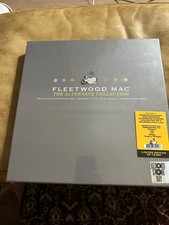
Fleetwood Mac The Alternate Collection 8LP Vinyl Box Set Sealed RSD 2022 Limited
$180.00

Fleetwood Mac - Rumours - Target CD West Germany
$30.00

Fleetwood Mac Live 1975 2LP Clear Vinyl RSD Record Store Day 2025 LTD ED SEALED
$50.00

FLEETWOOD MAC Lifetime Collection LOT Ticket Stubs Vinyl Records Cd STEVIE Nicks
$333.33


 Linear Mode

