
| |
|
|
|
#1
 02-28-2011, 12:46 PM
|
||||
|
||||

Quote:
As far as the data used for the arguement for eating less meat, that can be applied to overpoplulation too. And we can do something about that. As far as Heart Disease, Cancer... Good. I'm glad they are here. (Checks and balances.) If there were no diseases then we would really be screwed. There are 7 BILLION people on this planet. That is way too much. The projection for 2050 is 9 BILLION. If you think animals are being treated cruelly now, wait till they are gone. 
|
| . |
|
#2
02-28-2011, 12:53 PM
|
||||
|
||||
|
Quote:
Sources please. Or even just singular: source. Just one accredited source from "Anthrology" or wherever it is that you're getting your "facts."
|
|
#3
02-28-2011, 12:59 PM
|
||||
|
||||
|
Quote:
Here is just one article from the New York Times, but actually there some kind of special about it on tv. Of course, I paid attention since it was a specialization of mine in college. Neanderthals mated with some modern humans after all and left their imprint in the human genome, a team of biologists has reported in the first detailed analysis of the Neanderthal genetic sequence. RSS Feed Get Science News From The New York Times » The New York Times Max-Planck-Institute EVA The Neanderthal DNA that Svante Pääbo analyzed came from these three bones. The biologists, led by Svante Paabo of the Max Planck Institute for Evolutionary Anthropology in Leipzig, Germany, have been slowly reconstructing the genome of Neanderthals, the stocky hunters that dominated Europe until 30,000 years ago, by extracting the fragments of DNA that still exist in their fossil bones. Just last year, when the biologists first announced that they had decoded the Neanderthal genome, they reported no significant evidence of interbreeding. Scientists say they have recovered 60 percent of the genome so far and hope to complete it. By comparing that genome with those of various present day humans, the team concluded that about 1 percent to 4 percent of the genome of non-Africans today is derived from Neanderthals. But the Neanderthal DNA does not seem to have played a great role in human evolution, they said. Experts believe that the Neanderthal genome sequence will be of extraordinary importance in understanding human evolutionary history since the two species split some 600,000 years ago. So far, the team has identified only about 100 genes — surprisingly few — that have contributed to the evolution of modern humans since the split. The nature of the genes in humans that differ from those of Neanderthals is of particular interest because they bear on what it means to be human, or at least not Neanderthal. Some of the genes seem to be involved in cognitive function and others in bone structure. “Seven years ago, I really thought that it would remain impossible in my lifetime to sequence the whole Neanderthal genome,” Dr. Paabo said at a news conference. But the Leipzig team’s second conclusion, that there was probably interbreeding between Neanderthals and modern humans before Europeans and Asians split, is being met with reserve by some archaeologists. A degree of interbreeding between modern humans and Neanderthals in Europe would not be greatly surprising given that the species overlapped there from 44,000 years ago when modern humans first entered Europe to 30,000 years ago when the last Neanderthals fell extinct. Archaeologists have been debating for years whether the fossil record shows evidence of individuals with mixed features. But the new analysis, which is based solely on genetics and statistical calculations, is more difficult to match with the archaeological record. The Leipzig scientists assert that the interbreeding did not occur in Europe but in the Middle East and at a much earlier period, some 100,000 to 60,000 years ago, before the modern human populations of Europe and East Asia split. There is much less archaeological evidence for an overlap between modern humans and Neanderthals at this time and place. Dr. Paabo has pioneered the extraction and analysis of ancient DNA from fossil bones, overcoming daunting obstacles over the last 13 years in his pursuit of the Neanderthal genome. Perhaps the most serious is that most Neanderthal bones are extensively contaminated with modern human DNA, which is highly similar to Neanderthal DNA. The DNA he has analyzed comes from three small bones from the Vindija cave in Croatia. “This is a fabulous achievement,” said Ian Tattersall, a paleontologist at the American Museum of Natural History in New York, referring to the draft Neanderthal genome that Dr. Paabo’s team describes in Thursday’s issue of Science. But he and other archaeologists questioned some of the interpretations put forward by Dr. Paabo and his chief colleagues, Richard E. Green of the Leipzig institute, and David Reich of Harvard Medical School. Geneticists have been making increasingly valuable contributions to human prehistory, but their work depends heavily on complex mathematical statistics that make their arguments hard to follow. And the statistical insights, however informative, do not have the solidity of an archaeological fact. “This is probably not the authors’ last word, and they are obviously groping to explain what they have found,” Dr. Tattersall said. Richard Klein, a paleontologist at Stanford, said the authors’ theory of an early interbreeding episode did not seem to have taken full account of the archaeological background. “They are basically saying, ‘Here are our data, you have to accept it.’ But the little part I can judge seems to me to be problematic, so I have to worry about the rest,” he said. In an earlier report on the Neanderthal genome, the reported DNA sequences were found by other geneticists to be extensively contaminated with human DNA. Dr. Paabo’s group has taken extra precautions but it remains to be seen how successful they have been, Dr. Klein said, especially as another group at the Leipzig institute, presumably using the same methods, has obtained results that Dr. Paabo said he could not confirm. Dr. Paabo said that episode of human-Neanderthal breeding implied by Dr. Reich’s statistics most plausibly occurred “in the Middle East where the first modern humans appear before 100,000 years ago and there were Neanderthals until 60,000 years ago.” According to Dr. Klein, people in Africa expanded their range and reached just Israel during a warm period some 120,000 years ago. They retreated during a cold period some 80,000 years ago and were replaced by Neanderthals. It is not clear whether or not they overlapped with Neanderthals, he said. These humans, in any case, were not fully modern and they did not expand from Africa, an episode that occurred some 30,000 years later. If there was any interbreeding, the flow of genes should have been both ways, Dr. Klein said, but Dr. Paabo’s group sees evidence for gene flow only from Neanderthals to modern humans. The Leipzig group’s interbreeding theory would undercut the present belief that all human populations today draw from the same gene pool that existed a mere 50,000 years ago. “What we falsify here is the strong out-of-Africa hypothesis that everyone comes from the same population,” Dr. Paabo said. In his and Dr. Reich’s view, Neanderthals interbred only with non-Africans, the people who left Africa, which would mean that non-Africans drew from a second gene pool not available to Africans.
|
|
#4
02-28-2011, 01:01 PM
|
||||
|
||||
|
Oh this one is from the Christian Monitor
Study suggests humans mated with Neanderthals A study of DNA from humans living today has found signs of Neanderthal genes, suggesting that interbreeding occurred between the two species. Humans today could be part Neanderthal, according to a new study that found our ancestors interbred with an extinct hominid species some millennia ago. X Woman: Not human, not Neanderthal, what is she? Jewelry: so easy a cave man can do it Fossil DNA tells tales of red-haired Neanderthals Neanderthals walked the Earth between about 130,000 and 30,000 years ago. While they co-existed with modern humans for a while, eventually they went extinct and we didn't. There has been intense scientific debate over how similar the two species were, and whether they might have mated with each other. "The issue has been highly contentious for some time," said University of New Mexico genetic anthropologist Keith Hunley. Last week at the annual meeting of the American Association of Physical Anthropologists in Albuquerque, N.M., Hunley and colleagues presented the results of a new study that found evidence for interbreeding between modern humans and some other extinct ancient human species – either Neanderthals (Homo neanderthalensis) or another group such as Homo heidelbergensis. The research was first reported by NatureNews. The researchers looked at DNA samples from humans living today, and found signs of leftover Neanderthal genes introduced from this interbreeding. They looked at genetic data from almost 2,000 people around the world, and calculated how much genetic variation existed between samples. The results indicate that some extinct group of hominids mixed their genes with ours at two points in history, Hunley said. One period of interbreeding probably occurred shortly after Homo sapiens migrated out of Africa around 60,000 years ago. The researchers found an excess of genetic diversity in all modern people except Africans, suggesting that the influx of Neanderthal-like DNA came after the exodus from Africa. A second period of interbreeding is suggested by the fact that the researchers measured even more genetic diversity among people of Oceanic descent – people from Australia, New Zealand, New Guinea and other Pacific islands. "I think we show there's clear evidence in the genome of living people of this mixture," Hunley told LiveScience. "The fact that there's a clear signal implies that there was some significant amount" of interbreeding, he said. This work is the first time scientists have used DNA from living people to look at this question, Hunley said. In an earlier study, Erik Trinkaus of Washington University in St. Louis found suggestions of Neanderthal and modern human interbreeding by comparing ancient bone fossils from the two species. Trinkaus said the new work fits into his findings, though he hasn't reviewed the details yet since Hunley's paper has not yet been published in a peer-reviewed journal. "The conclusion makes sense and fits with the majority of the data available," Trinkaus said. Another anthropologist who has studied Neanderthal anatomy agreed. "I have been arguing for this position throughout my career, ever since I began to study Neandertals and other populations," said Milford Wolpoff of the University of Michigan. "It has always seemed clear that some Neandertal anatomy appears in living populations." Not everyone, though, will be easily convinced yet, Hunley said.
|
|
#5
02-28-2011, 01:09 PM
|
||||
|
||||
|
"I cannot freaking these believe these people..." for what? For being so incendiary as to ask for sources, and not about Neanderthals, who, are completely irrelevant to this conversation and are likely 98% irrelevant to our lineage?
Are you so attached to your happy meal that you must keep creating diversions to what is essentially a simple equation? World overpopulation? Sure it's a problem -- not sure what you're going to do about it in say, China or Latin America, where it's epidemic. Neanderthals? Or course they ate meat and so did our primary ancestors, the Cro-Magnons (they drew it on their cave walls), but what about before that? We have always been primarily a vegetarian species -- overwhelmingly so -- until the stone age, and even then, we simply added a little meat when we could. But we don't need to now. We have simply become used to it, because now we don't hunt...we just buy. And buy, and buy, in huge Costco portions that are making us fatter and ruining our environs. At least when we hunted, we didn't cause the animal lifelong discomfort, or in many cases, agony. We should pay attention to what we are eating and why we are eating it. This is all I am saying. If you choose to eat an extra bit of burger today out of spite, so be it. But why not cut down? It simply makes a lot more sense. Last edited by Pyewacket; 02-28-2011 at 01:14 PM..
|
|
#6
02-28-2011, 01:14 PM
|
||||
|
||||
|
Quote:

|
|
#7
02-28-2011, 01:26 PM
|
||||
|
||||
|
Quote:
Neanderthal man could be part of our DNA. Many vegans claim that what we evolved from creatures that did not eat meat. Well, I highly doubt that is true. Many animals that are considered carnivores eat plants and vice versa. Anyway, Neanderthal ate very little plants (if you believe the science). They basically lived off meat. If they are part of our DNA then man may be even more inclined to eat meat. It doesn't really matter. Humans are neither a herbivore or carnivore. "They didn't have the intellectual capacity to prevent their own extinction." Modern man doesn't seem to have it either. No checks and balances. Hell, 9 billion in 2050. In 2100 will it be 12 Billion. UGG!
|
|
#8
03-01-2011, 07:42 PM
|
||||
|
||||
|
Quote:
And, you're saying modern man DOES know how to prevent their own extinction? I seriously doubt that...especially if you watch Fox News for more than 10 minutes. We're on a collision course with our own species demise...have been for as long as we've been on Earth. (assuming we came from elsewhere in the Universe) Humans have basically been the "cancer cell" lifeform on this planet. We've grown in population totally unchecked like a malignancy. But, we'll get our due in time...not my lifetime, maybe not even our great-great-great-great grandchildren's, but eventually, humans will not exist on this planet. Gone like a cool breeze.
__________________
Among God's creations, two, the dog and the guitar, have taken all the sizes and all the shapes in order not to be separated from the man.---Andres Segovia
|
|
#9
03-01-2011, 08:02 PM
|
||||
|
||||
|
Quote:
 Mick
__________________
The large print giveth And the small print taketh away -Tom Waits
|
|
#10
03-01-2011, 08:04 PM
|
|||
|
|||
|
Quote:
 Eventually, nothing will exist on this planet.
__________________
-John You are allowed to feel messed up and inside out. It doesn't mean you're defective - it just means you're human.
|
|
#11
02-28-2011, 01:06 PM
|
||||
|
||||
|
Quote:
__________________
I'm not the man you think I am. My love has never lived indoors - I had to drag it home by four, hired hounds at both my wrists, damp and bruised by strangers' kisses on my lips. But you're the one that I still miss. Neko Case
|
 |
| Thread Tools | |
| Display Modes | |
|
|

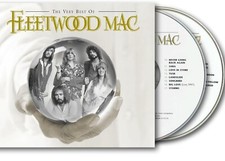
Fleetwood Mac – The Very Best Of Fleetwood Mac 2 CD Set - NEW
$17.40

Fleetwood Mac – Kiln House NM Vinyl, LP, 1976 Reissue, Stereo Blues Rock, Pop
$28.00
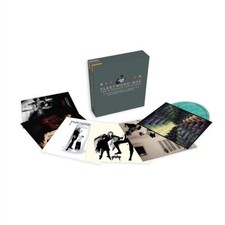
Fleetwood Mac - Alternate Collection (6 CD Box) New Sealed CD
$46.99

1977 Fleetwood Mac Rumours US Club Pressing VG+ W/ Original Lyric Poster
$142.54

Fleetwood Mac The Very Best of Fleetwood Mac 2CD 2002 Rhino R2 73775
$9.50


 Hybrid Mode
