
| |
|
|||||||
 |
|
|
Thread Tools | Display Modes |
|
|
|
#1
 03-17-2008, 02:49 PM
|
||||
|
||||

Quote:
 In the end, cane sugar is not that bad for you - neither is HFCS. It is the quatities of both that we consume that make them so bad. And, it is so easy not to do so. Buy Stevia instead of sugar, equal, slenda, etc. Also, try green tea with Stevia - I'd say drink unsweetened tea, but that is just not Southern  As for what not to eat - the closer you can get to home grown veggies the better. Yes, almost anything will have the fertilizer and insecticides on and in them, but there is nothing you can do about that short of growing them yourself.
__________________
 save the cheerleader - save the world 
|
| . |
|
#2
03-17-2008, 03:50 PM
|
||||
|
||||
|
Quote:
Herbal tea, I just do 'em black. I like the natural flavors to come through and to soothe me...
|
|
#3
03-17-2008, 03:57 PM
|
||||
|
||||
|
Quote:
|
|
#4
03-17-2008, 04:00 PM
|
||||
|
||||
|
OMG. I was going to put that in my post too! I was going to say that right after I mentioned taking my herbal tea black, but then I said....."no, maybe not". ya never know who might get offended.
I have a terrific 'Stevie of Death' too, but I'm terrified of posting it. It really might be pushing the limits.
|
|
#5
03-17-2008, 04:19 PM
|
||||
|
||||
|
Quote:
"A long, strong ***** pudding up my sister's arse . . ." (I hope I don't get banned for this.)
|
|
#6
03-17-2008, 04:27 PM
|
||||
|
||||
|
Quote:
I remember the first time I saw Airplane I was probably 10 years old, and I was literally crying after that line. 
|
|
#7
03-17-2008, 04:36 PM
|
||||
|
||||
|
Quote:
__________________
save the cheerleader - save the world
|
|
#8
03-17-2008, 04:38 PM
|
||||
|
||||
|
Quote:
 not to mention this one:  So, I say go ahead and post.
__________________
save the cheerleader - save the world
|
|
#10
03-17-2008, 05:47 PM
|
||||
|
||||
|
Quote:
Actually, it is funny: I wish knew how to put the Stevie of Death in this Nizi mocking as well:
__________________
save the cheerleader - save the world
|
|
#11
03-18-2008, 04:56 AM
|
||||
|
||||
|
^^^
Sadly, yes, that is his legacy. Everything that man has ever touched has turned to stone. And, what kills me is some of the ideas were not half bad, but the execution of them and the follow up destroyed any good that initially or could have come from them. On another point, here is an interesting article on the NYC economy from www.nytimes.com March 18, 2008 Troubled Outlook for New York City Economy Turns a Lot Grimmer By PATRICK McGEEHAN The outlook for New York City’s economy and its main engine, the financial services industry, had already taken a bleak turn before the sudden failure of Bear Stearns, the fifth-largest firm on Wall Street. Investment banks and brokerage firms started cutting their payrolls last fall as the weakening market for mortgages translated into huge losses. Employment in the city’s securities industry dropped by about 8,000 jobs from August to January, a decline of about 4 percent. Now, with the impending loss of several thousand high-paying jobs at Bear Stearns, city officials and economists are bracing for the downturn to steepen. How deep it will be and how long it will last are open questions. “Who knows?” said William C. Thompson Jr., the city’s comptroller. “We had been preparing for tougher times. This means things are going to get a little tougher. We just don’t know how many jobs are going to be lost because of this.” Bear Stearns had about 14,000 employees, and as many as 8,000 of them worked in the city. Last year, those workers collected more than $3.4 billion in pay and benefits, or an average of about $242,000 per employee. Bear Stearns was one of the 25 largest employers in the city and accounted for about one of every 25 jobs in the city’s securities industry. It was not the first major Wall Street firm to collapse. Drexel Burnham Lambert and Kidder Peabody fell more than a decade ago. But Bear Stearns was a bigger component of a more consolidated industry. On Monday, officials of JPMorgan Chase, which agreed to buy Bear Stearns and stave off a bankruptcy, declined to estimate how many of the jobs would be saved. But representatives of the firm did not dispute reports that the sale would probably result in the elimination of most of them. Already, the rescue has implications for the redevelopment of Lower Manhattan. JPMorgan announced last year that it would build a headquarters for its investment-banking operations at the site of the former Deutsche Bank building, where there was a deadly fire last year. But JPMorgan officials have now decided to move that unit instead to Bear Stearns’s glass tower in Midtown Manhattan. Government officials who were briefed on the revised plan said on Monday that they expected JPMorgan to honor its commitment to the World Trade Center area by moving other employees there. The comptroller’s office estimates that the city collects $20 million in taxes for every $1 billion paid out in cash bonuses. In 2007, year-end bonuses for city residents totaled about $30 billion, producing about $600 million in income tax revenue for the city. A significant drop in profits on Wall Street has a direct and possibly painful effect on the city and state budgets. “New York City and state are over-dependent on the financial industry for tax revenues,” said Kathyrn S. Wylde, president of the Partnership for New York City, a business-advocacy group. She estimated that Wall Street accounts for one-fifth of the business taxes collected in New York. “Even a mild downturn on Wall Street causes tremendous problems, and this is much more than a mild downturn,” Ms. Wylde said. “This is potentially a sustained period of significant losses. That translates into the need to significantly revise budgets.” Even generally optimistic financial executives like Alan H. Fishman, the chairman of Meridian Capital, a mortgage broker, said they were unsure how long it would take the city to absorb the latest blow. “Nobody’s ever seen something like this,” Mr. Fishman said, referring to the fallout from the mortgage mess. “If you’d asked everybody how serious this was two weeks ago, they would have said, it’s serious but it will pass. Now they would say it’s very serious.” Two weeks ago, before Bear Stearns’s solvency was in doubt, the city’s Independent Budget Office forecast that Wall Street would cut an additional 20,200 jobs in the city by the end of 2009. It also projected a decline in business taxes collected by the city from $6 billion last year to $5.6 billion this year to $5 billion next year. Mr. Thompson, the comptroller, said that projections of overall city revenue being flat in the first half of this year may turn out to have been too rosy. “No matter what, looking forward, you’re not going to have a Bear Stearns to be able to grow,” he said. “We’ll have one less major firm, and that is an additional concern on top of everything else.”
__________________
save the cheerleader - save the world
|
|
#12
03-18-2008, 07:21 AM
|
||||
|
||||
|
Wow, let's hope the carnage ends with Bear Stearns. Another foreclosed condo just showed up in my property search from my realtor. And really cheap.

__________________
~Suzy Last edited by SuzeQuze; 03-18-2008 at 07:24 AM..
|
|
#13
03-18-2008, 07:51 AM
|
||||
|
||||
|
See, it's shizz like this that makes me batshizz about the unmitigated corporate greed at BS:
http://www.observer.com/2008/bear-st...za-then-bridge Bear Stearns' Cayne Takes The Plaza, Then Bridge by Tom Acitelli | March 17, 2008 | Tags: Real Estatebear stearnsJames CayneThe Plaza Bear Stearns chairman James Cayne was in Detroit at the start of the weekend that saw the tanking of his venerable investment bank. Why? Mr. Cayne was competing in the North American Bridge Championship, according to reports. Also last week, as the perfect storm gathered, Mr. Cayne closed on a $25 million condo at the revamped Plaza. ******** If there is any justice in the world, the SEC or the Fed or somebody should be going after the personal assets of these criminals. Government Repo Sale at The Plaza! Besides, who needs The Plaza when there is a luxury suite waiting for him at Rykers Island.
|
|
#14
03-18-2008, 08:56 AM
|
||||
|
||||
|
A good sign?
Decline in Housing Starts Is Less Than Forecast By REUTERS WASHINGTON (Reuters) — United States home building projects started in February fell by 0.6 percent to a higher-than-expected annual rate while building permit activity, a sign of future construction plans, dropped off 7.8 percent, a government report on Tuesday showed. The Commerce Department said housing starts set an annual pace of 1.065 million units in February, higher than the 990,000 expected by economists. The January starts figure was revised upward to 1.071 million from the 1.012 million originally reported. Prices for United States Treasury bonds were down after the stronger-than-expected data, while stock futures stayed high. Still, some analysts were skeptical that there is long-lasting improvement in the beleaguered housing market. “I wouldn’t put anything in that little bounce,” said Josh Stiles, Bond Strategist at IDEAGlobal in New York. “The housing industry is in a recession.” Building permits fell 7.8 percent to an annual rate of 978,000, the slowest pace since a 974,000 rate set in September 1991. Economists polled by Reuters had forecast February permits at 1.020 units after the 1.061 million rate of January. Compared to a year ago, housing starts were down 28.4 percent. But for single-family homes, starts were off 40.5 percent from a year ago — the largest year-over-year drop since January 1991, when they fell by 45.1 percent. www.nytimes.com
__________________
save the cheerleader - save the world
|
|
#15
03-18-2008, 09:04 AM
|
||||
|
||||
|
Another good if not slightly great sign:
Lehman, Goldman Profits Fall, but Beat Estimates March 18, 2008, 8:28 am Investment BankingIndustries Financial ServicesTwo of Wall Street’s top investment banks reported earnings well below the heights of last year, but still beating analysts’ expectations at a time when the financial sector is on edge following the collapse of Bear Stearns. Lehman Brothers, whose stock took a beating on Monday following the announcement of the Bear Stearns sale, reported $489 million in profit for its first quarter. The earnings, which amount to 89 cents a share on $3.5 billion in revenue, are down 57 percent from the comparable period last year. Analysts surveyed by Thomson Financial expected profit of 72 cents a share. Meanwhile, Goldman Sachs reported $1.51 billion in profit for its first quarter of 2008. Goldman’s earnings of $3.23 per share on $8.34 billion in revenue is less than half of the $6.67 per share it earned in 2007. Analysts had expected $2.58 a share on $7.3 billion, according to Thomson. Lehman and Goldman reported yet more write-downs, which have become almost de rigueur as buyers of debt have almost completely vanished. Lehman disclosed a $1.8 billion net write-down tied to residential and commercial mortgages, while Goldman reported about $2 billion in charges related to mortgages and other debt, including loans meant to finance leveraged buyouts. Still, both firms have reported fewer write-downs compared to their peers as the two firms credited strong risk management practices to protect against the mortgage market collapse. Last year, Goldman said it had bet heavily against risky home loans, avoiding the charges taken by Morgan Stanley, Merrill Lynch and Bear Stearns that led to huge losses. The results follow a big selloff in investment banking shares on Monday, especially those of Lehman, sparked by the rapid demise of Bear Stearns and its fire sale to JPMorgan Chase. Lehman’s stock fell 19 percent Monday, and shares of other financial firms declined as well. For the chief executives of both firms, the only way to describe the markets today was “challenging,” even as they sounded hopeful notes about ways to make money in a difficult environment.”Although market conditions present many challenges at the moment, they also offer considerable opportunities,” Goldman’s chief executive, Lloyd C. Blankfein, said in a statement. “In what remains a challenging operating environment, our results reflect the value of our continued commitment to building a diversified platform and our focus on managing risk and maintaining a strong capital and liquidity position,” Lehman’s C.E.O., Richard S. Fuld, said in a statement. Though some analysts said there were similarities between Bear and Lehman, others were quick to draw a line between the two firms. “Lehman is not Bear,” Deutsche Bank analyst Mike Mayo said in a report Monday. The firm stressed that it had plenty of cash on hand as it seeks to avoid the sort of credit squeeze that decimated Bear Stearns. In its release Tuesday, Lehman said that it had a liquidity pool of $34 billion, with its parent company, Lehman Brothers Holdings, possessing $64 billion in other unencumbered assets and its regulated entitites holding unencumbered assets of $99 billion. Lehman said its book value was $39.45 per common share. Mr. Fuld previously told The New York Times that his firm has a comfortable level of liquidity. “We learned a ton in ’98,” Mr. Fuld told The Times, referring to investors’ panic after Russia defaulted on its debt. “We have a much different liquidity profile today than we did then.” Lehman’s only decline in revenue came from its trading operations, which fell 52 percent from last year to $1.7 billion. Its debt trading unit’s revenue plunged 88 percent on continued troubles in mortgages and leveraged loans, while its equities trading operations rose 6 percent in large part because of its hedge fund servicing business. Its investment banking revenue rose slightly to $867 million, as double-digit gains in mergers advisory and stock underwriting were mostly offset by a drop in debt underwriting. Investment management revenues rose 39 percent. Lehman’s return on common stockholders’ equity, a measure of profitability, fell about 16 percent to 8.6 percent for the quarter. Its book value per common share was $39.45. Goldman saw a wider decline in revenues across its businesses. Its biggest revenue generator, its trading and principal investment operations, saw a 46 percent drop in revenue to $5.12 billion thanks to the write-downs and some money-losing investments. Its investment banking operations reported a 32 percent drop in revenue to $1.12 billion as all elements of that business — deal advisory and underwriting — fell amid the market turmoil. But revenues from asset management and securities services (which includes clearing operations) rose 28 percent on higher assets under management and customer balances. Goldman said that it remained well-capitalized, with $42.63 billion in shareholder equity and $179.48 billion in unsecured long-term borrowings. The firm said its book value per common share was $92.44 and its tangible book value per common share was $80.28. www.nytimes.com
__________________
save the cheerleader - save the world
|
|
| Thread Tools | |
| Display Modes | |
|
|


$5.40

1970s Pop - Hardcover By Brunning, Bob - GOOD
$3.40

Fleetwood Mac: The First 30 Years, Bob Brunning
$6.91
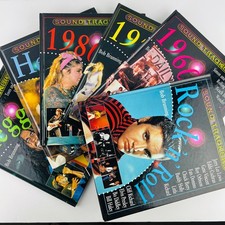
Bob Brunning Sound Trackers Music Series Hardcover 6 Book Lot Pop, Metal, Reggae
$59.99

Heavy Metal by Bob Brunning - Hardcover 1999 - VERY GOOD
$8.44


 Hybrid Mode
