
| |
|
|||||||
 |
|
|
Thread Tools | Display Modes |
|
|
|
#1
 09-30-2005, 06:25 PM
|
||||
|
||||
 Typical Bush attitude (symbolic sanction, give "time to fix")
link
By Saul Hudson 14 minutes ago WASHINGTON (Reuters) - The United States has postponed punishing Saudi Arabia, its close ally and key oil supplier, for restricting religious freedom -- the first time Washington has waived punishing a blacklisted country under a 1998 law targeting violators of religious rights. U.S. officials said on Friday the Bush administration had decided to delay imposing sanctions on Saudi Arabia for six months. (surprise surprise) The decision reflects the delicate balance the United States has sought to strike with Arab allies such as Saudi Arabia as it promotes expanding freedoms at the risk of irking governments needed to support its oil and terrorism policies. In a rare official rebuke a year ago, Washington designated Saudi Arabia as one of only eight countries worldwide that could be sanctioned. The blacklisting in an annual report said religious freedom did not exist in the kingdom. With this year's report due out next month, the Bush administration needed to decide on sanctioning Saudi Arabia and chose to give the kingdom a further six months to negotiate how it might improve its record. "We have not seen strong progress in the area of legal protection for religious freedom," State Department spokesman Kurtis Cooper said. "(But) we welcome Saudi recognition of the need to make improvements and create a more tolerant society." With high oil prices affecting the U.S. economy and dragging on President George W. Bush's popularity, Democrats have charged he has largely ignored Saudi Arabia's rights record for fear of causing any backlash from the oil supplier. Prominent Saudis dismiss as politically motivated U.S. criticism of the country's strict Wahhabi brand of Islam. In contrast to its decision on Saudi Arabia, the United States decided to sanction Eritrea by banning military exports to the Horn of Africa country, the officials said. Vietnam, the third country added to the blacklist last year, has avoided sanctions after agreeing to improve its record, they added. The other countries the United States considers serious violators of religious freedom are North Korea, Myanmar, Sudan, Iran and China. The United States Commission on International Religious Freedom, an agency established by Congress to promote religious freedom, has recommended this year that three allies should be added to the blacklist: Pakistan, Uzbekistan and Turkmenistan. ****************************************************************** Now, it bears noting that the US, whilst insisting on religious freedom abroad, cant seem to escape the agenda of our own home-grown fundies.... 
|
| . |
|
#2
09-30-2005, 06:46 PM
|
||||
|
||||
|
Well I think we all pretty much assumed there would be some sort of "scare tactics", that really isn't a change.
__________________

|
|
#3
09-30-2005, 07:11 PM
|
||||
|
||||
|
Quote:
|
|
#4
09-30-2005, 07:22 PM
|
||||
|
||||
|
More inside info:
By Rod Nordland and Christopher Dickey
Newsweek Jan. 24 issue - When elections are held in Iraq at the end of the month, Iraqis will not see any of the 150,000 American troops stationed there guarding the polling places. Instead, voters will pass groups of armed, masked men wearing black balaclavas to hide their faces. The gunmen may look like terrorists, but they'll be Iraqi Army and police, hiding their identities to protect themselves from retaliation by insurgents, who rarely bother to hide their faces anymore. American officials are hopeful the much-beleaguered Iraqi forces will prove their mettle on Election Day, and preside over an election "by Iraqis and for Iraqis," as an American general puts it. Yet Iraq's rebellious Sunni minority is likely to see it differently: an election for Shiites and Kurds, guarded by Shiites and Kurds, to dominate the Sunnis who once ruled the country The goal of American military planners has long been to use the new Iraqi military to build national unity. And officially, that hasn't changed. American military officials insist that Iraq's security services are not dominated by non-Sunnis. "Absolutely incorrect," says Lt. Gen. David Petraeus, who is in charge of training efforts for the Iraqi forces. "The national forces are national forces, typically Shia, Sunni, Kurds, Yezidi, everything. There is no shortage of recruits from all the difficult areas." That may be true on paper (although no official ethnic breakdown is available). Still, key units and leaders are clearly dominated by Shiites and Kurds, who together represent 75 percent of the population. Commando 36, for instance, was the first Iraqi National Guard unit into Fallujah when the Marines assaulted the city in November. Shia militia veterans and former Kurdish peshmerga guerrillas dominate the unit. They battled Sunni fighters for the Fallujah hospital, which was being used as an insurgent base. The new Iraqi Army's first full division, the Fourth Infantry, is commanded by a Kurd, Lt. Gen. Abdul Aziz. "The division commander is absolutely committed to an integrated Iraq," says his American counterpart, Maj. Gen. John Batiste, who is based in Saddam Hussein's hometown of Tikrit. "The American Army was the first institution to integrate America. The Iraqi Army will do the same for Iraq." But this ideal has proved harder to implement as the insurgency has grown stronger. Ever since mid-2003, when the occupation authority disqualified many officers from Saddam's Sunni-dominated military from rejoining the force, leading Sunnis have been reluctant to sign up. Later the insurgents focused their attacks on the Iraqi police and national guard, deeming them turncoats. When Sunnis have joined the security forces, they've sometimes acted as double agents. Distrust of Sunnis in official positions is now pervasive. "There is no doubt that we are heavily infested in the government, right at the top," says a leading official who has close ties to the Shia spiritual leader, Grand Ayatollah Ali Sistani. The new Iraqi military's first chief of staff was a Sunni—a former general in Saddam's Army. But Gen. Amar Bakir al-Hashimi was fired last summer after insurgents allegedly got key intelligence from one of his staff and used it to assassinate a high-ranking officer. The new chief of staff is a Kurdish general, and the other two highest Iraqi Defense officials are a Shiite and a Kurd. In Mosul, the Sunni police chief, Brig. Gen. Mohammed Kheiri Barhawi, fled the city after his entire force collapsed in the face of insurgent attacks. Later Kurdish troops arrested him carrying $600,000, and accused him of selling out to the insurgents. He was eventually released without charges. "He at one time was a shining example," says an American officer who has worked with Barhawi. "But he was ground down, too long in that job, shot three times, house badly damaged. In retrospect, he should have been transferred somewhere else." (I just want to say that aside from this issue, I totally support the Kurds.)
|
|
| Thread Tools | |
| Display Modes | |
|
|

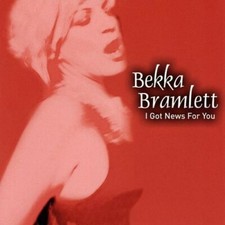
BEKKA BRAMLETT - I Got News For You - CD - **Excellent Condition** - RARE
$49.99
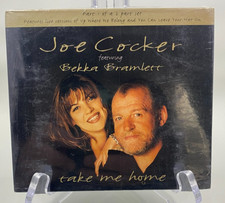
NEW - JOE COCKER - Take Me Home HTF UK CD Single feat. Bekka Bramlett
$7.49

Bekka Bramlett "I Got News For You" CD In Mint. Shongaloo Records LLC 1707. 2009
$45.00
BEKKA BRAMLETT - I Got News For You - CD - **Excellent Condition** - RARE
$49.75
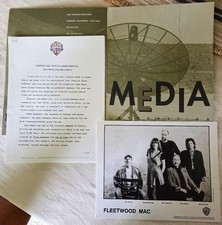
RARE Fleetwood Mac Dave Mason Bekka Bramlett Era 93 Original WB Press Kit w 8x10
$69.99


 Hybrid Mode
