
| |
|
|
|
#1
 12-07-2014, 02:27 AM
|
||||
|
||||

Quote:
I don't mind the record version, too much, but the Mirage video version? My god, I had this video as a kid, and my friends loved it....liked it....err, tolerated it, EXCEPT for NTF? "Turn this sh*t OFF, or we're going home!"(referring to NTF). NTF wasn't really well received.... 
__________________
Christine McVie- she radiated both purity and sass in equal measure, bringing light to the music of the 70s. RIP. - John Taylor(Duran Duran) 
|
| . |
|
#2
12-07-2014, 03:04 AM
|
|||
|
|||
|
I only really became a devoted fan of Fleetwood Mac recently, maybe just over two years ago.
I had heard their songs on WS 101.7 FM for years growing up because my Dad often put the car radio on WS FM. It's a classic rock station so of course they play Fleetwood Mac songs over and over: but they stick to the hit staples: Rhiannon, Dreams, Go Your Own Way, Don't Stop, Tusk, Gypsy, Hold Me, Little Lies, Seven Wonders. I have never heard this station play any songs from Behind the Mask, Time, Say You Will or Extended Play. It is also rare for them to play any song from Tusk other than the title track. Which brings me to why I love Tusk so much. When I worked out the same band was behind all of these great songs I heard on Sydney FM radio, I decided to dig a bit deeper into their back-catalogue and downloaded most of their albums from iTunes. Tusk was great because 75% of these songs I'd never heard before! They were new to me, exciting, fresh and catchy. I Know I'm Not Wrong is one of my favourite Lindsey songs. I love Tusk and think it is a great album, but I would stop short of calling it "perfect". Tusk is special to me because it isn't perfect (let me explain). There is not one bad song on Rumours. In my opinion, Rumours is the perfect album and I think it sells extremely well because so many people can relate to the stories on that record: unrequited love (Go Your Own Way), feeling trapped in a relationship (Dreams), I care about you, but I don't love you anymore (Don't Stop) etc. But Tusk is my favourite album because it never seems to get old. I notice something I haven't before every time I play the record. The songs on Rumours have been played to death both on FM radio and in concert by the band, but many Tusk songs retain that elusive feeling: you can play Never Forget and enjoy it and actually believe that most of the world has not heard the song. Does that make any sense? Last edited by secret love; 12-07-2014 at 03:09 AM..
|
|
#3
12-07-2014, 10:13 AM
|
|||
|
|||
|
That definitely makes sense! When songs are less familiar, they feel fresh and new and exciting. There's no need to press skip when a song comes up on your iTunes shuffle list. It surprises you and it's a gratifying listening experience.
Tusk has some great songs. Perhaps some of the best the band has done. I do think production hurt some in terms of accessibility. Lindsey could've probably had one or two more hits had his songs felt more complete...but that was clearly not what he was going for. I think Stevie's songs set her as one of the pre-eminent female singer-songwriters. Sara, Beautiful Child, and Storms are really special songs, devastating even. I wish the latter two were more known by the world and music critics. I'd be citing them as among her best songs and most essential. Sisters of the Moon was such a great rocker for the Tusk and Mirage tours, just an incredible live moment for Stevie and the band that again didn't pierce the popular consciousness like her other songs did, unfortunately. And Christine shows quite a lot of diversity on the album. The layering and production of "Brown Eyes"...my God! I remember thinking "Honey Hi" was just so short and stupid, but now it has completely absorbed me...I love the vocals and I love how they keep building to the end's "round." No, not every song works. I would point to the album's biggest problem being its pacing. Listening through the album in the car, for example, can be quite difficult, since there are so few upbeat songs. And slow ballads or slow songs don't give the overall listening much momentum and drive. Still, this is a very important album for the band and certainly gets close to The Beatles' White Album for its experimentation. I think The Beatles (and Led Zeppelin) did more with songs, where you'd have 3-5 enormous changes in rhythm and tempo that effectively made 3-5 songs in 1 song...but FM gives you more interesting vocals and personalities. If only the band would do more to draw attention to this album. Some songs here could only be described as sublime. Last edited by bethelblues; 12-07-2014 at 10:19 AM..
|
|
#4
12-07-2014, 04:03 PM
|
|||
|
|||
|
Quote:
Oh well, we can keep our fingers crossed that Sisters of the Moon will be swapped out for Angel some time in 2015. Power of positive thinking!  Edited to add: Yes, of course The Beatles did more with songs than Fleetwood Mac ever has. The mantra of this band, since Tusk, has been KISS (Keep It Simple Stupid) - "guys, let's stick to what worked for us in 1977". That is why so many of their songs are classified by Billboard as Adult Contemporary. There is definitely a Fleetwood Mac formula. Most songs Stevie writes have three different chords repeated through out. This is because she writes on piano and having never taken lessons, she doesn't know how to read a score nor does she know very many chords. The band tends to take Stevie's piano demos and keep the basic three chord structure but just add different instruments into the mix to make it interesting listening. Christine McVie did receive piano lessons and as a result, of course her songs tend to have a more complex musical structure than Stevie's. Lindsey's songs again, are almost always more musically complex than Stevie's because he is a virtuoso guitarist. On a side note, It Takes Time would definitely benefit from Christine McVie either re-arranging or completing re-writing the piano music. It is a bit too dull for me. I think what was missing from Say You Will was not Christine per se. What's missing to me is that more sophisticated musical structure she delivers in her compositions that just leaves Stevie's music-writing efforts for dead. We needed a bridge between Lindsey's amazing, boundary-pushing guitar work and the simple (but still impressive) music which Stevie composed. Christine's songs have always been more mainstream. Lindsey's work is more to the left and Stevie's is, sometimes, a little to the right. Her lyrics can sound forceful, bossy. Last edited by secret love; 12-07-2014 at 04:27 PM..
|
|
#5
12-07-2014, 08:22 PM
|
|||
|
|||
|
Quote:
|
|
#7
12-13-2014, 09:32 AM
|
||||
|
||||
|
35 Years Ago: Fleetwood Mac Tries Something New with ‘Tusk’
by Jeff Giles October 12, 2014 3:04 PM How do you release a double album that goes multi-platinum, breaks the Top Five, spawns multiple hit singles, and spends months in the Top 40 while still being widely regarded as an artistic folly and a flop? Ask Fleetwood Mac. After all, that’s exactly what they did with 1979′s ‘Tusk.’ Released Oct. 12, 1979 — just a few months shy of three years after their previous effort, 1977′s ‘Rumours,’ began its march toward record-breaking success — ‘Tusk’ made up for the long wait between LPs by packing 20 tracks into its expanded length. But as the Mac giveth, the Mac taketh away: for fans expecting a set of songs that picked up where ‘Rumours’ left off, ‘Tusk’ proved a confounding listen, full of artistic left turns and sonic experimentation. Some found it daring and others accused the band of self-indulgence, but no matter how you felt about the album, it was obvious that Fleetwood Mac was refusing to rest on its laurels. This is not to say that ‘Tusk’ is without its radio-friendly moments. Six singles were released in all, starting with the Top 10 title track — one of the more willfully experimental cuts on the album — and including ‘Sara’ (No. 7) and ‘Think About Me’ (No. 20). But it was obvious that rather than trying to recapture or outdo ‘Rumours,’ the band members were willing to expend the huge amount of commercial capital they’d built up by putting together a sprawling, ambitious work that reflected many, if not all, of their wildest artistic whims. Leading the charge was guitarist and singer Lindsey Buckingham, whose grip on the ‘Tusk’ reins would later lead to some derisively referring to the record as ‘Lindsey’s folly.’ As he later took pains to explain, however, it wasn’t about satisfying his ego. “I was losing a great deal of myself,” Buckingham later recalled of trying to create new music in the wake of ‘Rumours.’ His solution was to cover as much musical ground as possible — to consciously avoid a ‘Rumours II.’ “My thought was, let’s subvert the norm. Let’s slow the tape machine down, or speed it up, or put the mike on the bathroom floor and sing and beat on, uh, a Kleenex box! My mind was racing.” The end result was a set of songs that replaced the burnished AM glow of its predecessor with a sonic landscape that was broader and more colorful — yet also more arid, and studded with sharper angles. Critics were quick to point to New Wave as an overriding influence, but ‘Tusk’ wasn’t an attempt to glom onto trendy sounds. As evidenced by the stomping, marching band-backed title track, or the spiky ‘The Ledge,’ or the fuzz-laced ‘Not That Funny,’ or the reverb-soaked ‘That’s All for Everyone,’ it found Buckingham on nothing more than a dizzying quest to capture the sounds in his own mind. Although Buckingham described the positive aspects of upending expectations, engineer Ken Caillat recalled a fairly turbulent working environment, with Buckingham’s eccentric behavior setting the tone. “He was a maniac,” Caillat countered. “The first day, I set the studio up as usual. Then he said, ‘Turn every knob 180 degrees from where it is now and see what happens.’ He’d tape microphones to the studio floor and get into a sort of push-up position to sing. Early on, he came in and he’d freaked out in the shower and cut off all his hair with nail scissors. He was stressed.” He wasn’t the only one. Drummer Mick Fleetwood later laughed about Warner Bros. chief Mo Ostin’s apoplectic response to the finished product, paraphrasing his remarks by saying, “You’re insane doing a double album at this time. The business is f–ed, we’re dying the death, we can’t sell records, and this will have to retail at twice the normal price. It’s suicide.” But in 1979, not even the head of Fleetwood Mac’s record company could stop them from doing whatever they wanted. Neither could they stop a troubled narrative from being woven around the album’s eventual success. Given its length, its ambition, and its much clucked-over million-dollar cost — not to mention the mountains of rock-star excess that sprung up around Fleetwood Mac during an epic ‘Tusk’ tour that included specially painted hotel rooms for singer Stevie Nicks and no shortage of on-stage tension — the record came to be regarded as a weird, costly tumble from the dizzying heights of ‘Rumours.’ Unsurprisingly, the band members took issue with this point of view. “In the context of the whole, ‘Rumours’ took longer to make than ‘Tusk.’ One of the reasons why ‘Tusk’ cost so much is that we happened to be at a studio that was charging a f– of a lot of money,” Buckingham pointed out. “During the making of ‘Tusk,’ we were in the studio for about 10 months and we got 20 songs out of it. ‘Rumours’ took the same amount of time. It didn’t cost so much because we were in a cheaper studio. There’s no denying what it cost, but I think it’s been taken out of context.” Fleetwood also insisted in a Trouser Press interview that change was part of the band’s legacy. “We’ve never stayed one way for very long, and I don’t think we ever will. We’ve always changed a lot whether or not players have changed,” he said. “Doing a double album didn’t make any business sense at all. But it meant a lot to us, artistically — whether we could still feel challenged. We really, really are pleased with it. We’ve also, I think, got enough discretion to know if the songs aren’t up to standard, in which case we’d have just put out a single album.” Meanwhile, Christine McVie bristled during a 1982 interview with Sounds, pointing out that “‘Tusk’ sold nine million copies — so it can’t be too shabby, can it? But a lot of people gave us flak about that album. It’s very different, very different, very Lindsey Buckingham. I’ll have to say that. He was going through some musical experiments at the time.” Still, the backlash took its toll, and when the sales came in considerably softer than those for ‘Rumours’ — which was, it’s worth noting, one of the biggest-selling records of all time — Buckingham felt that the other members of the group turned on him, jaundicing his perception of his place in the band as well as its artistic limits. “I got a lot of support from the band during the making of ‘Tusk’; everyone was really excited about it. Then, when it became apparent that it wasn’t going to sell 15 million albums, the attitude started to change — which was sad for me in a way, because it makes me wonder where everyone’s priorities are,” Buckingham later admitted to Record. “They changed their attitude about the music, after they realized it wasn’t going to sell as many copies. That’s not really the point of doing it. The point is to shake people’s preconceptions about pop.” None of that helped curb Buckingham’s restless artistic appetites, and before the end of the ’80s, he was out of the band, temporarily off to pursue wilder (and less commercially friendly) solo vistas. But like a lot of works of art once deemed too outre, ‘Tusk’ earned a deeper measure of appreciation over time. Today, it’s widely regarded as one of the more interesting and artistically sounding albums in Fleetwood Mac’s catalog, and all those out-there moments that perplexed ‘Rumours’ fans have been hailed as influential by a widening circle of younger bands. In time, Buckingham would return to Fleetwood Mac, but the way it was perceived — and the lasting demand for ‘Rumours’-style Mac product — left a lasting impression on his career. “For me, the ‘Tusk’ album was the most important album we made, but only because it drew a line in the sand that, for me, defined the way I still think today,” Buckingham mused in a 2011 interview. “I was trying to pave some new territory for us, but another way of looking at it is that I was causing trouble. Had we all wanted the same thing for the same reason, I probably never would have made solo albums.” Read More: 35 Years Ago: Fleetwood Mac Tries Something New with 'Tusk' | http://ultimateclassicrock.com/fleet...ckback=tsmclip
|
|
#8
12-07-2014, 01:24 PM
|
||||
|
||||
|
Quote:
not the most kid-friendly song version, no.  for the record, i actually love NTF - both on the album where i think it's very interesting with extra little arrangements and left-field additions in it, and especially his more recent, very short punkish live versions. Live 2013 version was one of the unexpected highlights of that show. 
__________________
 "kind of weird: a tribute to the dearly departed from a band that can treat its living like trash"
|
 |
| Thread Tools | |
| Display Modes | |
|
|

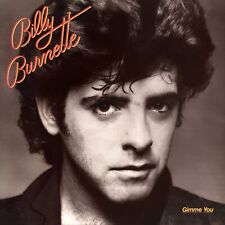
Gimme You by Billy Burnette (Remastered CD, 1981, 2023) Fleetwood Mac
$10.98
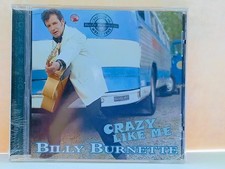
BILLY BURNETTE "Cray Like Me" CD 2017 release STILL SEALED
$24.50
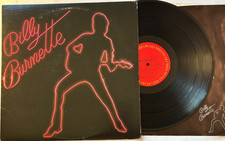
Billy Burnette - Self-Titled LP - 1980 1st Pressing 12" Columbia LP + Lyrics VG+
$6.00
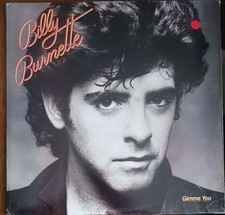
BILLY BURNETTE - GIMME YOU - 1981 COLUMBIA RECORDS VINYL ALBUM - (VG/VG+)
$5.00
![Billy Burnette - Billy Burnette [New CD] Rmst, Reissue picture](/vintage/img/g/0k8AAeSwKJppHhl1/s-l225/Billy-Burnette-Billy-Burnette-New-CD-Rmst-Reissue.jpg)
Billy Burnette - Billy Burnette [New CD] Rmst, Reissue
$15.32


 Hybrid Mode
