
| |
|
|||||||
|
|
Thread Tools | Display Modes |
|
#1
 01-06-2010, 12:28 AM
|
||||
|
||||
 Photo shows galaxies with stars that are hundreds of millions of years old
Hubble shows galaxies from toddler universe
Photo shows galaxies with stars that are hundreds of millions of years old updated 6:04 p.m. ET, Tues., Jan. 5, 2010 WASHINGTON - The Hubble Space Telescope has captured the earliest image yet of the universe — just 600 million years after the Big Bang, when the universe was just a toddler. Scientists released the photo Tuesday at a meeting of the American Astronomical Society. It’s the most complete picture of the early universe so far, showing galaxies with stars that are already hundreds of millions of years old, along with the unmistakable primordial signs of the first cluster of stars. These young galaxies haven’t yet formed their familiar spiral or elliptical shapes and are much smaller and quite blue in color. That’s mostly because at this stage, they don’t contain many heavy metals, said Garth Illingworth, a University of California, Santa Cruz, astronomy professor who was among those releasing the photo. “We’re seeing very small galaxies that are seeds of the great galaxies today,” Illingworth said in a news conference. Until NASA’s Hubble telescope was repaired and upgraded last year, the farthest back in time that astronomers could see was about 900 million years after The Big Bang, Illingworth said. Hubble has been key in helping determine the age of the universe at about 13.7 billion years, ending a long scientific debate about a decade ago. The panorama was built up like a mosaic from pictures taken in September and October 2009 with the Wide Field Camera 3, which was installed during last May's servicing mission; and in 2004 with the Advanced Camera for Surveys, which was repaired during the same mission. Readings in ultraviolet, visible-light and near-infrared wavelengths were combined to produce an enhanced-color image. The view covers a portion of the southern field of a large galaxy census called the Great Observatories Origins Deep Survey, a deep-sky study by several observatories to trace the formation and evolution of galaxies. The mosaic spans a slice of space that is equal to about a third of the diameter of the full moon, or 10 arcminutes. The panorama was built up like a mosaic from pictures taken in September and October 2009 with the Wide Field Camera 3, which was installed during last May's servicing mission; and in 2004 with the Advanced Camera for Surveys, which was repaired during the same mission. Readings in ultraviolet, visible-light and near-infrared wavelengths were combined to produce an enhanced-color image. The view covers a portion of the southern field of a large galaxy census called the Great Observatories Origins Deep Survey, a deep-sky study by several observatories to trace the formation and evolution of galaxies. The mosaic spans a slice of space that is equal to about a third of the diameter of the full moon, or 10 arcminutes. As far back as Hubble can see, it still doesn’t see the first galaxies. For that, NASA will have to rely on a new observatory, the $4.5 billion James Webb telescope, which is set to launch in about four years. “We are on the way to the beginning,” said astrophysicist Neil deGrasse Tyson, director of the American Museum of Natural History. “Every step closer to the beginning tells you something you did not know before.” The new Hubble picture captures those distant simpler galaxies juxtaposed amid closer, newer and more evolved ones. The result is a cosmic family photo that portrays 7,500 galaxies at different ages and stages of development over the course of more than 13 billion years. The earliest galaxies look irregular and chaotic, but as time goes on, the galaxies take on a more familiar look due to accretion, collisions and mergers. Tyson, who was not involved in the Hubble image research, said most people only like their own baby pictures, but Hubble’s photo is different: “These are the baby pictures for us all, hence the widespread interest.” http://www.msnbc.msn.com/id/34708811...ace/?gt1=43001 
|
| . |
|
|

![Peter Green - In The Skies - Expanded Edition [New CD] Bonus Tracks, Expanded Ve picture](/vintage/img/g/W7IAAeSwD9tpHhmo/s-l225/Peter-Green-In-The-Skies-Expanded-Edition-New-CD-B.jpg)
Peter Green - In The Skies - Expanded Edition [New CD] Bonus Tracks, Expanded Ve
$17.10
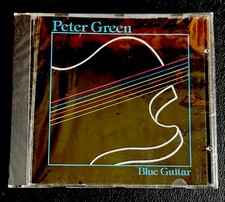
CD Peter Green Blue Guitar Castle Communications 1991 Rock Blues
$24.99

68' Peter Green Woodcut Blue Land Figure Signed #64/100
$1250.00

Fleetwood Mac - Peter Green’s Fleetwood Mac Simply Vinyl S125032 UK 2005 SEALED
$49.99

Instant Peter Green By Peter A Green
$94.26


 Threaded Mode