
| |
|
|||||||
|
|
Thread Tools | Display Modes |
|
#11
 06-04-2009, 10:29 PM
|
||||
|
||||

Quote:
Moreover, Obama must be careful with the gay in the military thing. If he loses that issue, it will hurt him and set back the gay civil rights movement. Remember, the R's do not want to give gay people any rights in any way - again, based on the premise that gays are filthy, immoral people that cannot be in any way trusted. That whole - if you want to fill your church - preach hate thing. Also, it would not behoove Obama to overturn the law with an Executive Order, if that is even legal and, I think, an executive order only becomes law if Congress doesn't overturn it within thirty days after it is published in the Federal Register. If Congress overturned Obama (highly unlikely on this issue) - it would be disastrous. Interestingly, Hillary has moved to allow same sex partners of American State Dept. personnel the same travel rights as same sex spouses. This is a very smart move in that it is the thin end of the wedge - an entree into this issue in a relatively benign area. On edit -- Here is an interesting article on the issue of gays in the military, which demonstrates how fay society has come: Don't Ask, Don't Tell - The Military Policy on Gays By Rod Powers, About.com May 26 2009 It may surprise some of you to learn that homosexuals are allowed to serve in today’s United States Military. They can serve, but they can’t engage in homosexual activities while in the military, nor can they tell anyone about their sexual preference. To do either is a basis for involuntary discharge. That’s the backbone of the current “Don’t Ask, Don’t Tell” law. Throughout its history, the US Military has had an inconsistent policy when it came to homosexuals in the military. Prior to World War II, there was no written policy barring homosexuals from serving, although sodomy was considered a crime by military law ever since Revolutionary War times. In 1778, Lieutenant Gotthold Frederick Enslin became the first soldier to be drummed out of the Continental Army for sodomy. Homosexuality - a Mental Condition During World War II, the Korean War, and the Vietnam War, the military defined homosexuality as a mental defect, and officially barred homosexuals from serving based on medical criteria. However, when personnel needs increased due to combat, the military developed a habit of relaxing its screening criteria. Many homosexual men and women serviced honorably during these conflicts. Unfortunately, these periods were short-lived. As soon as the need for combat personnel decreased, the military would involuntarily discharge them. A Complete Ban of Gays in the Military It wasn't until 1982 that the Department of Defense officially put in writing that “homosexuality was incompatible with military service,” when they published a DOD directive stating such. According to a 1992 report by the Government Accounting Office, nearly 17,000 men and women were discharged under this new directive during the 1980s. The Birth of "Don't Ask, Don't Tell" By the end of that decade, reversing the military's policy was emerging as a priority for advocates of gay and lesbian civil rights. Several lesbian and gay male members of the military came out publicly and vigorously challenged their discharges through the legal system. By the beginning of 1993, it appeared that the military's ban on gay personnel would soon be overturned. President Clinton announced that he intended to keep his campaign promise by eliminating military discrimination based on sexual orientation. But, this didn't sit well with the Republican-controlled Congress. Congressional leaders threatened to pass legislation that would bar homosexuals from serving, if Clinton issued an executive order changing the policy. After lengthy public debate and congressional hearings, the President and Senator Sam Nunn, chair of the Senate Armed Services Committee, reached a compromise which they labeled Don't Ask, Don't Tell, Don't Pursue. Under its terms, military personnel would not be asked about their sexual orientation and would not be discharged simply for being gay. However having sexual relations, or displaying romantic overtures with members of the same sex, or telling anyone about their sexual orientation is considered "homosexual conduct" under the policy and is a basis for involuntary discharge. This is now known as the "Don't Ask, Don't Tell" law, and is the current Department of Defense Policy. Changing Times At the time, most military leaders and young enlisted folk (who were forced to live in the barracks with a roommate) took a conservative view about allowing gays to serve openly in the military. I shared these concerns, and -- in fact -- penned the tounge-and-cheek article, Gays in the Military -- the Logistics1, when I first took over the About.com US Military site in 1999. However, times change.....so does the military.....and so have my views. Most junior enlisted (the one's who have to live in the barracks), today, see nothing wrong with homosexuality and would not be bothered by serving with those they know to be gay. Today, almost everyone gets a single room (with no roommate) following basic training and job school. In those few situations where military personnel share living accommodations (such as deployments and ships), it is generally several military members living together. I sincerely doubt there will be many cases of someone inappropriately "hitting on" anyone else around 49 or so witnesses. The Future of Gays in the Military "Don't Ask, Don't Tell" is going to go away, and gays will be allowed to serve openly in the military. That much is clear -- the writing is on the wall. The question is, "when?" That is still uncertain. Like President Clinton before him, President Obama has promised to overturn the law, and allow gays to openly serve. However, like President Clinton, President Obama is facing stiff opposition. Senior military leaders and many Congressional leaders oppose any change. Obama is taking a different track than Clinton did. Instead of facing the issue head-on, and risking a serious challenge (thereby making several political enemies), the President has put the issue on a "back-burner," to leave for a later time. Don't expect this time to be soon. The President has shown a propensity to side with senior Pentagon officials when it comes to military issues since he's taken office. His decision to revive military trials for some prisoners at Guantanamo Bay, and to slow down his original plan for withdrawal of troops from Iraq are just two cases in point. I suspect the Obama administration will continue to "study the issue," for some time to come. At a time of his choosing (at the best "political time"), he will make his first move. I suspect that move will not be an attempt to overturn the policy, but rather an executive order to the Pentagon to simply stop homosexual discharges, while leaving the original policy on the books. Later, he can negotiate a permanent change with Congressional leaders. This About.com page has been optimized for print. To view this page in its original form, please visit: http://usmilitary.about.com/od/mille.../a/dontask.htm ©2009 About.com, Inc., a part of The New York Times Company. All rights reserved. Links in this article: 1. http://usmilitary.about.com/library/.../aa011000a.htm
__________________
 save the cheerleader - save the world Last edited by strandinthewind; 06-04-2009 at 10:36 PM.. 
|
|
|


$5.40

Heavy Metal by Bob Brunning - Hardcover 1999 - VERY GOOD
$8.44

1970s Pop - Hardcover By Brunning, Bob - GOOD
$3.40
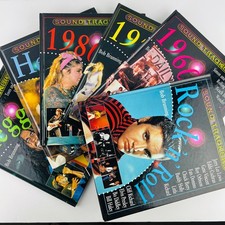
Bob Brunning Sound Trackers Music Series Hardcover 6 Book Lot Pop, Metal, Reggae
$99.99

Blues: The British Connection by Bob Brunning
$27.58


 Threaded Mode