
| |
|
#11
 10-06-2008, 09:13 AM
|
||||
|
||||

Quote:
Also, as predicted: McCain, Obama camps trade barbs on negative ads By CHARLES BABINGTON, Associated Press Writer The McCain and Obama presidential campaigns traded accusations of mudslinging Monday in the wake of new ads dredging up infamous events from 20, 30, even 40 years ago. Nancy Pfotenhauer, an adviser to the McCain campaign, said it's "absolutely essential" that Americans hear not only about his plans for the future but also "about the decision they have to make about these two individuals." She said she thought that commercials that raise new questions about Obama's associations "have struck a nerve" with the Democrat. Obama's communications director, Robert Gibbs, countered that the new McCain offensive — including GOP vice presidential nominee Sarah Palin's allegation that Obama "pals around with terrorists" is happening because Republicans want to talk about something other than the struggling economy. Gibbs, who appeared with Pfotenhauer on ABC's "Good Morning America" Monday, charged that the McCain campaign is resorting to "a despicable smear campaign." Democrats on Sunday had denounced Palin's charge and warned that it would trigger reexaminations of McCain's past. Sure enough, Obama's campaign released a Web video and a letter about McCain's role in the Keating Five scandal from the early 1990s. McCain "does not want to play guilt-by-association, or this thing could blow up in his face," Democratic strategist Paul Begala said on NBC's "Meet the Press." The names being bandied about — Bill Ayers and Charles Keating — are unfamiliar to millions of Americans, and their wrongdoings occurred decades ago. But political operatives dredged them up over the weekend, and they could play a prominent role in the campaign's final month. Palin, the Alaska governor, defended her earlier comments about Obama and Ayers, in which she said the Democratic nominee is "palling around with terrorists who would target their own country." Ayers was a founder of the violent Weather Underground group during the Vietnam era. Its members were blamed for several bombings when Obama was a child. Obama has denounced Ayers' radical views and activities. The two men live in the same Chicago neighborhood and once worked on the same charity board. Ayers hosted a small meet-the-candidate event for Obama in 1995, early in his political career. Obama strategist David Axelrod has said the two men are "friendly." On Sunday, Palin told reporters in California that her comments were about "an association that has been known but hasn't been talked about. I think it's fair to talk about where Barack Obama kicked off his political career, in the guy's living room." In fact, Obama was questioned about Ayers during a prime-time Democratic debate against Sen. Hillary Rodham Clinton before April's Pennsylvania primary. "The heels are on, the gloves are off," Palin said of her campaign strategy. Obama, speaking Sunday to thousands at an outdoor event in Asheville, N.C., fired back. He said McCain and his aides "are gambling that he can distract you with smears rather than talk to you about substance." He described the criticisms as "Swiftboat-style attacks on me," a reference to the unsubstantiated allegations about 2004 Democratic nominee John Kerry's military record in Vietnam. Other Democrats rushed to Obama's defense. Veteran party activist Hillary Rosen, on CNN's "Late Edition," said, "If they throw mud like that, then you go back to Charles Keating, you go back to Sarah Palin's investigation." She was referring to inquiries into the firing of Alaska's top police official. "You know, I just don't think that John McCain wants to take this nuclear strategy," Rosen said. Just months into his Senate career, in the late 1980s, McCain made what he has called "the worst mistake of my life." He participated in two meetings with banking regulators on behalf of Keating, a friend, campaign contributor and savings and loan owner who was later convicted of securities fraud. The Senate ethics committee investigated five senators relationships with Keating. The panel cited McCain for a lesser role than the others, but faulted his "poor judgment." Obama's new Web video, being e-mailed to millions of his supporters, summarizes a 13-minute Web "documentary" that the campaign plans to distribute Monday. Obama campaign manager David Plouffe said in a statement, "McCain's Keating history is relevant and voters deserve to know the facts." On Sunday, Obama also unveiled a TV ad on the economy that describes McCain was "erratic in a crisis." Some see that as a reminder of McCain's age, 72. http://news.yahoo.com/s/ap/20081006/...idates_attacks Here is the Obama schtick: The current economic crisis demands that we understand John McCain's attitudes about economic oversight and corporate influence in federal regulation. Nothing illustrates the danger of his approach more clearly than his central role in the savings and loan scandal of the late '80s and early '90s. John McCain was accused of improperly aiding his political patron, Charles Keating, chairman of the Lincoln Savings and Loan Association. The bipartisan Senate Ethics Committee launched investigations and formally reprimanded Senator McCain for his role in the scandal -- the first such Senator to receive a major party nomination for president. At the heart of the scandal was Keating's Lincoln Savings and Loan Association, which took advantage of deregulation in the 1980s to make risky investments with its depositors' money. McCain intervened on behalf of Charles Keating with federal regulators tasked with preventing banking fraud, and championed legislation to delay regulation of the savings and loan industry -- actions that allowed Keating to continue his fraud at an incredible cost to taxpayers. When the savings and loan industry collapsed, Keating's failed company put taxpayers on the hook for $3.4 billion and more than 20,000 Americans lost their savings. John McCain was reprimanded by the bipartisan Senate Ethics Committee, but the ultimate cost of the crisis to American taxpayers reached more than $120 billion. The Keating scandal is eerily similar to today's credit crisis, where a lack of regulation and cozy relationships between the financial industry and Congress has allowed banks to make risky loans and profit by bending the rules. And in both cases, John McCain's judgment and values have placed him on the wrong side of history. HomeFull Documentary Available at 12:00 PM Eastern Active content removed Active content removed Top News Revisiting McCain’s Keating 5 history Seattle Times - Sept. 4, 2008 Keating 5 ring a bell? Los Angeles Times - Sept 25, 2008 McCain’s recent history Sioux Falls Argus Leader - Sept. 15, 2008 Did McCain Learn From the S&L Crisis? The Washington Independent - Sept. 29, 2008 John McCain’s Presidential Campaign and the Keating 5: A Fresh Look at a Dead Scandal American Chronicle - Sept. 26, 2008 McCain’s role in S&L collapse rouses bitter memories Orange Country Register - Sept, 26, 2008 The Keating Five is more relevant now than ever The Daily Voice - Sept. 23, 2008 Ignoring Keating Media Matters - Sept. 26, 2008 John McCain & The Ghost of Keating Five The Nation - Sept. 17, 2008 Remember the S&L Bailout? John McCain Hopes You Don’t Mother Jones Research & Downloads (permalink) The ABCs of John McCain, Charles Keating & The Savings & Loan (S&L) Crisis Downloads The ABCs of John McCain, Charles Keating & The Savings & Loan (S&L) Crisis John McCain’s Letter on behalf of Keating to James Baker, White House Chief of Staff John McCain’s First Letter on behalf of Keating to Edwin Gray, banking regulator John McCain’s Second Letter on behalf of Keating to Edwin Gray, banking regulator John McCain’s Third Letter on behalf of Keating to Edwin Gray, banking regulator John McCain’s Letter on behalf of Keating to Donald Regan, Secretary of Treasury John McCain with Charles Keating III (The Phoenix Gazette - September 12, 1993) During S&L Crisis, 747 Savings & Loans Banks Failed, Costing US Taxpayers $124 Billion; Deregulation Allowed Riskier Investments By S&Ls, Leading To Widespread Collapses And Fraud. In the 1980’s and early 1990’s the US economy was badly shaken by the failure of 747 savings and loan (S&L) institutions that had to be taken over and bailed out by the federal government. In total, the failures cost taxpayers $124 billion. One of the main causes for the epidemic of failures was the unregulated expansion of S&L’s, which had traditionally only dealt with home loans, into more exotic and riskier investments. When many of those investments failed, the institutions collapsed. [Chicago Tribune, 7/3/98, Los Angeles Times, 9/17/08] S&L’s Risky Investments With Federally-Insured Money Led To Call For More Regulation. In the early 1980’s, Charles Keating’s American Continental Corporation purchased a California S&L named Lincoln. At that time, S&Ls like Lincoln were able to go beyond their traditional purpose of offering home loans and engage in riskier forms of investment. Since the deposits of S&Ls were insured by the federal government, regulators began to take notice of the investments being made by Keating and at other S&Ls. The Federal Home Loan Band Board (FHLLB), which had regulatory authority over the S&Ls, began to worry about the risks of this trend, and proposed a “direct investment” regulation to limit the money S&Ls could direct to these riskier investments. [Senate Ethics Committee Keating Five Investigation, 1990] At Keating’s Request, McCain Wrote 5 Letters, Supported Bill To Forestall Direct Investment Rule. Keating was unhappy with the direct investment rule and began actively lobbying against it. Senate Ethics Committee Special Counsel Robert Bennett explained during the 1990 Keating Five hearings that John McCain wrote at least five letters to regulators, Treasury and White House officials to argue against these proposed restrictions on risky investments by S&Ls. Bennett said that “In 1984 and ‘85, then Congressman McCain wrote several letters to Chairman [Edwin] Gray [of the Federal Home Loan Bank Board] and White House officials urging them to postpone promulgation of the direct investment rule… There is evidence that Senator McCain did so at the urging of Mr. Keating or other representatives of Lincoln.” McCain’s work for Keating also included signing onto a bill to delay the direct investment rule in 1984 [Senate Ethics Committee Keating Five Investigation, 1990; HCONRES 363, 98th Congress] With New Regulations In Place, Officials Began Investigation That Found That Keating’s Lincoln S&L Had Operated As Massive Fraud. After the direct investment rule was enacted the Federal Home Loan Bank Board began a more vigorous investigation into Lincoln’s practices, beginning to uncover a vast web of fraud and accounting irregularities designed to embezzle money to Keating and his family and friends. Top regulator William Black later said that Lincoln “operated like a Ponzi scheme, or financial pyramid dependent on an ever-increasing churning of assets.” Black said, “Its parent, Keating's American Continental Corp., was no more than a shell that siphoned dividends from Lincoln and distributed them through inflated salaries to Keating, his family members and associates.” [Senate Ethics Committee Keating Five Investigation, 1990; Associated Press, 12/5/90] Keating Asked McCain And Other Senators To Whom He Had Contributed To Intervene With Regulators. In the most well-known episode of the scandal, Charles Keating asked five U.S. Senators including McCain to intervene with regulators from the Federal Home Loan Bank Board on his behalf. The Senators attended two meetings with the regulators in 1987. Reports of the meetings and the fact that Keating had contributed heavily to those Senators led to an investigation by the Senate Ethics Committee in 1990 into what became known as Keating Five scandal. [Senate Ethics Committee Keating Five Investigation, 1990; Chicago Tribune, 6/14/90; Los Angeles Times, 5/30/89] Keating Admitted He Was Trying To Buy Influence. Keating was asked if his contributions bought him influence with the Senators, to which Keating replied, “I want to say in the most forceful way I can, I certainly hope so.” [Los Angeles Times, 5/30/89] Ethics Committee Special Counsel Said McCain Had Closest Relationship to Keating. Robert Bennett, the Special Counsel for the Senate Ethics Committee said during the 1990 hearings: “of the five senators here before you, Senator McCain had the closest personal friendship with Charles Keating. Their friendship predated Senator McCain's political career. Senator McCain also was the only one who received personal as well political benefits from Charles Keating.” [Senate Ethics Committee Hearing into the Keating Five] McCain Received $166,000 In Campaign Contributions from Charles Keating and his Associates. “Together with friends and associates, Keating contributed $56,000 to McCain's first House race, another $56,000 to the second and $54,000 to his 1986 Senate campaign,” contributions that were key to early success as a politician. [New York Times, 5/25/97] McCain Used Keating’s Private Planes on Nine Occasions. “From August 1984 to August 1986, Sen. John McCain and his family flew across the country and to the Bahamas on at least nine occasions at Charles H Keating Jr.'s expense,” often to stay at the Keatings’ exclusive Cat Cay getaway. [Arizona Republic, 10/8/89] McCain Had Direct Financial Ties To Keating. Keating brought in McCain’s wife and father-in-law as the largest investors in an Arizona shopping center investment. Fountain Square Shopping Center was a no-risk investment that virtually guaranteed a 25% return and a “significant tax write-off” through a tax shelter technique available to the wealthy that was soon outlawed. When reporters first questioned the deal, McCain said to reporters “It’s up to you to find that out, kids.” [Arizona Republic, 10/8/89] McCain Originally Denied Reports of Connection. “When the story broke, McCain did nothing to help himself. ‘You're a liar,’ McCain said” when asked about the investments. He challenged reporters saying, ‘It's up to you to find that out, kids.’” [Arizona Republic, 3/1/2007] McCain Rebuked By Senate Ethics Committee For Exercising “Poor Judgment.” In 1990, the bipartisan (three members of each party) Senate Ethics Committee rebuked McCain “for exercising ‘poor judgment’ for intervening with the federal regulators on behalf of Keating.” [Arizona Republic, 3/1/2007] Keating’s S&L Was Declared Insolvent; $3.4 Billion Bailout Most Expensive in Meltdown. Federal regulators declared Lincoln Savings and Loan insolvent. It ended up costing taxpayers $3.4 billion to clean up the mess and cover federally-insured deposits at Lincoln, making it the most expensive failure in the entire S&L meltdown. [Washington Post, 11/29/92; New York Times, 2/21/08] Keating Also Bilked 23,000 Investors – Many Elderly – With Junk Bonds. As his deeds unraveled under the scrutiny of regulators and civil and criminal court cases, it became clear that he had sold worthless junk bonds to 23,000 investors, many of them elderly retirees who had thought their investments were insured and lost their lost savings to Keating’s crimes. [Associated Press, 2/23/08] Keating Was Found Guilty of 73 Counts of Fraud, Lost Two Criminal And One Civil Case. “a federal jury convicted him of 73 counts of wire and bankruptcy fraud in the collapse of American Continental and Lincoln,” a keystone of the Savings & Loan scandal as Keating “looted” the bank. Keating was also found guilty in civil court and lost a massive class action suit by investors he bilked. [Arizona Republic, 3/1/2007; Associated Press, 4/7/99] Learn MoreTop News Revisiting McCain’s Keating 5 history Seattle Times - Sept. 4, 2008 Keating 5 ring a bell? Los Angeles Times - Sept 25, 2008 McCain’s recent history Sioux Falls Argue Leader - Sept. 15, 2008 http://www.keatingeconomics.com/
__________________
 save the cheerleader - save the world 
|
|
|

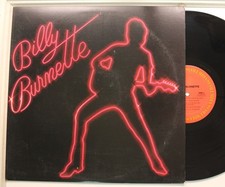
Billy Burnette Lp Self Titled On Columbia - Vg+ To Vg++ / Vg++
$11.99
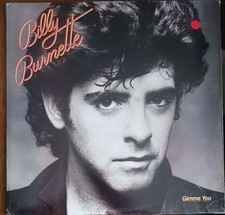
BILLY BURNETTE - GIMME YOU - 1981 COLUMBIA RECORDS VINYL ALBUM - (VG/VG+)
$5.00
Billy Burnette - Self-Titled LP - 1980 1st Pressing 12" Columbia LP + Lyrics VG+
$4.50
BILLY BURNETTE - (SELF- TITLED) - 1979 POLYDOR RECORDS PROMO VINYL LP - (VG/VG)
$5.50
BILLY BURNETTE 45 RPM Promo Record "SHOO-BE-DOO" 1978 Rock Unplayed MINT
$6.70


 Threaded Mode