
| |
|
|||||||
|
|
Thread Tools | Display Modes |
|
#1
 03-06-2004, 10:22 PM
|
||||
|
||||
 "Unknown Soldier" Speaks Out To Bring Troops Home
I'm not going to post this whole thing because it's pretty long but please check it out, it's a worthwhile read.
"Unknown Soldier" Speaks Out To Bring Troops Home" Because members of the military are limited in their ability to speak out publicly, the soldier interviewed here must remain anonymous. A military medic who served in the Gulf War in the early 1990s, he is a member of the Reserves who was called up to serve in the current war in Iraq. His primary role is to deliver medical care to U.S. military personnel as well as Iraqis. Profoundly patriotic and committed to protecting his country, he is deeply concerned that the U.S. invasion and subsequent occupation of Iraq, which has resulted in the deaths of over 500 American soldiers and uncounted thousands of Iraqis, may now be edging toward disaster. He believes that the troops have done their job and should be brought home. In this interview, he notes that the troop rotations currently underway (between now and June) will place into the Iraq combat zone a significantly higher percentage of Reserves than has been deployed in any previous war. Because Reserves receive far less extensive training than active duty forces, he warns that the summer of 2004 may be a particularly dangerous time for U.S. forces in Iraq. Stationed in the area of the Baghdad Airport at the time of President Bush’s Thanksgiving 2003 visit to the troops there, he also recounts that on the day before the president’s visit, the troops were given a questionnaire that asked them whether they “supported the president.” Those who did not declare their support with sufficient enthusiasm were not permitted to take part in the Thanksgiving meal, and had to make do with MREs (meals ready to eat, referred to by the soldiers as “meals refused by Ethiopians”) in their quarters. This interview offers a rare, unfiltered report from a first-hand participant in the invasion and ongoing occupation of Iraq. Why did you decide to join the U.S. military? It’s one of the things my family does. I was taught by my parents that there were two things we had to do: go to college and serve in the military. We believe in this country wholeheartedly and being in the military is very important to me. It’s part of my life. Do you think the American public is well-informed about what is happening in Iraq? No, I really don’t. I see young people on my medical table all the time, people who have lost their legs or arms or had other terrible injuries. No one back home sees any of that. I’ve been home for a month and I haven’t seen a casualty yet on television. I’m still waiting. Where are the casualties? It’s as if it doesn’t exist, as if it doesn’t happen. What about Iraqi deaths and injuries? We don’t care about Iraqi deaths. It’s something that does not even count. The hospital was told not to keep count. The Iraqi infrastructure does not keep an account of the deaths anymore. Why? The American government told them not to. We do always keep a list of the Americans injured and the number that die. But here in America you don’t see anything about these soldiers coming back. You don’t read anything about the funeral. It’s like it’s a secret, like these people didn’t exist. Was it like this in previous wars? No. What brought about the change? From what I gather, it used to be that the president would go out to the area to meet the [deceased] soldiers coming in. They would drape the caskets and they would actually watch and give a moment of silence as the coffin came by. The Bush Administration felt that was too much for Americans to handle, so they secured that part of the ceremony so that no one knows when that fallen soldier comes home. It’s an injustice to the military, because you gave your life to the country and the country should give something back to you. Even just a moment of silence. Every day that someone dies, the flag should be lowered to half staff. Not just because a politician died. Those guys are good people. They work hard. They do anything and everything that is asked of them. And they gave the ultimate sacrifice. It should not be that you have to go to a website to find out who died. Are the men and women in the U.S. military in Iraq sufficiently trained before going over there? No. I am extremely concerned about the major shift that is taking place right now, between now and June, where there’s going to be a much higher percentage of the troops being Reserves rather than full-time, active duty military. The difference is that the active duty go through far more training than Reserves. Up to now, we’ve had a mix of about 20 percent Reserves and 80 percent active duty. With the change going on now, they are rotating out tens of thousands of active duty troops and replacing a lot of them with Reserves. We’ve heard that could be 80 percent Reserves and 20 percent active duty. Some sources say it could be 50/50. But the main point is, nothing like that has ever been tried before, and these Reserves are being sent into a war zone. Many of them are people who would be fine driving a truck or working on a base in some support capacity, but they’re going to be out there on the streets with M-16 rifles. It took me a long time to become skilled with my M-16. You have to learn about dope and windage. It takes time to get it right. What are dope and windage? Windage is about taking into account the effect that the wind will have on the course of the bullet. Dope is about the way you elevate your sight to lock in on a target. What else is lacking in terms of training? The type of training that you need for guerilla warfare. Some units get it and some don’t. Urban training is real tough. You’ve got to pick the enemy out before he picks you out, and you’ve got to know what spot to look for. OJT is not going to work. What’s OJT? On-the-job training. It’s not going to work. And that’s what we’re going through now. It’s completely OJT. These guys are learning as we go along. To what extent do you feel that U.S. soldiers in Iraq have the proper equipment for what they face there? We were supposed to have bulletproof vests, where we actually put the plates inside our flak jackets. We never got those. The money had been paid for those things, but we never got them. My brother had to send me a flak jacket. There’s all sorts of stuff that we had to buy on our own before we left. The types of canteens you need, water pouches that go on your back. These were not provided, or not sufficiently? Right. We were given canteens that you hold on your side, but the kind that hold a lot of water, you need them, too. It can get unbelievably hot over there and you need to drink a lot of water. Also, the pack doesn’t work. What’s wrong with it? It’s top-heavy. All the weight sits above head level. It doesn’t work. The weight should be set in the middle of your back, not above your neck. So you had to go out and buy another pack. Why on earth didn’t someone figure this out beforehand? The military buys stuff from the cheapest dealer. We had to go out and buy boots. Not that the military boots are that bad, but they’re not the greatest boots in the world for what you’re going to be doing. And when you’re going to spend hours and hours and hours in a pair of boots, you want something that’s comfortable. So you have to go out and buy your own boots. To buy all of these things, of course, assumes that you or your family can afford to buy them, and a lot of recruits come from poor families. What did you think about President Bush’s Thanksgiving visit to Iraq? I was there when President Bush came to the [Baghdad] airport. The day before, you had to fill out a questionnaire and answer questions, that would determine whether they would allow you in the room with the President. What was on the questionnaire? “Do you support the president?” Really! Yes. Members of the military were asked whether they support the president politically? Yes. And if the answer was not a gung-ho, A-1, 100 percent yes, then you were not allowed into the cafeteria. You were not allowed to eat the Thanksgiving meal that day. You had an MRE. What’s an MRE? Meals ready to eat. We also call them “meals refused by Ethiopians.” About this questionnaire, it raises a serious question about whether military personnel, or civil servants for that matter, should ever be asked questions by their supervisors about their political beliefs. It also raises the whole question of freedom of speech. In particular, the circumstances under which members of the military have freedom of speech. There is none. Is a soldier free, for example, to speak to the media if it is in support of the president and his policies, but not free to do so if in opposition or if raising uncomfortable questions? If you are spouting good things about the president, you are allowed to speak. If you are saying anything negative, you are not allowed to speak. Is it your sense that official visitors, such as Administration figures, members of Congress, and the like, are shown what’s really happening in Iraq? Or are they shown a sanitized version of what’s happening? It’s cleaned up before they get there. It’s really cleaned up before they get there. We are not going to take them on local runs in the local village. Because? Because they may end up dead. And you know how that would look back in the States, to have a member of Congress or a Senator killed in Iraq. So there’s a sense that you’re in constant danger? You’re on guard 24/7. I know a guy that got killed at a Coke machine, just buying a Coke. Does the military, and particularly those members who have served in combat zones, have a higher than average rate of suicide? Yes. Have you seen any of these? Yes. They’re normally the younger ones. The older guys who have been around, like myself, we know that life is too short to end like that. But the younger guys are the ones you have to worry about. There are signs – major depression, they want to get killed, they want to get shot – you can tell. Do you think it matters that so many of the top people in the Bush Administration never served in combat? Yes. It’s quite a list. Bush, Cheney, Wolfowitz, Ashcroft, Rumsfeld, Rove, Rice, and many more. I’m still trying to figure out how Cheney managed to get five draft deferments. They say there is not one person in Congress today that has a son or daughter in combat. Neither house of Congress. How did you feel when you saw President Bush arrive in a flight suit on the aircraft carrier off the coast of San Diego, with the banner “Mission Accomplished”? We laughed. Why? We have a saying about people who dress up in military uniforms, like Idi Amin or Mussolini. People like that have something to hide. The reason they wear the uniform is to make themselves feel big, feel proud. How did you feel when the President said to the Iraqis, to the insurgents, “Bring it on!” Being a medical person, I take an oath to try to protect my troops at all times. Anything that puts them in danger, alarms me. And that was unnecessary. Did the soldiers in Iraq think they were going to find weapons of mass destruction? Yes. How come they didn’t find them? My feeling is that they were never there. As Wolfowitz said, if you don’t tell the American people that there are weapons of mass destruction, they won’t go along with the idea that [going to war is justified because] Saddam was a bad guy. That’s not enough. After 9/11, you’ve got to tell the American people that they’ve got weapons and they can hit the United States any time they want to. Do the troops currently serving in Iraq have a sense of how long the U.S. military is likely to remain there? Yes. We know it’s going to be a minimum of ten years. Based on what? Based on our government telling us that. A minimum of ten years. So even if there is an Iraqi government of some sort formed … We will still be there, to make sure the government thrives. If you know anything about the British occupation of Iraq, the British people after a few years pulled their soldiers out. They said, “We’re tired of this, we don’t want to do this any more.” The British government set up an Iraqi government. In a very short time, that government was dead, and the Baath Party came into being. So are you, therefore, not terribly optimistic about peace, freedom, and democracy taking root in Iraq very soon? As soon as the Ayatollah [Grand Ayatollah Ali al-Sistani] says go to war, the people will go to war. When he tells them to go home, they go home. When he tells them to get up, they get up. And he’s going to be our worst nightmare because he controls over 60 percent of the people [the Shi’a] in that country. Do you feel it is possible for American citizens to support the troops without supporting the policies under which the troops are acting? Yes. Most definitely. Any parting words? We did our job. We need to come home. http://www.interventionmag.com/cms/m...rticle&sid=668 
|
| . |
|
|

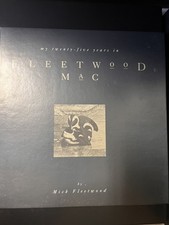
My 25 Years in Fleetwood Mac by Mick Fleetwood Hardcover Print 1992 CD included
$8.50
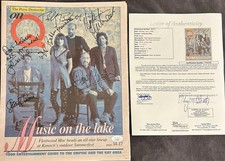
Fleetwood Mac FULLY SIGNED On Q Newspaper JSA LOA McVie Mick Fleetwood Autograph
$399.99

Fleetwood Mac ~ Mick Fleetwood / John McVie Signed 11x14 Photo Page with JSA COA
$299.94
MICK FLEETWOOD SIGNED WINE LABEL BECKETT BAS COA AUTOGRAPHED SLABBED MAC SINGER
$235.00
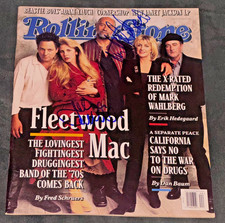
Signed John McVie Mick Fleetwood Mac Autographed Rolling Stone Magazine Auto PSA
$499.99


 Threaded Mode