
| |
|
#16
 03-06-2004, 01:43 AM
|
||||
|
||||

Quote:
http://www.thenation.com/doc.mhtml?i=20040315&s=corn What's Right With Kerry "There is, as evidence, his nineteen-year Senate record, during which he has voted consistently in favor of abortion rights and environmental policies, opposed Bush's tax cuts for the wealthy, led the effort against drilling in the Alaskan wilderness, pushed for higher fuel economy standards, advocated boosting the minimum wage and pressed for global warming remedies. But what distinguishes Kerry's career are key moments when he displayed guts and took tough actions that few colleagues would imitate. One rap on Kerry is that he is overly cautious and conventional. He's no firebrand on the stump, nor does he come across as the most passionate and exciting force for change. But his history in Washington includes episodes in which he demonstrated a willingness to confront hard issues, to challenge power, to pursue values rather than political advantage, to take risks for the public interest. Kerry arrived in the Senate in 1985. This Vietnam War hero turned antiwar leader had been lieutenant governor of Massachusetts. But he entered the body more as the prosecutor he had been in the late 1970s after graduating from Boston College law school. In early 1986 Kerry's office was contacted by a Vietnam vet who alleged that the support network for the CIA-backed Nicaraguan contras (who were fighting against the socialist Sandinistas in power) was linked to drug traffickers. Kerry doubted that the Reagan Administration, obsessed with supporting the contras, would investigate such charges. He pushed for a Senate inquiry and a year later, as chairman of a Foreign Relations subcommittee, obtained approval to conduct a probe. It was not an easy ride. Reagan Justice Department officials sought to discredit and stymie his investigation. Republicans dismissed it. One anti-Kerry effort used falsified affidavits to make it seem his staff had bribed witnesses. The Democratic staff of the Senate Iran/contra committee--which showed little interest in the contra drug connection--often refused to cooperate. "They were fighting us tooth and nail," recalls Jack Blum, one of Kerry's investigators. "We had the White House and the CIA against us on one side and our colleagues in the Senate on the other. But Kerry told us, 'Keep going.' He didn't let this stuff faze him." Kerry's inquiry widened to look at Cuba, Haiti, the Bahamas, Honduras and Panama. In 1989 he released a report that slammed the Reagan Administration for neglecting or undermining anti-drug efforts in order to pursue other foreign policy objectives. It noted that the government in the 1970s and '80s had "turned a blind eye" to the corruption and drug dealing of Panamanian dictator Manuel Noriega, who had done various favors for Washington (including assisting the contras). The report concluded that "individuals who provided support for the contras were involved in drug trafficking...and elements of the contras themselves knowingly received financial and material assistance from drug traffickers." And, it added, US government agencies--meaning the CIA and the State Department--had known this. This was a rather explosive finding, but the Kerry report did not provoke much uproar in the media, and the Democratic leadership on Capitol Hill did little to support Kerry and keep the matter alive. His critics derided him as a conspiracy buff. Yet a decade later the CIA inspector general released a pair of reports that acknowledged that the agency had worked with suspected drug smugglers to support the contras. Kerry had been right. nvestigations were not the only notable moments in Kerry's Senate career. On September 10, 1996, as he was in a tight re-election contest against William Weld, the popular Republican governor of Massachusetts, Kerry voted against the Defense of Marriage Act, which would deny federal benefits to same-sex couples and permit states to not recognize same-sex marriages conducted in other states. He was one of only fourteen senators to oppose the measure. Several leading Senate liberals--including Paul Wellstone, Tom Harkin and Pat Leahy--had voted for it. But on the floor of the Senate that day, Kerry, who noted that he did not support same-sex marriage, said, "I am going to vote against this bill...because I believe that this debate is fundamentally ugly, and it is fundamentally political." He refused to pretend that the bill was not a wedge-issue trap devised by conservative Republicans. The legislation, he charged, was "meant to divide Americans," and he argued fiercely that it was unconstitutional. "If this were truly a defense of marriage act," he said, "it would expand the learning experience for would-be husbands and wives. It would provide for counseling for all troubled marriages, not just for those who can afford it. It would provide treatment on demand for those with alcohol and substance abuse.... It would guarantee daycare for every family that struggles and needs it." The following year, a re-elected Kerry was in another lonely position as one of only five original sponsors of the Clean Money, Clean Elections Act, to provide for full public financing of Congressional elections. The measure would remove practically all special-interest money from House and Senate campaigns. (Kerry's colleagues were Wellstone, Leahy, John Glenn and Joe Biden--all Democrats.) "Kerry was totally into it," says Ellen Miller, former executive director of Public Campaign, a reform group pressing for the legislation. "He believes in this stuff." In introducing the legislation, Kerry said on the Senate floor, "Special interest money is moving and dictating and governing the agenda of American politics.... If we want to regain the respect and confidence of the American people, and if we want to reconnect to them and reconnect them to our democracy, we have to get the special interest money out of politics." He was also a backer of the better-known McCain-Feingold legislation, a more modest and (some might say) problematic approach to campaign reform. But over the years he's pointed to the Clean Money, Clean Elections Act as the real reform. "It is a tough position in Congress to be for dramatic change in financing elections," says Miller. "It's gutsy to go out and say, 'Let's provide a financially leveled playing field so there is more competition for incumbents.' Kerry and Wellstone were the leaders and took a giant step. It was remarkable." After two decades in the Senate, Kerry has a long record that can be picked apart by competitors within his own party as well as in the GOP. And though he has been re-elected three times, he has not developed the best political skills. He has not shed a manner too easily criticized as aloof or patrician. He has had brushes with smarmy campaign financing. But there have been times he has shown courage, devotion to justice and commitment to honesty, open government and principle-over-politics. There are few senators of whom that can be said. A full assessment of the man ought to take these portions of his public service into account." Abortion rights? Environmentalist? Voted against ALL of Bush's tax cuts? Against drilling in the Arctic Wildlife Refuge? Alternative energy and higher fuel standards? Wants to raise the minimum wage? Wants to remedy global warming? Investigated the CIA? Voted against gay hate legislation? Sponsored a bill for clean elections? Sound like Bush to you? Kerry has cast over 6500 votes in 19 years in the senate. When you cast that many votes in that length of time, it's easy for people to pick apart the little things without looking at the bigger picture. Politics is all about compromise. Did he vote for things I dont' like? Sure. Did he compromise to get something good done for us in return? I believe so. This man has dedicated his entire life to public service. He'll make a damn fine president. 
|
|
|
 Similar Threads
|
||||
| Thread | Thread Starter | Forum | Replies | Last Post |
| Faux News Poll (gasp!) | gldstwmn | Chit Chat | 5 | 04-11-2004 12:49 AM |


Billy Burnette - Try Me Vinyl LP MCA-27114 (1985, MCA / Curb Records) SEALED
$9.88
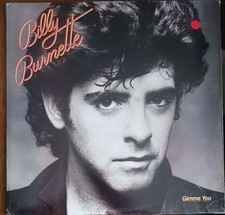
BILLY BURNETTE - GIMME YOU - 1981 COLUMBIA RECORDS VINYL ALBUM - (VG/VG+)
$5.00
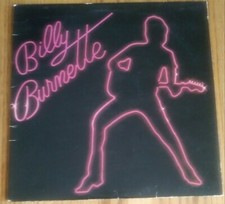
BILLY BURNETTE - (SELF-TITLED) - 1980 COLUMBIA VINYL RECORD - (VG/VG)
$4.50
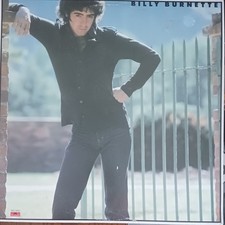
BILLY BURNETTE - (SELF- TITLED) - 1979 POLYDOR RECORDS PROMO VINYL LP - (VG/VG)
$5.50
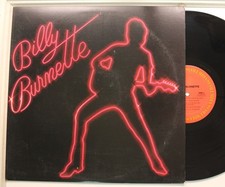
Billy Burnette Lp Self Titled On Columbia - Vg+ To Vg++ / Vg++
$11.99


 Threaded Mode