
| |
|
#76
 09-14-2008, 04:05 PM
|
||||
|
||||

Quote:
__________________
 
|
|
#77
09-14-2008, 05:58 PM
|
||||
|
||||

Quote:
Treaty of Tripoli Unlike governments of the past, the American Fathers set up a government divorced from religion. The establishment of a secular government did not require a reflection to themselves about its origin; they knew this as an unspoken given. However, as the U.S. delved into international affairs, few foreign nations knew about the intentions of America. For this reason, an insight from at a little known but legal document written in the late 1700s explicitly reveals the secular nature of the United States to a foreign nation. Officially called the "Treaty of peace and friendship between the United States of America and the Bey and Subjects of Tripoli, of Barbary," most refer to it as simply the Treaty of Tripoli. In Article 11, it states: "As the Government of the United States of America is not in any sense founded on the Christian religion; as it has in itself no character of enmity against the laws, religion, or tranquillity, of Musselmen; and as the said States never have entered into any war or act of hostility against any Mehomitan nation, it is declared by the parties that no pretext arising from religious opinions shall ever produce an interruption of the harmony existing between the two countries." The preliminary treaty began with a signing on 4 November, 1796 (the end of George Washington's last term as president). Joel Barlow, the American diplomat served as counsel to Algiers and held responsibility for the treaty negotiations. Barlow had once served under Washington as a chaplain in the revolutionary army. He became good friends with Paine, Jefferson, and read Enlightenment literature. Later he abandoned Christian orthodoxy for rationalism and became an advocate of secular government. Barlow, along with his associate, Captain Richard O'Brien, et al, translated and modified the Arabic version of the treaty into English. From this came the added Amendment 11. Barlow forwarded the treaty to U.S. legislators for approval in 1797. Timothy Pickering, the secretary of state, endorsed it and John Adams concurred (now during his presidency), sending the document on to the Senate. The Senate approved the treaty on June 7, 1797, and officially ratified by the Senate with John Adams signature on 10 June, 1797. All during this multi-review process, the wording of Article 11 never raised the slightest concern. The treaty even became public through its publication in The Philadelphia Gazette on 17 June 1797. So here we have a clear admission by the United States that our government did not found itself upon Christianity. Unlike the Declaration of Independence, this treaty represented U.S. law as all treaties do according to the Constitution (see Article VI, Sect. 2). Although the Christian exclusionary wording in the Treaty of Tripoli only lasted for eight years and no longer has legal status, it clearly represented the feelings of our Founding Fathers at the beginning of the U.S. government. http://www.earlyamerica.com/review/s...7/secular.html (this cite also has many more examples) So, clearly the Establishment Clause was not just referring to the Establishment of a National Church. It was referring to enforecement of religious tenets through law as well. Interestingly, when you read the quotes from the Founding Fathers in that cite, you can really see that they thought individual pursuit of religion was the way to go and that the govt, should have no business in establish a religion. One of those quotes is to the United Baptist Churches in Virginia in May, 1789, when George Washington said that every man "ought to be protected in worshipping the Deity according to the dictates of his own conscience." This is the exact point I am making and the exacxt point that Palin and the current R party are so vehemently opposed to 
__________________
 save the cheerleader - save the world
|
|
#78
09-14-2008, 05:59 PM
|
||||
|
||||
|
Quote:

__________________
save the cheerleader - save the world
|
|
#79
09-14-2008, 06:31 PM
|
||||
|
||||
|
Quote:
__________________
|
|
#80
09-14-2008, 06:32 PM
|
||||
|
||||
|
Quote:
__________________
save the cheerleader - save the world
|
|
#81
09-14-2008, 08:41 PM
|
||||
|
||||
|
^^^
I always thought "Church" was were one goes to compare clothing  Unless of course, One is in Norway, then a "church" is good for, kindling, marshmallowing and smores and campfire songs. And least we can't forget THOSE HOLY figures such as David Koresh and Jim Jones...Such GREAT religious folk. Brian "Hey Kool-aid!!! Oh Cyanide yeah!!!" j.
__________________
"To acknowledge death is to accept freedom and responsibility."
|
|
#82
09-14-2008, 09:18 PM
|
||||
|
||||
|
Quote:
The reason that Rightwing Christians are so scary is because they forget about those parts of Jesus' teaching and are too busy judging and telling others how to live. When that extends into political decision-making, everyone who does not subscribe to that particular theology is at risk.
|
 |
|
|


$3.40

Blues: The British Connection Bob Brunning PB Alexis Korner Mayall Groundhogs
$59.99

$5.40
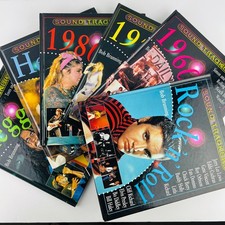
Bob Brunning Sound Trackers Music Series Hardcover 6 Book Lot Pop, Metal, Reggae
$59.99

Heavy Metal by Bob Brunning - Hardcover 1999 - VERY GOOD
$8.44


 Linear Mode

