
| |
|
|||||||
 |
|
|
Thread Tools | Display Modes |
|
#1
 10-01-2005, 06:48 PM
|
||||
|
||||
 The Anchor in the Storm - Anderson Cooper
I think this was quite an interesting read. I just read it in my new rolling stone magazine, and I found it on their website also. Here it is. I know there are lots of Anderson fans on here :
---- The Anchor in the Storm Anderson Cooper became the future of TV news by getting angry, demanding answers and shedding tears By JANET REITMAN In the scramble to explain away the Bush administration's slow response to Katrina, one White House aide told the New York Times that "getting truth on the ground in New Orleans was very difficult." Anyone who watched Anderson Cooper's steady, and increasingly outraged, coverage of the hurricane and its aftermath on CNN would disagree. For weeks now, Cooper, the thirty-eight-year-old anchor of Anderson Cooper 360°, has been reporting from the sludge-filled wreckage of New Orleans, cruising around by boat to interview escapees from the flood and, on several occasions, to rescue people from the water. "The viewers watching can't be here," he says. "My job is to bring them here, via TV, and let them smell it, and see it -- really see it -- and know it." Cooper has also been relentless in his questioning of policymakers who, early on, seemed oblivious to the crisis. Responding to Louisiana Sen. Mary Landrieu's praise of the president and Congress for their "remarkable efforts," Cooper, visibly enraged, pointed out that while officials in Washington were thanking one another, people on the ground were watching bodies being eaten by rats. "It's rare that you are on a story and you're so surrounded by the realities, and the realities don't jibe with what you're hearing from officials," says Cooper, who has been nominated for "Secretary of Take No ****" by Wonkette, the political blog. "I started in Somalia in 1992, and I was also in Rwanda for a little while, and I'm seeing bodies here who look like the bodies I saw in Rwanda. It's been a shocking, and eye-opening, experience." Where are you right now? I'm sitting outside of my car on Canal Street, which borders the French Quarter, looking at a team of Blackwater security guys who are protecting an executive while he empties out his office in a building across the street. They're eating Chips Ahoy. They are going door-to-door offering cookies to their drivers. And there are two armored personnel carriers parked over there, and there's the Border Patrol -- not sure what they're doing -- and some Customs agents. Down the street, there are volunteers serving hamburgers to all the first responders. Oh, and Dr. Phil is down the street. Dr. Phil? I think he's doing some of his shows down here. Frankly, anyone who's down here is happy to see people come down, because you're kind of on the edge of the world. So there's something comforting about seeing Dr. Phil, of all people. What's it like trying to work in a city in chaos? Logistically, it's difficult. Half the city is underwater, so the maps they have don't mean much -- you kind of have to draw your own. We have a boat we use to get around and a couple of SUVs we drive around in at night. Someone gave me a pair of steel-toe boots because walking around, there are so many nails, they go through your sneakers and right into your foot. But I have a little space in an RV to sleep in at night, so that seems pretty luxurious to me. When did the scope of this tragedy really hit home? It took me two days to really feel this thing. I was in Gulfport, Mississippi, and I knew. I knew when a casino that had been on the river was now in the parking lot. The next day, I went to Waveland, Mississippi, and the police were going door-to-door, and when they found people who were dead, they'd make a "V" on the door, for "victims." Then a refrigerator truck would arrive and take them out. One woman was so bloated: She'd been there for forty-eight hours when we found her and was there another day until she was taken out. Have the authorities been giving your crew a hard time? We had one boatload of paramedics ask us not to videotape a body floating in the water. We did videotape it but in a way that was respectful. I understand their perspective -- I don't want a person finding out that their family member has died on television. I think it's important that these people have dignity. But at the same time I don't think we should gloss over the reality of what happened here. I mean, that's the point of the story: the fact that there are still bodies floating around. Exactly how bad is the water? It's equivalent to what you'd find in a gutter in Bombay. It's a black, swirling, brackish mass. They tell you not to light a cigarette near the water because there's so much gas in it. And there's debris, and human excrement, and bodies. Terrible things happen to you if you've been in the water for a long time. A human body lying in the sun eventually dries out. In water it's a whole different thing. People come up bloated, unrecognizable. People who are black turn white. When you've seen someone who has drowned, you can still hear them screaming, in a way, because they're contorted, their eyes are bulging -- it's something you can't get out of your mind. What else haunts you? That this is the United States. I can't believe this is happening in the United States of America -- not just that it's a disaster but that the response has been what it is, and there are still bodies lying out on the streets of New Orleans -- how many days after the hurricane hit? I can drive five minutes from here and motor in the water for a minute and find a body. They've tied them to street signs so they don't float away. And a lot of federal officials, like FEMA's Michael Brown, seemed somewhat clued-out to all of this. You know, those first couple days, these people were going on the air and thanking each other and telling us how well things were going -- it was just not what I was seeing on the ground. It's not what people were experiencing. And it just builds up, like, wait a minute -- do you know what's going down? Come here yourself and put on latex gloves and get some bodies off the streets. This is not the time for thanks. This is the time for apology and answers, and movement. You spent part of August on assignment in Niger. That's a long way from the anchor desk in New York. How did that trip come about? I was on vacation in Africa -- I don't take vacations very well; I tend to cut them short. And this time, I was in South Africa, and then in Rwanda to see the gorillas and visit the genocide museum, when I saw a brief thing on CNN International about Niger, and I called my bosses and said I wanted to go. Niger has several million people at risk of starvation -- mostly children dying of malnutrition. It's a difficult thing to see, watching children die. We profiled three kids -- infants we met the first day. Two of the three ended up dying within forty-eight hours of us coming in. The level of poverty is degrading. What we tried to do is show the reality of these children's lives -- but the reality is one out of four dies by the age of four. That's mind-boggling. It must be difficult to feel that people care about the stories you report from Africa as much as stories you do in the United States. About Africa, it's not like nobody cares -- but it's tough to tell stories and get people to care about them. In New Orleans, people do care. I've had the same emotions and pictures in faraway lands. But here, I guess what's different about it for me is that this time I don't feel like I'm talking into a wind tunnel. After everything you've seen, it amazes me that you can still keep that raw emotion. Some people would get numb to all that tragedy. When someone says they're numb to tragedy, that's a bull**** excuse. I think it's a cop-out to get caught up in this cynical "I've seen it all" crap. Your job is to come here and be moved: Open your eyes, and your ears, and your heart, and relay that. It's very simple. It's not brain surgery; it's not a real impressive thing to do, but you do have to do it consistently and fairly. And if you can't do that, if you can't keep your mind and your eyes and your ears open, then you ought to leave the business. You seem really outraged in many of your reports. Did you ever worry that you're losing your objectivity? I'm a big believer in being nonpartisan and not taking sides. I just want facts. You feel a lot of phony outrage on cable news, and I don't believe that. I think you can tell when something is real, I think that comes across, and I think when you're standing surrounded by block after block of shattered lives, and smelling the stink of a corpse on you while you're talking to a politician who seems just from another world, what it boils down to is trying to find out facts and trying to get answers -- not just responses but answers to questions. What's been the most powerful story you've heard? There are so many. I met a doctor who was one of the only doctors at the convention center in New Orleans, treating 15,000 to 20,000 people. All he had was a stethoscope. He finally got a police escort to take him to a pharmacy, and they held off the looters long enough for him to get supplies, and he went back and treated people for days and days and days. Soon that convention center will be cleared up and there will be basketball games played there, and no one will remember the horror of what happened there. I think we need to remember it, so it never happens again. (Posted Sep 22, 2005)
__________________
CHRIS M. 
|
| . |
|
#2
10-01-2005, 09:06 PM
|
||||
|
||||
|
Thanks for posting. I so bought that issue of Rolling Stone for that article when I flipped through the mag and spotted it.
 I usually cannot bear to read Rolling Stone, I feel like my IQ drops by the minute the longer I read. I think the last time I read it was when Tina Turner released her last greatest hits package and Rolling Stone said that her new song "Open Arms" ranks right up there with her stuff from the eighties. I think they all took one big collective hit off a crackpipe to print that with a straight face. I usually cannot bear to read Rolling Stone, I feel like my IQ drops by the minute the longer I read. I think the last time I read it was when Tina Turner released her last greatest hits package and Rolling Stone said that her new song "Open Arms" ranks right up there with her stuff from the eighties. I think they all took one big collective hit off a crackpipe to print that with a straight face.In any event, I found this and it made me giggle: http://www.record-eagle.com/2005/sep/29kathy.htm So I'm watching CNN for yet another night, and for yet another night, there's Anderson Cooper. This time he's on the Gulf, in a blue T-shirt, one of the last men standing in Galveston two nights before Hurricane Rita is due. And it hits me. I've fallen for him. Before a hurricane named Katrina, I had never heard of Anderson Cooper. A few weeks after Sept. 11, 2001, I went into a self-imposed news blackout. It sounds weird from someone who works for a newspaper, but like many people, I was shaken to the core by Sept. 11. Finally, deciding the constant flow of terrifying news was unhealthy, I began taking it in small doses that I could control. An NPR news junkie, I shut that off, too, and got most of my news then from papers and wire services. In fact, only in the last few months have I started testing the NPR waters again. But I've been tuned in to CNN since Katrina, and there, every night, is Anderson. Solid. Steady. Compassionate. Handsome, especially in blue. Always in the eye of the storm, whether nature-made or man-made. Looking back, the attraction probably started the night he cut loose on U.S. Sen. Mary Landrieu. Day after day, as people were suffering in the streets with no help in sight, she'd parrot the same junk about the stellar response and support of the president and feds. I practically jumped off the couch cheering when he finally told her in so many words that it was baloney, all of it - where is the cavalry? It no doubt grew as, night after night, he told it like he saw it, in storm-ravaged places like Waveland. Bay St. Louis. Kenner. New Orleans. And then, Galveston. But my revelation of the heart was short-lived. Because I just as quickly realized there might be one or two other women out there with the same idea. Sure enough, the next morning, a friend at work who's also been glued to CNN mentions how much she likes him. She adds that her 90-year-old mother, who's also wild about him, told her his mom is someone famous. So I go to the Internet, and it seems while I was busy not watching CNN, other women were. There's an Anderson Cooper Fan Club site, with "Andernews" and people who call themselves "Anderfans," and tips like the next time you're at the checkout, open People magazine to Page 102. A New York magazine profile says he's even got stalkers. One sent him a teddy bear dressed in a suit and tie in colors he wears on the air; angry when he didn't respond, she showed up to see him at CNN. Now he has bodyguards. (His mother, by the way, is Gloria Vanderbilt.) So it's probably hopeless. I'll have to get over him. And I will - as soon as I get done with the doll I'm making. I just have to finish the little blue T-shirt. But I still can't help but wonder: Do you think he does blizzards?
__________________
|
|
#3
10-02-2005, 10:34 AM
|
||||
|
||||
|
Did anyone watch SNL last night?
 I love Seth Meyers. Hilarious!
__________________
|
|
#4
10-02-2005, 10:43 AM
|
||||
|
||||
|
Quote:
|
|
#5
10-02-2005, 11:15 AM
|
||||
|
||||
|
Quote:
Weekend Update sucked, though.
__________________
|
|
|
|

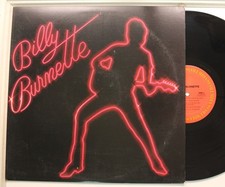
Billy Burnette Lp Self Titled On Columbia - Vg+ To Vg++ / Vg++
$11.99
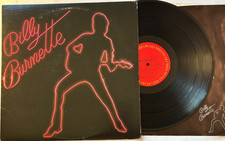
Billy Burnette - Self-Titled LP - 1980 1st Pressing 12" Columbia LP + Lyrics VG+
$4.50
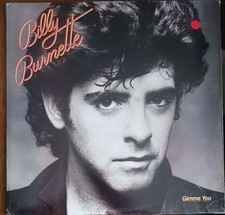
BILLY BURNETTE - GIMME YOU - 1981 COLUMBIA RECORDS VINYL ALBUM - (VG/VG+)
$5.00
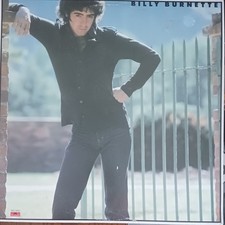
BILLY BURNETTE - (SELF- TITLED) - 1979 POLYDOR RECORDS PROMO VINYL LP - (VG/VG)
$5.50
BILLY BURNETTE 45 RPM Promo Record "SHOO-BE-DOO" 1978 Rock Unplayed MINT
$6.70


 Linear Mode

