The Ledge

Go Back   The Ledge > Main Forums > Stevie Nicks
User Name
Password
Register FAQ Members List Calendar


Make the Ads Go Away! Click here.
Reply
 
Thread Tools Display Modes
  #76  
Old 07-11-2005, 11:10 AM
gldstwmn's Avatar
gldstwmn gldstwmn is offline
Addicted Ledgie
Supporting Ledgie
 
Join Date: Mar 2003
Location: Drowning in the sea of La Mer
Posts: 19,490
Default

Quote:
Originally Posted by sparky
Evidently. I won't repeat the stories I have heard here. Someone's bound to have a hissy fit.

He's mentioned in a few books. I don't have to tell the stories.
I think one of them is You'll Never Make Love In This Town Again. I read it a long time ago and vaguely remeber Henley being mentioned in it.

Last edited by gldstwmn; 07-11-2005 at 08:55 PM..
Reply With Quote
  #77  
Old 07-11-2005, 01:02 PM
David's Avatar
David David is offline
Addicted Ledgie
 
Join Date: Apr 2002
Location: California
Posts: 15,186
Default

Quote:
Originally Posted by bikerchic
Stevie said in a Jay Leno interview that when she was making "Trouble in Shangri-La", it was right around the time of the O.J. Simpson trial and the fact that someone could have soooo much (shangri-la) and then lose it all. Then stupid Jay says "so this album is about O.J. Simpson?" and Stevie say's "no, but he inspired me" Only Stevie
THAT'S RIGHT!! Thanks for reminding us. Stevie was thinking about how someone with fame & fortune & acclaim (someone like O.J. Simpson) could "lose it all." The Simpson trial got her to thinking about that in a wider context.

But I still think the Shangri-La metaphor is a Mrs. Malapropism. It doesn't have anything to do with Shangri-La from the Hilton novel (which is a utopia unspoiled by the mobs, where you don't get sick, you live in a sort of communistic peace & you live an extremely long life, but which turns out it's really a fascistic nightmare where the individual is not encouraged to be individualistic but part of the "team" -- like today's corporate environment).

There are other, better metaphors for having it all & losing it. That's just not what Shangri-La is about. It's not actually what Stevie had in mind -- she does that a lot, though: she settles on a word or a phrase or even an entire concept that has that sort of imprecision or inexactness. That's one of the reasons I consider her such a great singer & persona but not a poet.
Reply With Quote
  #78  
Old 07-11-2005, 01:30 PM
sparky's Avatar
sparky sparky is offline
Addicted Ledgie
 
Join Date: Mar 2003
Location: Sharon's shack
Posts: 4,743
Default

Quote:
Originally Posted by David
But I still think the Shangri-La metaphor is a Mrs. Malapropism. It doesn't have anything to do with Shangri-La from the Hilton novel (which is a utopia unspoiled by the mobs, where you don't get sick, you live in a sort of communistic peace & you live an extremely long life, but which turns out it's really a fascistic nightmare where the individual is not encouraged to be individualistic but part of the "team" -- like today's corporate environment).

There are other, better metaphors for having it all & losing it. That's just not what Shangri-La is about. It's not actually what Stevie had in mind -- she does that a lot, though: she settles on a word or a phrase or even an entire concept that has that sort of imprecision or inexactness. That's one of the reasons I consider her such a great singer & persona but not a poet.


Exactly. It is that very vaguery which allows so many people to project their own emotions onto her songs. Ultimately, Stevie is the great borrower of existing cliches. Sometimes her borrowing can be brilliant. Sometimes it just comes off as uninspired and extremely familiar.

Mrs. Malapropism. I haven't the words to describe how perfect that is.
Reply With Quote
  #79  
Old 07-11-2005, 01:43 PM
glitter_fades glitter_fades is offline
Addicted Ledgie
 
Join Date: Feb 2001
Posts: 923
Default

Quote:
Originally Posted by David
THAT'S RIGHT!! Thanks for reminding us. Stevie was thinking about how someone with fame & fortune & acclaim (someone like O.J. Simpson) could "lose it all." The Simpson trial got her to thinking about that in a wider context.

But I still think the Shangri-La metaphor is a Mrs. Malapropism. It doesn't have anything to do with Shangri-La from the Hilton novel (which is a utopia unspoiled by the mobs, where you don't get sick, you live in a sort of communistic peace & you live an extremely long life, but which turns out it's really a fascistic nightmare where the individual is not encouraged to be individualistic but part of the "team" -- like today's corporate environment).

There are other, better metaphors for having it all & losing it. That's just not what Shangri-La is about. It's not actually what Stevie had in mind -- she does that a lot, though: she settles on a word or a phrase or even an entire concept that has that sort of imprecision or inexactness. That's one of the reasons I consider her such a great singer & persona but not a poet.
Which one do you think is worse? The Shangri-La misnomer or the Landslide one?

In both cases I prefer calling it a misnomer to a malapropism.

Usually a malapropism is so glaring a misuse it's humorous. Stevie cracks me up all the time with these, but many listeners don't notice the liberties she takes with the English language and fail to see the humor.

Reply With Quote
  #80  
Old 07-11-2005, 01:51 PM
David's Avatar
David David is offline
Addicted Ledgie
 
Join Date: Apr 2002
Location: California
Posts: 15,186
Default

Quote:
Originally Posted by glitter_fades
Which one do you think is worse? The Shangri-La misnomer or the Landslide one?
Well, I never thought of the "landslide" problem. Describe the problem because I'm not sure I'm on to it: is it that she meant "avalanche" (snow) & not "landslide" (dry rock)?
Quote:
In both cases I prefer calling it a misnomer to a malapropism.
You're absolutely right. It's a misnomer rather than a malapropism, strictly speaking. A malapropism is what Archie Bunker used to do: for example, when you refer to the "geometry of contagious countries."

Sometimes malaprops become very common, but they're still very humorous: when a political writer refers to the "enormity" of the public support George Bush had in the days following 9/11.
Reply With Quote
  #81  
Old 07-11-2005, 01:56 PM
glitter_fades glitter_fades is offline
Addicted Ledgie
 
Join Date: Feb 2001
Posts: 923
Default

Quote:
Originally Posted by David
Well, I never thought of the "landslide" problem. Describe the problem because I'm not sure I'm on to it:

is it that she meant "avalanche" (snow) & not "landslide" (dry rock)?


Quote:
You're absolutely right. It's a misnomer rather than a malapropism, strictly speaking. A malapropism is what Archie Bunker used to do: for example, when you refer to the "geometry of contagious countries."


Quote:
Sometimes malaprops become very common, but they're still very humorous: when a political writer refers to the "enormity" of the public support George Bush had in the days following 9/11.
How about the "mandate" he had after winning the election in 2000 by ONE vote in the Supreme Court?

Last edited by glitter_fades; 07-11-2005 at 03:46 PM..
Reply With Quote
  #82  
Old 07-11-2005, 06:16 PM
Johnny Stew's Avatar
Johnny Stew Johnny Stew is offline
Addicted Ledgie
Supporting Ledgie
 
Join Date: May 2000
Posts: 12,145
Default

Quote:
Originally Posted by David
But I still think the Shangri-La metaphor is a Mrs. Malapropism. It doesn't have anything to do with Shangri-La from the Hilton novel (which is a utopia unspoiled by the mobs, where you don't get sick, you live in a sort of communistic peace & you live an extremely long life, but which turns out it's really a fascistic nightmare where the individual is not encouraged to be individualistic but part of the "team" -- like today's corporate environment).

There are other, better metaphors for having it all & losing it. That's just not what Shangri-La is about. It's not actually what Stevie had in mind -- she does that a lot, though: she settles on a word or a phrase or even an entire concept that has that sort of imprecision or inexactness. That's one of the reasons I consider her such a great singer & persona but not a poet.
The concept of "Shangri-La" from 'Lost Horizon' withstanding, I don't understand what the issue is with Stevie's usage.

The dictionary defines "shangri-la" as:
1. An imaginary remote paradise on earth; utopia.
2. A distant and secluded hideaway, usually of great beauty and peacefulness.
3. Any place of complete bliss and delight and peace


Certainly Stevie's concept of "trouble in paradise" fits into that definition, without creating a misnomer.
__________________
"Although the arrogance of fame lingers like a thick cloud around the famous, the sun always seems to shine for Stevie." -- Richard Dashut, 2014
Reply With Quote
  #83  
Old 07-11-2005, 08:43 PM
bushesandbriars's Avatar
bushesandbriars bushesandbriars is offline
Senior Ledgie
 
Join Date: May 2005
Posts: 115
Default

Quote:
Originally Posted by David
THAT'S RIGHT!! Thanks for reminding us. Stevie was thinking about how someone with fame & fortune & acclaim (someone like O.J. Simpson) could "lose it all." The Simpson trial got her to thinking about that in a wider context.

But I still think the Shangri-La metaphor is a Mrs. Malapropism. It doesn't have anything to do with Shangri-La from the Hilton novel (which is a utopia unspoiled by the mobs, where you don't get sick, you live in a sort of communistic peace & you live an extremely long life, but which turns out it's really a fascistic nightmare where the individual is not encouraged to be individualistic but part of the "team" -- like today's corporate environment).

There are other, better metaphors for having it all & losing it. That's just not what Shangri-La is about. It's not actually what Stevie had in mind -- she does that a lot, though: she settles on a word or a phrase or even an entire concept that has that sort of imprecision or inexactness. That's one of the reasons I consider her such a great singer & persona but not a poet.
There's lots of interesting stuff on this thread, but I want to discuss this in particular because the sense that I'm getting here in not that Stevie's made an error in her language, but that people are people are being excessively literal and picky about language in general, about what is imaginatively acceptable and what isn't.

The last time I checked, metaphors were meant to be flexible, to conjure up a range of images and emotions from various . As Linda Ronstadt once pointed out, an artist's job is to evoke, not instruct. I doubt few people have read Lost Horizon nowadays, and Shangri-La is actually from a Chinese myth about Shang-shung, anyway, so Stevie has no obligation to be accurate to Hilton, and never mentioned him, as far as I know. She's taking a general idea in our culture--Shangri-La, which I recall being a setting for Jem when I was a little girl--and using it in her own way. That's part of what art is--people reinventing cultural symbols.

I guess my point is just that people are really, really literal about artists, and I don't agree. No artist claims to be a journalist, Stevie included, and I personally think when Stevie talks about her writing being about things going on in her life, she means everything, not just her relationships with men: I think she means what she sees on the news, what her friends are doing, what she's reading, her mood. Anything is fodder for a good writer; you don't have to experience because the artist is a trained observer and empathizer. I'll bet if you sifted heavily through her songs--demos included--you could find at least one literary nod/idea/phrase in at least half, maybe more. That does not make them derivative, though it can at times. If re-using made one derivative, Shakespeare would derivative. (And I'm not comparing Stevie to Shakespeare, just pointing out that you can read something, it strikes a chord, and you use it, thus making it both "true" and, if you do your job, fresh.) Something does not have to be literally, physically true to be imaginatively and emotionally true, and that's what art is about--the common denominator of humanity. It's why all this shippy-stuff with Lindsey makes me bonkers--she can write about a million things, and does, but they're filtered through her own perspective. To steal Nikki Giovanni's line, writers write from empathy. If they didn't, they'd dry up before you could say, "Bob's your uncle."

I don't neccessarily think Stevie is a poet, either, but not because I find her metaphors--and if we're being really picky here, Shangri-La is a simile in this case, not a metaphor, anyway--off, but because poetry is governed by precise rules of meter, form, tradition, etc.--stuff most songwriters don't have, and things that don't really lend themselves to rock bands. I'd put very, very few songwriters in the "poet" category. Stevie is really a post-modern writer--concerned with reinvention and reimagining. Her use of language can be sloppy or redundant--"windows like eyes to the soul," "the earth and the stars and the sky IS at rest with the ocean," etc--but if you want literal reportage on the human condition, watch BBC News. I'm not criticizing you or anyone else, just pointing out that I think this discussion is a little excessive in its demands for "metaphorical" accuracy.

And I want to know what you think a more suitable comparison for the rich and famous not coping with success is. You say there are many and don't cite any, and I'm curious to know.

Also, someone remarked on Stevie's use of "existing" cliches--well, yes, some sound re-hashed, probably because "existing" is the definition of a cliche--an oft-stated observation.

I'm truly not trying to snipe at anyone; I think all your opinions are fascinating. I just thought the things I mentioned were missing from the discussion, and I think that they need to be in here just to be fair to what Stevie and all creative people do.
__________________
I, too, am America.
--Langston Hughes, "I, Too"


She came out on the stage in ostrich feathers, beaded satin,
and shone that smile on us and sang.
--Robert Hayden, "Homage to the Empress of the Blues
"

Live not for battles won.
Live not for the-end-of-the-song.
Live in the along.
--Gwendolen Brooks, "Speech to the Young"

Last edited by bushesandbriars; 07-11-2005 at 08:44 PM.. Reason: spelling
Reply With Quote
  #84  
Old 07-11-2005, 11:01 PM
David's Avatar
David David is offline
Addicted Ledgie
 
Join Date: Apr 2002
Location: California
Posts: 15,186
Default

Quote:
Originally Posted by bushesandbriars
She's taking a general idea in our culture--Shangri-La, which I recall being a setting for Jem when I was a little girl--and using it in her own way. That's part of what art is--people reinventing cultural symbols.
But if it doesn't ring true to me, it doesn't ring true. What can I tell ya? If her image -- her selection of one word or phrase from among the many that language makes available to her -- doesn't hit me as especially evocative or well-chosen, there isn't much I can do about it.
Quote:
I guess my point is just that people are really, really literal about artists, and I don't agree.
Well, it's silly to expect poets to be essayists or journalists or other recorders of facts in their poems. But it's not silly to expect poets -- or songwriters -- to select words, phrases & images that are precise in the sense that they are chosen for the rightness of their connotation as well as their denotation. There are dozens of ways, in any language, of saying the same thing; & there are even ways of saying the same thing by using words in new ways. It's all open to the poet. But words aren't lumps of clay. You can look at a lump of clay & have no idea what the sculptor made out of it beforehand. He's free to turn it into a horse or a spaceship or even some creature you've never seen before. Words have history associated with them, they have images & ideas associated with them & they have feelings associated with them. It's the poet's business to have all that in mind in order to either recapitulate denotation & connotation or to extend them in some startling & magical new way.
Quote:
I don't neccessarily think Stevie is a poet, either, but not because I find her metaphors--and if we're being really picky here, Shangri-La is a simile in this case, not a metaphor, anyway--off, but because poetry is governed by precise rules of meter, form, tradition, etc.--stuff most songwriters don't have, and things that don't really lend themselves to rock bands.
"I hear there's trouble in Shangri-La" is not a simile. It's a metaphor. I like to think I'm picky enough to distinguish a simile from a metaphor. In Fowler's good definition: "Between simile & metaphor the differences are (1) that a simile is a comparison proclaimed as such, whereas a metaphor is a tacit comparison made by the subtitution of the compared notion for the one to be illustrated; (2) that the simile is usually worked out at some length & often includes many points of resemblance, whereas a metaphor is as often as not expressed in a single word; & (3) that in nine out of ten metaphors the purpose is the practical one of presenting the notion in the most intelligible or convincing or arresting way, but nine out of ten similes are to be classed not as a means of explanation or persuasion, but as ends in themselves, things of real or supposed beauty for which a suitable place is to be found."
Quote:
I'd put very, very few songwriters in the "poet" category. Stevie is really a post-modern writer--concerned with reinvention and reimagining. Her use of language can be sloppy or redundant--"windows like eyes to the soul," "the earth and the stars and the sky IS at rest with the ocean," etc--but if you want literal reportage on the human condition, watch BBC News. I'm not criticizing you or anyone else, just pointing out that I think this discussion is a little excessive in its demands for "metaphorical" accuracy.
But you're eating your cake & having it, too. As far as I'm concerned, it's excessive to demand reportorial or denotative accuracy of a songwriter or a poet, but not excessive to demand metaphorical accuracy (which I assume is nothing more than the precise, selective use of language to render connotative -- or suggestive -- accuracy). I also don't agree with you that all poetry is governed by precise rules of meter, form & tradition; much of it is, but even that amount adheres to rules that have evolved from earlier rules & may bear little, if any, resemblance to the older rules. My reason for not considering Stevie a poet is that I don't see in her that precise, selective use of language to render connotative -- or suggestive -- accuracy. . . which is why I posted about the use of "trouble in Shangri-La" in the first place! What if she had named the song "Trouble in Paradise"? What would be different? or even lost? What is it specifically about the use of the phrase "Shangri-La" that "does it" for the song? I think I actually cited an advantage earlier: it sounds mystical, far-away, exotic, slightly mandarin, & I posited the possibility that Stevie was attracted to the phrase for that very appeal.
Quote:
And I want to know what you think a more suitable comparison for the rich and famous not coping with success is. You say there are many and don't cite any, and I'm curious to know.
Jeez, that's the job of the poet, isn't it? Certainly evocative, resonant, metaphorically precise words & images have been used to represent this idea -- by Updike, by William James, by Fitzgerald (with his haunting green light that recedes before Gatsby, who pursues it & pursues it until death stops him), by Wharton, by Benet, by Mencken, by Howells -- heck, by every writer who's ever penned moral tales on the themes of the American Dream.
Quote:
I'm truly not trying to snipe at anyone; I think all your opinions are fascinating. I just thought the things I mentioned were missing from the discussion, and I think that they need to be in here just to be fair to what Stevie and all creative people do.
I don't see why it's a question of being "fair." Stevie writes something, & it has meaning & resonance to some people, but other people find it vague, imprecise, unpersuasive. Stevie doesn't necessarily need a defense attorney.
Reply With Quote
  #85  
Old 07-11-2005, 11:06 PM
David's Avatar
David David is offline
Addicted Ledgie
 
Join Date: Apr 2002
Location: California
Posts: 15,186
Default

Quote:
Originally Posted by Johnny Stew
The concept of "Shangri-La" from 'Lost Horizon' withstanding, I don't understand what the issue is with Stevie's usage.

The dictionary defines "shangri-la" as:
1. An imaginary remote paradise on earth; utopia.
2. A distant and secluded hideaway, usually of great beauty and peacefulness.
3. Any place of complete bliss and delight and peace


Certainly Stevie's concept of "trouble in paradise" fits into that definition, without creating a misnomer.
I guess you could read "Shangri-La" as extremely ironic if you interpret it as symbolic of the luxury & power of the famous. I have trouble connecting the suggestion of peace, tranquility & longevity (Shangri-La) with the fast-paced, vainglorious, tinsel-town world of famous rock stars & other entertainers.
Reply With Quote
  #86  
Old 07-11-2005, 11:14 PM
glitter_fades glitter_fades is offline
Addicted Ledgie
 
Join Date: Feb 2001
Posts: 923
Default

Don't get me started on --"windows like eyes to the soul."

That's a simile, but the wrong one.

Stevie. Have you're attorney call me in the morning.
Reply With Quote
  #87  
Old 07-11-2005, 11:19 PM
dissention's Avatar
dissention dissention is offline
Addicted Ledgie
 
Join Date: Mar 2003
Posts: 26,612
Default

Quote:
Originally Posted by glitter_fades
Don't get me started on --"windows like eyes to the soul."

That's a simile, but the wrong one.

Stevie. Have you're attorney call me in the morning.
Would you say that to Bob Dylan?
__________________

Reply With Quote
  #88  
Old 07-11-2005, 11:21 PM
catinthedark catinthedark is offline
Addicted Ledgie
 
Join Date: Dec 2004
Location: ... in the shadow of this strange, strong love of you
Posts: 2,767
Default

Quote:
Originally Posted by dissention
Would you say that to Bob Dylan?

__________________
Cat

"We're rock stars. We are not nice."
Stevie Nicks, the sage mother goddess fierce gypsy bitch we adore.
Reply With Quote
  #89  
Old 07-11-2005, 11:21 PM
Johnny Stew's Avatar
Johnny Stew Johnny Stew is offline
Addicted Ledgie
Supporting Ledgie
 
Join Date: May 2000
Posts: 12,145
Default

Quote:
Originally Posted by David
I guess you could read "Shangri-La" as extremely ironic if you interpret it as symbolic of the luxury & power of the famous. I have trouble connecting the suggestion of peace, tranquility & longevity (Shangri-La) with the fast-paced, vainglorious, tinsel-town world of famous rock stars & other entertainers.
In your post prior to this one, you seem to suggest that "Trouble In Paradise" might have been a better word choice for her, and would have more accurately reflected Stevie's concept.
But isn't "paradise" also an idyllic, tranquil place? Why would the editorial choice of using "paradise" be viewed as more acceptable than using "shangri-la"?

If we need to be completely literal, Stevie should have sung, "I hear there's trouble in La-La Land."
Unfortunately, "La-La Land" doesn't sound nearly as compelling as "Shangri-La."
__________________
"Although the arrogance of fame lingers like a thick cloud around the famous, the sun always seems to shine for Stevie." -- Richard Dashut, 2014
Reply With Quote
  #90  
Old 07-11-2005, 11:22 PM
glitter_fades glitter_fades is offline
Addicted Ledgie
 
Join Date: Feb 2001
Posts: 923
Default

Quote:
Originally Posted by dissention
Would you say that to Bob Dylan?
If he said something as jackass as that, I would.

Reply With Quote
Reply


Posting Rules
You may not post new threads
You may not post replies
You may not post attachments
You may not edit your posts

BB code is On
Smilies are On
[IMG] code is On
HTML code is On

Forum Jump


BEKKA BRAMLETT - I Got News For You - CD - **Excellent Condition** - RARE picture

BEKKA BRAMLETT - I Got News For You - CD - **Excellent Condition** - RARE

$49.99


BEKKA BRAMLETT - I Got News For You - CD - **Excellent Condition** - RARE picture

BEKKA BRAMLETT - I Got News For You - CD - **Excellent Condition** - RARE

$49.75



Bekka Bramlett

Bekka Bramlett "I Got News For You" CD In Mint. Shongaloo Records LLC 1707. 2009

$45.00


NEW - JOE COCKER - Take Me Home HTF UK CD Single feat. Bekka Bramlett picture

NEW - JOE COCKER - Take Me Home HTF UK CD Single feat. Bekka Bramlett

$5.99
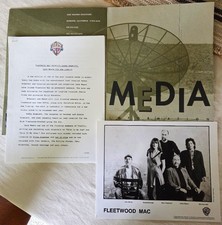


RARE Fleetwood Mac Dave Mason Bekka Bramlett Era 93 Original WB Press Kit w 8x10 picture

RARE Fleetwood Mac Dave Mason Bekka Bramlett Era 93 Original WB Press Kit w 8x10

$69.99


All times are GMT -5. The time now is 07:23 AM.


Powered by vBulletin® Version 3.8.11
Copyright ©2000 - 2026, vBulletin Solutions Inc.
© 1995-2003 Martin and Lisa Adelson, All Rights Reserved