
| |
|
#16
 06-23-2005, 08:12 PM
|
||||
|
||||

Quote:

|
|
#17
06-23-2005, 08:15 PM
|
||||
|
||||
|
Quote:
I cannot imagine the California Supreme Court allowing Ahnuld to redistrict, if it goes that far.
|
|
#19
06-24-2005, 02:26 PM
|
||||
|
||||
|
My heart just FELL when I saw this....this isnt what I considered emminent domain.....
as for the 5th Amendment takings clause, I had done some research in the past regarding community property rights and takings and I thought there had to be a "nexus?" Any real estate attorneys out there? What bothers me is that poor towns will now be targeted by rich developers to provide land for developments all in the name of the almighty "tax dollar" Dont get me wrong, I do think there are instances where community needs outweigh individual needs (such as one neighbor blighting an entire neighborhood by his actions i.e. cutting down a stand of trees in a heavily forested neighborhood and ruining the aesthetics of the rest of the parcels) but in New London, these were old Victorian homes on waterfront property that had been in some of the families for generations  What is GOING ON in our Courts? If anything is bound to get Joe Public up in arms it is the breaching of the ingrained attitude about personal property rights. Maybe its time our Judges WERE recalled/impeached or whatever one does with a lifetime appointed monkey...   here are some takings law links: article another article cases here is the "nexus" case: Dolan v. City of Tigard 512 U.S. 374 (1994) Issues: The court further defined the nexus required between the impact of a development project and mitigating conditions. It held that the essential nexus test also requires "rough proportionality," therefore, making it the agencies burden to show it has not required more dedication of land than is necessary. Last edited by irishgrl; 06-24-2005 at 02:43 PM..
|
|
#20
06-24-2005, 04:22 PM
|
||||
|
||||
|
This ruling isn't as black and white as the idea of "now evil developers can come in and steal your house". There's more to it than that. The opinion was specifically and strictly worded, so I doubt anyone has to fear their home being snatched away without due process. Government bodies loathe to use eminent domain because of political consequences.
"Analysis: Supreme Court rules state and local governments may seize private property for economic development June 23, 2005 MICHELE NORRIS, host: From NPR News, this is ALL THINGS CONSIDERED. I'm Michele Norris. A major ruling on property rights today from the Supreme Court. The court ruled that state and local governments may force homeowners and business owners to sell their property when the space is needed for a redevelopment project. The 5-to-4 ruling came from a case in New London, Connecticut. And as NPR's Nina Totenberg reports, it's a major setback for property rights advocates. NINA TOTENBERG reporting: The Constitution allows the government to take private property for public use and requires that the property owners be paid fair market value. Over the last century the Supreme Court has interpreted the meaning of `public use' broadly. It's approved the taking of property to build highways, hospitals, to allow the building of railroads, to facilitate mining and to eradicate slums. The question in this case was whether the city of New London, Connecticut, could take property for economic development. New London in the 1990s was designated by the state as a depressed area. The city, which had lost tens of thousands of jobs, saw a once-in-a-lifetime chance at revitalization when the Navy closed its harbor facilities and gave 32 acres of land to the local government. At the same time Pfizer decided to build a $300 million research facility next door. And the state said it would contribute $70 million to lay the groundwork for private redevelopment of the area--filling floodplains, cleaning up hazardous-waste spills and the asbestos-ridden land areas and opening up the river front to the public for the first time. The redevelopment plan called for private development of office complexes, condominiums, shopping areas and a hotel. But the plan ran into trouble when seven of the 90-plus homeowners refused to sell. The holdouts own tiny parcels of land, typically a tenth of an acre, with houses that are both owner-occupied and rented out. Although the city offered a total of $1.6 million, the property owners said it wasn't a question of money. Matthew Dery's great-grandparents built the house where his elderly parents now live. The property also includes three other houses, one of which Matt lives in with his wife and son and was a wedding present from his grandmother. Mr. MATTHEW DERY (Property Owner): It's a snapshot of my mother's whole life and also a snapshot of our lives as well. I garden the same property that my great-grandmother gardened. TOTENBERG: Lawyers representing Dery and the other holdouts challenged the taking of their homes, contending that economic development is not a public purpose. Today the US Supreme Court disagreed. Writing for the five-member court majority, Justice John Paul Stevens said that promoting economic development is a traditional and long-accepted function of government. `Certainly,' said Stevens, `the city could not take property from one owner and simply give it to another private owner, nor would the city be allowed to take property under the pretext of a public purpose. But that was not the case here,' he said, `where the redevelopment plan was a carefully designed one approved by the democratically elected city council and reviewed by the Connecticut courts.' Justice Anthony Kennedy underlined the point in a concurring opinion. `There may well be categories of cases that are suspicious,' he said, `but in this case, when the plan was developed, it was unknown which private businesses would benefit.' Scott Bullock of the Libertarian Institute for Justice represented the homeowners in the Supreme Court. Mr. SCOTT BULLOCK (Libertarian Institute of Justice): I think it's a dark day for American home and small-business owners. You know, while most constitutional decisions affect a relatively small number of people, this decision really undermines the rights of every American, except the most politically connected of those, as Justice O'Connor recognized in her dissent. TOTENBERG: Justice Sandra Day O'Connor's opinion for the four dissenters lambasted the majority opinion, declaring that the beneficiaries would likely be wealthy corporations and developers who have the most influence. But state and local leaders denied that the process called eminent domain is easily used. Bart Peterson is the mayor of Indianapolis and the vice chairman of the National League of Cities, which filed a brief in the case urging today's result. Mayor BART PETERSON (Indianapolis; Vice Chairman, National League of Cities): There are number of checks and balances, such as not just the legislative process, but the political process. It's unpopular to use eminent domain, and that's why it's used so sparingly. You don't find local government officials who are anxious to use eminent domain. It really is a last resort. TOTENBERG: And Connecticut Attorney General Richard Blumenthal emphasized that the New London plan was for the greater public good. Mr. RICHARD BLUMENTHAL (Connecticut Attorney General): New London is a city in distress. It will enjoy a larger employment base, more jobs, more retail, more public functions, neighborhood revival, benefits to its waterfront. There are a slew of benefits to the city of New London. TOTENBERG: Today's court opinion, however, did not minimize the hardships the redevelopment plan imposed on those forced to sell. `Nothing in our opinion,' Justice Stevens stressed, `precludes states from placing further restrictions on the state's power to take property, as some states have done.' Property rights advocates said today that is where the battle will now move. Nina Totenberg, NPR News, Washington"
|
|
#21
06-24-2005, 04:25 PM
|
||||
|
||||
|
Quote:
I hope you're not implying that Ginsburg, Stevens and the other three Supreme Court justices should be impeached.
|
|
#22
06-24-2005, 04:40 PM
|
||||
|
||||
|
I disagree because all a city has to do is have somne sort of economic plan and that is all the Court apparently requires with the lang. "the redevelopment plan was a carefully designed one approved by the democratically elected city council and reviewed by the Connecticut courts." I mean all that is required is to have a plan and then buy the houses. That sucks. Also, no city is going to is going to go through all that trouble if they have not gotten some sort of commitment, however informal, from a large anchor store, etc. - my a$$ "it was unknown which private businesses would benefit"
 In the end, this is pandering to big business against the small guy.
__________________
 save the cheerleader - save the world
|
|
#23
06-24-2005, 04:47 PM
|
||||
|
||||
|
Here is an article on this and why it could have far reaching effects (emphasis and commentary supplied)
Land war goes before Supreme Court Homeowners ask justices to block city's use of eminent domain From Bill Mears CNN Washington Bureau WASHINGTON (CNN) -- A fight by homeowners to save their New London, Connecticut, neighborhood from city officials and private developers -- an important property rights case with an unusual twist -- will reach the U.S. Supreme Court on Tuesday. At issue is whether governments can forcibly seize homes and businesses, for private economic development. Under a practice known as eminent domain, a person's property may be condemned and the land converted for a greater "public use." It has traditionally been employed to eliminate slums, or to build highways, schools or other public works. The New London case tests the muscle of local and state governments to raise what they see as much-needed revenue, which they argue serves a greater "public purpose." Legal analysts said they see the case as having major implications nationwide in property rights and redevelopment issues. Eminent domain is a practice indirectly sanctioned by the U.S. Constitution. The Fifth Amendment's protection against unwarranted government interference adds a caveat: "Nor shall property be taken for public use, without just compensation." A recent study by the property rights group Institute for Justice, which is representing the New London homeowners in court, found about 10,000 cases from 1998 to 2002 of local governments in 41 states using or threatening to use eminent domain to transfer home and properties from one private owner to another. Courts in at least six states have upheld the practice. [that is a lot to me] Such battles have long been a staple of U.S. westward expansion. In the 19th century, farmers, railroads, miners and ranchers competed for the opportunity to exploit rural resources. Today, the disputes have become more urban-based, focusing on stadiums, office parks and shopping centers. Courts and legislatures around the country have had widely differing standards on when eminent domain can be used. City, homeowners square off In the New London case, city officials there argue that eminent domain also should apply to "economic development" even if done privately since it would increase tax revenue and improve the local economy. Susette Kelo and six other homeowners have said the move is more about enriching well-connected developers. "It's obvious they don't want us here, and they've done everything in their power to make us leave," Kelo said. "They are simply taking our property from us private owners and giving it to another private owner to develop." Kelo said she and her husband, Tim, bought their two-bedroom pink Victorian in the city's Fort Trumball waterfront neighborhood in 1997 for $50,000. The area is in a working-class section of New London, overlooking the Thames River and Long Island Sound. "It was like I'd been here all my life. It was just a warm and inviting feeling," she said. But city officials disagree with that label. "New London has been and is classified by the state of Connecticut as a distressed municipality," City Attorney Thomas Londregan said. "When we lost the naval base, we lost about 18,000 jobs." Londregan said that while the city has never claimed the Fort Trumball neighborhood is blighted, the area has suffered economically. It has been zoned since 1929 as industrial despite the presence of existing private homes. "This area had a junkyard, which had to be cleaned up at great expense," Londregan said. "They had oil tanks, commercial big storage tanks. There is a railroad yard down there." Pfizer plant spurred city action In 1998, pharmaceutical giant Pfizer Inc. agreed to build a $270 million global research facility next to the area in dispute. Two years later, the New London City Council sought to accommodate Pfizer's investment and adopted a redevelopment plan to transform 90 acres of Fort Trumball. The city and state would contribute millions of dollars. Eminent domain power was transferred to the New London Development Corp., a private, nonprofit group of citizens, business owners and community leaders. It wants to build a conference center, hotel complex, offices, condominiums, and eventually, an aquarium in New London, which is about 125 miles east of New York City. The day before Thanksgiving 2000, Kelo said, a notice was posted on her East Street home, informing her and her husband that they had four months to move out or police would remove them and their belongings. "I really didn't want to sell my property so I wasn't interested at all in the offer," she said. "And they simply told me if you're not going to sell, we're going to take your property by eminent domain." [that is horrifying] Most of Kelo's neighbors have moved on, leaving large parts of Fort Trumball bulldozed amid rubble. About 80 homes and businesses are gone, leaving only seven property owners and 15 parcels remaining. The city government said it offered Kelo and her neighbors a fair price for their properties. The Connecticut Supreme Court agreed with New London, ruling that promoting economic development outweighed private property rights. Homeowners argued that since their neighborhood is neither a slum nor crime-ridden, it does not meet legal standards for application of eminent domain. The case is Kelo v. City of New London (04-0108). A ruling is expected by June. Find this article at: http://www.cnn.com/2005/LAW/02/21/scotus.eminent.domain
__________________
save the cheerleader - save the world
|
|
#24
06-24-2005, 05:44 PM
|
||||
|
||||
|
Yet another article on the ramifications:
Eminent domain: A big-box bonanza? Court's ruling OKed land grab for business like Target, Home Depot, CostCo, Bed Bath & Beyond June 24, 2005: 3:20 PM EDT By Parija Bhatnagar, CNN/Money staff writer NEW YORK (CNN/Money) - The Supreme Court may have just delivered an early Christmas gift to the nation's biggest retailers by its ruling Thursday allowing governments to take private land for business development. Retailers such as Target (Research), Home Depot (Research) and Bed, Bath & Beyond (Research) have thus far managed to keep the "eminent domain" issue under the radar -- and sidestep a prickly public relations problem -- even as these companies continue to expand their footprint into more urban residential areas where prime retail space isn't always easily found. Eminent domain is a legal principle that allows the government to take private property for a "public use," such as a school or roads and bridges, in exchange for just compensation. Local governments have increasingly expanded the scope of public use to include commercial entities such as shopping malls or independent retail stores. Critics of the process maintain that local governments are too quick to invoke eminent domain on behalf of big retailers because of the potential for tax revenue generation and job creation. The Supreme Court's decision Thursday clarified that local governments may seize people's homes and businesses -- even against their will -- for private and public economic development. The ruling would seem to offer new opportunities to retailers. However, some industry watchers caution that with Thursday's decision thrusting the eminent domain issue into the national spotlight, companies using eminent domain risk a very public backlash. Craig Johnson, president of retail consulting group Customer Growth Partners, said that retailers shouldn't interpret the high court's decision to be a green light to aggressively expand even into those neighborhoods where a big-box presence is unwelcome. "Even with the Supreme Court's decision potentially in their favor, smart retailers would rather go into communities wearing a white hat rather than a black one," said Johnson. The appropriate move for companies would be to selectively use eminent domain as a last resort, he said, not as a first course of action. "I think companies have learned a few lessons from Wal-Mart's public relations struggles," he said. Where's the space crunch? According to industry watchers, retailers face a different type of expansion problem on the East Coast versus the West Coast. "On the West Coast, land availability takes a back seat to labor union issues and that's why Wal-Mart has consistently run into problems in California," Johnson said. "On the East Coast, because of population density it's very hard to get big open space and the zoning is more restrictive," Johnson said. Industry consultant George Whalin said that's one reason that Target, the No. 2 retailer behind Wal-Mart, (Research) has resorted to using eminent domain to set up shop in a few East Coast markets. Target and Wal-Mart could not immediately be reached for comment. "Wal-Mart and Target have both been criticized for their eminent domain use," said Burt Flickinger, a consultant with the Strategic Resources Group. Meanwhile, eminent domain opponents called the high court ruling a "big blow for small businesses." "It's crazy to think about replacing existing successful small businesses with other businesses," said Adrian Moore, vice president of Los Angeles-based Reason Public Policy Institute, a non-profit organization opposed to eminent domain. "There are many, many instances where we've found that the cities that agreed to eminent domain use not only destroyed local businesses but the tax revenue that the local government had hoped to generate did not come to pass," Moore said. But at least one retail industry analyst sees things a little differently. "Expanding for big box store is a challenge, especially in the Northeast. Therefore, retailers will have to devise a strategy for using eminent domain," said Candace Corlett, retail analyst with WSL Strategic nRetail. "Local communities may oppose Wal-Mart and Target coming to their area but as consumers, they also want to shop at these stores and they complain when they don't have these stores nearby," she said. "The fact is that shoppers ultimately vote with their dollars and retailers are very well aware of that." Find this article at: http://money.cnn.com/2005/06/23/news...ex.htm?cnn=yes
__________________
save the cheerleader - save the world
|
|
#25
06-24-2005, 06:28 PM
|
||||
|
||||
|
Quote:
Ive said I disagree with the crapola our Supreme court has been dishing out for quite some time...I guess you havent caught THOSE posts..... I happen to agree with the dissenting opinion in this case because poor towns can smell the money with THIS ruling you mark my words....
|
|
#26
06-24-2005, 06:29 PM
|
||||
|
||||
|
Quote:
|
|
#27
06-24-2005, 07:46 PM
|
||||
|
||||
|
Quote:
I was just surprised that you would call for that same action to happen.
|
|
#28
06-24-2005, 07:56 PM
|
||||
|
||||
|
Quote:
Quote:
Remember, this particular action is being performed by the city government. If the voters of New London don't like it, they should have taken it up with their elected officials. I'm assuming that the majority of city dwellers were in favor of the redevelopment, otherwise it wouldn't have even gotten to the Supreme Court. Quote:
It's a hard decision- but I don't see it as "evil".
|
|
#29
06-24-2005, 08:29 PM
|
||||
|
||||
|
Quote:
I dont know WHAT the answer is exactly--possibly a change in the rule allowing lifetime appointments? I dont know...all I know is, these Judges are interfering more and more with our liberties great and small and its got to stop. I most certainly do NOT want the moral "majority" to dictate to me how I should believe or by what rules I should live in my personal decisions therefore, I hardly think I qualify to be lumped in with the "right-wing wackos"
|
|
#30
06-24-2005, 08:38 PM
|
||||
|
||||
|
Quote:
Actually, some of those homes could very well qualify as "Historic" and therefore represent a valuable (some would say PRICELESS) part of the Town's history. Some of them have been in the family for Generations and so, no amount of recompense could be considered "fair." New London may have been approached by a developer who saw the value in the waterfront property (always a choice location) and approached the town regarding a possible shopping center/tourist attraction in that EXACT spot...the only way to do that is to change the zoning and the General Plan and then approach the owners with a "fair" offer. The court states that cities and local governmental bodies know what is best for an area but that is a very one sided (developmentally geared) assessment. The problem with this scenario is that no body's home is safe if you live in a prime location, that a wealthy developer chooses to target. I dont know what the environmental protection is in New London, but here in CA, a project could be changed/postponed or stopped altogether if there is an environmentally sensitive or culturally sensitive (such as an Indian burial ground) area near by.......I think I would (if I were the New London residents) look into recalling the elected officials....special election, recall, it can be done, and it would give a clear message to the city council that they are accountable to the PEOPLE not the deep pockets developers...... edit: on the Federal level, there are laws that govern environmental impacts commonly referred to as NEPA or National Environmental Protection Act. This governs any/all Governmental development projects. Here in CA, we have to abide by CEQA, the California Environmental Quality Act. These statutes govern environmental standards by which projects are completed... I venture to say that every state has some form of environmental protection, and possibly these rules can be imposed upon the New London developers/project...(one can hope anyway) by the way, here is why I am so concerned: Quote:
Last edited by irishgrl; 06-24-2005 at 10:51 PM..
|
 |
|
|


Billy Burnette Lp Self Titled On Columbia - Vg+ To Vg++ / Vg++
$11.99
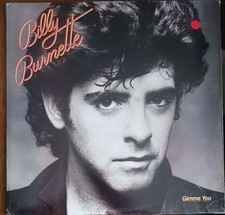
BILLY BURNETTE - GIMME YOU - 1981 COLUMBIA RECORDS VINYL ALBUM - (VG/VG+)
$5.00

BILLY BURNETTE - (SELF-TITLED) - 1980 COLUMBIA VINYL RECORD - (VG/VG)
$4.50

Billy Burnette - Self-Titled LP - 1980 1st Pressing 12" Columbia LP + Lyrics VG+
$4.50
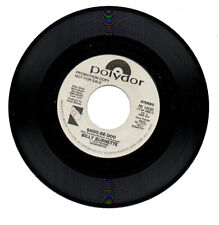
BILLY BURNETTE 45 RPM Promo Record "SHOO-BE-DOO" 1978 Rock Unplayed MINT
$6.70


 Linear Mode

