
| |
|
|
|
#1
 07-20-2005, 10:24 AM
|
||||
|
||||
 economy still improving
Greenspan: Solid growth, more hikes
Fed chairman tells House panel 'significant uncertainties' could alter positive economic outlook. July 20, 2005: 10:36 AM EDT WASHINGTON (Reuters) - Federal Reserve Chairman Alan Greenspan, in probably his last semi-annual testimony to Congress, said Wednesday that the U.S. growth outlook was solid and the Fed should keep raising interest rates. But he warned "significant uncertainties" surround this positive prospect, including the high price of energy, labor costs, the future behavior of low long-term interest rates and the danger this could spell for the country's housing market. "Our baseline outlook for the U.S. economy is one of sustained economic growth and contained inflation pressures," he told the House Banking Committee in the text of his remarks, made available to the media before delivery. "In our view, realizing this outcome will require the Federal Reserve to continue to remove monetary accommodation. This generally favorable outlook, however, is attended by some significant uncertainties that warrant careful scrutiny," said Greenspan, who is due to stand down at the end of January. Turning to long-term yields that have stayed low in the face of rising official interest rates, Greenspan said their decline was "without precedent" and warned their future behavior was a risk to the outlook. Part of the danger lies in the fact that low borrowing U.S. costs have contributed to a boom in U.S. house prices, with Greenspan citing "speculative fervor" in some markets. The Fed has raised interest rates in nine quarter-percentage point steps since June last year to 3.25 percent and is expected by financial markets to keep going to around 4.0 percent by the end of 2005. In his testimony, Greenspan cited the last Fed policy committee statement, which said the Fed expects to raise rates at a "measured" pace. The 79-year old chairman, due to retire in January, said it was not clear if U.S. unit labor costs would keep on a modest upward path and warned this could have an important impact on inflation. A spike in oil prices above $60 per barrel along with other energy price rises posed another important risk. A flattening in prices would be good for inflation, but Greenspan noted that financial futures markets see little chance of a decline in energy costs "for years to come." Find this article at: http://money.cnn.com/2005/07/20/news...ex.htm?cnn=yes
__________________
 save the cheerleader - save the world 
|
| . |
|
#2
07-20-2005, 10:25 AM
|
||||
|
||||
|
AND ---
Revenue Surge Shrinks Deficit Tax Cuts 'Working,' President Says, but Some Voice Caution By Jonathan Weisman Washington Post Staff Writer Thursday, July 14, 2005; A01 The federal budget deficit will slip to $333 billion this fiscal year, from $412 billion in 2004, as a surge of unanticipated tax receipts pushes the red ink significantly below levels projected just five months ago, White House officials said yesterday. The midyear budget forecast also shows that President Bush is on track to reach his goal of halving the deficit a year before his deadline of 2009. By 2008, the White House forecasts that the deficit will fall to $162 billion, or 1.1 percent of the gross domestic product (GDP). A slight rise projected for 2010 reflects the initial cost of Bush's proposal to add private investment accounts to Social Security. "It's a sign that our economy is strong, and it's a sign that our tax relief plan, our pro-growth policies, are working," Bush said after a Cabinet meeting at the White House. In dollar terms, the 2005 deficit of $333 billion would still be the third highest on record. That figure relies on the expenditure of about $173 billion in surplus Social Security taxes that must be repaid when baby boomers enter their retirement years. Sen. Jim DeMint (R-S.C.) called the deficit numbers "misleading" because "Congress is raiding Social Security to mask the true size of the deficit," which he says should be more than $400 billion. But the change from February's projections is dramatic. Then, the White House foresaw a record deficit of $427 billion, equal to 3.5 percent of the GDP, for the fiscal year ending Sept. 30. Under that forecast, the deficit would have risen for the fourth straight year, from the $128 billion surplus Bush inherited in 2001. Now, the deficit is expected to finally begin receding, and it would come in at 2.7 percent of the GDP, smaller in those terms than the deficits of 15 of the past 25 years. "The U.S. budget deficit is falling, and it's falling fast," said White House budget Director Joshua B. Bolten. Independent budget experts cautioned that a number of debatable assumptions underpin the White House's deficit projections. The improved budget picture for 2005 is almost all the result of $87 billion in unanticipated tax receipts, much of which may have resulted from one-time events, such as a one-year corporate tax holiday enacted last year. Congressional Budget Office Director Douglas Holtz-Eakin said last week that such events probably will not make much difference for the budget picture by the end of the decade. But the White House assumes that tax receipts will come in an average of $82 billion higher in each of the next five years than the administration forecast in February. A White House budget official called the assumption "eminently reasonable," because tax receipts rarely decline even from elevated levels in an expanding economy. The White House does include $37 billion in Iraq and Afghanistan war costs for 2006 and $13 billion in 2007, but Bolten said those costs will certainly be higher. The projection does not include additional expenditures to fix the alternative minimum tax (AMT), a parallel income tax enacted to ensure the rich pay taxes but one that increasingly ensnares the middle class. Bolten acknowledged the AMT needs to be fixed but said it should be part of an overall tax revision effort that does not change total tax revenue. The White House also assumed that interest rates over the next five years will be considerably lower than those projected by the private sector. Lower interest rates would shrink payments due on the expanding federal debt. Such payments have already risen 14.5 percent over the level at this time last year, as the Federal Reserve Board raises rates, according to the CBO. And Anthony M. Santomero, president of the Federal Reserve Bank of Philadelphia, warned yesterday that rates are likely to continue their rise. Moreover, Bolten said, the real strains on the federal budget deficit will be seen beyond the administration's five-year window, when retiring baby boomers begin driving Medicare and Social Security expenditures dramatically higher. "Don't be deceived," warned U.S. Comptroller General David M. Walker. "We face large and growing structural deficits in the long term that are getting worse every day, and it's time that we start to address them." Republicans boasted that the improved outlook vindicated their drive to cut taxes in each of the last four years, claiming that much of the boost in tax revenue was the result of economic growth stimulated by the tax cuts. The White House used the news to resume its push to make permanent tax reductions set to expire at the end of 2010. "There's no doubt that the effect of the tax cuts . . . have been an enormous factor in producing the additional income that has found its way now into the federal treasury," Bolten said. Rep. John M. Spratt Jr. (S.C.) and Sen. Kent Conrad (N.D.), the ranking Democrats on the House and Senate Budget committees, agreed that the short-term numbers are a marked improvement. But Senate Minority Leader Harry M. Reid (D-Nev.) said the administration was "claiming credit for an F-plus in fiscal management." © 2005 The Washington Post Company http://www.washingtonpost.com/wp-dyn...071301617.html
__________________
save the cheerleader - save the world
|
|
#3
07-20-2005, 05:34 PM
|
||||
|
||||
|
Quote:
So yes, I guess W can say tax cuts are "working" but for whom?
|
|
#4
07-20-2005, 05:43 PM
|
||||
|
||||
|
Quote:
__________________
Christine McVie- she radiated both purity and sass in equal measure, bringing light to the music of the 70s. RIP. - John Taylor(Duran Duran)
|
|
#5
07-21-2005, 10:09 AM
|
||||
|
||||
|
Quote:
I sympathize with you on the property taxes. Part of the reason that they are skyrocketing is because the states/counties are receiving less money from the federal government than they used to becasue of those fabulous Bush tax cuts.
|
|
#6
07-21-2005, 10:12 AM
|
||||
|
||||
|
Quote:
Again, this is why I am for a flat tax for all income over say $30,000 a year with no tax on those make under $30,000 a year. I think all this some get a deduction and some don't is horseshiitte and unfair. I mean I spend a fortune on my Scotties and consider them my kids - where the hell is my tax break 
__________________
save the cheerleader - save the world
|
|
#7
07-21-2005, 10:16 AM
|
||||
|
||||
|
Here is an article on the ficticious savings under the Bush tax cuts.
http://www.washingtonpost.com/wp-dyn...2004Jul24.html Taxes Cut, Not Saved By Jonathan Weisman and Neil Irwin Jerry Bailey is precisely the kind of taxpayer President Bush had hoped to bestow his tax cuts on: an entrepreneur brew-pub owner, a job provider, not overly rich by Washington area standards but well off enough to pay a hefty sum to the federal government each year. But after three tax cuts in three years, the part-owner of Loudoun County's Old Dominion Brewing Co. is not exactly celebrating his gains. Sure, his federal tax bill was trimmed, by a healthy $5,600, according to a rough calculation by Clint Stretch, director of tax policy at the accounting firm Deloitte & Touche LLP. But other factors having nothing to do with federal taxes have clouded Bailey's situation. This year, the property tax bill on his Bethesda home will reach $6,725, a $950 increase over his payment four years ago. The annual cost of his 56-mile-a-day commute has jumped more than $300 since 2001, and the long, slow decline of business profits these past four years has left Bailey far behind, no matter what his federal tax payment may be. "I'm not paying any taxes at all because we're not making any money," Bailey said with a sigh. "I loved paying taxes. It meant we were doing all right." As the Democrats converge on Boston this week to nominate their presidential candidate, the rhetoric around the economic policies of the past 42 months will doubtless be shrill. At first blush, the Democrats' case may seem like a hard sell. Economic growth has returned. Job growth, while slow, has perked up over the past 12 months. Most of all, Republicans may expect some gratitude for cutting taxes by more than $1.7 trillion over the next 10 years. But many Americans feel they have lost ground since 2001, and a solid 71 percent are convinced they have received no tax cuts at all. A poll by CBS News and the New York Times in March found that only 22 percent believe the policies of the Bush administration made their taxes go down; 25 percent said their taxes actually went up. Taxpayers in the Washington area at the highest income levels appear to have profited handsomely from the tax cut, as one Cleveland Park businessman's tax returns show. Further down the income scale, some people barely broke even, as Alverta Munlin and Donald Belton can attest, after local taxes and rising costs of living were factored in. And some struggling middle-income families, such as that of Serkalem Nessibu, lost their entire tax cut to things like the rise in their property tax because of the increased value of their home. Presumably, the numbers would have been worse for many people had they not had their federal taxes cut; but these other demands on their money help explain why some taxpayers may dismiss the tax cut and instead focus on their reduced bottom line. True, rising property and sales taxes at the local level have clawed back as much as 27 percent of the federal income tax cuts, said Mark Zandi, chief economist at the research firm Economy.com. Nonetheless, he said, personal income tax payments have fallen about $200 billion since Bush took office. "I don't think there is any doubt that [the tax burden] has dropped," said Greg Jenner, acting assistant Treasury secretary for tax policy. "The statistics are irrefutable, and it's absolutely clear that the American people are better off because of the tax cuts that the president proposed." Since early 2001, state and local taxes have actually fallen as a share of personal income, said Mark Warshawsky, assistant Treasury secretary for economic policy, from 6.3 percent of income to 6.1 percent. Factor in federal taxes and the total tax burden has plunged from 18.3 percent of personal income to 13.9 percent. "Tax cuts on the federal level have greatly outweighed those state and local [tax] increases," agreed Dean Maki, an economist at J.P. Morgan Chase, who has studied the impact of tax law on personal incomes and spending. But Maki had a caveat that could well apply to the Washington area, one that can easily make people feel as though their annual outlays have grown, no matter what: Housing prices in the Northeast and California have risen considerably faster than the national average. Deloitte & Touche's Property Tax Services Group in Chicago found that single-family home values nationally have jumped 24.2 percent since 2001, from a median $147,800 to $174,600. But in the Northeast, median home values shot from $146,500 in 2001 to $212,280 in May, a 45.5 percent leap. That, in turn, has driven up property taxes and cut into individual gains from the federal tax cuts. Nationally, property taxes rose an average of more than 10 percent, DeLoitte researchers say. In Alexandria, they rose 53 percent. As the economy slowed in 2001 and federal funds for states tightened, local jurisdictions had to find myriad ways to raise revenue that have pinched local consumers' pocketbooks. In 2001, the District of Columbia repealed a law that would have lowered the top marginal rate on income earned in the city to 8.5 percent from 9.5 percent. In the past three years, the District has raised taxes on cigarettes, alcoholic beverages and phone services. Maryland has raised a number of fees, such as raising the price to register a typical car to $128, from $81. And Virginia this year passed a wide-ranging tax package that will increase the sales tax rate by a penny per dollar starting next month, and eliminate a $12,000 state income tax deduction for wealthy seniors. "I have no doubt I've gone backwards," said Al Aitken, an American Airlines copilot who is trying to organize a property tax revolt through his VOTORS, or Virginians Over-Taxed On Residences. "I favor President Bush's tax cut, but my increase in property taxes more than ate it up." Aitken has the records to prove his point. In 1997, he fled his five acres outside of Manassas when his property tax payment reached $4,000, then settled on 10 acres in Culpeper County, where his tax payment dropped to $1,700. But Washington sprawl and soaring real estate prices quickly caught up to him. By 2002, his tax obligation was back up to $4,000. It has now reached $6,000. With an income of $128,132, including a Marine Corps pension, Aitken did profit from the president's tax cuts, saving roughly $3,150 last year, by Stretch's calculations. But $2,000 of that was snatched away by Culpeper County. About $270 was consumed by rising gasoline prices, inflating the cost of his 100-mile commute to Dulles International Airport. His net gain? $880. It's something, of course, but there are other factors. The collapse of the airline industry in the wake of the Sept. 11, 2001, attacks took a toll on Aitken personally. This year, American Airlines pilots swallowed a 23 percent salary cut to keep the planes flying. With wages last year totaling $92,236, Aitken effectively gave back more than $21,000. His net gain vanished into a substantial loss. Bush administration economists say such anecdotes do not paint an accurate picture of the national experience. Property taxes have risen, but measured against personal wealth, the increase has been slight, from 1.24 percent of personal incomes in 2001 to 1.35 percent now. Overall, they stressed, after-tax incomes have risen 11 percent since the president took office. "People are always nervous about changes in tax law, and they're skeptical about the benefits," Jenner said. "But overall, wages have gone up, and after-tax income has gone up significantly," Warshawsky added. Of course, many Washingtonians have come out ahead -- way ahead. Last year, with his firm revving back up, a Cleveland Park businessman who discussed his finances only on condition of anonymity pulled down more than $1,035,000 in salary and bonuses. His wife, a federal employee, chipped in $45,000, giving the family of four a sizable income that enjoyed tax rate cuts in every income bracket, including the top, which was lowered from 39.6 percent to 35 percent. The couple also received $33,512 in taxable dividends last year. Before Bush took office, those would have been taxed at the ordinary income rate of 39.6 percent. But last year, Congress slashed the dividend rate to 15 percent. All told, the businessman's taxes fell $44,500 from where they would have been under the Clinton-era tax code, according to Deloitte & Touche. With the assessment of his house more than doubling since 2001, his property taxes have risen by $4,320. But rising gas prices had negligible impact on a commute of just four miles. The household's net gain? About $40,000 a year. Down the income scale, the picture looks considerably different. Serkalem Nessibu, an Ethiopian immigrant in her forties, moved to the United States in 1979 and since then has achieved a middle-class existence. She and her husband have a three-bedroom house in Accokeek, in Prince George's County, and two children, one of them on the way to college this year. To help support it all, Nessibu works one full-time job answering the phone at a downtown Washington hotel. After her shift ends, she typically packs up and goes to a second job, working until recently as a supervisor at a diner. Altogether, she works 70 to 75 hours a week, and brought home $38,000 last year for her efforts. Her husband was laid off from his job with an electric utility when there was a merger two years ago, and he now works part time driving a bus while looking for permanent work. Altogether, Nessibu's family made about $50,000 last year, and she paid about $1,100 less on her federal taxes than she would have had the Bush tax cuts not been enacted. But the family took home about $60,000 back in 2000, when the economy was booming, Nessibu received ample overtime at the hotel and her husband worked full time. They bought a house in 2000, and the property tax has zoomed from about $800 to almost $2,000, more than enough to negate her gains from the federal tax cuts. She took her 15-year-old son out of public school and he now goes to a Catholic school that costs $8,000 a year. And with her 18-year-old daughter starting college, Nessibu is having to take out loans to pay for education. Routine costs also have risen. The co-payment for medical care is $15, up from $10. Her car insurance shot up when her kids turned 16. "The groceries and the gas, everything seems to go up in price," Nessibu said. "Everything I make goes to pay basic living expenses or pay for my children's education. I really appreciate being here in America. I just hope the second generation will be more successful than we are." Bailey's tale also illustrates the wider economic headwinds facing Americans these past years. He pays himself $100,000 to run the brew pub. His wife, a government epidemiologist, earns $120,000. But the real money once came from their 22 percent ownership in Old Dominion Brewing, a share that yielded $132,000 in additional income in 1999, when the pub cleared $600,000. As the air leaked out of the Northern Virginia technology bubble, Bailey's brewery suffered collateral damage. Profits slid to $535,000 in 2000, $197,000 in 2001, $86,000 in 2002 and just $3,397 in 2003. Bailey's share of the profits comes as a dividend payment, theoretically making him one of the big winners last year, when Congress slashed the tax rate on dividends. But for now, that is cold comfort. His dividend in 2003 amounted to $747.34, his tax savings $157 -- hardly enough to make up for the $290,000 in lost personal profits since Bush took office. In the rougher world off North Capitol Street, Alverta Munlin has been feeling squeezed as well. The 68-year-old tutors children and organizes adult education programs for Center City Community Corporation, earning about $38,000 to support herself and her adopted 14-year-old. It is not easy, she admitted. She gets some assistance to cover the $5,700 tuition that covers her child's Catholic-school education. Her mortgage payment of $585 and her utility bills of up to $150 a month all add up. But what really galls her is a crackdown by the District on the appearance of the neighborhood around her First Street NW home. Twice now, she said, she has been fined $100, first because her grass was too long, then because there was trash in the alley. "I'm 68 years old. I cannot be out sweeping streets, and I cannot afford to hire someone else to do it," she protested. "The mayor takes it for granted that people can do this. I don't have that luxury." The Bush tax cuts did lower her federal tax payments, by about $1,000 last year, thanks to the child tax credit that grew from $500 to $1,000, as well as tax-rate cuts at the bottom of the income scale. But 20 percent of that gain went to those two fines. An additional $113 will disappear when her property tax payment jumps from $939.84 this year to $1,052.61. Remaining from her tax cut? $637. In a single-room-occupancy hotel at 14th and R streets in Northwest Washington, Donald Belton is also confronting the cost of living in the nation's capital. For most of the Bush years, Belton, 37, lived on the streets, messed up on heroin, cocaine, marijuana, "a little bit of everything," he said. But last year, he turned himself over to the interfaith charity So Others Might Eat, and turned his life around. He shook off the drugs, enrolled in SOME's job-training course, studying building maintenance, and accepted assistance to cover the $603 a month he needed for his room with a shared bath and kitchen. In early May, he finished school. By the end of the month, he had landed a maintenance mechanic's job at a Washington hotel, earning $26,000 a year. Then in June, he said, he was dropped from the D.C. Housing Authority's rental assistance program. Just under half his $700 biweekly take-home pay goes to his hotel. Dreams of an apartment of his own now seem remote. "I want to get out," he said. "I want to find an apartment, but you can't find one for $600, $650 a month in D.C., and I can't get out of town because of the transportation." As he stretches his $26,000 a year, Belton will receive some help from the Bush tax cuts -- $350, by Stretch's estimate. But that may be dwarfed by cutbacks in social services, increases in Metro fares and D.C. rents that have increased 18 percent since 2001. For years, the District received federal funds -- about $3 million at its height -- for drug-crime prevention, public safety programs, even basketball leagues in its public housing projects. In 2003, those funds vanished, said Michael Kelly, director of D.C. public housing. "The fact of the matter is a lot of programs have been cut," said Gregory P. Irish, director of the D.C. Department of Employment Services. "When you have high unemployment, you can't merely depend on tax cuts. You have to put some money out there for job training." Indeed, local government organizations say much of their tax increases were driven by the unfunded demands of the federal government. Since 2001, 62 percent of the nation's cities raised public safety spending above the rate of inflation, in part because of terrorism threats and the demands of the new Department of Homeland Security, said Chris Hoene, research manager at the National League of Cities. During that time, city property tax collections cumulatively rose 5 percent in 2001, 7 percent in 2002 and 4 percent in 2003. In their No Child Left Behind education law, Congress and the president promised that funding for Title I, the main federal program for disadvantaged students, would be increased significantly to help bring poor-performing schools up to new expectations. But this year, federal funding will fall $6.2 billion short of that pledge, said Dan Fuller, director of federal programs at the National School Boards Association. Congress long ago mandated programs for children with special needs, but the gap between the cost of those programs and the federal contribution to cover them will reach $10 billion, a gap that is being made up largely with property taxes. "There is essentially a federal education tax," Fuller said. "It's disguised as a local property or sales tax increase, but it's because the federal government is not providing for their mandates."
__________________
save the cheerleader - save the world
|
|
#8
07-21-2005, 12:01 PM
|
||||
|
||||
|
Quote:
 People with FOUR kids should pay FOUR times the school taxes. People with zero kids should pay just that, IMO. The white trash that were living next door(who moved last week!   ) had four kids, yet couldn't even pay $600 rent. I don't feel like their kids should be my responsibility. If you don't have a good job, wear a condom, for christ's sake!!! Yada, yada, yada....global village... ) had four kids, yet couldn't even pay $600 rent. I don't feel like their kids should be my responsibility. If you don't have a good job, wear a condom, for christ's sake!!! Yada, yada, yada....global village...I'm with you on the pet tax cuts. I've dropped $5k on my dog's cancer treatment so far this year. So far, it's paid off. 
__________________
Christine McVie- she radiated both purity and sass in equal measure, bringing light to the music of the 70s. RIP. - John Taylor(Duran Duran)
|
|
#9
07-21-2005, 10:05 AM
|
||||
|
||||
|
Quote:

__________________
"How much does the world weigh? Ask a single mother..."
|
|
#10
07-21-2005, 10:09 AM
|
||||
|
||||
|
Quote:
Interestingly and though most states had to raise the tax rates to compensate for less Fed. monies - most property has significantly increased in value over the last five or six years - in fact many have almost doubled in value due to the real estate boom of the last ten years, which was fueled by historically low interest rates. That increase in property value has made rates go up as well.
__________________
save the cheerleader - save the world
|
|
#11
07-21-2005, 10:14 AM
|
||||
|
||||
|
Quote:
|
|
#13
07-20-2005, 11:23 AM
|
||||
|
||||
|
Quote:
Economic news is what is always is: some people get jobs, some people don't; some people get cost-of-living raises, some people don't; some people can afford their mortgages, some people can't; some people make money in the stock market, some people don't. But EVERYONE is paying a ****load for gasoline at this point.
|
|
#14
07-20-2005, 01:29 PM
|
||||
|
||||
|
Quote:
__________________
save the cheerleader - save the world
|
|
#15
07-20-2005, 01:38 PM
|
||||
|
||||
|
Quote:
__________________
Christine McVie- she radiated both purity and sass in equal measure, bringing light to the music of the 70s. RIP. - John Taylor(Duran Duran)
|
 |
|
|

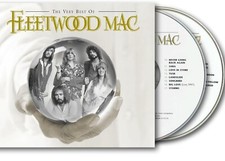
Fleetwood Mac – The Very Best Of Fleetwood Mac 2 CD Set - NEW
$17.40

Fleetwood Mac The Alternate Collection 8LP Vinyl Box Set Sealed RSD 2022 Limited
$180.00

Fleetwood Mac - Rumours - Target CD West Germany
$30.00

Fleetwood Mac Live 1975 2LP Clear Vinyl RSD Record Store Day 2025 LTD ED SEALED
$50.00

Fleetwood Mac - Rumours - Deluxe Edition 2 LP 180 gram 45 RPM Vinyl Record
$64.99


 Hybrid Mode
