
| |
|
|||||||
 |
|
|
Thread Tools | Display Modes |
|
#1
 03-19-2006, 02:33 PM
|
||||
|
||||
 US is increasingly "owned" by foreigners
U.S. Ports Debate Spurs Ownership Talks
By MARTIN CRUTSINGER, AP Economics Writer 59 minutes ago WASHINGTON - The furor over efforts by an Arab company to buy U.S. port operations has focused attention on a little noticed economic fact of life: America increasingly is foreign-owned. From the ritzy Essex House hotel in Manhattan, owned by the Dubai Investment Group, to the nationwide chains of Caribou Coffee and Church's Chicken, owned by another company serving Arab investors, foreigners are buying bigger and bigger chunks of the country. The U.S. must borrow more than $2 billion per day from foreigners to finance its huge trade deficits. In 2005, for example, there was a record deficit of $805 billion in the current account, the broadest measure of trade. Foreigners sell their televisions, cars and oil to Americans and hold dollars in return. Those dollars are invested in stocks, bonds and other assets, including real estate and factories. Foreigners already own half of the U.S. government's publicly traded debt. As of January, some $2.19 trillion in Treasury securities were in the hands of central banks, including China and Japan, and private investors abroad. At the end of 2004, the total foreign direct investment in this country — actual factories, office buildings and other tangible assets as opposed to stocks and bonds — came to $1.53 trillion, 8.2 percent more than in 2003. That investment shows up in all of the 50 states. In Oakland, Maine, it's a customer service center for T-Mobile USA Inc., which is a subsidiary of German-based Deutsche Telekom. In Glendale, Calif., it's the U.S. headquarters for Nestle, the Swiss-based food and beverage company. Arab investment has gotten the most scrutiny of late because of the now-withdrawn bid by a Dubai-based company to buy operations at six major U.S. ports. But statistics show that Arab investments represent only a a fraction of the total direct investment in the U.S. by foreigners. European nations accounted for $977 billion, or two-thirds, of the $1.53 trillion of foreign direct investment, according to figures compiled by the Commerce Department. By contrast, Arab countries in the Middle East accounted for $9.3 billion, led by $4.7 billion in investment from Saudi Arabia. The United Arab Emirates was second among Middle East Arab countries with $1.8 billion in investments, according to the data. DP World of Dubai said last week it intends to sell its U.S. operations to an American-owned company. But that has not stopped some members of Congress from seeking to overhaul the way such deals are reviewed by a secretive government panel. A bill by the chairman of the House Armed Services Committee, GOP Rep. Duncan Hunter (news, bio, voting record) of California, would bar foreign ownership of U.S. infrastructure deemed critical to the national security. "To those who say this is protectionism, I say — America is worth protecting," Hunter said. Opponents say his proposal would mean the fire sale of billions of dollars of assets now in foreign hands and end up hurting the U.S. economy. Consider that for more than a decade, French tire maker Michelin has been the exclusive supplier of tires for NASA's space shuttles. DSM, a Dutch company, makes body armor for U.S. troops, while French-owned Sodexho provides meals for the troops at a number of military installations. Nearly one in five U.S. oil refineries is owned by foreign companies. Foreign companies also have a sizable presence in running power plants, chemical factories and water treatment facilities in the United States. "People don't understand how integrated the U.S. economy has become with the global economy, how dependent we have become on other nations," said Clyde Prestowitz, president of the Economic Strategy Institute, a Washington think tank. Some analysts believe such realities are getting lost as politicians try to respond to growing anxiety about the trade deficits, the loss of nearly 3 million manufacturing jobs since mid-2000, immigration problems and the threat of more terrorist attacks. "We have to be very careful that we don't overreact in the legislative process and enact economic policy masquerading as national security policy," said Todd Malan, head of the Organization for International Investment. The Washington group represents foreign companies that do business in the United States. To the puzzlement of some economists, the current debate centers on direct foreign investment, the most stable type of investment. Yet the far larger share of foreign investment is in Treasury securities, corporate bonds and stocks. If foreigners suddenly decided to reduce their holdings of these assets, the dollar could plunge in value, interest rates could soar and stock prices could suffer a big blow. David Wyss, chief economist at Standard & Poor's in New York, cited the 51 percent share of foreign ownership of the federal government's debt — and that share is rising. "That strikes me as scary," Wyss said. "When you make yourself so dependent on inflows of capital from the rest of the world, the question is what happens if the inflows slow down." The amount of federal debt that must be financed each year is climbing because of the budget deficits. On Thursday, Congress acted to raise the debt ceiling — the amount the government can borrow — by $781 billion, to nearly $9 trillion. Alan Greenspan, the former Federal Reserve chairman, said last year he believed market forces would lower the current account deficit before there were serious disruptions to the economy. A decline in the value of the dollar against other currencies, including China's, would help by making U.S. goods more competitive on overseas markets and imports more expensive and thus less attractive for American consumers. Falling global energy prices and stronger overseas economic growth to boost demand for U.S. exports would also help. "A lot of things will have to come together" to reduce America's need for foreign capital, said Mark Zandi, chief economist at Moody's Economy.com. 
|
| . |
|
#3
03-19-2006, 05:59 PM
|
|||
|
|||
 I was just recently talking to Congresswoman Louise Slaughter (D-NY) about this. She is ****ing PISSED about the selling off of America. Pissed. And as she always says, "I'm not named 'Slaughter' for nothing" I was just recently talking to Congresswoman Louise Slaughter (D-NY) about this. She is ****ing PISSED about the selling off of America. Pissed. And as she always says, "I'm not named 'Slaughter' for nothing" 
|
|
#4
03-19-2006, 07:00 PM
|
|||
|
|||
|
The United States owes the rest of the world close to 9000 billion dollars....
I wouldn't like a monthly statement from my credit card with a figure like that on it. A significant proportion of this is to Japan and especially now China too. Rather an ironic statistic given the US 20th century history of democracy and China's communist past. There is also a huge stake in America from middle east states. It is conceivable that between 60 and 80% of the USA is foreign owned. Quite a shocking thought really.
|
|
#5
03-19-2006, 07:50 PM
|
||||
|
||||
|
Quote:
__________________
 save the cheerleader - save the world
|
|
#6
03-19-2006, 07:54 PM
|
||||
|
||||
|
Quote:
I cant stand the fact that we are in debt primarily because of the trade deficit, we have the capability to make these items that we are buying from overseas...our workforce could use the jobs and it would reduce our debt load. I know corporations dont want to come back because its cheaper for them to do business overseas, but if I were in charge, I'd give an ultimatum to all these multinationals, "come back to our shores or be forever locked out" These DAMN corporations only care about their profit margins, they dont care if their home country is going broke, or our people are starving for lack of work....DAMN THE TORPEDOES! if they wont come home, F**K em!
|
|
#7
03-19-2006, 10:29 PM
|
|||
|
|||
|
http://abcnews.go.com/Entertainment/...C-RSSFeeds0312
You could do a lot of things with $9 trillion, besides run up a record-breaking national debt. Better yet, there are a lot of things Oprah could do with that kind of money. The Senate voted Thursday to allow the national debt to swell to nearly $9 trillion, a mind-boggling figure that represents $30,000 for every American. But whether you're a budget bending homeowner — or a blue-chip celebrity — that 13-digit bundle represents so much more. Last year, Oprah purchased a $16,882 Pontiac G6 sedan for every member of her studio audience. Give the talk-show queen $9 trillion, and she could purchase 533 million Pontiacs, enough for every man, woman — and unlicensed driver of any age — in the United States, Canada and Mexico. Oprah would even have enough left over cars to spread joy in Central America and the Caribbean. Still, it's hard to think "Pontiac" if you'd be throwing a multitrillion-dollar party. With that kind of dough, you could give a $255,000 Aston Martin V12 Vanquish to 35.3 million Americans — a number equal to the population of California. I'm not saying we should pimp the ride of every Californian. There are already plenty of Aston Martins in Malibu. We could hold a national Aston Martin lottery, where every American would have a better than a 1-in-10 shot of driving away in a James Bond-mobile. With the unfathomable figure of $9 trillion, you could buy 6.4 million Tomahawk cruise missiles (at $1.4 million a pop) or 3 million tons of $93-an-ounce Beluga caviar for the party of a lifetime. Invest that same figure in Charmin bathroom tissue and you could buy a lifetime supply of toilet paper (more than 3,000 rolls) for every person on the planet. 1,000 Bottles of Coke for Everyone on the Planet Not only could you buy the world a Coke, you could give all 6.5 billion of us more than 1,000 bottles each, assuming you pay the $1.25 vending machine price. And if you really wanted to do something crazy, you could send every person in Cleveland on a $20 million vacation in space. Does that have all the makings of a Hollywood blockbuster? Forget Peter Jackson's $207 million version of "King Kong." You'll have enough for 43,478 sequels. Of course, handouts are never the answer. And America must stop turning to people like Oprah for solutions and freebies. She's only one person. She can only do so much. Still, Oprah is the top-earning celebrity in the country, with $255 million in income last year. In an age of near limitless possibilities, we could clone 35,294 Oprah Winfreys, and if each devotes all their income to paying off the deficit, the problem could be cured in a year. We can even hit up Tom Cruise to pay for the couches. But if cloning is unpalatable, we can always turn to Wal-Mart. America's No. 1 retailer earned $258 billion last year. If America nationalizes the chain store, and it keeps earning at that level, we could pay off that debt in less than 36 years. Of course, all that is assuming that Wal-Mart has zero expenses and that we could also finance that $9 trillion over the next 36 years with an interest-free loan.
|
|
| Thread Tools | |
| Display Modes | |
|
|

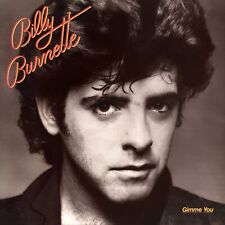
Gimme You by Billy Burnette (Remastered CD, 1981, 2023) Fleetwood Mac
$10.98
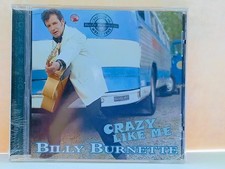
BILLY BURNETTE "Cray Like Me" CD 2017 release STILL SEALED
$24.50
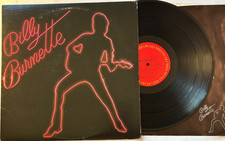
Billy Burnette - Self-Titled LP - 1980 1st Pressing 12" Columbia LP + Lyrics VG+
$6.00
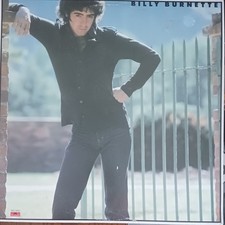
BILLY BURNETTE - (SELF- TITLED) - 1979 POLYDOR RECORDS PROMO VINYL LP - (VG/VG)
$5.50
![Billy Burnette - Billy Burnette [New CD] Rmst, Reissue picture](/vintage/img/g/0k8AAeSwKJppHhl1/s-l225/Billy-Burnette-Billy-Burnette-New-CD-Rmst-Reissue.jpg)
Billy Burnette - Billy Burnette [New CD] Rmst, Reissue
$15.32


 Linear Mode

